When your money loses value every day, you find another way to save
In Argentina, the peso doesn’t just lose value-it collapses. In 2023, inflation hit over 200%. By early 2026, the official exchange rate for the U.S. dollar sits at 948 pesos, but on the street, you’ll pay more than 1,475 pesos for the same dollar. The central bank has spent over $1.1 billion trying to stop the fall. It hasn’t worked. So people stopped waiting for the government to fix it. They turned to crypto.
Today, Argentina is the second-largest crypto market in Latin America, with $93.9 billion in transaction volume. That’s not because Argentines are crypto investors. It’s because they have no other choice. The peso is broken. Banks won’t let you buy more than $200 a month in dollars at the official rate. The black market offers better rates, but it’s risky. So millions are using stablecoins-digital coins tied to the U.S. dollar-as their new savings account, payment system, and lifeline.
Stablecoins aren’t a trend-they’re survival
Eighty-nine percent of crypto activity in Argentina is focused on buying stablecoins like USDT, USDC, and DAI. That’s the second-highest rate in the world, just behind Colombia. These aren’t speculative bets. They’re digital dollars. When you buy a USDT on Lemon, Argentina’s biggest crypto platform, you’re not gambling. You’re locking in purchasing power.
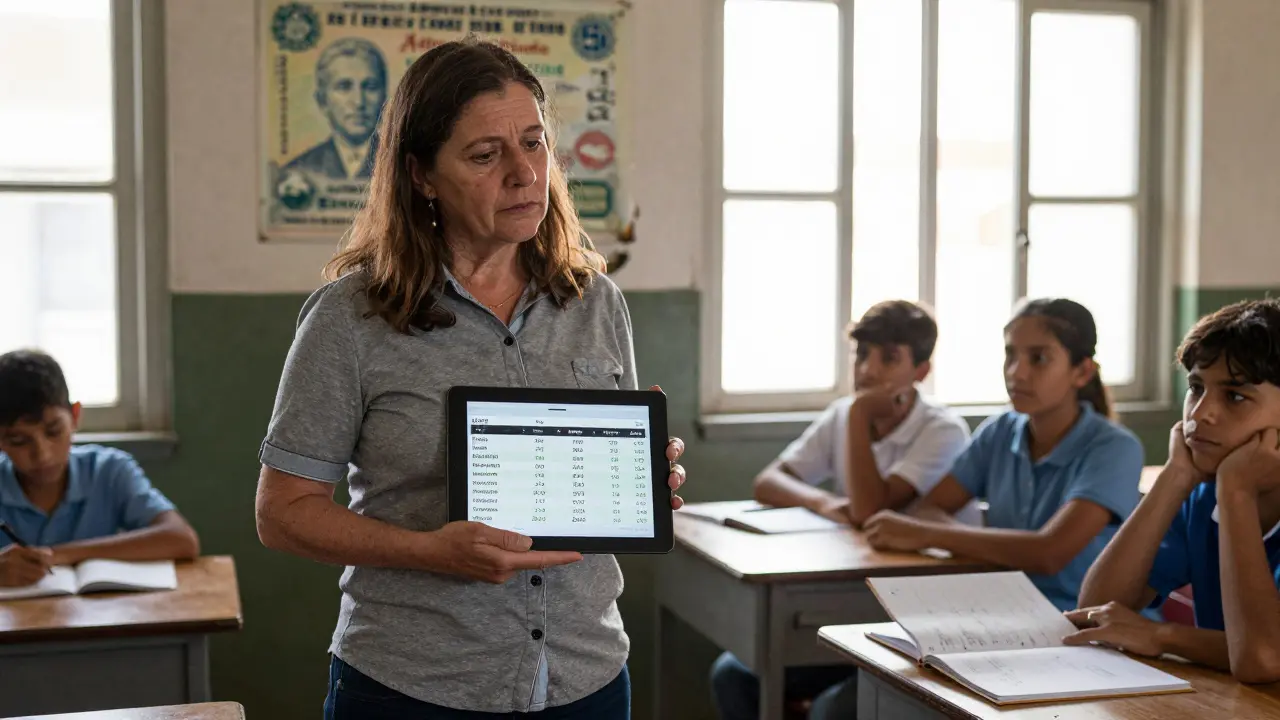
Take Maria, a teacher in Rosario. Last year, she saved 500,000 pesos for her daughter’s school fees. By the time school started, that money bought 40% less. She switched to buying $500 worth of USDC each month. Now, she knows exactly what that money will cover. No surprises. No panic. She doesn’t need to wait for a bank appointment or risk a black-market deal. She opens the app, taps a button, and her dollars are safe.
DAI is especially popular because its backing is public. Every dollar of collateral is recorded on the Ethereum blockchain. You can check it yourself. That transparency matters when banks hide their books and the government changes rules overnight.
Bitcoin isn’t for trading-it’s for holding
While stablecoins are used for daily needs, Bitcoin is becoming Argentina’s long-term savings tool. Lemon reports that more Argentines now hold Bitcoin than stablecoins on their platform. That’s a major shift. People aren’t trying to flip Bitcoin for quick profits. They’re buying it to protect their life savings over years, not months.
Why Bitcoin? Because it’s not controlled by anyone. No central bank can print more of it. No politician can freeze your wallet. It’s decentralized, borderless, and finite. For Argentines who’ve seen their currency devalued five times in a decade, that’s not ideology-it’s insurance.
One small business owner in Mendoza told a local news outlet he now keeps 70% of his profits in Bitcoin. He pays suppliers in USDT, but his core savings? Bitcoin. He calls it his “inflation-proof vault.”
How crypto bypasses the rules the government can’t break
Argentina’s capital controls are strict. You can’t legally take more than $200 out of the country per month. You can’t buy dollars easily. You can’t hold foreign currency in a local bank. But crypto doesn’t care about borders or bank hours.
Imagine you’re a freelance designer in Buenos Aires. You get paid in pesos, but your software subscriptions, cloud hosting, and freelance platforms all charge in dollars. Without crypto, you’d pay a 30% premium on the black market just to get the dollars you need. With USDT, you buy it locally, send it instantly to your PayPal or Stripe account, and pay your bills. No middleman. No waiting. No risk.
Even cross-border payments are changing. Brazilian tourists now use Mercado Pago to pay Argentine merchants directly in real time using Brazil’s PIX system. No currency conversion. No fees. No peso exposure. The money flows in Brazilian reals, and the Argentine seller gets it in stablecoins. It’s a quiet revolution happening at the point of sale.
It’s not just individuals-businesses are running on crypto
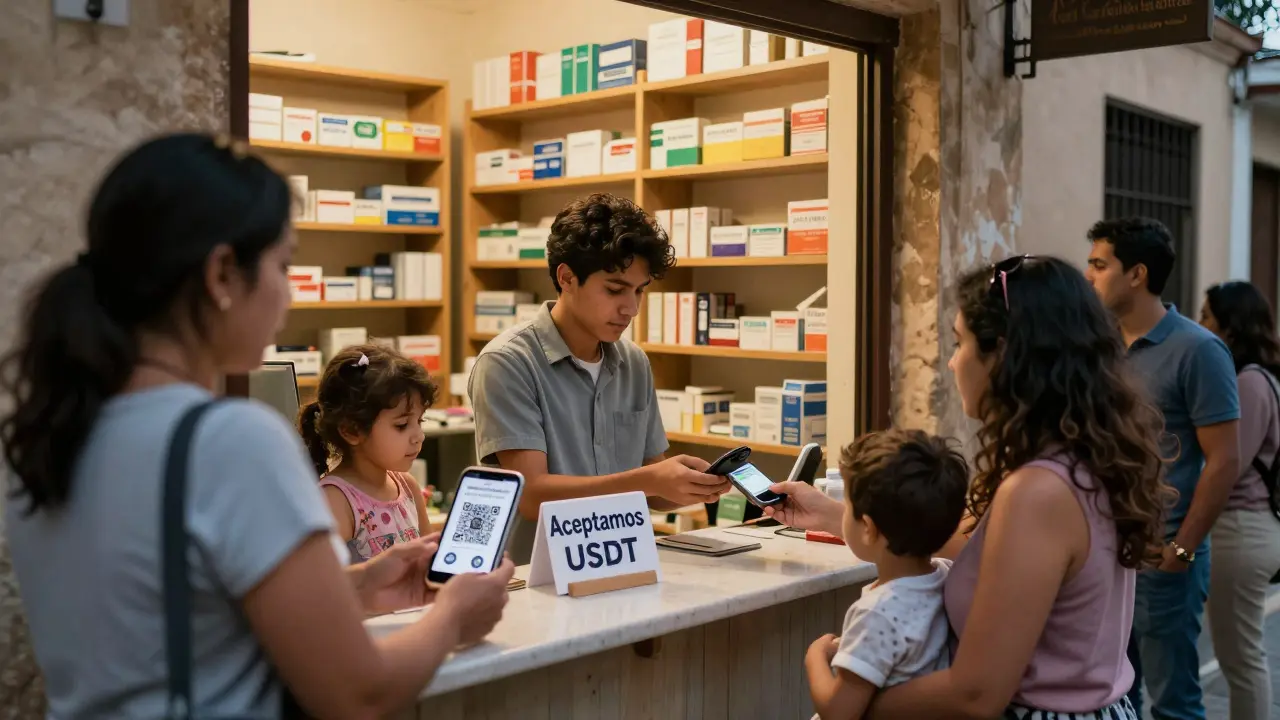
Small shops, clinics, and even taxi drivers now accept USDT. A pharmacy chain in Córdoba started accepting stablecoins in 2024. Their sales jumped 18% in six months. Why? Because customers were tired of watching prices change by the hour. One customer said, “I don’t know what my peso is worth tomorrow. But I know what $100 buys. So I pay in crypto.”
Importers are using crypto to buy goods from China and the U.S. without going through banks. Exporters are getting paid faster. A textile company in Santa Fe now receives payments from Chile in USDC and converts it to pesos only when they need to pay local workers. That way, they avoid losing 20% of their revenue to inflation between payment and payroll.
Even the government is paying attention. Argentina launched a regulatory sandbox in 2023 and now licenses Virtual Asset Service Providers (VASPs). That means platforms like Lemon and Binance Argentina operate legally. It’s not perfect-but it’s progress.

The learning curve is low, but the stakes are high
You don’t need to be a tech expert to use crypto in Argentina. Signing up on Lemon takes 15 minutes. You upload your ID, link your bank account, and buy USDT with your peso salary. Done. No blockchain jargon. No private keys to manage. It’s like using PayPal-but your money doesn’t vanish overnight.
But if you want to go deeper-use DeFi, run a Bitcoin node, or trade on decentralized exchanges-you’ll need weeks of learning. That’s where local communities help. Buenos Aires hosts events like Devconnect and the Ethereum World Fair. There are free Spanish-language YouTube tutorials, Telegram groups, and meetups in every major city. People teach each other because they have to.
Why Argentina’s story matters everywhere
Argentina isn’t an outlier. It’s a warning. When a currency fails, people don’t wait for permission. They find tools that work. Crypto isn’t replacing the peso because it’s cooler. It’s replacing it because it’s reliable.
Other countries are watching. Venezuela, Nigeria, Turkey, and Lebanon have similar stories. But Argentina’s adoption is the most organized, the most widespread, and the most integrated into daily life. It’s not a protest. It’s a practical response.
The government might try to fix the peso. It might get help from the U.S. or the IMF. But if inflation keeps climbing and controls stay tight, crypto won’t fade. It will grow. And Argentina will keep showing the world how people rebuild their financial lives when the system fails them.
What happens if the peso finally stabilizes?
Some say crypto adoption will drop if inflation slows. Maybe. But history says otherwise. When people learn to use a better tool, they don’t go back. Look at the internet. Once you used email instead of fax machines, you didn’t go back. Same with mobile payments. Once you used Mercado Pago instead of cash, you didn’t return.
Crypto in Argentina isn’t just about inflation. It’s about freedom. Freedom from waiting in bank lines. Freedom from hidden fees. Freedom from knowing your savings will be worth less tomorrow. That’s not something you give up easily.
Why do Argentines prefer stablecoins over Bitcoin?
Most Argentines use stablecoins like USDT and USDC for everyday transactions because they’re stable-1 USDT equals $1. Bitcoin is volatile, so it’s not practical for paying bills or buying groceries. But for long-term savings, many switch to Bitcoin because it can’t be printed or devalued by a central bank. So stablecoins are for spending and paying; Bitcoin is for storing wealth.
Can you really buy dollars with crypto in Argentina?
Yes, but indirectly. You can’t walk into a bank and buy dollars with crypto. But you can buy USDT on Lemon, send it to a U.S.-based exchange like Coinbase, and cash out to a U.S. bank account. Many Argentines use this method to send money abroad or pay for international services. It’s faster and cheaper than traditional wire transfers.
Is crypto legal in Argentina?
Yes. Argentina doesn’t ban crypto. In fact, it licenses crypto exchanges as Virtual Asset Service Providers (VASPs). The government even created a regulatory sandbox to test new financial tech. While there’s no official crypto law yet, using crypto isn’t illegal. Many banks now allow deposits from licensed crypto platforms.
Are crypto transactions taxed in Argentina?
Yes. Since 2023, Argentina taxes capital gains from crypto sales. If you sell USDT or Bitcoin for pesos and make a profit, you owe income tax. But enforcement is patchy. Most people report nothing, and the tax authority focuses on large transactions. Still, the legal framework exists, and the government is slowly improving tracking tools.
How do Argentines protect their crypto from hacks?
Most use centralized platforms like Lemon or Binance Argentina because they’re regulated and offer insurance. But advanced users store Bitcoin in hardware wallets like Ledger or Trezor. They avoid keeping large amounts on exchanges. Many also use multi-signature wallets and write down recovery phrases on paper-kept in safe places like safety deposit boxes or with trusted family members.
Is crypto adoption growing or slowing down in Argentina?
It’s growing. Even during political calm, crypto usage stays high. During elections or inflation spikes, volumes jump 30-50%. Chainalysis found that crypto adoption in Argentina is among the highest globally, not because of speculation, but because it’s essential for daily life. As long as the peso remains unstable, crypto will keep growing.
Pamela Mainama
January 30, 2026 AT 10:58Will Pimblett
January 30, 2026 AT 17:42Gurpreet Singh
February 1, 2026 AT 06:27Mark Ganim
February 3, 2026 AT 05:55Aaron Poole
February 4, 2026 AT 15:31Gavin Francis
February 4, 2026 AT 23:53Dahlia Nurcahya
February 5, 2026 AT 19:39Elizabeth Jones
February 7, 2026 AT 10:08When you can’t trust your currency, you trust the math. When you can’t trust your banks, you trust the blockchain. When you can’t trust your government, you trust each other. That’s not a revolution. That’s a return to first principles.
What’s remarkable isn’t that Argentina adopted crypto. It’s that they did it without fanfare, without hashtags, without needing approval. They just... did what needed doing. No speeches. No protests. Just taps on a screen.
And in that silence, something louder than any manifesto was built: a new kind of trust. Not in institutions. Not in politicians. But in code that can’t be corrupted, in ledgers that can’t be erased, in networks that can’t be shut down.
Other nations watch this and call it desperation. But desperation doesn’t build systems. Desperation collapses. What’s happening in Argentina is creation. It’s craftsmanship. It’s the slow, stubborn act of building something that lasts, brick by digital brick.
Maybe one day, when the peso finally stabilizes, they’ll keep using crypto-not because they have to, but because they don’t want to go back. Because once you know what real financial autonomy feels like, you never truly forget.
mary irons
February 8, 2026 AT 17:47Parth Makwana
February 10, 2026 AT 06:49Meenal Sharma
February 10, 2026 AT 15:00Rob Duber
February 10, 2026 AT 20:43Robert Mills
February 12, 2026 AT 13:01Wayne mutunga
February 13, 2026 AT 22:19Edward Drawde
February 15, 2026 AT 07:25Tressie Trezza
February 16, 2026 AT 18:53