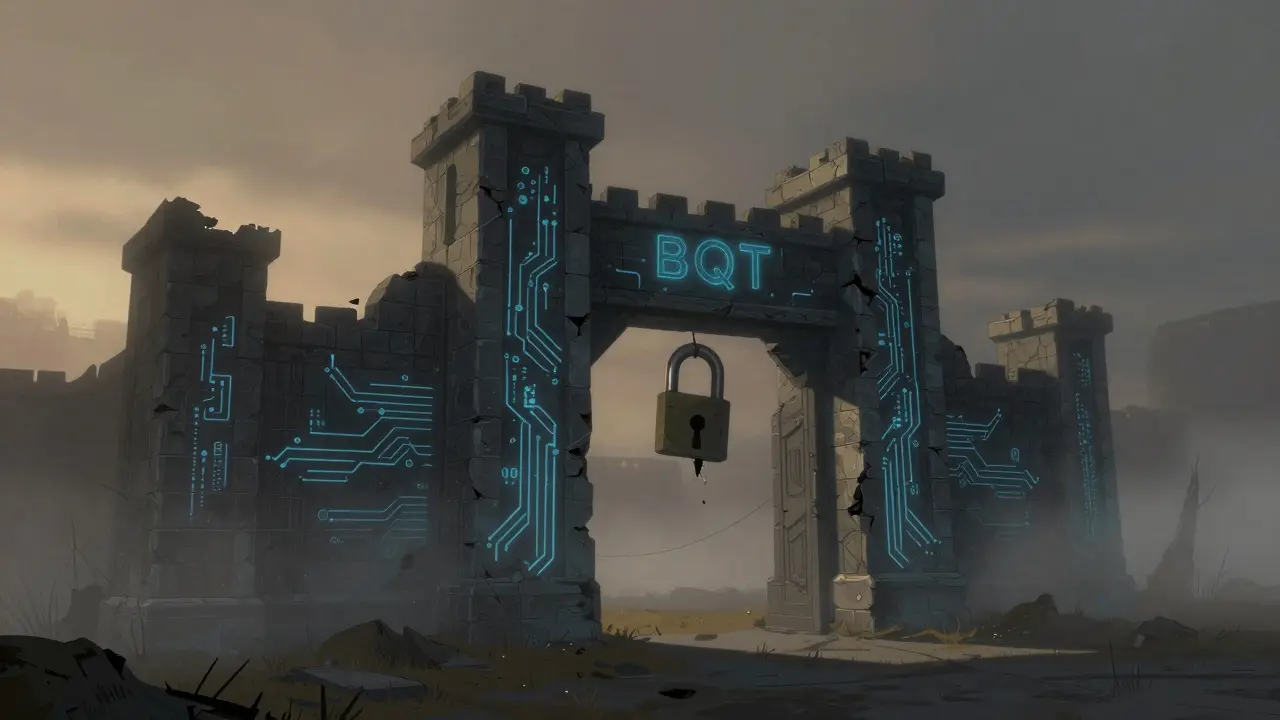
You might have stumbled upon the name BQT crypto exchange while digging through old forums or checking out obscure trading platforms. Maybe you saw a mention of it in a archived article from a few years back and wondered if it’s still an option for your trades. The short answer? You need to stop looking at BQT right now. It is not active. It is not safe. And quite frankly, it doesn't exist anymore as a functioning platform.
If you are holding cryptocurrency and thinking about moving it to BQT, do not do it. If you are just curious about what happened to this specific project, stick around. I’ve dug into the history, the promises they made, and why they vanished into thin air. Understanding failures like BQT is actually more valuable than reading another generic list of top exchanges, because it teaches you exactly what red flags to spot before you lose your own money.
The Quick Truth About BQT Status
Let’s get the heavy lifting out of the way first. As of mid-2026, BQT Technologies, LTD is completely defunct. The last credible update we have comes from late 2022, when independent researchers noted that while their website was technically loading, the actual exchange functionality was inaccessible. There has been no activity since then. No new features, no customer support responses, and definitely no trading volume.
This isn’t a case of a platform taking a "maintenance break." This is a classic example of a crypto startup that launched with hype, failed to gain traction, and simply shut down. In the world of decentralized finance and peer-to-peer trading, silence usually means the servers are off and the team has moved on to something else-or disappeared entirely. Relying on outdated information about BQT could lead you to try to connect a wallet to a dead endpoint, which is a security risk in itself.
What Was BQT Promising?
To understand why it failed, we have to look at what they were trying to build. Back in 2022, BQT positioned itself as the "first decentralized P2P Crypto Hedge Trading Platform." That’s a mouthful, so let’s break it down. They claimed to offer a space where traders could directly negotiate with each other to swap cryptocurrencies without needing fiat currency (like USD or EUR) involved.
The core idea was hedging. Imagine you hold Bitcoin but think the price might drop slightly in the next week. Instead of selling it, you want to "borrow" Ethereum against your Bitcoin holdings temporarily. BQT promised an escrow system that would handle this collateral arrangement between two peers. Their pitch was that every crypto asset had value and could be used as a negotiating tool to acquire another, creating a self-sustaining internal market.
On paper, this sounded innovative. They cited data from the Cambridge Center about growing crypto user bases and the rise of hedge funds to justify their existence. They wanted to challenge traditional models by removing the middleman-the centralized exchange that matches buy and sell orders via an order book. Instead, BQT relied on direct negotiation.
The Fatal Flaws in the Model
So, if the idea was clever, why did it die? The problem wasn’t just bad luck; it was structural. BQT had several critical disadvantages that made it nearly impossible for regular users to adopt.
- No Fiat On-Ramp: This was the biggest killer. To use BQT, you already had to own cryptocurrency. You couldn’t sign up, link your bank account, and buy Bitcoin with dollars. You had to go to Coinbase or Binance, buy crypto there, pay fees, transfer it to a wallet, and then move it to BQT just to start trading. For beginners, this friction is too high. Most people want one place to do everything.
- Liquidity Issues: Peer-to-peer markets live or die by liquidity. You need buyers and sellers online at the same time. Without a massive user base, you’re left staring at an empty room. Established exchanges like Kraken or Bybit have millions of users ensuring instant matches. BQT never reached that critical mass.
- Lack of Advanced Tools: Traders don’t just want to swap assets; they want charts, technical indicators, and fast execution. BQT’s focus on manual negotiation meant slower, clunkier interactions compared to the lightning-fast automated matching engines of major competitors.
- Security Ambiguity: While they mentioned an escrow system, there were no details on encryption standards, cold storage implementation, or multi-signature requirements. In crypto, vague security claims are a huge red flag.
These flaws placed BQT in a narrow niche that ultimately proved unsustainable. They tried to serve advanced hedge traders but lacked the infrastructure to support them, while simultaneously alienating beginners who needed simplicity.

How BQT Compares to Active Alternatives
Since BQT is gone, you probably need a place to trade. Let’s look at how BQT’s theoretical model stacks up against the reality of current market leaders. This comparison helps highlight why established platforms win.
| Feature | BQT (Defunct) | Bybit (Active) | Kraken (Active) |
|---|---|---|---|
| Fiat Support | None (Crypto-only) | Yes (USD, EUR, etc.) | Yes (Multiple currencies) |
| Trading Type | P2P Negotiation | Centralized Order Book | Centralized Order Book |
| Leverage | Not specified | Up to 200x | Up to 5x (Spot/Futures vary) |
| Security Proof | None documented | Triple Layer Asset Protection | Regular Audits & Proofs |
| User Base | Zero (Inactive) | Millions globally | Millions globally |
Notice the difference? Bybit and Kraken offer seamless entry points. You can deposit cash, trade instantly, and withdraw if you want. They also provide robust security frameworks. Bybit, for instance, uses a "Triple Layer Asset Protection" model, which includes segregated accounts and cold storage. Kraken is known for its rigorous compliance and audit trails. BQT offered none of this certainty.
Red Flags: How to Spot a Dead Exchange Early
BQT didn’t wake up one day and vanish without warning. There were signs. Learning to spot these can save you from similar situations with other lesser-known projects. Here is what went wrong with BQT that you should watch for elsewhere:
- Social Media Silence: BQT’s last tweet was in 2022. Active crypto projects post daily updates, market analysis, or community engagement. If a project goes quiet for months, assume the worst.
- Missing from Rankings: By 2025, BQT was absent from all major lists-CoinGecko, Forbes, Finder, and CoinDesk. These aggregators track volume and activity. If you aren’t on the list, you likely don’t have real users.
- No User Community: I checked Reddit, Trustpilot, and specialized crypto forums. There were no discussions, no complaints, and no praise. A healthy exchange has noise-people arguing about fees or praising support. Silence means no one is using it.
- Vague Technical Details: BQT announced a "decentralized" platform but never released smart contract code or detailed protocol specs. True decentralized projects are open-source. Secrecy often hides incompetence or fraud.
In 2022, the crypto market was already cooling down (the "crypto winter"), with major players like Celsius and Voyager failing. In that environment, a new entrant without deep pockets and a clear advantage cannot survive. BQT lacked both.

Where Should You Go Instead?
If you were interested in BQT for hedging or P2P trading, here are safer, active alternatives that actually work in 2026.
For Hedging and Derivatives: Look at Bybit. They dominate the derivatives space with high leverage options and a reputation for handling large volumes securely. Their interface is designed for traders who want to hedge positions actively.
For Security and Reliability: Kraken remains a gold standard. They have survived multiple market crashes, maintain transparent proof-of-reserves, and offer excellent customer support. If you value safety over flashy features, Kraken is a solid choice.
For True Decentralization: If you liked the P2P aspect of BQT but want it to actually work, check out Bisq or HodlHodl. These are non-custodial P2P platforms that allow you to trade directly with others without a central intermediary. They have active communities and proven track records, unlike BQT.
Final Thoughts on BQT
BQT was an ambitious idea that failed due to poor execution, lack of liquidity, and bad timing. It serves as a cautionary tale in the crypto space. Just because a platform sounds innovative doesn’t mean it’s viable. Always check for active development, real user volume, and transparent security measures before sending any funds.
Don’t waste time trying to resurrect BQT. It’s gone. Focus your energy on platforms that are built, audited, and trusted by millions of users today. Your capital is hard-earned; protect it by sticking to verified exchanges.
Is BQT crypto exchange still operating in 2026?
No, BQT Technologies, LTD ceased operations around late 2022. The platform is currently inaccessible, and there has been no activity or updates since then. It is considered defunct.
Can I recover my funds from BQT?
It is highly unlikely. Since the company has ceased operations and the exchange is inaccessible, there is no customer support or recovery mechanism available. Any funds sent to BQT wallets after its shutdown are likely lost.
Was BQT a scam?
While there is no definitive legal ruling labeling it a scam, it exhibited many characteristics of failed startups rather than malicious fraud. However, the lack of transparency, absence of regulatory compliance, and sudden disappearance make it extremely risky. Users should treat it as unsafe.
What was the main feature of BQT exchange?
BQT claimed to be a decentralized peer-to-peer (P2P) platform focused on crypto hedge trading. It allowed users to swap cryptocurrencies directly using an escrow system without involving fiat currency, aiming to create a self-sustaining internal market.
Are there safe alternatives to BQT for P2P trading?
Yes. For decentralized P2P trading, platforms like Bisq, HodlHodl, and LocalBitcoins (where available) are established alternatives with active user bases and better security protocols. For general trading, Bybit and Kraken are recommended for their reliability and liquidity.
Why did BQT fail?
BQT failed due to a combination of factors: no fiat on-ramp making it hard for new users to join, low liquidity preventing successful trades, lack of advanced trading tools, and intense competition from established giants like Binance and Kraken during a tough market period in 2022.