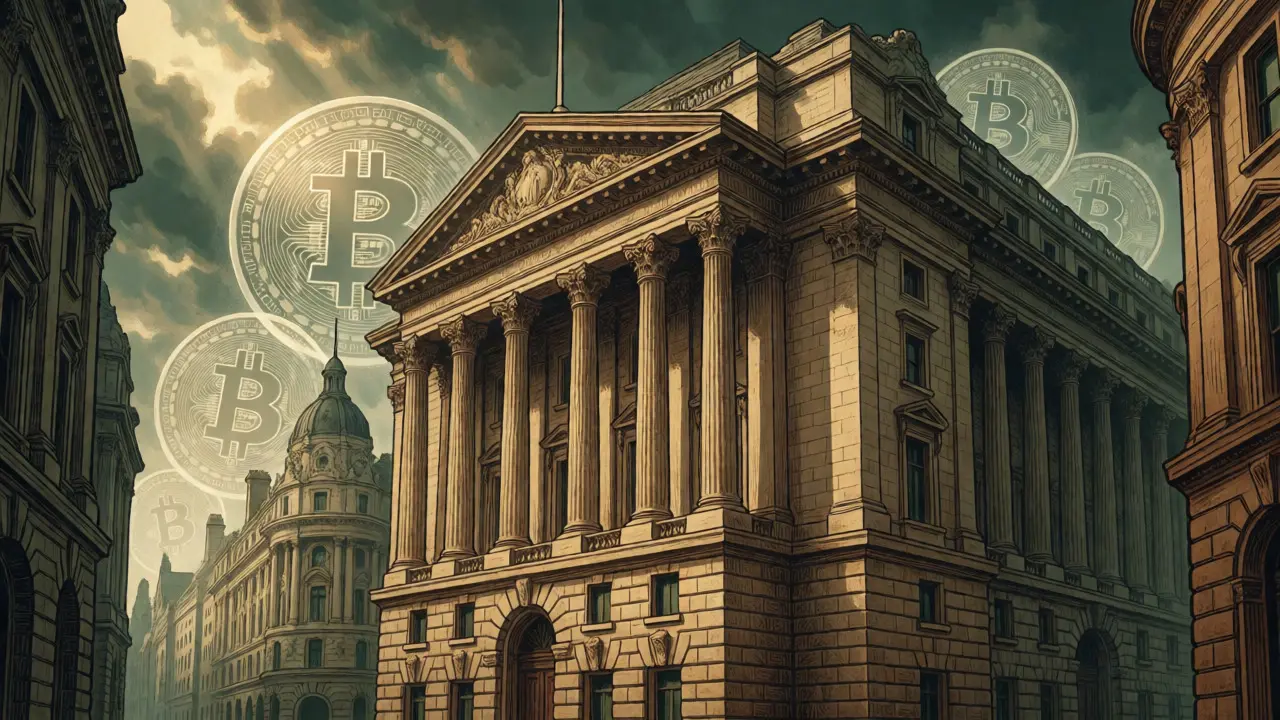
You might be searching for DSX crypto exchange reviews because you found an old account, saw a mention in a forum, or are researching why platforms vanish. Here is the blunt truth: DSX Global is dead. It filed for bankruptcy in January 2021 and hasn't traded since. But its story offers critical lessons about exchange safety, regulatory risks, and the dangers of keeping funds on smaller, less transparent platforms.
What Was DSX?
DSX Global was a centralized cryptocurrency exchange founded in 2014 and headquartered in London, UK. Unlike many offshore exchanges that popped up during the early Bitcoin boom, DSX positioned itself as a professional-grade platform, leveraging the team's background in traditional financial markets. They marketed themselves as offering "a fully integrated, end-to-end trading, settlement and custody service for cryptoassets." The goal was to bring the stability and structure of London’s financial district to the wild west of crypto.
The exchange supported major fiat currencies like EUR, GBP, USD, and RUB, allowing users to trade directly with money rather than just swapping coins. At its peak, it listed around 29 cryptocurrencies. This wasn't a massive selection compared to giants like Binance or Coinbase today, but it focused on established assets, avoiding the high-risk, low-liquidity tokens that plague many newer exchanges.
Key Features and User Experience
If you were using DSX before it closed, you likely noticed the interface. Reviewers often described the design as "crisp" and professional, reflecting that London financial heritage. It wasn't cluttered with meme coins or gamified elements. The user experience was designed to be accessible for both beginners and seasoned traders.
Security was a stated priority. DSX implemented two-factor authentication (2FA), cold storage for most funds, and manual withdrawal processing. While manual withdrawals can mean slower transaction times, they also act as a safety net against automated hacks. In 2019, they tried to modernize by adding credit card deposits and launching an iOS mobile app. An Android version was promised but never widely confirmed as a stable release before the collapse.
Supported Assets and Pairs
- Fiat Currencies: USD, EUR, GBP, RUB
- Cryptocurrencies: Approximately 29 major tokens (Bitcoin, Ethereum, Litecoin, etc.)
- Trading Types: Crypto-to-Crypto and Fiat-to-Crypto pairs
Why Did DSX Fail?
The primary reason for DSX's demise was bankruptcy, filed on January 12, 2021. This happened right at the start of the massive 2021 bull run, a time when competitors were thriving. Why did DSX sink while others swam? Several factors contributed to its downfall.
First, competition was fierce. By 2020, major exchanges like Binance, Coinbase, and Kraken had aggressively lowered fees and expanded their asset lists into the hundreds. DSX stuck to its conservative list of ~29 coins. Traders wanting exposure to emerging altcoins had no reason to stay. Second, liquidity dried up. CoinMarketCap classified DSX's volume data as "untracked," which usually signals low activity or poor reporting standards. Low volume means wider spreads and harder exits for large traders.
Third, regulatory pressure mounted. DSX was applying for registration with the UK's Financial Conduct Authority (FCA) under the 5th Anti-Money Laundering Directive. They never secured this approval before going bankrupt. In the crypto world, operating without clear regulatory backing in a strict jurisdiction like the UK is a ticking time bomb.
Reputation and Scam Allegations
User reception was mixed at best. On review sites like Cryptogeek, DSX held an average rating of 3 out of 5 stars. Users complained about moderate fees and limited coin selection. But the real damage came after the closure.
In October 2025, DSX appeared on Crypto Legal UK's "List of Reported Scam Companies." This designation suggests that former users struggled to recover their funds. When an exchange goes bankrupt, users become creditors. If the company has hidden liabilities or mismanaged reserves-as often happens in unregulated entities-recovery rates can be near zero. The inclusion on scam watchlists implies that the bankruptcy process was opaque and potentially unfavorable to retail investors.
| Feature | DSX Global | Coinbase | Binance |
|---|---|---|---|
| Status | Defunct (Bankrupt 2021) | Active & Publicly Traded | Active & Global Leader |
| Founded | 2014 | 2012 | 2017 |
| Regulation | Pending FCA (Unresolved) | US Regulated / Global Licenses | Varied Global Licenses |
| Asset Count | ~29 | 200+ | 350+ |
| Transparency | Low (Volume Untracked) | High (Public Company) | Moderate (Proof of Reserves) |
Lessons for Today's Traders
The DSX story isn't just history; it's a warning. What should you look for now? First, check the regulation status. Is the exchange registered with your local authority? DSX failed partly because it didn't have that final stamp of approval. Second, look at transparency. Does the exchange publish proof of reserves? DSX's volume was "untracked," meaning even basic metrics were unclear. Third, consider the business model. Exchanges that rely solely on trading fees need high volume to survive. If you're on a small exchange with few users, one bad quarter can kill the company.
If you are currently holding crypto on a smaller, less-known exchange, ask yourself: Can I withdraw my funds instantly? Do I know where my coins are stored? If the answer is vague, move them to a larger, regulated platform or a self-custody wallet. The cost of moving funds is always cheaper than losing them entirely.
Alternatives to DSX
Since DSX is gone, where should former users go? Industry analysts consistently recommend established players. Coinbase is frequently cited as a top alternative due to its public listing and US-based compliance. It offers higher security guarantees, though fees can be higher. CEX.io is another option mentioned in post-DSX discussions, praised for its longevity and support for multiple payment methods.
For those who want lower fees and more coins, Binance or Kraken remain strong contenders, provided you understand the regulatory nuances in your country. Always prioritize exchanges with a proven track record of surviving market downturns.
Is DSX crypto exchange still operational?
No, DSX Global is not operational. It filed for bankruptcy on January 12, 2021, and has remained inactive since then. It is classified as a "dead" exchange by major tracking platforms like CoinMarketCap and Cryptowisser.
Can I still withdraw money from DSX?
Generally, no. Since the exchange is bankrupt, normal trading and withdrawal functions are suspended. Former users may have been part of legal proceedings to recover funds, but active withdrawal services through the platform interface are unavailable.
Was DSX a scam?
It started as a legitimate business but ended up on scam watchlists. DSX appeared on Crypto Legal UK's list of reported scam companies in 2025. While it may not have been a deliberate Ponzi scheme initially, the lack of fund recovery for users and poor transparency led to fraud allegations.
How many cryptocurrencies did DSX support?
DSX supported approximately 29 cryptocurrencies and tokens. This was a deliberately conservative approach, focusing on established assets like Bitcoin and Ethereum rather than newer altcoins.
What happened to DSX users' funds?
The outcome varies, but many users faced difficulties recovering their full balances. Bankruptcy proceedings in crypto are complex and often result in partial repayments or long delays. Some reports suggest significant losses for retail investors.
Saket Kulkarni
September 7, 2026 AT 01:22I completely concur with the assessment that regulatory oversight is the single most critical factor in exchange longevity. The failure of DSX serves as a poignant reminder that operational elegance cannot compensate for structural fragility. It is imperative for investors to prioritize platforms with transparent, audited reserves and clear legal standing within their jurisdiction.
Kathy Siew
September 9, 2026 AT 01:19lol "professional-grade" my foot.
they had 29 coins and untracked volume? that's not professional, that's a ghost town with a fancy logo. i feel bad for anyone who actually trusted them with their life savings. typical offshore nonsense dressed up in a suit.
Brittany Ross
September 10, 2026 AT 14:11Oh wow, this brings back so many memories! 😭 I remember looking at DSX back in the day because they seemed so serious and British 🇬🇧 but honestly, the lack of new listings was super frustrating. 📉 It’s really sad how quickly things can go wrong even when you think you’re safe. 💔 Sending good vibes to everyone who lost money there. 🙏✨
Maegan Rust
September 12, 2026 AT 11:02This narrative resonates deeply with me. It highlights the fragile nature of trust in decentralized finance. We often overlook the human element behind these digital vaults. When the lights go out, it's not just numbers on a screen; it's real people's futures hanging in the balance. A powerful lesson indeed.
Jennifer Brosnan
September 15, 2026 AT 01:44It’s amusing how these "London financial heritage" claims always mask the inevitable grift. They probably never intended to secure that FCA license, just used it as a marketing buzzword to lure in unsuspecting retail bots. Classic misdirection. The scam wasn't the bankruptcy; the scam was the illusion of legitimacy all along.
lea terrade
September 16, 2026 AT 08:34i wonder if the manual withdrawals were actually a feature or a bug... like did they just not have the tech to automate it properly? feels like a stretch calling it a safety net when the whole platform collapsed anyway. hard to trust anything that moves that slow tbh
Rachel Leet
September 16, 2026 AT 22:40The core issue isn't competition or liquidity. It's fundamental misunderstanding of value storage. If you don't control the keys, you don't own the asset. DSX users were merely holding IOUs from a failing bank. This isn't crypto; it's traditional banking wrapped in blockchain jargon. And we know how those banks treat depositors during insolvency.
Mary Burnett
September 18, 2026 AT 20:42Thank you for this comprehensive overview. It is reassuring to see such detailed analysis of past failures. For those of us who prefer stability over novelty, these lessons are invaluable. I shall certainly keep this in mind when evaluating future platforms.
Stephen McElreavy
September 18, 2026 AT 22:19Whoa, talk about a cautionary tale!! 😱 It’s absolutely harrowing to think about the sheer volatility and risk involved here. The juxtaposition of their "crisp" UI against the murky depths of their accounting practices is simply staggering! 🤯 It really underscores the importance of due diligence and understanding the underlying liquidity metrics. One must be vigilant, folks! The market doesn't forgive complacency!! 🚀📉
Indu Nair
September 19, 2026 AT 14:29Look, stop crying about DSX!
If you didn't check the regulation status yourself, that's on YOU! Stop blaming the exchange for being shady and start blaming your own laziness! Do your homework! Read the fine print! Don't just jump in because it sounds fancy! Wake up!
Dominic Jones
September 21, 2026 AT 11:46It is fascinating, is it not?
The cyclical nature of these failures-always promising transparency, always delivering opacity-is quite predictable. We must ask ourselves: why do we continue to place faith in centralized entities without rigorous proof of reserves? The answer, I suspect, lies in our collective desire for convenience over security. A profound philosophical dilemma, indeed.
Kathryn Haber
September 22, 2026 AT 10:53life is weird man
one day you're trading btc on a london platform feeling sophisticated and the next day you're reading obituaries for exchanges lol
we're all just ghosts haunting servers sometimes
Robert Brabham
September 24, 2026 AT 08:53Actually, I'd argue DSX wasn't dead yet. Bankruptcy filings can be strategic maneuvers to freeze assets while insiders move liquidity elsewhere. The "untracked volume" might have been intentional obfuscation to hide wash trading. I'm not saying they were malicious, but the timing right before the bull run is suspiciously convenient for whoever held the bag last.
Sonya Kirkwood
September 25, 2026 AT 14:17It is terrifyingly precise how they vanished. Not with a bang, but with a whimper of unprocessed withdrawals. The silence after the bankruptcy filing was deafening. One expects chaos, but instead got bureaucratic limbo. It is a masterclass in disappearing acts.
Liam Grimes
September 26, 2026 AT 17:45Yeah mate, fair play for writing this up. I remember seeing ads for them years ago. Thought they were legit cause they said London based. Turns out "based" just meant an office suite they rented for a month maybe? Lol. Anyway, good advice on moving funds off small exchanges. Learned that the hard way myself.
liam & the bees
September 28, 2026 AT 07:24Hey everyone! 👋 Just wanted to add that Coinbase has been solid for me since switching away from smaller spots. Their interface is clean and I sleep better knowing they are public. Hope this helps someone else avoid the DSX headache! Stay safe out there! 🐝💛
Ted Thoroughgood
September 28, 2026 AT 10:43Don't give up on finding good platforms guys!! There are plenty of great options now with way better security!! Keep learning and stay positive!! You got this!! 💪😊
Ferdinand Friday
September 29, 2026 AT 14:33The demise of DSX illustrates a broader systemic vulnerability inherent in the current structure of centralized cryptocurrency exchanges, wherein the absence of robust, independent auditing mechanisms allows for the accumulation of hidden liabilities that ultimately precipitate catastrophic insolvency events, leaving retail participants bearing the brunt of institutional mismanagement and opaque operational practices.