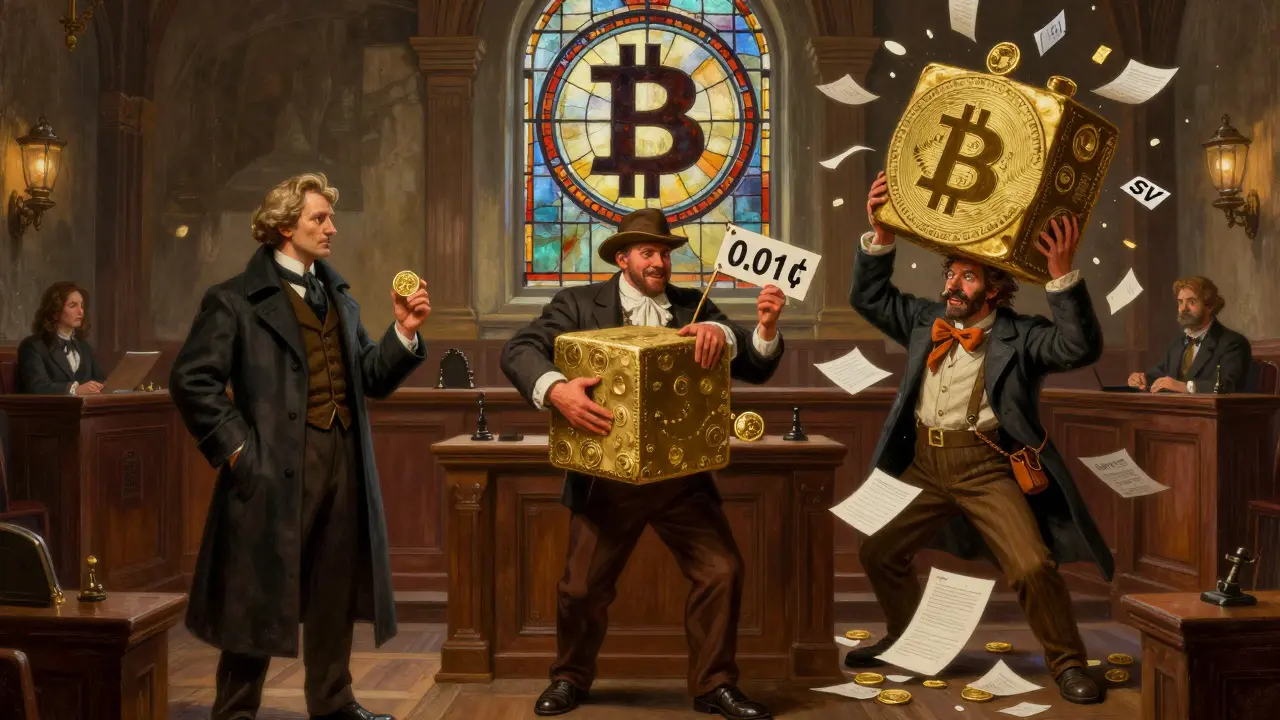
When Bitcoin hit its first major bottleneck in 2017, something unexpected happened: the community split. Not just a minor disagreement, but a full-blown fork that created a new cryptocurrency with a different set of rules. That was Bitcoin Cash (BCH). Then, less than a year later, another group broke off from Bitcoin Cash itself to create Bitcoin SV (BSV). These weren’t just technical tweaks-they were ideological battles over what Bitcoin should be.
Why Did Bitcoin Fork at All?
Bitcoin was designed to handle 7 transactions per second. That’s fine for a digital gold experiment, but not so great if you want to use it for buying coffee. By 2017, transaction fees spiked to over $50 during peak times, and blocks took hours to confirm. People were frustrated. Some said: "Let’s make blocks bigger so more transactions fit." Others said: "No, that centralizes power. Use Lightning Network instead." The debate got heated. Developers, miners, and users picked sides. And because Bitcoin is open-source, no one could stop a group from just copying the code and changing the rules. That’s how Bitcoin Cash was born on August 1, 2017.Bitcoin Cash: Bigger Blocks, Faster Payments
Bitcoin Cash didn’t just tweak a setting-it doubled the block size from 1 MB to 8 MB right away, then later increased it to 32 MB. That meant up to 200 transactions per second, compared to Bitcoin’s 7. Fees dropped to pennies. For everyday users, it felt like Bitcoin was finally working as cash again. Unlike Bitcoin, which stuck with SegWit and layered solutions, Bitcoin Cash doubled down on on-chain scaling. No need for complex wallets or second layers. Just send, receive, confirm. Simple. Fast. Cheap. By 2019, Bitcoin Cash was handling 100,000+ transactions per day. Its median transaction value hovered between $1 and $10. That’s telling. People weren’t holding it as an investment-they were using it to pay for things. Merchants in Japan, El Salvador, and parts of Europe started accepting it. It wasn’t Bitcoin, but it was closer to what Satoshi described in the whitepaper: electronic cash for daily use.Bitcoin SV: The "Original Vision" That Wasn’t
Then came Bitcoin SV. In November 2018, a faction led by Craig Wright (who claims to be Satoshi Nakamoto) split from Bitcoin Cash. Their argument? BCH had betrayed Satoshi’s vision by not going big enough. So they raised the block size again-to 128 MB, with no hard cap. BSV didn’t stop there. It removed limits on OP_RETURN, a feature that lets users store data on the blockchain. Suddenly, people were using BSV to store memes, PDFs, even entire movies directly on the chain. One block held over 100 MB of data. That’s not payment processing-that’s a public hard drive. The fork triggered a "hash war." Miners switched back and forth between BCH and BSV, trying to profit from whichever chain paid more. The hash rate for BCH jumped from 4 Exahashes to 7.8 Exahashes overnight. But the war cost miners millions. Bitcoin Cash miners lost $3.45 million. BSV miners lost $2.49 million. It was a financial bloodbath. By mid-2019, the dust settled. BSV’s daily transaction volume averaged just 10,000, with spikes up to 450,000. But its median transaction value sometimes dropped to $0. Why? Because most transactions weren’t payments-they were data uploads. The network was being used as a blockchain storage service, not a payment system.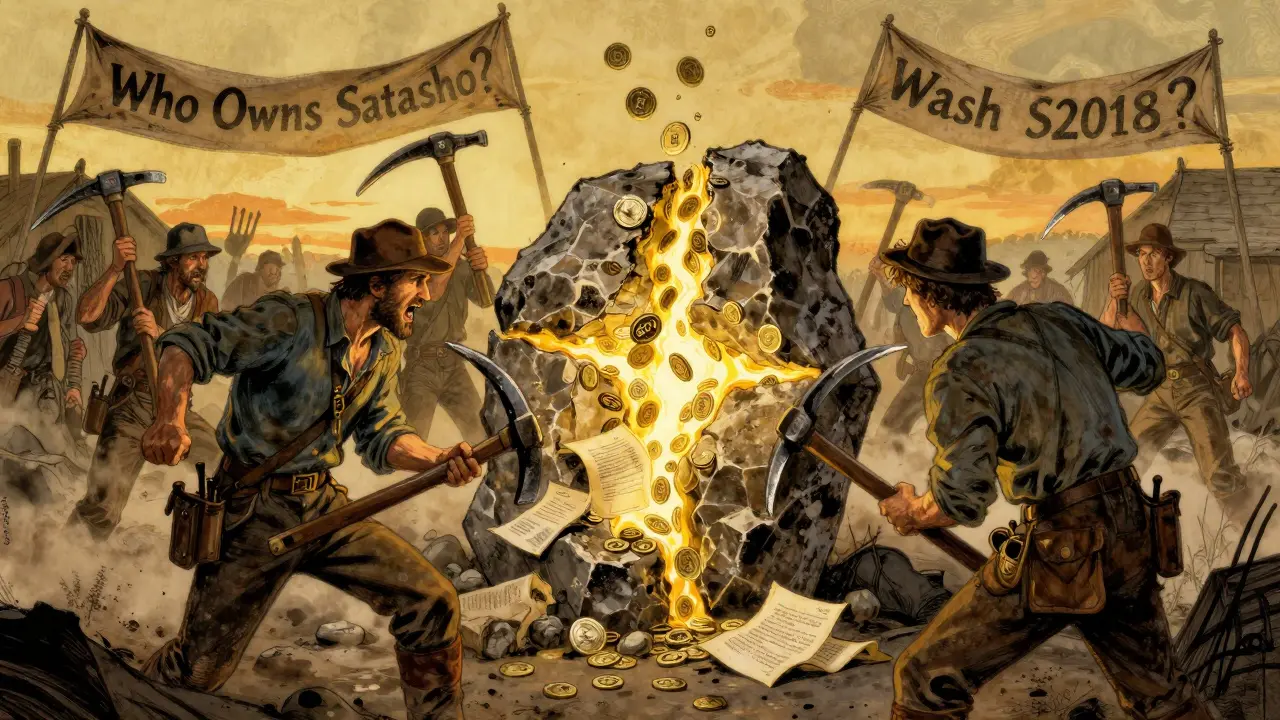
The Real Difference: Philosophy Over Tech
Here’s what most people miss: it’s not about block size numbers. It’s about what each group believes Bitcoin should do. - Bitcoin says: "Security and decentralization come first. Let the Lightning Network handle scaling." - Bitcoin Cash says: "Make Bitcoin usable as money. Bigger blocks. No layers. Just work." - Bitcoin SV says: "Go even bigger. Store everything on-chain. Replace global banking." Bitcoin SV’s vision sounds bold. But it comes with trade-offs. Larger blocks mean you need more powerful, expensive hardware to run a full node. That pushes control into the hands of a few big miners and data centers. It’s the opposite of decentralization. Bitcoin Cash, while still centralized compared to Bitcoin, kept node requirements low enough that regular users could still run them. That’s why it still has a global network of over 1,000 full nodes. BSV? Less than 200.Hash Rate, Security, and the Real Risk
Bitcoin’s network hash rate is over 800 Exahashes. Bitcoin Cash sits at around 2 Exahashes. Bitcoin SV? Just 447 Petahashes-that’s less than 1% of Bitcoin’s power. Why does this matter? Because the more hash power a chain has, the harder it is to attack. A 51% attack-where a single entity controls more than half the mining power-could let someone double-spend coins. Bitcoin’s massive network makes this nearly impossible. For BCH, it’s risky but unlikely. For BSV? It’s theoretically possible. And it’s happened before. In 2020, BSV suffered a 51% attack that reversed over $5 million in transactions. It was the largest such attack on any major cryptocurrency at the time. The attack didn’t target Bitcoin. It didn’t target BCH. It targeted BSV. Why? Because it was weak.
Adoption: Who’s Actually Using These?
Bitcoin still handles over 85% of all on-chain economic activity among the three. But Bitcoin Cash has carved out a real niche. It’s accepted by merchants in over 30 countries. Wallets like Electron Cash and Bitcoin.com Wallet support it. Exchanges list it. People send it. They use it. BSV? Its adoption is mostly tied to one company: nChain. And one person: Craig Wright. Most enterprise projects promised on BSV never launched. The few that did-like a blockchain-based news platform or a document storage service-either shut down or moved elsewhere. The most telling statistic? Bitcoin Cash has over 2 million unique addresses that sent or received a transaction in the last 30 days. Bitcoin SV? Around 150,000. And half of those are just data uploads.What’s Left Today?
Bitcoin Cash still exists. It’s not the giant it was in 2017, but it’s alive. It’s stable. It’s used. It’s not perfect, but it delivers on its promise: fast, cheap payments. Bitcoin SV? It’s a ghost town with a loud owner. The hype has faded. The miners have left. The transactions are mostly junk data. It’s a cautionary tale: you can’t force a community to believe in your vision just because you claim to be Satoshi. The lesson? Forks aren’t just code changes. They’re social experiments. And in crypto, trust matters more than math. Bitcoin Cash earned its place by listening to users. Bitcoin SV tried to rewrite history-and lost.What You Should Know
- Bitcoin Cash (BCH) is the most successful Bitcoin fork. It works as digital cash. Use it if you want fast, low-cost transactions. - Bitcoin SV (BSV) is not a payment system. It’s a data storage experiment with questionable security. - Neither BCH nor BSV has surpassed Bitcoin in adoption, security, or network effect. - If you’re looking for Bitcoin’s original purpose-peer-to-peer cash-BCH is the closest thing that actually works. - If you’re drawn to BSV because of "Satoshi’s vision," ask yourself: who’s really running it? And what’s the real incentive?Is Bitcoin Cash still active?
Yes. Bitcoin Cash (BCH) is actively used, traded, and accepted by merchants worldwide. It has a stable network of over 1,000 full nodes, handles over 100,000 transactions daily, and is listed on major exchanges like Coinbase and Binance. Its community continues to develop wallets and tools for everyday use.
Is Bitcoin SV worth investing in?
Most experts advise against it. Bitcoin SV’s network is small, insecure, and dominated by a single entity. Its transaction volume is low, and most activity consists of non-payment data uploads. Its price is highly volatile and driven more by speculation than utility. There’s no real economic activity backing it.
Why did Bitcoin Cash fork again to create BSV?
A faction led by Craig Wright and Roger Ver believed Bitcoin Cash hadn’t gone far enough in scaling. They wanted even larger blocks (128 MB+), no limits on data storage, and a return to what they claimed was Satoshi’s original design. The split was less about technology and more about control, ideology, and personal claims of being Satoshi.
Can I send Bitcoin to a Bitcoin Cash address?
No. Bitcoin (BTC), Bitcoin Cash (BCH), and Bitcoin SV (BSV) are separate blockchains with different addresses. Sending BTC to a BCH address will result in permanent loss of funds. Always double-check the network before sending any cryptocurrency.
Do Bitcoin forks affect Bitcoin’s price?
Sometimes, but not directly. Forks can create short-term market excitement, and holders of Bitcoin often receive free coins on the new chain. But Bitcoin’s price is driven by its own adoption, liquidity, and institutional interest. BCH and BSV have never had enough market weight to meaningfully move Bitcoin’s price.
If you’re looking for a Bitcoin alternative that actually works as money, Bitcoin Cash is the only fork that delivers. Everything else is noise.
jay baravkar
March 4, 2026 AT 23:10Ethan Grace
March 5, 2026 AT 00:36Megan Lutz
March 6, 2026 AT 08:49Julie Potter
March 7, 2026 AT 22:40Brian T
March 9, 2026 AT 02:31James Burke
March 9, 2026 AT 07:39Jane Darrah
March 10, 2026 AT 05:11Eva Gupta
March 11, 2026 AT 09:45Jonathan Chretien
March 13, 2026 AT 05:14Josh Moorcroft-Jones
March 13, 2026 AT 22:51Nancy Jewer
March 14, 2026 AT 23:26Nash Tree Service
March 15, 2026 AT 12:27