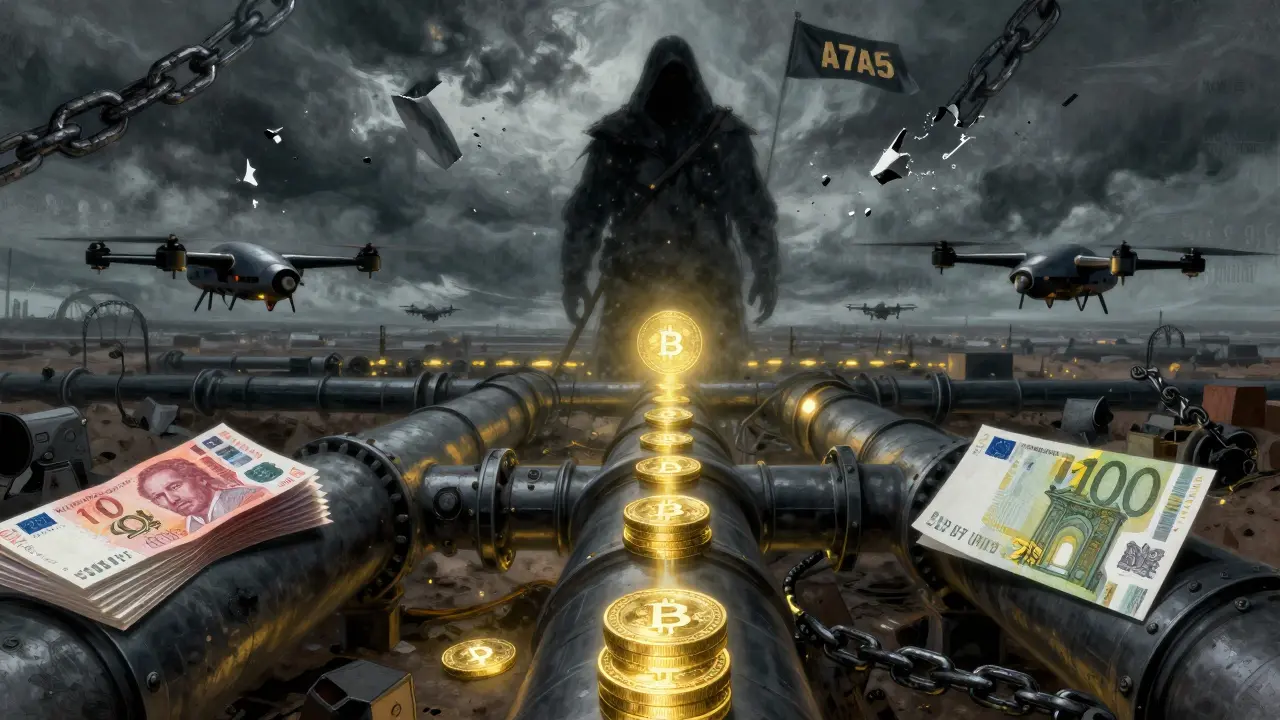
When Western countries slammed sanctions on Russia after its invasion of Ukraine, they expected to choke off its war machine. But instead of collapsing, Russia built a digital shadow economy - one powered by cryptocurrency. It wasn’t just a workaround. It was a redesign of how money moves when the old system refuses to play along.
The A7A5 Token: A Ruble in Disguise
At the heart of Russia’s crypto evasion strategy is a digital currency called A7A5. It’s not Bitcoin. It’s not Ethereum. It’s a custom token, specifically engineered to slip past sanctions. Backed by the Russian ruble, A7A5 was created by a company based in Kyrgyzstan and launched on both TRON and Ethereum blockchains. Why two chains? Because if one gets blocked, the other keeps running. Since its debut, A7A5 has moved over $9.3 billion in just four months. That’s not a glitch. That’s a system.This token acts like a bridge. Russian businesses and military suppliers use it to convert rubles into crypto, then trade that crypto for dollars, euros, or stablecoins on exchanges outside Western control. The goal? To buy everything from drones to diesel without triggering a single red flag in SWIFT or the U.S. banking system.
Garantex Dies. Grinex Rises.
In March 2025, the U.S. Secret Service shut down Garantex - one of Russia’s biggest crypto exchanges. On paper, it looked like a win. But within days, the same team behind Garantex launched Grinex. They didn’t just rebrand. They transferred every customer’s funds over. Grinex’s own website openly says it was created because Garantex got frozen. That’s not a coincidence. It’s a playbook.Grinex now handles billions in transactions. It’s not just a replacement. It’s an upgrade. The platform is designed to avoid detection: it uses decentralized infrastructure, operates through shell companies, and avoids any direct ties to Russian banks. The U.S. Treasury’s OFAC eventually labeled Grinex as sanctioned - but by then, it was already too late. The money had moved.
Capital Bank: The Bridge Between Crypto and War
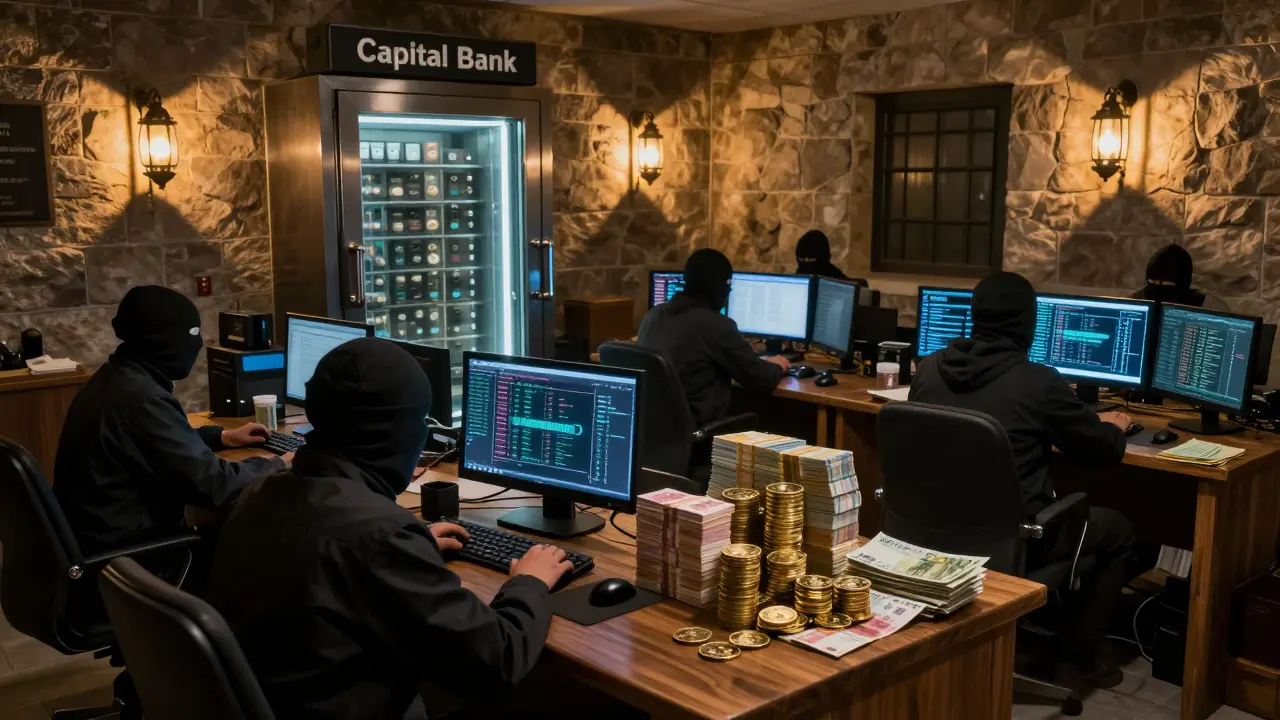
Crypto alone can’t buy missiles. You need cash. That’s where Capital Bank in Kyrgyzstan comes in. This little-known bank, run by Kantemir Chalbayev, has become Russia’s financial lifeline. It takes crypto payments - often in A7A5 or stablecoins - and converts them into real rubles or euros. Then, it wires that money directly to defense contractors.This isn’t a rumor. Leaked data from Moldovan fugitive Ilan Shor - a Putin ally sanctioned by the U.S. - showed wallets tied to A7A5 received over $8 billion in stablecoins over 18 months. Some of that cash funded apps used to manipulate politics in Moldova. Other portions paid for weapons. Capital Bank is the final step: turning digital noise into real-world firepower.
The Crypto Laundromat
Russia didn’t just use existing crypto. It built a whole laundering pipeline. Transparency International Russia exposed it in a 2025 report called “Crypto Laundromat.” Here’s how it works:- Shell companies in Cyprus, the UAE, and Kyrgyzstan buy fake identities - complete with passports and bank accounts - for as little as $500.
- These identities open crypto wallets and register as “individual traders.”
- They receive payments from Russian entities via A7A5 or other tokens.
- Then, they withdraw the funds as cash or transfer them to Western-facing banks.
It’s like a conveyor belt. Money enters on one end as rubles, gets turned into crypto, then emerges on the other as clean euros. The system is so efficient, it’s been running since 2023 - and it’s still going.
International Crackdowns Are Coming - But Too Late?
By late 2025, the EU, U.S., and UK finally acted. The EU’s 19th sanctions package banned transactions on Grinex, A7A5, and two other platforms. The UK froze assets tied to the token and its issuers. The U.S. added dozens of entities to its sanctions list.But here’s the catch: enforcement moves slower than evasion. By the time regulators label a platform, billions have already moved. Elliptic, a blockchain analytics firm, added A7A5 screening to its compliance tools - but that only helps exchanges that care about rules. Many don’t. And Russia knows it.
The Financial Action Task Force warned in August 2025 that terrorist groups like ISIL-K were also using crypto. Russia’s methods are just more advanced. They’re not breaking rules. They’re rewriting them.
What This Means for the Future of Crypto
This isn’t just about Russia. It’s about what happens when a nation decides crypto is the new offshore banking. The tools Russia is using - custom tokens, layered exchanges, shell banks - are now available to anyone with enough tech know-how. The line between innovation and illicit use is blurring.Compliance tools are catching up. Wallets can now be flagged. Transactions can be traced. But the cat-and-mouse game is accelerating. Russia’s next move? Likely a token backed by gold or oil, issued on a private blockchain, with no public ledger. The next Grinex? Already being built.
The West thought sanctions would isolate Russia. Instead, they forced it to build a financial system no one else has - one that doesn’t need banks, doesn’t need dollars, and doesn’t need permission.
Why This Matters Beyond Russia
If a country can bypass global sanctions using crypto, what stops others from doing the same? Iran? North Korea? Venezuela? The playbook is now public. The infrastructure exists. The technology is open-source.For everyday users, this doesn’t mean crypto is dangerous. It means the industry is at a turning point. Exchanges that ignore sanctions risk becoming tools of war. Regulators that move too slowly become enablers. And the global financial system? It’s being rewritten - not by governments, but by code.
Gaurav Mathur
February 12, 2026 AT 11:23Brittany Meadows
February 13, 2026 AT 08:51Jeremy Lim
February 14, 2026 AT 08:53John Doyle
February 15, 2026 AT 18:43kelvin joseph-kanyin
February 17, 2026 AT 07:18Elizabeth Choe
February 18, 2026 AT 22:03Grace Mugambi
February 20, 2026 AT 17:44Crystal McCoun
February 22, 2026 AT 01:03Elijah Young
February 23, 2026 AT 18:05Beth Trittschuh
February 23, 2026 AT 20:05Benjamin Andrew
February 23, 2026 AT 21:18Andrea Atzori
February 24, 2026 AT 16:24Joe Osowski
February 25, 2026 AT 02:43Peggi shabaaz
February 25, 2026 AT 11:00Keturah Hudson
February 26, 2026 AT 01:17Ace Crystal
February 27, 2026 AT 16:22SAKTHIVEL A
February 28, 2026 AT 04:40blake blackner
February 28, 2026 AT 07:43Donna Patters
March 1, 2026 AT 22:34Robbi Hess
March 3, 2026 AT 20:08