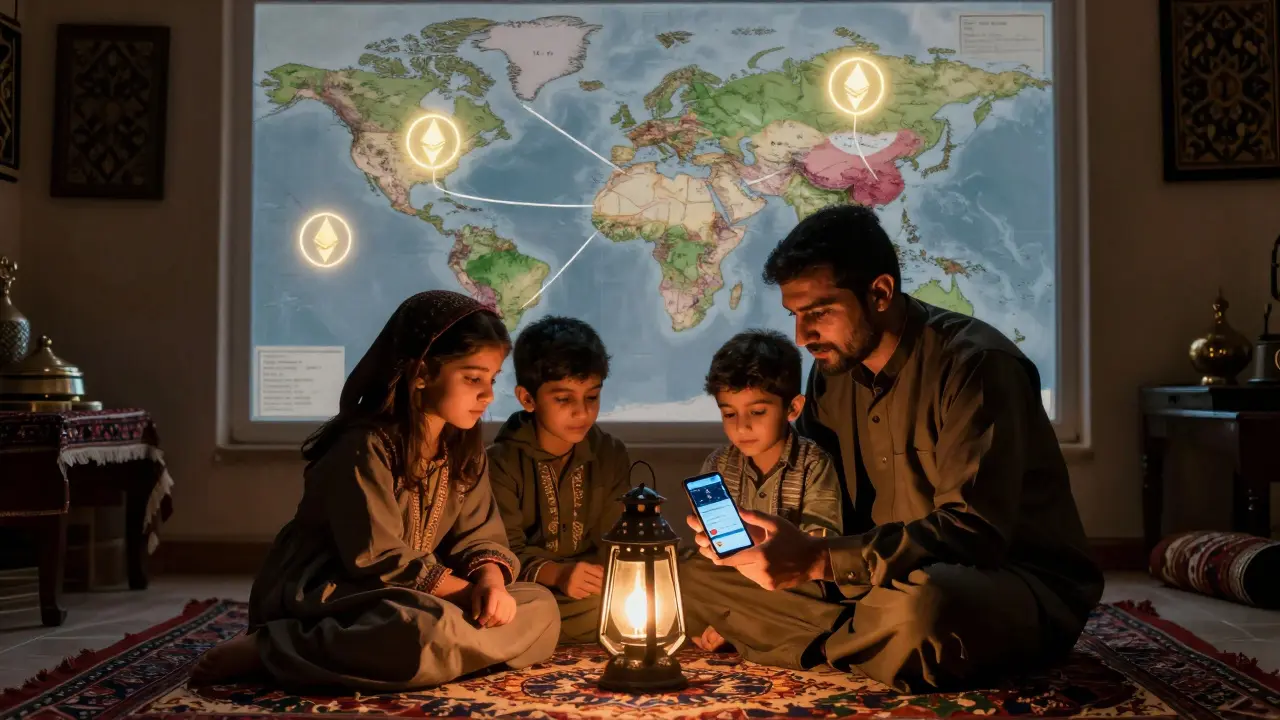
When the FATF placed Iran on its blacklist in 2019, few predicted how deeply it would change everyday life for ordinary Iranians. It wasn’t just a diplomatic slap-it cut off access to the global financial system. Banks stopped accepting Iranian transactions. SWIFT became unreachable. Even humanitarian aid payments got tangled in red tape. For millions of Iranians, the only way to send money abroad, buy medicine, or pay for essentials became clear: cryptocurrency.
What the FATF Blacklist Actually Means for Iran
The FATF, or Financial Action Task Force, doesn’t just issue warnings. When a country lands on its blacklist-officially called the "Call for Action"-it triggers real, global consequences. All banks and financial institutions worldwide are required to treat any transaction involving Iran as high-risk. That means extra checks, delays, or outright blocks. For Iran, this wasn’t just inconvenient-it was a financial chokehold.
By 2025, Iran remained one of only two countries on this list, alongside North Korea. The rest of the world had moved on, but Iran’s banking ties had collapsed. From 28 correspondent banking relationships in 2018, the number dropped to just three by 2025. That’s not a glitch. It’s a total shutdown of normal finance.
How Iranians Turned to Crypto Out of Necessity
People didn’t choose crypto because it was trendy. They chose it because they had no other option.
Chainalysis data shows that in 2024, Iran accounted for $9.2 billion of the $15.8 billion in cryptocurrency transactions received by all sanctioned countries combined. That’s more than Russia, despite Russia having a far larger economy. Why? Because for Iranians, crypto isn’t speculation-it’s survival.
Centralized exchanges like Nobitex and Wallex saw transaction volumes jump 63% between January and December 2024. Monthly outflows went from $290 million to over $480 million. People were converting their rials into Bitcoin and Ethereum to move money out of the country. Bitcoin alone made up 78% of these transactions-not because it’s the fastest, but because it’s the hardest to block.
The Paradox: More Crypto, More Risk
Here’s the cruel twist: the tools Iranians use to bypass sanctions also make them targets.
Global exchanges like Binance and Bybit are forced to comply with FATF’s "travel rule," which requires them to collect and share personal data on every transaction over $1,000. But Iran’s government also demands surveillance. So when a user signs up on Binance to send money to family abroad, they’re giving both the exchange and Iranian authorities their identity.
Users report account freezes constantly. One Reddit user in Tehran described how Binance locked their $8,200 account after three small transfers under $1,500. A Nobitex survey found that 33% of Iranian users on global exchanges had accounts frozen in 2025. Meanwhile, Iranian banks throttle internet access during peak crypto hours, making transactions fail 74% of the time between 8 PM and 10 PM local time.
And then there’s the legal gray zone. The UAE’s financial regulators shut down 17 exchanges in early 2025 for failing to screen Iranian users. A UAE-based platform called Rain suspended 317 Iranian accounts in July 2025, wiping out $4.1 million in combined holdings. There’s no warning. No appeal. Just silence.
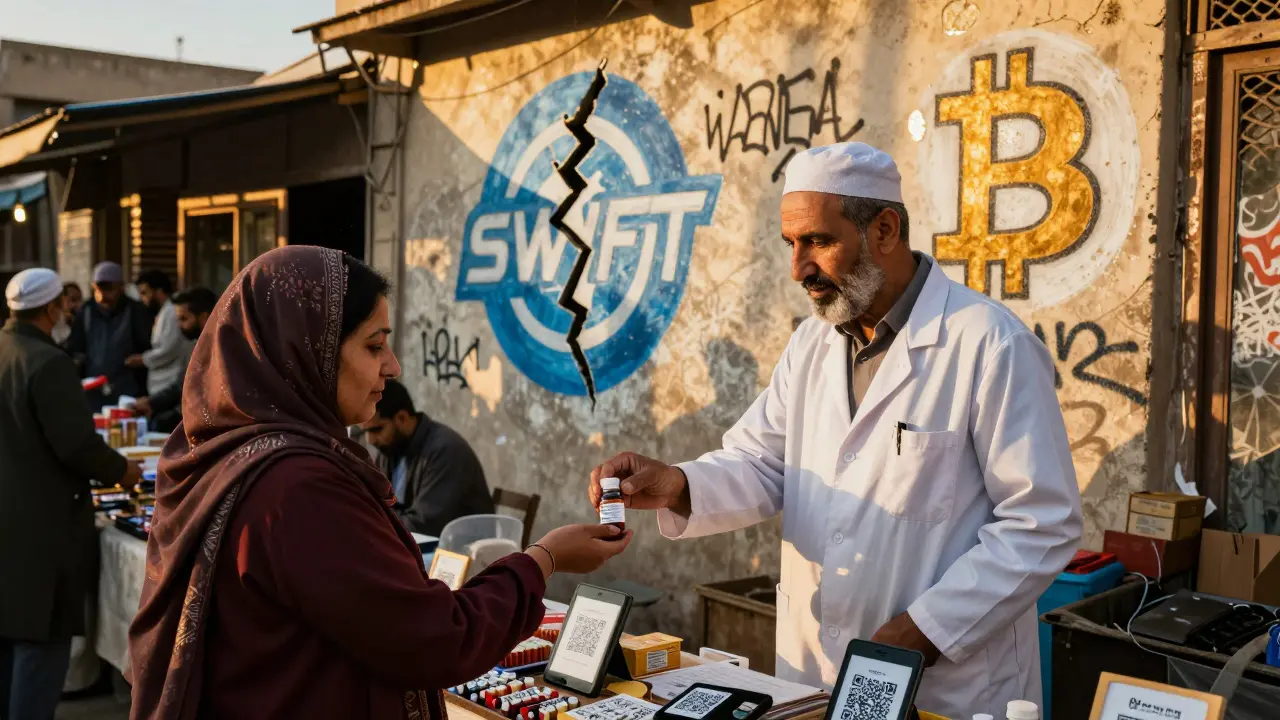
How Iranians Are Adapting-And What They’re Using
People aren’t giving up. They’re getting creative.
Most transactions now happen through mobile wallets like Trust Wallet and Exodus. The average transaction size dropped to under $1,500-down 40% from 2023-because smaller amounts fly under the radar. Ninety-two percent of activity comes from phones, not desktops.
Some users rely on peer-to-peer (P2P) networks. Platforms like LocalBitcoins and Telegram-based groups let Iranians trade directly with users in Turkey, Pakistan, or the UAE. Success rates hover around 78%, but premiums run 15-22%. You pay more, but you get through.
A growing number are turning to decentralized exchanges (DEXs) like PancakeSwap. They don’t require ID, but liquidity is thin. Slippage hits 15% on average, meaning you lose value just by trading. Still, 63% of users say it’s the only way to keep moving funds without being tracked.
There’s even a homegrown experiment: Iran’s Central Bank launched a "Halal Stablecoin" (HSC) in August 2025, pegged to gold. Four million people used it in its first month, moving $280 million. But here’s the catch-it’s isolated. No foreign exchange, no global liquidity. It’s a digital island.
The Hidden Cost: Security, Surveillance, and Scams
Using crypto in Iran isn’t just technically hard-it’s dangerous.
Every Iranian needs a SIM card to access the internet. That means every online crypto activity is tied to their real identity. To avoid government monitoring, 89% of users install apps like Soroush+, which bypasses censorship-but 41% of these apps have been found to leak data or contain malware.
And then there’s the technical barrier. The average new user takes 72 hours to learn how to manage a non-custodial wallet. Sixty-one percent need help setting up seed phrases. Lose your recovery phrase? Your money is gone. No customer service. No reset button.
GitHub repositories like "IranCryptoKit" offer tools to bypass national firewalls, but 37% of users who downloaded them reported security breaches. Community-driven solutions are lifesavers-but they’re not safe.
Who’s Really Using Crypto in Iran?
It’s not just tech-savvy youth. It’s doctors paying for foreign medicines. Small business owners importing parts. Students sending tuition to universities abroad. Grandparents receiving money from children overseas.
Statista estimates that 18.7 million Iranians-42% of the adult population-now use cryptocurrency regularly. Only 0.3% of registered businesses use it for payments. That tells you everything: this isn’t about commerce. It’s about survival.
Meanwhile, global regulators are watching. Singapore suspended 17 exchanges in early 2025 for inadequate Iranian screening. The U.S. added 13 new cryptocurrency addresses to its sanctions list in September 2025, targeting Iranian mixing services. Every move Iran makes to adapt triggers a counter-move from abroad.
The Bigger Question: Is the Blacklist Working?
FATF says its goal is to stop money laundering and terrorist financing. But experts argue the blacklist is backfiring.
Dr. Emad Kiyaei, a sanctions expert in Switzerland, wrote in September 2025: "The blacklist has become counterproductive. It’s accelerating Iran’s crypto adoption without reducing proliferation risks."
Dr. Reza Vafadari, who testified before the U.S. Senate, put it bluntly: "78% of Iran’s crypto activity now serves as a sanctions evasion mechanism."
And here’s the irony: Iran has taken steps to comply. It ratified two international anti-terrorism conventions in 2024 and 2025. But FATF hasn’t moved it off the list. No public explanation. No timeline. Just silence.
The result? More people are using crypto. More transactions. More risk. More isolation. The policy didn’t stop financial activity-it pushed it underground, into less regulated, more dangerous spaces.
What’s Next?
By 2027, FATF predicts over 25 million Iranians will be using cryptocurrency. But Dr. Kiyaei’s modeling suggests a 60% chance of systemic collapse if the blacklist remains unchanged beyond mid-2026.
Why? Because the infrastructure is fragile. Exchanges freeze accounts. Liquidity dries up. People lose money. Trust erodes. The system isn’t sustainable-it’s a stopgap.
For Iranians, crypto isn’t a luxury. It’s the last open door. And as long as the FATF blacklist stays in place, that door will keep getting narrower, more dangerous, and more essential.
Robbi Hess
February 10, 2026 AT 23:06Let’s be real-this isn’t about sanctions. It’s about control. The FATF is just another tool for Western powers to maintain financial hegemony. Iran’s people aren’t criminals; they’re just trying to feed their families. The system isn’t broken-it was designed this way.
And yet, no one in Brussels or Washington dares admit the truth: this policy is failing spectacularly. More crypto use doesn’t mean more terror funding. It means more desperation. And desperation doesn’t care about your compliance reports.
Keturah Hudson
February 11, 2026 AT 21:15I’ve lived in three countries, and I’ve never seen a population adapt with more quiet resilience than Iranians. They didn’t wait for permission. They didn’t lobby. They just figured it out-with phones, peer-to-peer networks, and sheer will.
It’s not glamorous. It’s not sexy crypto bro stuff. It’s a grandmother sending her grandson’s tuition through a Telegram bot. That’s the real story here-not the headlines.
krista muzer
February 13, 2026 AT 18:00ok so like… i just read this whole thing and im like… wow. i had no idea. like, i thought crypto was just for rich guys in california or hackers or whatever. but this? this is like… survival mode. imagine having to use bitcoin just to buy insulin for your mom. that’s not innovation. that’s tragedy dressed up in blockchain.
and the part about the sim cards?? holy. every transaction is tied to your id?? no wonder people are getting hacked. its like living in a panopticon with a bad wifi connection.
Tammy Chew
February 14, 2026 AT 10:14The notion that crypto is a humanitarian tool is naive at best. It’s a laundering vector wrapped in moral posturing. The fact that 78% of transactions are in Bitcoin isn’t proof of ingenuity-it’s proof of regulatory arbitrage.
And let’s not pretend these P2P networks are somehow noble. They’re unregulated, untraceable, and ripe for exploitation. If you want to call this ‘survival,’ fine. But don’t pretend it’s virtuous.
Santosh kumar
February 15, 2026 AT 04:06This is one of the most human stories I’ve read in a long time. I’m from India, where we’ve also faced financial restrictions-remember demonetization? I know what it feels like to be cut off.
What Iranians are doing isn’t rebellion. It’s dignity. They’re not trying to overthrow the system. They’re trying to stay alive within it. That deserves respect, not judgment.
Claire Sannen
February 16, 2026 AT 00:26The data here is overwhelming, but what stands out most is the human cost behind the numbers.
Every $1,500 transaction represents a child’s medicine, a parent’s rent, a student’s visa fee. The FATF’s rigid policies treat these as risks-not rights. There’s a moral failure here that no compliance officer can quantify.
If you want to reduce illicit finance, stop punishing the vulnerable and start holding the enablers accountable-the banks that refuse to process humanitarian aid, the exchanges that freeze accounts without explanation, the regulators who refuse dialogue.
Joe Osowski
February 17, 2026 AT 15:10Iran’s a terrorist state. They’re using crypto to fund nukes and militias. You want to turn this into some sob story about grandmas and medicine? That’s just propaganda. The U.S. didn’t blacklist Iran because they’re mean. They did it because they’re dangerous.
Stop romanticizing sanctions evasion. If you can’t play by the rules, don’t play at all.
Grace Mugambi
February 18, 2026 AT 11:59There’s a deeper philosophical question here: When institutions fail the people they’re meant to protect, do the people have a moral obligation to rebuild outside the system?
Iranians aren’t breaking rules-they’re redefining survival in a world where the rules were never meant for them. The FATF thinks it’s enforcing order. But what it’s really doing is proving that order without justice is just oppression with a compliance checklist.
Maybe the real innovation isn’t crypto. It’s the refusal to accept that survival is a crime.
Donna Patters
February 19, 2026 AT 07:53Bitcoin for medicine? How quaint. The entire premise is absurd. If you’re so desperate, why not use gold? Or barter? Or-dare I say-negotiate with the international community?
But no. We must have blockchain. Because nothing says "progress" like turning your bank account into a gamble on a decentralized ledger.
monique mannino
February 20, 2026 AT 05:57This made me cry. 😭
Imagine having to choose between your child’s medicine and your internet bill. Imagine your only lifeline being a 12-word phrase you wrote on a sticky note. And then someone freezes your account because a regulator in Singapore got nervous.
These aren’t crypto traders. These are people. And they’re doing the impossible. We owe them more than sanctions-we owe them compassion.
Peggi shabaaz
February 21, 2026 AT 07:27it’s wild how people just assume crypto is some big tech thing when really it’s just… people trying to live
the part about the 8pm-10pm internet throttling? that’s not a glitch. that’s a weapon
and the halal stablecoin? sounds like a prison with better branding
idk. i just feel sad for them. like, really sad
bala murali
February 21, 2026 AT 20:20The structural asymmetry in this scenario is striking. The FATF operates under a centralized governance model predicated on correspondent banking hierarchies, while Iranian actors have migrated toward decentralized, non-custodial infrastructures-effectively creating a parallel financial substrate.
What’s emerging isn’t merely sanctions evasion; it’s a de facto dual-track monetary architecture. The implications for global financial architecture are non-trivial. If 42% of Iran’s adult population is operating outside the SWIFT-anchored system, then the entire paradigm of financial sovereignty is in flux.
Ekaterina Sergeevna
February 22, 2026 AT 10:48Oh look, another post about how crypto is "saving" people from sanctions. Newsflash: if your entire economy relies on crypto to import bread, you’ve already lost.
And don’t get me started on these "Halal Stablecoins." It’s like calling a cardboard box a luxury yacht because you painted it gold.
Stop romanticizing collapse. This isn’t resilience. It’s a slow-motion implosion with a blockchain UI.
Desiree Foo
February 22, 2026 AT 19:46You can’t justify breaking international norms because you’re "desperate." That’s the exact excuse terrorists use. If Iran wants to rejoin the global financial system, they need to stop funding Hezbollah and start following the rules.
There’s a reason the FATF hasn’t lifted the blacklist. It’s not because they’re heartless. It’s because they’re responsible.