
Imagine a customer sending you payment inside a chat window. No bank transfers that take days. No credit card processors demanding your tax ID and freezing your funds. Just a message sent, a notification received, and money in your pocket. This is the reality of Jetton USDT on The Open Network (TON), a layer-1 blockchain designed by the team behind Telegram.
If you run an online store, sell digital products, or offer services, this new stablecoin option changes how you handle billing. Launched in April 2024 as a native deployment by Tether, USDT on TON isn't a wrapped asset bridged from another chain. It is a direct issuance backed by Tether's reserves, running on a network built for speed and low costs. For merchants, this means you can accept dollar-stable value with transaction fees that often cost less than a penny.
What Is Jetton USDT on TON?
To understand how to accept these payments, you first need to know what you are actually accepting. On the Ethereum network, tokens follow the ERC-20 standard. On TON, they follow the Jetton standard (also known as TEP-74).
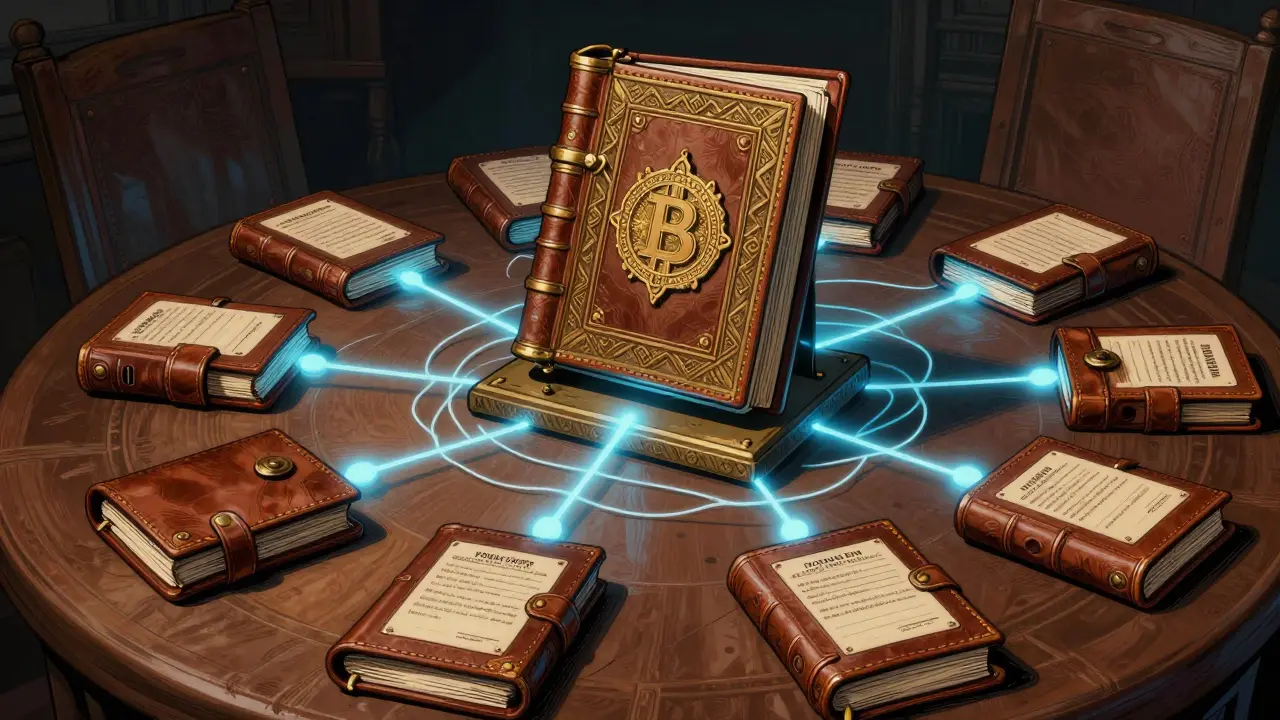
A Jetton is a fungible token managed by smart contracts rather than the native coin engine. When someone sends you USDT on TON, they are interacting with a specific type of contract architecture. Unlike Ethereum, where one central contract tracks everyone's balance, TON uses a master-and-wallet model. There is a single "master" contract that defines the rules for USDT. But for every person holding USDT, there is a separate "wallet" contract dedicated just to them.
This design has two major benefits for you as a merchant:
- Scalability: Because balances are distributed across individual wallet contracts, the network doesn't get clogged when millions of people hold the same token.
- Low Fees: Gas fees are paid in TON, the native currency, not in USDT. Since TON transactions are fast and cheap, your customers pay almost nothing to send you money.
Crucially, do not confuse "Jetton USDT" with "JETTON," which is a completely unrelated gaming token on the same network. You are looking for the official Tether USD token deployed natively on TON.
Setting Up Your Merchant Wallet
You cannot simply generate a random TON address and expect USDT to arrive. Because of the Jetton architecture mentioned earlier, the recipient must have a valid USDT Jetton wallet contract initialized at their address. If a transfer is sent to an address without this specific contract, the transaction will fail.
Fortunately, most modern wallets handle this automatically. Here is how to set up your receiving end based on your technical comfort level.
For Non-Technical Merchants: Telegram Wallet
If your audience is already on Telegram, the path of least resistance is the Telegram Wallet bot (@wallet). Once you set up your wallet within the app, it automatically supports Jettons. When you share your public address or use the in-chat payment interface, the system ensures your USDT Jetton wallet is ready to receive funds. You just need to keep a tiny amount of TON in your main wallet to cover any outgoing gas fees if you decide to move your USDT later.
For Developers: Custom Integration
If you are building a checkout flow into your own website, you need a solution that manages Jetton initialization for you. You cannot rely on raw addresses alone. You need a gateway or SDK that knows how to derive the correct Jetton wallet address for your master key.
This is where infrastructure providers come in. Services like TxNod allow you to connect your hardware wallet (like a Ledger) via its extended public key (xpub). The platform then handles the complex part: ensuring that when a customer pays with Jetton USDT, the funds go directly to a verified address derived from your keys, while managing the necessary contract interactions in the background. Since TxNod is non-custodial, you never give up control of your private keys, and funds settle straight to your wallet on-chain.
The Technical Flow of a Payment
Understanding the mechanics helps you troubleshoot issues and build better user experiences. Here is exactly what happens when a customer pays you in Jetton USDT:
- Invoice Creation: You generate an invoice. In a custom setup, this involves querying the USDT Jetton master contract to ensure you are referencing the right token.
- Customer Transfer: The customer sends a message to their own USDT Jetton wallet contract. This message instructs the contract to transfer X amount of USDT to your USDT Jetton wallet contract.
- Gas Payment: The customer pays a small fee in TON (usually around 0.1 TON budget, with excess refunded) to process the smart contract execution.
- Notification: Your Jetton wallet contract receives the tokens and emits a `TransferNotification` event.
- Verification: Your system detects this event on the blockchain and marks the order as paid.
For developers using TypeScript, libraries like the Tact documentation provide cookbooks for handling these messages. However, rolling this out yourself requires monitoring block explorers like Tonscan and writing code to decode payload data. Using an API wrapper simplifies this by converting those raw blockchain events into clean JSON webhooks.
Comparing USDT on TON vs. Other Chains
Why choose TON over Ethereum or Tron? It comes down to friction and ecosystem fit. Let's look at the numbers and the user experience.
| Feature | USDT on TON (Jetton) | USDT on Ethereum (ERC-20) | USDT on Tron (TRC-20) |
|---|---|---|---|
| Avg. Transaction Fee | < $0.01 | $2 - $20+ (varies heavily) | ~$1 |
| Settlement Time | Near-instant | Seconds to minutes | Seconds |
| User Interface | Native Telegram integration | External wallets (MetaMask) | External wallets (TronLink) |
| Gas Currency | TON | ETH | TRX |
| Merchant Setup Complexity | Low (with proper tools) | Medium | Low |
The biggest advantage of TON is the Telegram connection. If your marketing funnel lives in social media or messaging apps, asking a user to download a separate browser extension for MetaMask adds friction. With TON, they might already have a wallet open in the app they use to talk to you. This reduces drop-off rates significantly for micro-transactions and digital goods.
Best Practices for Accepting Jetton USDT
To ensure smooth operations, keep these rules in mind:
- Always Hold Some TON: Even though you are accepting USDT, you need TON to pay for gas if you ever want to move those funds out of your wallet or refund a customer. Keep a small reserve (e.g., 1-5 TON) in your main account.
- Verify the Contract Address: Scammers sometimes deploy fake tokens with similar names. Always verify that you are interacting with the official Tether USDT Jetton master contract address listed on reputable sources like Tonscan or the official TON Foundation documentation.
- Automate Reconciliation: Don't manually check the blockchain for payments. Use webhooks. When the `TransferNotification` hits your endpoint, update your database immediately. This provides instant confirmation to your customers.
- Consider Custody Options: If you are a solo founder, managing hot wallets can be risky. Consider using a non-custodial gateway that integrates with hardware wallets. This keeps your private keys offline while allowing your website to generate unique payment addresses for each invoice.
Troubleshooting Common Issues
"My customer says the transfer failed."
This usually happens because the sender did not have enough TON to pay for gas, or the recipient's Jetton wallet was not initialized. Remind customers that they need both USDT and TON in their wallet to make a transfer.
"I see the transaction on Tonscan, but my dashboard didn't update."
Check your webhook logs. Sometimes firewalls block incoming POST requests from blockchain nodes. Ensure your server accepts connections from the IP ranges used by your provider or node service.
"Can I accept JETTON (the game token) instead?"
No. Unless you specifically want exposure to the volatility of a gaming token, stick to USDT. JETTON trades against USDT and fluctuates in price. USDT maintains its peg to the US Dollar, making it reliable for billing.
Is Jetton USDT the same as USDT on Ethereum?
They are both issued by Tether and backed by the same reserves, so their value is identical. However, they exist on different blockchains. You cannot send USDT from Ethereum directly to a TON address without using a bridge or an exchange. Jetton USDT is native to the TON network and follows the TEP-74 standard, whereas Ethereum USDT follows ERC-20.
Do I need a business license to accept Jetton USDT?
If you use a non-custodial payment gateway like TxNod, you generally do not need to provide KYC documents or register a company to start accepting payments. These platforms operate on a trustless model where you control the keys. However, always consult local tax laws regarding cryptocurrency income reporting in your jurisdiction.
Why does my customer need TON to send me USDT?
On the TON blockchain, computational work (gas) is paid for using the native TON coin, not the token being transferred. So, even if the payment is $100 in USDT, the sender needs a few cents worth of TON to execute the transaction. This is similar to needing ETH to send ERC-20 tokens on Ethereum.
Can I integrate Jetton USDT acceptance into my existing website?
Yes. You can build a custom integration using the TON SDKs and Tact documentation, or use a third-party API. Many solo founders use TypeScript-based SDKs provided by gateways to create invoices programmatically. These tools handle the complexity of Jetton wallet derivation and webhook verification for you.
Are there risks associated with Jetton contracts?
Like all smart contracts, there is inherent code risk. However, the official USDT Jetton contracts on TON are written in FunC and have been publicly audited and reviewed by the developer community. The primary operational risk for merchants is losing access to their private keys or failing to initialize the correct Jetton wallet contract, causing rejected transactions.