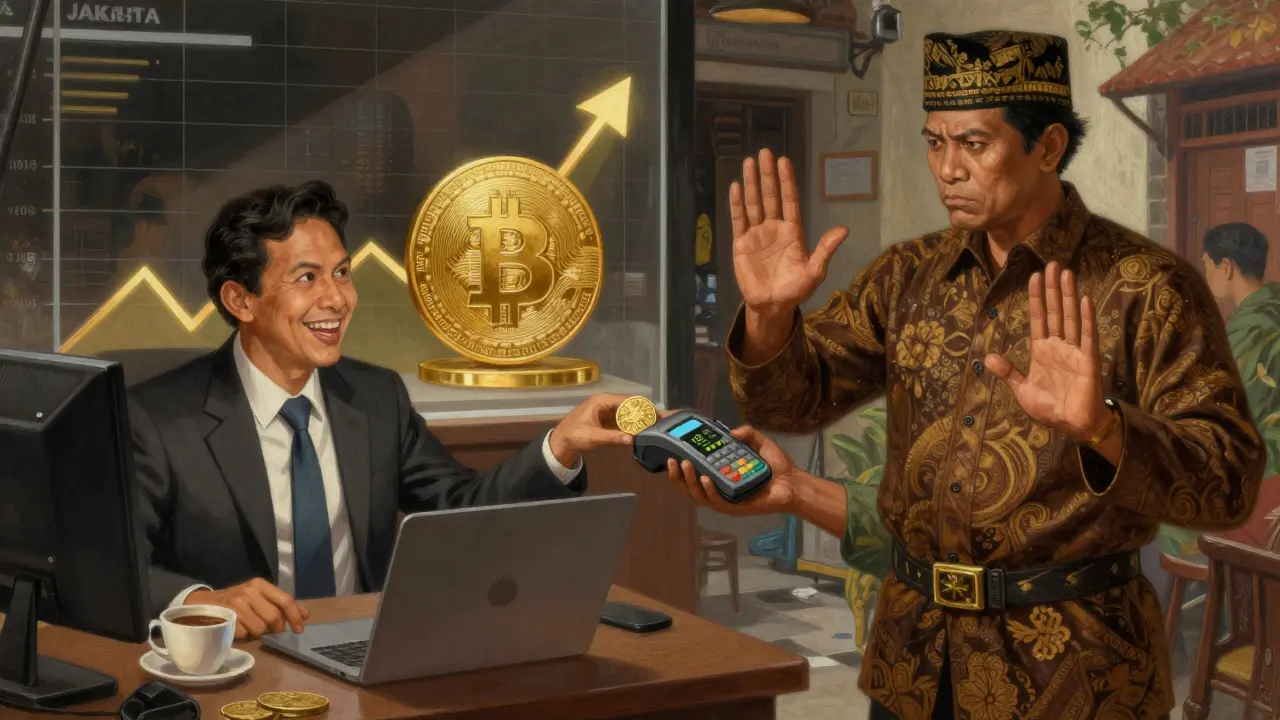
To understand why this is happening, you have to look at the split personality of Indonesian regulation. On one side, you have the Bank Indonesia (BI), the central bank that guards the rupiah with a vengeance. On the other, you have the Financial Services Authority (known as OJK), which sees the massive potential in crypto as an investment vehicle. This creates a weird paradox: it's perfectly fine to get rich trading Bitcoin, but the moment you try to use that Bitcoin to pay a supplier, you're breaking the law.
The Hard Line: Why the Ban Exists
The ban isn't a new whim; it's rooted in the nation's Currency Law, which mandates that the rupiah is the only legal tender. Bank Indonesia has reinforced this through specific regulations-namely Regulation Number 18/40/PBI/2016 and 19/12/PBI/2017. These rules tell every payment operator, from e-wallet providers to payment gateways, that processing virtual currency transactions is strictly forbidden.
Why be so rigid? The central bank argues that allowing crypto payments would threaten financial stability and expose the public to extreme volatility. If a merchant accepts a coin that crashes 50% in a day, it creates a ripple effect of financial harm. This position was reiterated as recently as November 2025, with BI officials making it clear that virtual currencies are not recognized as valid payment instruments.
The Big Shift: From Commodities to Financial Assets
While the payment ban stayed put, the way Indonesia views crypto as an asset changed completely on January 10, 2025. Previously, crypto was treated like a commodity (think gold or coffee) and managed by Bappebti. Now, oversight has moved to the OJK under Regulation No. 27 of 2024. This reclassified crypto assets as "digital financial assets."
This shift is a big deal. It moves crypto into the same realm as securities and stocks, providing a more sophisticated regulatory framework. To keep the industry healthy, the OJK even waived all regulatory fees for licensed providers throughout 2025. However, this professionalization comes with a price tag for the companies involved. To get a license, the barriers to entry are now quite high:
| Entity Type | Min. Capital Requirement (IDR) | Approx. Value (USD) |
|---|---|---|
| Digital Asset Exchanges | 50 Billion | $3.2 Million |
| Custodians | 25 Billion | $1.6 Million |
| Token Issuers | 10 Billion | $640,000 |
The "Operational Schizophrenia" of Doing Business
For business owners, this duality is a nightmare. Imagine you're a tech exporter in Jakarta. Your client in Europe wants to pay in USDT to save on fees. Because of the BI ban, you can't legally accept that payment. This isn't just a theoretical problem; actual business owners have reported losing thousands of dollars in international orders because they couldn't bypass the traditional banking system.
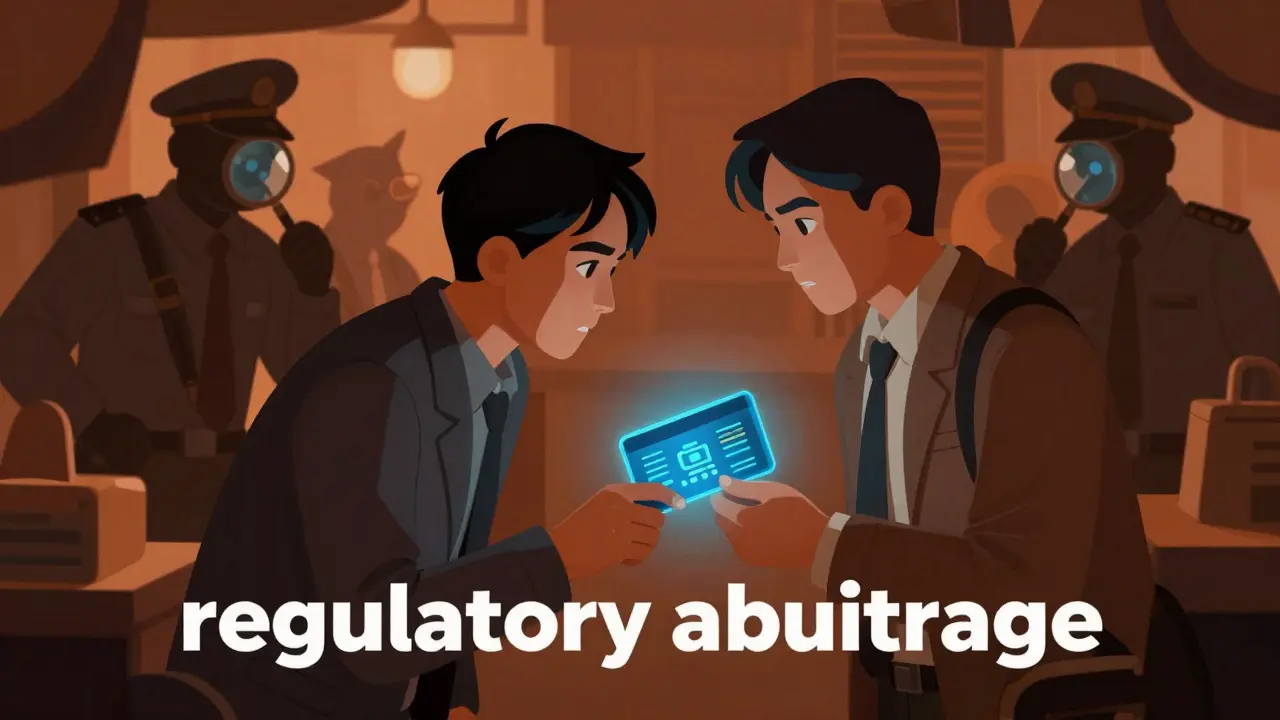
This has led to what industry experts call "regulatory arbitrage." Because the ban is so restrictive, many merchants have gone rogue. Some surveys suggest that nearly 68% of merchants are secretly accepting crypto through informal channels. The most common workaround? Converting crypto payments into gift cards or prepaid credits. It's a cat-and-mouse game where the risk of a fine is weighed against the need to stay competitive in a global market.
Taxes and the New Fiscal Reality
If you're trading in Indonesia, there's some good news on the tax front. Since August 1, 2025, the government has overhauled how crypto is taxed via Minister of Finance Regulation No. 50 (PMK 50). They scrapped the old 1% Value Added Tax (VAT) and replaced it with a much leaner 0.21% final income tax on transaction values.
This change acknowledges that crypto isn't just a "taxable good" but a financial instrument. While the tax rate is lower, the government is getting much better at tracking it. The Directorate General of Taxes now has a dedicated unit of 147 specialized auditors who use automated systems integrated with the OJK to monitor transactions in real-time. You might pay less, but the government is watching much more closely.

How Indonesia Compares to Its Neighbors
When you look at Southeast Asia, Indonesia is playing a very specific game. It's far more restrictive than Singapore or Thailand, where licensed providers can often facilitate crypto payments under certain conditions. However, it's more organized than Vietnam, which also bans payments but lacks a dedicated regulatory body like the OJK.
This strictness has a tangible cost. Analysis shows that Indonesian businesses face about 37% higher transaction costs and slower processing times for international settlements compared to neighbors who allow crypto-based solutions. This gap is exactly why some of the country's top blockchain talent is fleeing to Dubai or Singapore-the "brain drain" is real when the tech is ready but the laws are stuck in the past.
What's Next? The Digital Rupiah Hope
Is there any light at the end of the tunnel? The House of Representatives is currently reviewing Draft Law No. 12/2025, which focuses on Digital Rupiah Integration. The idea is to create a Central Bank Digital Currency (CBDC) that could potentially act as a bridge.
If the government creates a Digital Rupiah, they might allow "crypto-to-CBDC" bridges, which would effectively allow the efficiency of blockchain while keeping the rupiah as the central point of control. That said, the Governor of Bank Indonesia hasn't promised any immediate relaxation. For now, the rule remains: trade all you want, but keep your crypto out of the checkout counter.
Can I legally buy Bitcoin in Indonesia?
Yes, absolutely. Trading cryptocurrency is legal and regulated by the OJK. You can use licensed exchanges like Indodax or Tokocrypto to buy and sell digital assets as investments.
What happens if a merchant accepts crypto as payment?
It is a violation of Bank Indonesia regulations. Payment system operators and merchants risk severe penalties, and in some cases, fines for non-compliance can reach up to IDR 5 billion.
Is the tax on crypto in Indonesia still 1%?
No. As of August 2025, the 1% VAT was replaced by a 0.21% final income tax on the transaction value, making it significantly cheaper for traders.
Who regulates crypto assets now?
The Financial Services Authority (OJK) took over regulatory authority from Bappebti on January 10, 2025, reclassifying these assets as digital financial assets.
Will the Digital Rupiah end the payment ban?
It's possible, but not guaranteed. The Digital Rupiah could provide a legal pathway for blockchain-based payments, but Bank Indonesia has stated that any relaxation requires a deep assessment of monetary policy.
Caiaphas Konkol
April 25, 2026 AT 09:03It is so obvious that this is just a dress rehearsal for a global programmable currency system. They let you trade it now just to suck all the liquidity into their controlled exchanges before they flip the switch and announce a 'Digital Rupiah' that tracks your every single breath
The OJK shift is a classic move to consolidate power under a single entity for easier surveillance. Only the truly enlightened realize that these 'regulatory shifts' are actually blueprints for total financial enslavement. The 0.21% tax is just a lure to get everyone to register their wallets with the state. Truly pathetic that most people just see this as 'financial modernization' while the architecture of a digital panopticon is being built right in front of them. Wake up and look at the patterns.
Candace Sherrard
April 26, 2026 AT 14:51The dichotomy between the OJK and Bank Indonesia really highlights a deeper struggle between the desire for speculative growth and the primal need for state stability, which makes me wonder if we are witnessing the death throes of the traditional nation-state model of currency. If a government allows the asset to exist but forbids its utility, they are essentially admitting that the technology has outpaced their ability to control it, creating a ghost economy that exists in the shadows but fuels the actual wealth of the citizenry. It is a fascinating, if slightly tragic, exercise in cognitive dissonance where the state wants the tax revenue from the trades but fears the loss of the rupiah's symbolic power. Perhaps the Digital Rupiah is less about efficiency and more about creating a digital leash that mimics the blockchain's speed without sacrificing the central bank's absolute authority over the monetary supply.
Lisa Camp
April 27, 2026 AT 12:04Absolute joke! Stop whining about 'regulatory arbitrage' and just move your business to a country that actually likes money! 🚀
Gloris Young
April 28, 2026 AT 22:33It's a tough spot for local entrepreneurs. Just keep grinding.
Kyle Bush
April 29, 2026 AT 21:33Who cares about Indonesia? 🇺🇸 USA is where the real action is! 🦅 They can keep their weird bans while we keep winning! 💰🔥
Jennifer Taylor
May 1, 2026 AT 21:33They are just watching you. The government knows everything you do with your coins. You think a low tax is a gift? It is a trap to find who is hiding money. Just a big trap.
Alex Wan
May 2, 2026 AT 11:24I strongly belive that we must support the local laurnders in their quest for innovashun! It is truly a tragedy that the regulatory framework is so rigid, yet I am sure we can find a way to collaberate and laern from these challenges together! 🌟
Mike Word
May 3, 2026 AT 07:38Comparing this to the Thai or Singaporean models is a good point. It seems Indonesia is trying to find a middle ground that doesn't actually exist in practice.
debashish sahu
May 5, 2026 AT 00:11Many countries in Asia face similar hurdles when balancing tradition with tech. It is a gradual process of evolution.
Jagdish Sutar
May 5, 2026 AT 17:26That is a very peaceful way to put it. For anyone starting out in the region, just keep an eye on those OJK updates!
Doc Coyle
May 7, 2026 AT 15:06The central bank is right. Letting people pay with volatile coins is just asking for a disaster. I don't see why people are so upset about basic financial safety.
Clair Geary
May 9, 2026 AT 04:48the gift card workaround is such a wild vibe lol... really shows how creative people get when the rules are just too stiff
Sarah Ingrams
May 10, 2026 AT 08:25hope they find a way to make it easier for the small biz owners
Ellie Drews
May 11, 2026 AT 07:56I'm sure the Digital Rupiah will be a good compromise for everyone involved once it actually rolls out.