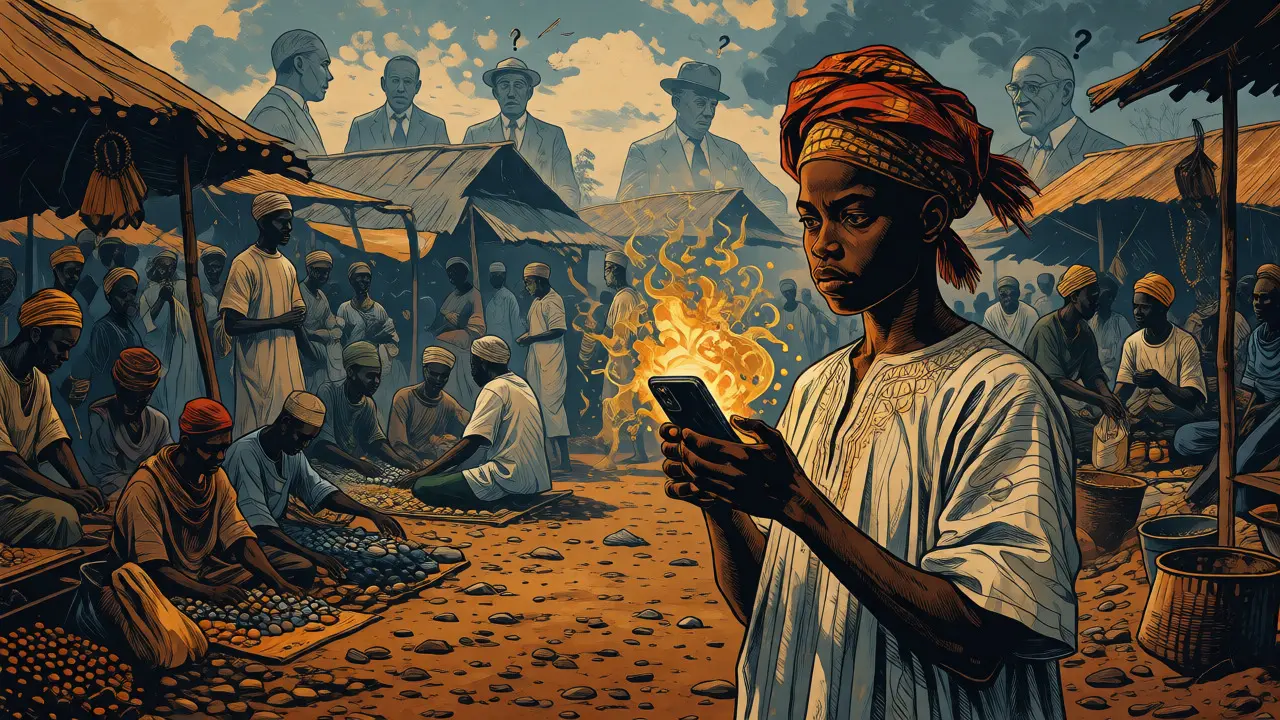
Imagine trying to send money home or buy digital assets when your local currency has lost over 75% of its value against the dollar since 2016. That is the daily reality for millions of Nigerians. While traditional banks struggle with inflation hitting 24%, a different kind of market is thriving right under their noses. P2P crypto trading has exploded across Nigeria, turning everyday people into traders who bypass strict banking restrictions and high remittance fees. It’s not just about speculation; it’s about survival and financial freedom.
Why Peer-to-Peer Is Winning in Nigeria
Nigeria isn’t just adopting crypto; it’s leading the world in how it uses it. Ranking second globally in adoption metrics, roughly 36% of Nigerian adults are unbanked, yet they have smartphones and internet access. This gap created a perfect storm for peer-to-peer (P2P) platforms. These systems let you buy and sell cryptocurrencies like Bitcoin or USDT directly with other humans using local payment methods-like bank transfers or mobile money-without a middleman holding your cash hostage.
The appeal is obvious. Traditional remittances can cost up to 8% in fees. With P2P, you often pay significantly less, sometimes near zero if you’re smart about choosing counterparties. More importantly, it acts as an inflation hedge. When the Naira dips, users quickly swap into stablecoins like USDT to preserve value. This behavior explains why P2P now accounts for about 68% of all crypto activity in Nigeria, far above the global average of 29%. You aren’t waiting for a bank approval that might take days; you’re transacting in minutes.
The New Rules: How ISA 2025 Changed the Game
If you remember the chaos of 2021, when the Central Bank of Nigeria (CBN) told banks to stop servicing crypto businesses, you know why regulation matters. Things have shifted dramatically with the Investments and Securities Act (ISA 2025). This law handed the reins to the Securities and Exchange Commission (SEC), creating a clearer path for legitimacy.
Before this, many platforms operated in a gray area. Now, licensing is mandatory. The SEC expects 35-40 licensed platforms by the end of 2025, up from just 12 currently operating under provisional licenses. This shift has reduced scam incidents by 63% compared to late 2024. But don’t think everything is smooth sailing. Licensing delays have caused some consolidation, meaning fewer, bigger players dominate the space. If you’re new, this actually helps. Sticking to licensed entities means your funds are safer, and there’s a regulatory body you can complain to if things go wrong.

Top Platforms: Where Should You Trade?
Not all P2P platforms are created equal. Some prioritize speed, others offer better customer support in local languages, and a few focus on educational content for beginners. Here’s a breakdown of the heavy hitters in the Nigerian market as of late 2025.
| Platform | Key Strength | Fees | Payment Methods | User Rating |
|---|---|---|---|---|
| Binance P2P | Highest liquidity (45% market share) | 0.1% taker/maker | 20+ including bank transfers | 4.8/5 |
| Bybit | Local language support (Yoruba, Igbo, Hausa) | Competitive | Multiple local options | 4.6/5 |
| YellowCard | Educational resources & pan-African reach | Zero trading fees | Instant Naira deposits | 4.5/5 |
| Busha | First SEC-licensed exchange | Standard spread | Bank transfer, cards | 4.4/5 |
| Breet | Speed (98% transactions < 5 mins) | Spread-based | Direct bank payouts | 4.3/5 |
Binance P2P remains the giant. It controls nearly half the market because it has the most users. More users mean faster trades and tighter spreads. However, its verification process can be slow for first-timers, adding up to 40% more time to your initial setup. If you value volume and variety, start here.
Bybit has carved out a niche by speaking your language. Literally. They offer 24/7 support in Yoruba, Igbo, and Hausa. For many Nigerians outside Lagos, this level of accessibility is worth switching platforms for. Their integration with local banking infrastructure gives them a 12-15% performance advantage in processing times compared to global competitors.
YellowCard is interesting for those who want to learn. They provide over 120 tutorial videos in Nigerian languages. They also charge zero trading fees, making them attractive for small transactions. However, their app has faced stability issues during peak hours, so keep that in mind if you trade during market volatility.
Busha deserves mention as Nigeria’s first SEC-licensed exchange. It’s designed specifically for the local market, offering features like recurring purchases. It’s user-friendly but may lack the deep liquidity of Binance. Breet, on the other hand, is all about speed. If you need to convert crypto to Naira instantly, Breet completes 98% of transactions within five minutes.
Real Risks: Scams and Technical Glitches
It’s not all sunshine and profits. The same anonymity that makes P2P attractive also attracts scammers. A recent report highlighted that 22% of fraud cases involve impersonation of verified sellers. One Reddit user documented losing ₦500,000 ($328) on Paxful because a buyer used stolen bank account credentials. Once the money was sent, the real account owner reversed the transaction, leaving the seller empty-handed.
Here is how to protect yourself:
- Never release crypto before confirming receipt: Log into your bank app. Do not trust screenshots sent via WhatsApp; they are easily photoshopped.
- Use Escrow wisely: Platforms hold the crypto until both parties confirm. Ensure the platform’s escrow system is active before starting.
- Check counterparty history: Look for traders with high completion rates and low cancellation rates. Avoid new accounts unless the price is exceptionally good.
- Beware of "Overpayment" scams: A buyer claims they sent extra money and asks you to refund the difference before releasing crypto. Stick to the agreed amount.
Technical issues are another hurdle. In March 2025, Binance experienced a 37-hour outage affecting 28,000 Nigerian users. Imagine being stuck mid-trade with no way to contact your counterparty. Also, while platforms advertise two-factor authentication (2FA), security researcher Chinedu Okoro notes that 68% of Nigerian users disable it due to SMS delivery issues. This creates massive vulnerability points. If you can, use an authenticator app instead of SMS for 2FA.

Getting Started: A Practical Checklist
Ready to make your first trade? Expect a learning curve. Most beginners spend 2-3 hours setting up their accounts, including Know Your Customer (KYC) verification. Here is what you need to prepare:
- Valid ID: National ID card, Voter’s Card, or International Passport. Make sure it’s clear and readable.
- Bank Account: Must be in your name. Mismatches between your ID and bank account details will cause delays or rejections.
- Stable Internet: Rural areas face connectivity challenges, affecting 31% of users. Have a backup data plan ready.
- Small Test Transaction: Don’t start with ₦100,000. Try ₦5,000 first to understand the flow.
Once set up, watch the rates. Rates fluctuate rapidly. During volatile periods, discrepancies of up to 2.7% can occur between what you see and what you get. Always calculate the final Naira amount before hitting "Buy" or "Sell." Remember, 73% of users prioritize speed over everything else, but rushing leads to mistakes. Take your time to verify.
The Future Outlook
Nigeria’s crypto ecosystem is valued at $2.3 billion and growing at 34% year-over-year. Analysts predict the P2P market could hit $5.1 billion by 2027. Why? Because institutional participation is rising. Dr. Amina Bello, Chief Economist at ChainUp Africa, predicts a 40-50% increase in institutional involvement by 2026. This means more liquidity and potentially better tools for retail traders.
However, risks remain. Regulatory tightening is still possible, with a 23% probability according to risk assessments. Additionally, technological limitations persist. If you live in an area with poor network coverage, you might struggle with real-time monitoring requirements imposed by the SEC. Despite these hurdles, the momentum is undeniable. For Nigerians seeking financial autonomy amidst economic uncertainty, P2P crypto trading isn’t just a trend-it’s a lifeline.
Is P2P crypto trading legal in Nigeria?
Yes, following the Investments and Securities Act (ISA 2025), crypto trading is regulated by the SEC. While banks were previously restricted, they can now service licensed crypto businesses, making P2P transactions legally recognized and protected under specific frameworks.
Which P2P platform is fastest for withdrawing Naira?
Breet is widely regarded as the fastest, completing 98% of transactions within 5 minutes. YellowCard also offers instant withdrawals, typically taking under 3 minutes, though occasional rate discrepancies may occur.
What are the common scams to avoid on P2P platforms?
Common scams include fake payment proofs, overpayment schemes where buyers ask for refunds of excess amounts, and impersonation of verified sellers. Always verify funds directly in your bank account before releasing crypto from escrow.
Do I need a large amount of money to start trading?
No. Data shows that 89% of Nigerian users trade amounts under ₦500,000 per transaction. Many platforms allow you to start with very small amounts, making it accessible for beginners to test the waters without significant financial risk.
How does inflation affect my P2P crypto trades?
High inflation drives demand for stablecoins like USDT as a hedge. This increases trading volume and can widen spreads during volatile periods. Keeping assets in stablecoins rather than Naira helps preserve purchasing power when the local currency depreciates.