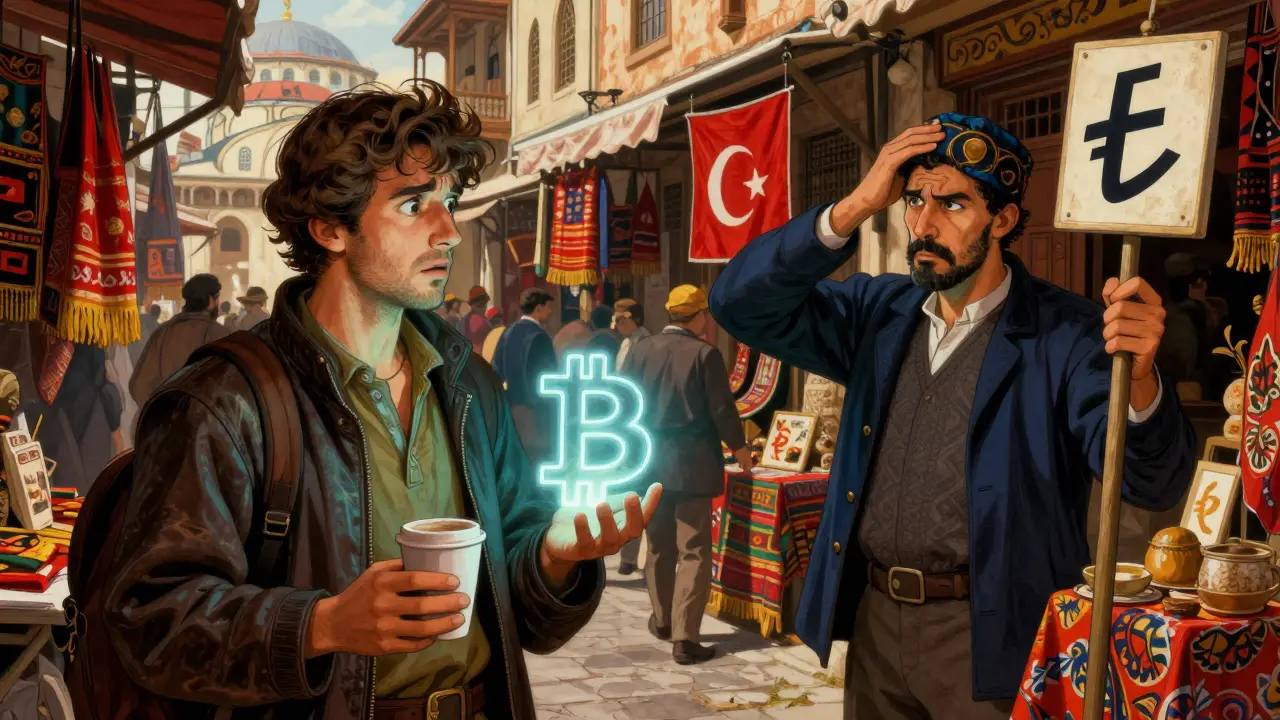
Imagine trying to buy a cup of coffee in Istanbul with Bitcoin. You can't. Not legally. While millions of Turks hold digital assets as a shield against the Turkish lira's volatility, using those coins for everyday purchases is strictly forbidden. This creates a confusing reality where owning crypto is legal, but spending it is not. If you are looking to trade or operate in Turkey's digital asset market, understanding this split personality of regulation is critical.
The landscape shifted dramatically in recent years. What started as a grey area has become a highly regulated environment under the watchful eyes of the Central Bank of Turkey (TCMB) and the Capital Markets Board (CMB). With new rules taking effect in early 2025 and draft legislation looming, the stakes have never been higher for traders and service providers alike.
The Core Rule: Trade Yes, Pay No
To understand the current situation, you need to look at the April 2021 decision by the TCMB. The central bank declared that cryptocurrencies cannot be used as payment instruments. This means no merchant can accept Bitcoin, Ethereum, or any other token in exchange for goods or services. The Turkish lira remains the sole legal tender.
However, the ban does not extend to ownership or trading. You can buy, sell, and hold crypto on licensed exchanges. This distinction is vital. It allows individuals to use crypto as an investment vehicle or a store of value-particularly important given the historical inflation rates in Turkey-but strips it of its utility as currency.
This dual approach sets Turkey apart from many Western jurisdictions. In the European Union, under the MiCA framework, regulated crypto payments are permitted. In the United States, the approach varies by state, but generally, crypto can be used for transactions if compliant with local laws. Turkey’s model is stricter on the payment side, aiming to protect the national currency while acknowledging the demand for digital assets.
Licensing and Capital Requirements for Exchanges
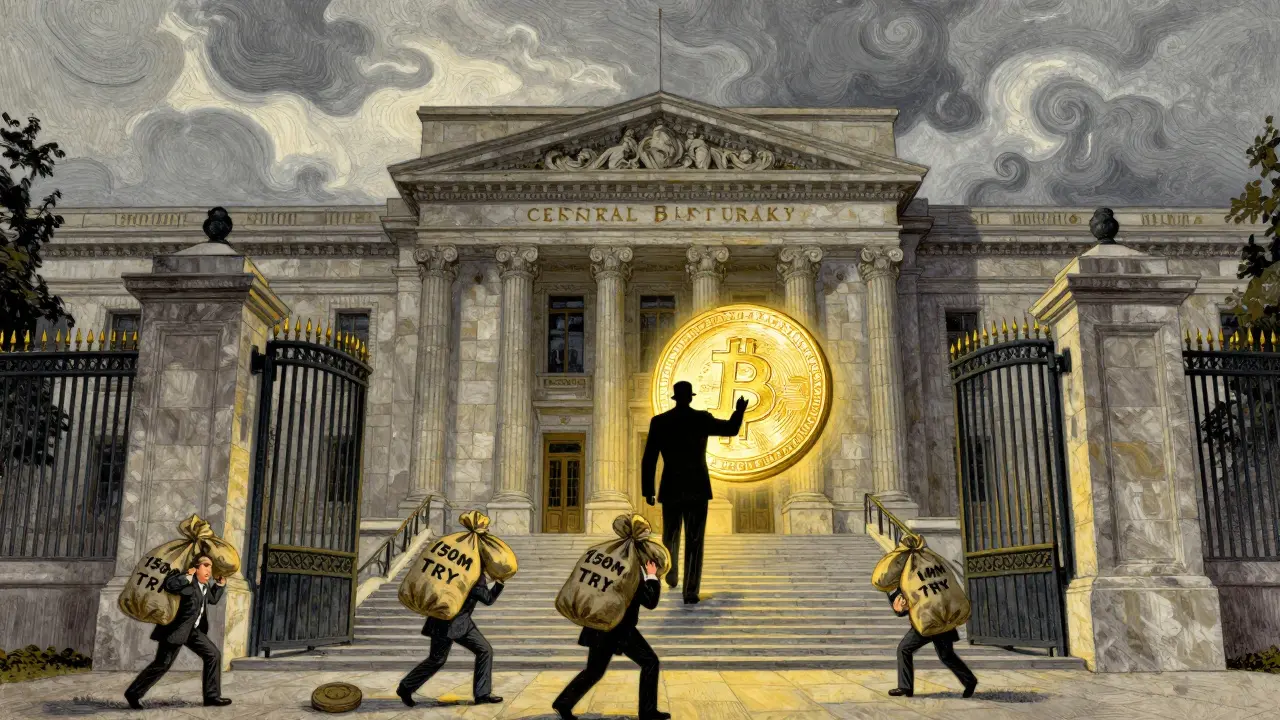
If you are a business looking to operate in Turkey, the barriers to entry are high. Under the 'Law on Amendments to the Capital Markets Law' enacted in July 2024, all Crypto Asset Service Providers (CASPs) must obtain licenses from the CMB. You cannot just launch a website and start trading; you need official approval.
The financial requirements are substantial. Here is what it takes to get licensed:
- Crypto Exchanges: Must maintain a minimum capital of 150 million Turkish lira (approximately $4.1 million).
- Custodians: Must hold at least 500 million Turkish lira (approximately $13.7 million).
These thresholds are significantly higher than typical licensing fees in Europe. For example, many EU countries allow crypto firms to operate with much lower initial capital. This strategy favors large, established players and pushes out smaller startups. It ensures that only financially robust entities can handle user funds, reducing the risk of collapse.
Beyond money, these firms must pass technological audits conducted by TÜBİTAK (The Scientific and Technological Research Council of Türkiye). Your systems must be secure, scalable, and transparent. The CMB also requires regular operational updates and detailed transaction records, including canceled trades. This level of scrutiny is designed to prevent fraud and ensure market integrity.
KYC, AML, and the Role of MASAK
Compliance is not just about having enough money; it is about knowing your customer. The Financial Crimes Investigation Board (MASAK) enforces strict Anti-Money Laundering (AML) and Know-Your-Customer (KYC) protocols. These rules are tightening rapidly.
Currently, identity verification is mandatory for transactions exceeding 15,000 Turkish lira (about £425). But the net is closing. Unregistered wallets face strict verification checks, and the government is moving toward universal identification for all significant crypto activities. This directly impacts privacy advocates who prefer anonymous trading. In Turkey, anonymity is increasingly difficult to maintain.
Looking ahead, draft legislation being prepared for the Grand National Assembly would give MASAK unprecedented powers. According to reports, this bill would allow authorities to freeze cryptocurrency accounts linked to criminal activity. MASAK could blacklist specific wallets, impose transaction limits, and shut down accounts across banks and exchanges. This move aligns Turkey with global standards set by the Financial Action Task Force (FATF), particularly targeting "rented accounts" used in illegal gambling and fraud.
Impact on Traders and Daily Life
For the average Turkish citizen, these regulations create a complex daily routine. Many people turn to crypto to hedge against the depreciation of the lira. When the local currency loses value, holding Bitcoin or USDT (Tether) feels like a safety net. However, cashing out that safety net involves navigating a restricted system.
Since you cannot pay merchants directly with crypto, users often rely on peer-to-peer (P2P) trading or convert their assets back into lira through licensed exchanges. This process carries risks. P2P markets thrive in the grey areas of regulation, exposing users to potential scams or regulatory crackdowns. There is growing frustration in online communities about the lack of practical utility for crypto. Users want to use their assets freely, but the law says otherwise.
The enforcement is real. In July 2024, the CMB blocked access to several unauthorized platforms, including PancakeSwap, a popular decentralized exchange. This shows that regulators are actively monitoring and restricting access to unlicensed services. If your platform isn't approved, it won't work in Turkey.

Comparison with Global Standards
How does Turkey stack up against the rest of the world? Let's look at the key differences.
| Feature | Turkey | European Union (MiCA) | United States |
|---|---|---|---|
| Payment Legality | Prohibited | Allowed (Regulated) | Varies by State |
| Trading Legality | Legal (Licensed) | Legal | Legal |
| Exchange Capital Req. | High (150M+ TRY) | Moderate/Low | Varies |
| Primary Regulator | CMB / TCMB / MASAK | ESMA / National Authorities | SEC / CFTC / FinCEN |
Turkey’s approach is unique in its strict separation of investment and payment functions. While the EU focuses on harmonizing rules across member states to facilitate cross-border payments, Turkey prioritizes protecting the lira. The US relies on a fragmented system where federal and state agencies overlap. Turkey offers clarity but at the cost of flexibility.
Future Outlook: Taxes and Consolidation
As of late 2025, profits from cryptocurrency trading remain untaxed in Turkey. This is a temporary reprieve. As the regulatory framework matures, the government is likely to introduce taxes to capture revenue from this growing sector. Investors should prepare for potential changes in tax law.
The market is also consolidating. High capital requirements and strict compliance burdens mean smaller exchanges will struggle to survive. Larger platforms like BTCTurk and Paribu are well-positioned to dominate. For international firms, entering the Turkish market requires significant investment in legal expertise, technology, and capital. The learning curve is steep, often taking 6-12 months to achieve full compliance.
Despite the restrictions, adoption continues to grow. With a population of 84 million seeking protection from currency instability, the demand for crypto remains strong. The challenge lies in balancing this demand with the government's goal of maintaining financial stability and controlling capital flight.
Can I use cryptocurrency to pay for goods in Turkey?
No. The Central Bank of Turkey (TCMB) prohibits the use of cryptocurrencies as payment instruments. Merchants cannot legally accept crypto for goods or services. The Turkish lira is the only legal tender.
Is it legal to own and trade crypto in Turkey?
Yes, ownership and trading are legal, provided you use licensed Crypto Asset Service Providers (CASPs). You must register with the Capital Markets Board (CMB) and comply with KYC/AML regulations.
What are the capital requirements for starting a crypto exchange in Turkey?
Exchanges must hold a minimum capital of 150 million Turkish lira, while custodians require 500 million Turkish lira. These high thresholds are designed to ensure financial stability and consumer protection.
Will crypto profits be taxed in Turkey?
As of October 2025, crypto profits are untaxed. However, this status is subject to change as regulations mature. Investors should monitor legislative updates for potential future tax obligations.
What happens if I use an unlicensed exchange?
Using unlicensed platforms carries significant risk. Regulators have blocked access to unauthorized sites like PancakeSwap. Transactions on these platforms may not be protected, and users could face legal or financial consequences.
Hadleigh Edwards
May 30, 2026 AT 01:41it is really fascinating to see how the regulatory landscape in turkey is evolving because while many people might think that crypto is just about getting rich quick there is actually a deeper economic narrative at play here involving inflation and currency devaluation which makes the ban on payments quite understandable from a central bank perspective even if it feels restrictive for everyday users who are trying to protect their savings from the volatile lira
i mean when you look at the historical context of turkish monetary policy it becomes clear why they want to maintain the lira as the sole legal tender but at the same time they cannot ignore the massive demand for digital assets among the population so this hybrid approach where trading is allowed but spending is banned is essentially a compromise that tries to balance financial stability with individual freedom although it often ends up creating more confusion than clarity for the average citizen who just wants to buy coffee without jumping through hoops
and let us not forget the impact on small businesses who might have wanted to accept crypto to attract international customers or reduce transaction fees but now find themselves completely shut out of that possibility which could stifle innovation in the fintech sector overall so while the intentions might be noble the execution seems to leave a lot to be desired in terms of practical usability
Bill Gunn
May 30, 2026 AT 16:18the capital requirements are absolutely wild 🤯 150 million try for an exchange? that is insane compared to eu standards. basically killing any chance for startups to compete against the big guys like btcturk or paribu. it creates a monopoly situation which is never good for consumers long term. also love the emoji use here because seriously who else is shocked by these numbers? 😱
trisya hazriyana
May 31, 2026 AT 17:31sarcasm aside the jargon heavy reality is that tcmb is just trying to stop capital flight via crypto rails. its classic macroeconomic defense mechanism. they call it payment ban but its really a control mechanism. very interesting dynamic.
Eric Grosso
June 2, 2026 AT 08:45so does this mean i cant just send btc to my friend in istanbul for him to buy groceries? or is that considered p2p trading? im confused abt the exact line between gifting and paying. need clarification pls
Edith Mair
June 2, 2026 AT 23:48you need to understand that masak is watching every move. if you try to bypass the system they will freeze your accounts. do not test them. the rules are strict for a reason. compliance is not optional here.
Sam Dashti
June 3, 2026 AT 05:43it is like living in a digital paradox where you can own the future money but only spend the past money. kinda poetic in a dystopian way. the vibrant chaos of istanbul meets the rigid structure of blockchain regulation. what a time to be alive honestly.
Joe Clements
June 4, 2026 AT 06:13i totally get why people are frustrated. it must be hard to feel like your savings are safe in crypto but then you cant actually use them for anything useful. hope the regulations loosen up soon so everyone can breathe easier.
Rosie Morris
June 6, 2026 AT 02:36me too! its so confusing trying to figure out what is legal and what isnt. i just want to trade without worrying about getting banned. maybe we should start a support group for confused traders lol
lorna erni
June 6, 2026 AT 03:11listen up folks! if you are running an exchange you better have your ducks in a row. 500m try for custodians is no joke. this is not a game. either bring the cash or stay out. the market is consolidating fast and weak players will get crushed. adapt or die!
stalin brian
June 8, 2026 AT 01:59in india we have our own set of crazy tax rules but at least we can pay with crypto sometimes. turkey is taking a different path. interesting to compare cultures and financial systems. maybe we can learn from each other?
kamal ifrani
June 8, 2026 AT 13:41typical western ignorance. you think its all fun and games until the regulators come knocking. turkey knows what it is doing. protecting national sovereignty over crypto anarchy. wake up sheeple. the drama is real but the lesson is clearer.
saradee dee
June 9, 2026 AT 11:18oh my god yes! it is so dramatic how fast things change. one day you can buy coffee next day you cant. simple words but complex feelings. i am just happy i read this article before making any mistakes. thank you for sharing!
Craig Swanson
June 10, 2026 AT 20:59look i know it sounds harsh but these high barriers are necessary for consumer protection. look at all the scams out there. if you cant afford 150m try you probably dont have the infrastructure to keep user funds safe. tough love but true. step up your game or go home.
Dana Rapoport
June 11, 2026 AT 15:36reserved opinion but the philosopher in me wonders if this separation of payment and investment is sustainable long term. history shows that money evolves. forcing it into a box might work temporarily but technology usually finds a way around restrictions. curious to see how this plays out.
mark valmart
June 12, 2026 AT 05:34man its just annoying. i liked using crypto for small stuff. now i have to convert back to lira first. extra steps extra fees. whatever i guess thats life in regulated markets.
Crystal Davis
June 12, 2026 AT 17:32actually you are missing the point. the tcmb decision was based on rigorous analysis of monetary transmission mechanisms. amateurs talk about convenience experts talk about systemic risk. the ban is economically sound regardless of your personal preference for decentralized payments. educate yourself before commenting.
Debbie Lewis
June 14, 2026 AT 10:03just observing from afar. seems like a tough spot for everyone involved. hope things stabilize soon.