
Quick Summary
- dApps give you control: You own your data and assets instead of relying on big tech companies.
- No single point of failure: Because they run on networks, one server crashing doesn't shut down the app.
- Total transparency: Every transaction is public and verifiable on the blockchain.
- Censorship resistance: Governments or corporations cannot easily ban users or stop transactions.
- New opportunities: Developers can monetize innovations through open-source ecosystems and tokens.
Imagine trying to log into your favorite platform, only to find your account locked because a central company decided you violated a vague policy. You have no recourse. Your data is gone, and your history is inaccessible. This is the reality of centralized systems today. Now, picture an environment where that switch is flipped. You never lose access, the code runs exactly as written, and no administrator can hit "delete" on your life work. That shift defines the move toward decentralized applications, commonly known as dApps.
This isn't just theoretical hype. As we settle into 2026, the distinction between how you interact with software is becoming clearer than ever before. Traditional apps rely on servers controlled by a few entities. dApps rely on distributed networks. If you have ever worried about who actually owns the photos you upload or whether your bank might freeze your funds, understanding these tools is essential. They aren't magic, but they solve real problems about trust, control, and reliability that plague our current internet.
What Makes a dApp Different?
To understand why someone would choose this technology, you first need to see how it differs from the apps you use daily. Most apps you touch live on computers owned by a company. When you use them, you send requests to those servers, which process data and send back a response. The company controls the database, the interface, and the rules. They can change terms, shut down features, or close accounts.
In contrast, blockchain technology powers dApps by distributing logic across thousands of computers worldwide. Instead of one master server, every participant holds a copy of the ledger. When a transaction happens-whether it's swapping currency or minting a digital asset-it is verified by this network rather than a boss in an office.
This architecture brings about fundamental changes. The backend logic is often written in smart contracts. These are self-executing agreements with terms directly written into code. Once deployed, they cannot be changed by a developer whim. For example, if a rule says you get 5% interest, the code enforces that automatically. There is no middleman to approve the rate or decide to lower it tomorrow.
The Power of True Data Ownership
Perhaps the most talked-about benefit involves privacy and ownership. In the current web model, your information belongs to the platforms hosting it. Search engines index your queries to sell ads. Social media tracks your likes to profile your behavior. With dApps, the narrative shifts.
You keep your credentials safe in a digital wallet. A tool like MetaMask or Trust Wallet acts as your passport. You sign transactions with your private key, meaning you prove your identity without handing over your personal details to a third party. In many decentralized protocols, your name is just a random string of numbers and letters unless you choose to link it elsewhere.
This matters when things go wrong. History shows us centralized databases are prime targets for hacks. If a massive social site gets breached, millions of passwords leak. In a decentralized system, there is no giant central vault of data to steal. Attackers would have to compromise multiple nodes simultaneously, which is mathematically improbable on robust chains. Your security relies on cryptography, not on a firewall protected by a corporate security team.
Removing Middlemen Reduces Costs
Fees are another major driver for adoption. In finance, remittance, or marketplaces, intermediaries take a cut. Traditional payment processors charge merchants percentages plus fixed fees. Banks add wire transfer costs and foreign exchange spreads. dApps remove these layers entirely.
When you swap assets on a decentralized exchange, the protocol facilitates the trade directly between users. The gas fee paid goes to the network validators who keep the chain running, not a CEO's bonus pool. Over time, this structure drives transaction costs down significantly compared to legacy banking rails. While blockchain fees fluctuate with network congestion, removing the profit margin of banks often leaves the total cost of execution lower, especially for cross-border interactions.
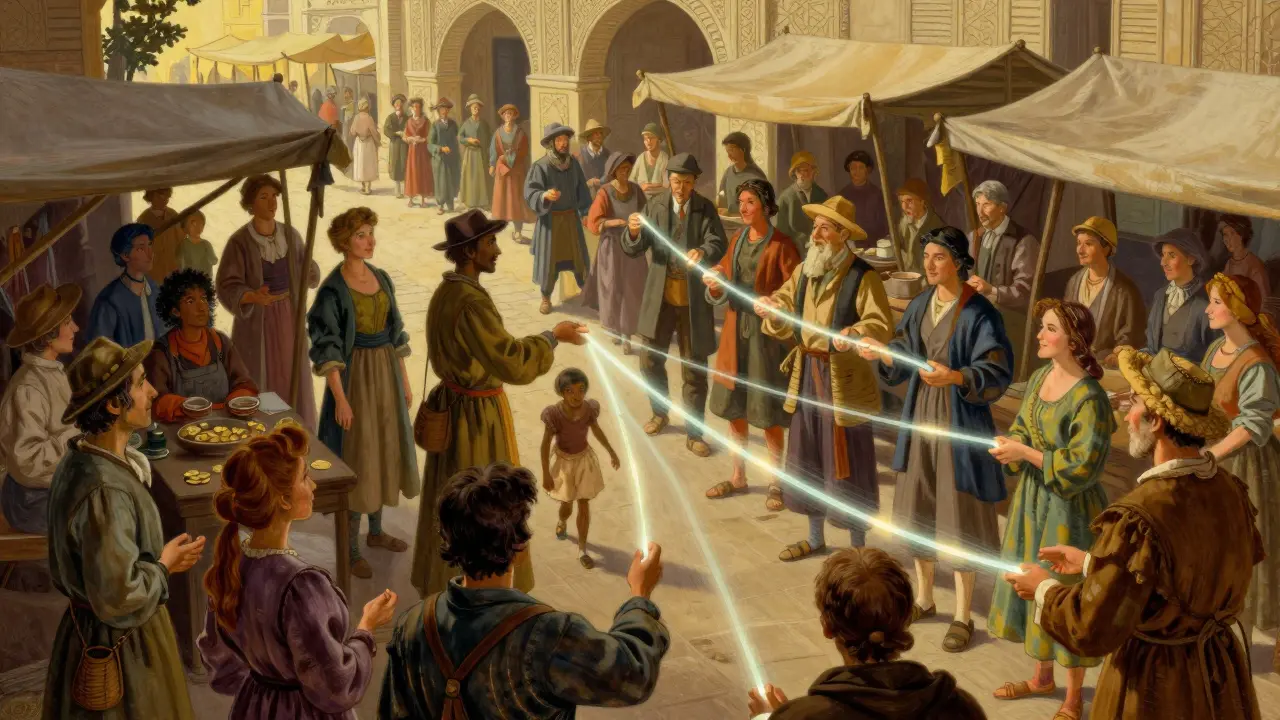
Transparency You Can Actually Verify
Trust in centralized systems is blind trust. You believe the stock ticker is accurate. You believe the voting tally is correct. With dApps, verification is built-in. Every action taken on the application is recorded on a public ledger.
If a charity uses a dApp to distribute aid, donors can track exactly where every penny goes. There is no hidden accounting spreadsheet to alter in a darkened room. The blockchain provides an immutable audit trail. Even if the project founders disappear, the history of transactions remains visible to anyone with an internet connection. This level of openness forces honesty and allows communities to spot irregularities immediately.
Censorship Resistance and Global Access
Not everyone enjoys equal access to the internet or banking services today. Some regions face government blocks on communication. Others lack credit checks that prevent them from opening traditional bank accounts. dApps address these gaps directly.
Because the application lives on a distributed network, shutting it down requires stopping almost every computer connected to it simultaneously. This has proven impossible even with coordinated efforts by powerful entities. For developers in restrictive environments, publishing software means their community won't lose access overnight due to political pressure. For users, it means financial inclusion. Anyone with a smartphone and internet connection can participate in global markets, peer-to-peer lending, or social coordination regardless of their physical location or citizenship status.
Opportunities for Developers
If you are building things, the landscape has shifted dramatically. Traditional SaaS development involves renting servers, maintaining uptime, and handling infrastructure scaling yourself. On-chain development introduces a different workflow. Many dApps are open-source. Code repositories are public, allowing others to copy, improve, or remix your work legally and ethically.
Monetization models have also expanded beyond subscriptions. You can create token economies where users buy utility tokens to access premium features or governance rights. These tokens can appreciate in value if the ecosystem grows, giving early adopters and builders a stake in success. Furthermore, composability allows your dApp to plug into other projects seamlessly. Think of it like Lego blocks; you don't need to rebuild everything from scratch. You can borrow functionality from established protocols to enhance your product instantly.
Real World Use Cases in 2026
It helps to look at how this tech applies practically today. Let's look at Decentralized Finance (DeFi). Platforms like Uniswap or Aave allow you to lend savings or trade assets. In the past year alone, billions flowed through these protocols without touching a traditional bank branch. It is fast, automated, and available 24 hours a day, 7 days a week.
Supply chains are another area seeing traction. Imagine scanning a QR code on a package of coffee beans. Instead of marketing fluff, the code pulls data from a blockchain showing the harvest date, transport method, and fair-trade certifications signed by the farmers themselves. This prevents fraud and builds consumer trust.
Then there are digital collectibles, or Non-Fungible Tokens (NFTs). While the speculative frenzy has cooled, the utility remains. Artists sell work directly to fans, earning royalties automatically on every resale. Creators own their distribution channel, bypassing gallery owners and streaming services that take massive cuts.

Comparing Centralized vs. Decentralized
| Feature | Centralized Apps (Web2) | DApps (Web3) |
|---|---|---|
| Control | Corporate entity or admin | User via private keys |
| Uptime | Dependent on server status | Network resilience ensures availability |
| Data Privacy | Data collected by provider | Data remains encrypted/local |
| Transaction Fees | Often higher due to margins | Paid to network validators |
| Censorship | Platform can ban users | Impossible for a single actor to ban |
Remaining Challenges to Consider
We must be honest about the hurdles. Adoption hasn't reached mass markets yet because usability still lags behind traditional apps. Connecting a wallet can confuse non-tech-savvy users. Recovery is hard; if you lose your private key, your funds are gone forever. Unlike a bank that resets your password with ID verification, there is no customer support line here.
Scalability is improving rapidly with Layer-2 solutions, but some networks can still be slow during peak traffic. Gas fees can spike unexpectedly. However, developers are actively solving these issues with better interfaces and off-chain computation techniques. These technical limitations do not negate the core benefits; they are growing pains of a maturing industry.
Is it Time to Switch?
You don't necessarily need to abandon every app you love. But for tasks involving sensitive data, valuable assets, or freedom of expression, the benefits are clear. Start small. Perhaps use a secure wallet for your savings instead of an unstable crypto exchange. Participate in a decentralized storage solution to backup important documents. Try buying a gift card through a protocol that guarantees delivery.
The shift represents a fundamental rethinking of how we trust machines versus people. By choosing dApps, you opt out of surveillance capitalism. You reclaim the right to exist digitally without permission. As the technology matures over the coming years, the gap between convenience and control will narrow, making the choice easier for everyone.
Frequently Asked Questions
Do I need to pay fees to use dApps?
Yes, most dApps running on public blockchains require small transaction fees, known as "gas," to process actions. This pays the network validators. However, these fees are typically lower than intermediary service charges found in banking.
Are dApps safer than normal apps?
Generally, yes, regarding hacking. Without a central database to breach, attackers have a harder time stealing data. However, you bear more responsibility for securing your own login keys.
Can governments shut down a dApp?
It is extremely difficult to shut down a dApp completely because it runs on thousands of nodes globally. Regulators can target entry points like websites, but the underlying protocol continues functioning.
How do I start using a dApp?
You generally need to download a crypto wallet extension or mobile app, fund it with cryptocurrency, and connect it to the dApp interface to authorize transactions.
What happens if I lose my private key?
Access to your assets or accounts on the dApp is lost permanently. There is no central authority to reset it, highlighting the importance of backing up keys securely offline.
June Coleman
April 1, 2026 AT 13:19Oh sure, trusting code written by anonymous developers in offshore jurisdictions is clearly the safest option we have for our financial future.
Maybe try saving your actual bank account while you figure this one out
Arlen Medina
April 1, 2026 AT 20:29Ive been working with smart contracts since 2018 and let me tell you this stuff works.
You either get on board now or get left behind by people who know how to stack sats properly
Stop listening to fear mongers about regulation because the network doesnt care what your local congressman says
Bruce Micciulla Agency
April 3, 2026 AT 08:36This technology is fundamentally flawed in its approach to security protocols and accountability standards for everyday users today.You cannot trust anonymous validators with custody of high value assets over the long term.Every system relies on human infrastructure underneath the blockchain abstraction layer.Power grids are still centralized utilities mostly controlled by monopolies.Electricity prices vary wildly across different regions affecting stability.The miners often consolidate into large mining pools operating privately.Those pools act effectively like single points of failure when attacked.The math proves eventual entropy in blockchain states over time.Energy consumption outweighs any marginal privacy gains claimed by proponents.Regulation will inevitably catch up to these networks eventually.Tax authorities demand KYC compliance everywhere soon regardless of ideology.Wallet providers are becoming just new custodians with access keys.Users are told to self-custody but do it wrong often.Lost funds represent massive waste of potential value for society.Traditional banking offers insurance against such losses currently.
Emily 2231
April 3, 2026 AT 15:48They are watching us through these wallets and tracking every transaction made online without our consent.
The government will never allow true decentralization to function fully without their backdoor access keys installed
We must stay vigilant against corporate surveillance disguised as financial innovation tools for the masses
shubhu patel
April 4, 2026 AT 04:58It is interesting how much the ecosystem has evolved over the last few years regarding usability and access for normal people
Many of the early adopters were just chasing quick profits but now real utility is emerging slowly across various sectors
Privacy and ownership are important concepts that deserve serious consideration in the current digital landscape
We should support open source projects that build infrastructure for everyone to benefit equally in the long run
JERRY ORTEGA
April 5, 2026 AT 00:48i think the paranoia is understandable but there is good info here too
just remember to backup your seeds offline if you decide to try it yourself
maybe start small with non critical assets first though
sekhar reddy
April 6, 2026 AT 17:51I cant beleive how fast this is changing everything around us!!!
My soul is literally shaking thinking about the possibilities ahead
We are standing at the dawn of a new economic era right now!
Adriana Gurau
April 7, 2026 AT 18:51Cute enthusiasm for the naive ones :)
Real players know liquidity is king and not everyone gets rich quick
Enjoy the toy while the pros make the real moves here ;)
Suzanne Robitaille
April 9, 2026 AT 15:36The philosophical implications of owning your digital identity are profound for the concept of the self in society
When we remove the gatekeepers we force ourselves to confront our own agency
This shift could redefine trust beyond human institutions toward mathematical certainty instead
Brooke Herold
April 11, 2026 AT 02:28In many parts of the world this offers a lifeline to those excluded from traditional banking systems entirely
Financial inclusion is a vital part of human rights development globally
Technology should serve everyone not just the wealthy elite in developed nations
Trish Swanson
April 11, 2026 AT 04:46The regulatory, oversight, on this, remains, completely, inadequate, for public safety!