Bitcoin Yield Calculator
Calculate Your Bitcoin Yield
How Lombard Works
LBTC earns yield from Bitcoin staking on Babylon network. Your BTC remains 1:1 backed while earning passive income.
Your Estimated Yield
Bitcoin is the biggest cryptocurrency by market cap-over $1 trillion worth-but for years, it’s done one thing well: hold value. It doesn’t earn interest. It doesn’t lend. It doesn’t provide yield. That’s where Lombard (BARD) comes in. Launched in 2024, Lombard isn’t just another altcoin. It’s a Bitcoin infrastructure protocol built to turn Bitcoin from a passive savings account into an active financial asset.
What Exactly Is Lombard?
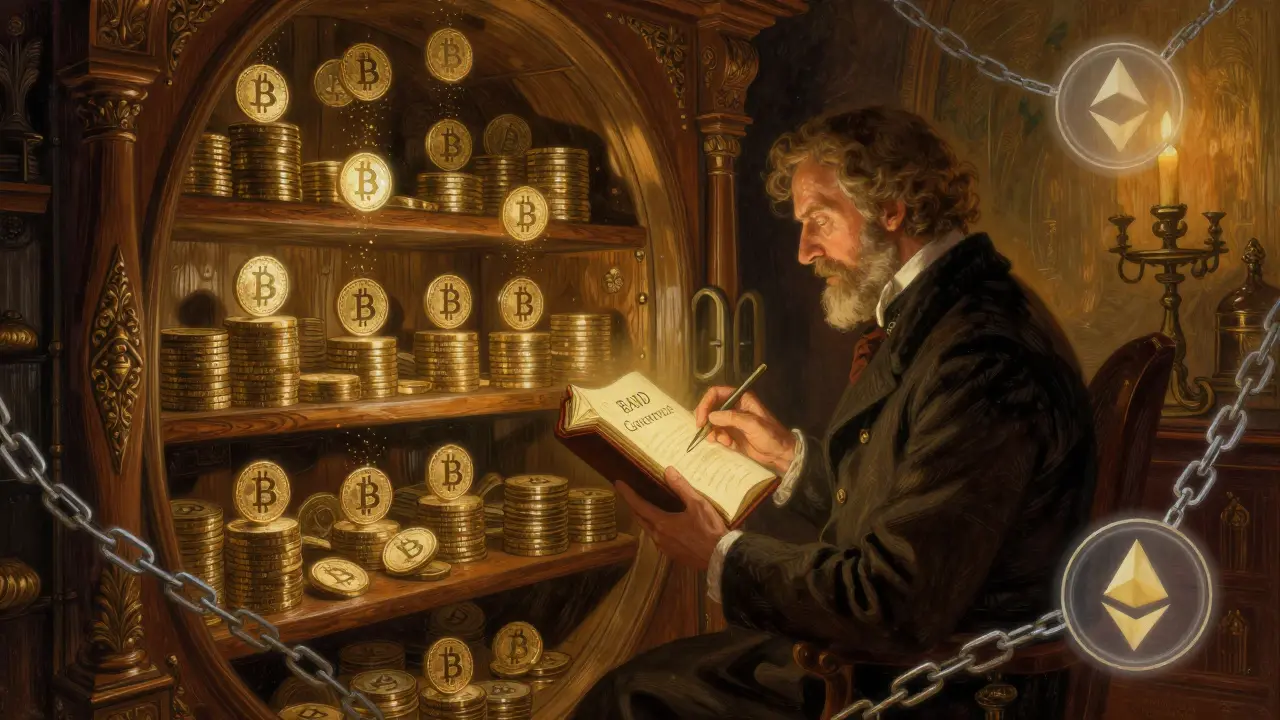
Lombard is a protocol that lets Bitcoin holders earn yield without giving up control of their BTC. It does this through LBTC, a 1:1 backed, liquid token that represents Bitcoin on other blockchains-but unlike WBTC or other wrapped tokens, LBTC earns staking rewards. Those rewards come from Bitcoin being staked on the Babylon network, a security layer designed specifically for Bitcoin staking. Lombard takes those rewards, sells them for BTC, and uses the proceeds to grow the LBTC reserve. That means your LBTC grows in value over time, even if Bitcoin’s price stays flat.How Does BARD Fit Into This?
The BARD token is Lombard’s native cryptocurrency. It runs on Ethereum, has a max supply of 1 billion tokens, and serves three key roles:- Governance: BARD holders vote on protocol upgrades, vault strategies, and ecosystem grants through the Liquid Bitcoin Foundation.
- Security: To secure the LBTC cross-chain bridge, users must stake BARD. This acts as a financial guarantee-if something goes wrong, staked BARD can be slashed to cover losses.
- Access: Holding BARD gives you priority access to Lombard’s vaults, better yields, and exclusive DeFi opportunities.
Think of BARD as the engine that keeps Lombard running. Without it, the system wouldn’t be secure. With it, you’re not just holding a token-you’re helping protect Bitcoin’s entry into DeFi.
How Lombard Solves Bitcoin’s Biggest Problem
Bitcoin’s biggest weakness in DeFi has always been its inability to generate yield. You can’t stake it on Ethereum. You can’t lend it on Aave. You can’t provide liquidity on Uniswap. That’s why $1 trillion+ of Bitcoin has sat idle while Ethereum and Solana assets earned 5%, 10%, even 20% APY. Lombard changes that. By using Babylon’s Bitcoin staking protocol, it unlocks yield from Bitcoin’s own security mechanism. The rewards aren’t theoretical-they’re real, and they’re added back to your LBTC balance. You still own Bitcoin. You still get its price appreciation. Now, you also get passive income.How Lombard Compares to Other Bitcoin Solutions
| Feature | Lombard (LBTC/BARD) | WBTC | RenBTC | Staked ETH | |--------|---------------------|------|--------|------------| | Backed 1:1 by BTC | Yes | Yes | Yes | No | | Earns yield | Yes | No | No | No | | Cross-chain (12+ chains) | Yes | Limited | Limited | N/A | | Institutional security | 14 trusted providers | Centralized custodians | Decentralized but less institutional | N/A | | Staking required for security | BARD token | No | No | ETH token | | Unstaking time | Up to 21 days (for BARD) | Instant | Instant | 14-21 days |WBTC and RenBTC are just digital receipts. They let you use Bitcoin on Ethereum, but they don’t make it work harder. Lombard makes Bitcoin earn. That’s the difference.
Who Uses Lombard?
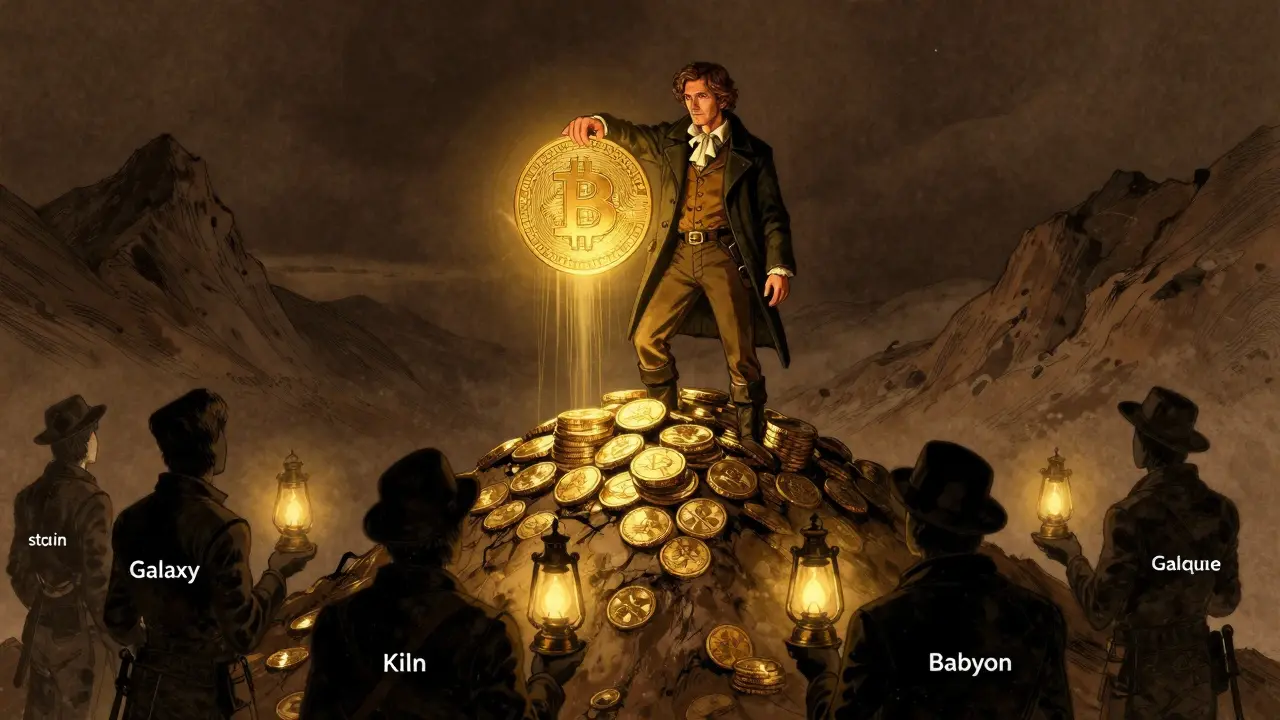
Lombard targets two main groups: institutions and serious retail investors. Institutions like Galaxy, Kiln, P2P, and Figment are Finality Providers on Babylon. That means they’re on the hook for security. They’re not just investors-they’re partners. This isn’t a startup trying to attract meme traders. It’s a protocol built with institutional-grade trust. Retail users can access Lombard through its DeFi Marketplace. The dashboard lets you filter vaults by chain, risk level, or yield type. There are basic vaults that just lend LBTC to Aave or Compound, and advanced ones that use tokenized options or basis trades-strategies usually only available to hedge funds.How to Get Started
1. Deposit Bitcoin into Lombard’s vault. You’ll receive LBTC at a 1:1 ratio. 2. Use LBTC in DeFi: lend it, provide liquidity, or stake it in Lombard’s vaults. 3. Buy or stake BARD to secure the bridge and earn extra rewards. Staking BARD locks your tokens for up to 21 days if you want to withdraw. 4. Monitor your yield through Lombard’s dashboard. Rewards compound automatically.It’s not for beginners. You need to understand cross-chain bridges, staking risks, and DeFi mechanics. But if you’re holding Bitcoin and want to make it work harder, Lombard is one of the few legitimate options.
Current Market Data (December 2025)
As of December 11, 2025:- BARD price: $0.8389
- 24-hour volume: $53.6 million
- Price change (24h): -13.98%
- Market cap rank: Top 200 cryptocurrencies
The recent dip reflects broader crypto market conditions, not protocol failure. Lombard’s infrastructure is live, its partnerships are solid, and its tokenomics are designed for long-term growth-not quick pumps.

Future Roadmap
Lombard isn’t stopping at liquid staking. They’re building:- Basis trade vaults: Profiting from price differences between spot BTC and futures markets.
- Tokenized options vaults: Allowing users to sell options on LBTC for steady income.
- More blockchain integrations: Expanding beyond the current 12 chains to include newer Layer 2s and rollups.
- Enhanced governance: Giving BARD holders more control over ecosystem funding and development.
Their goal? Make every Bitcoin holder a DeFi user. Every institution a client. Every developer a Bitcoin builder.
Why It Matters
Bitcoin’s role in crypto is changing. It’s no longer just digital gold. It’s becoming digital capital. Lombard is one of the first protocols to make that shift real. It doesn’t try to replace Bitcoin. It enhances it.If Bitcoin is going to be the foundation of decentralized finance, it needs to earn. Lombard is building the tools to make that happen.
Is Lombard Safe?
Security is Lombard’s biggest selling point. Unlike many DeFi projects that rely on code alone, Lombard uses a consortium of 14 trusted institutions to validate transactions. Babylon’s staking layer adds Bitcoin-native security. Chainlink’s CCIP and Symbiotic handle cross-chain transfers securely. The 21-day unstaking period for BARD might seem long, but it’s intentional. It prevents mass exits that could destabilize the bridge. It’s a trade-off: less liquidity for more security.There’s no insurance fund. No FDIC. But the institutional backing and multi-layered security model make it one of the most robust Bitcoin DeFi protocols to date.
Final Thoughts
Lombard (BARD) isn’t a speculative gamble. It’s infrastructure. It’s the plumbing behind Bitcoin’s next chapter. If you believe Bitcoin should do more than sit in a wallet, Lombard is worth your attention.It’s not for everyone. But for those who want Bitcoin to earn, to lend, to grow-it’s one of the only real options on the table.
Is BARD a Bitcoin token?
No. BARD is an Ethereum-based token that governs and secures Lombard’s Bitcoin infrastructure. The Bitcoin-backed token is called LBTC, which is a 1:1 representation of BTC on other blockchains. BARD powers the system; LBTC is the asset you earn yield on.
Can I stake Bitcoin directly with Lombard?
Not directly. You deposit Bitcoin into Lombard’s vault, and it’s converted into LBTC. LBTC is what you use in DeFi and what earns yield. The Bitcoin itself is staked on the Babylon network by Lombard’s institutional partners.
What’s the difference between LBTC and WBTC?
WBTC is just a wrapped version of Bitcoin-it’s pegged 1:1 but doesn’t earn anything. LBTC is also 1:1 backed, but it automatically earns staking rewards from Bitcoin being secured on Babylon. LBTC grows in value over time; WBTC doesn’t.
Why does BARD have a 21-day unstaking period?
The 21-day period protects the LBTC cross-chain bridge. If too many people unstaked BARD at once, it could weaken the security of the system. This delay ensures stability and gives the protocol time to adjust. It’s a trade-off for stronger security.
Is Lombard only for institutions?
No. While Lombard partners with institutions like Galaxy and Kiln, its DeFi Marketplace is open to retail users. You don’t need to be an institution to deposit Bitcoin or use LBTC. But because the system involves cross-chain bridges and staking, it’s better suited for users who understand DeFi basics.
Where can I buy BARD?
BARD is listed on major exchanges including Bitget, Binance, and OKX. You can trade it for BTC, ETH, or USDT. Always check the official Lombard website for the latest list of supported platforms.
What happens if Babylon gets hacked?
Babylon is designed to be Bitcoin-native, meaning it inherits Bitcoin’s security model. It’s not a separate chain-it’s a staking layer on top of Bitcoin’s blockchain. There’s no known attack vector against Babylon’s design. Additionally, Lombard’s security consortium of 14 institutions acts as a backup layer of oversight and validation.
Does Lombard have a wallet?
Lombard doesn’t have its own wallet. You use any Ethereum-compatible wallet like MetaMask or Trust Wallet to hold BARD. For LBTC, you interact through Lombard’s DeFi dashboard, which connects to your wallet. Always verify the official website before connecting any wallet.
Kathy Wood
December 16, 2025 AT 07:33So let me get this straight: you’re giving up control of your BTC to some ‘institutional consortium’… and calling it ‘security’? 😂
Bitcoin was built to eliminate middlemen-and now we’re trading one centralization for another, wrapped in DeFi glitter?
Rakesh Bhamu
December 16, 2025 AT 22:21This is actually one of the most thoughtful Bitcoin DeFi projects I’ve seen. The institutional backing isn’t a flaw-it’s a feature. Most DeFi protocols are code-only and get hacked within months. Lombard’s 14 trusted validators add real-world accountability. LBTC earning yield without sacrificing BTC custody? That’s huge.
And yes, the 21-day unstaking period is annoying-but it’s a price worth paying for bridge integrity. Think of it like a bank’s CD: less liquidity, more safety.
Hari Sarasan
December 17, 2025 AT 05:38One must interrogate the ontological underpinnings of this architectural paradigm. The very notion of ‘yield-bearing Bitcoin’ constitutes a semiotic rupture in the Satoshiian orthodoxy-wherein the immutable scarcity principle is subordinated to the hegemonic logic of yield-farming capitalism.
Furthermore, the reliance upon Babylon’s staking layer introduces a non-Bitcoin-native consensus mechanism, thereby undermining the cryptographic purity of the original protocol. This is not innovation-it is epistemological colonization.
Lynne Kuper
December 19, 2025 AT 00:14Oh wow. So Bitcoin is now a savings account that pays interest… if you’re willing to trust a bunch of crypto hedge funds? 🤦♀️
Let me guess-next they’ll sell you ‘Bitcoin ETFs with compounding dividends’ and call it ‘financial evolution’.
Lloyd Cooke
December 19, 2025 AT 02:59The elegance of Lombard lies not in its technology, but in its quiet rebellion against the cult of velocity that defines modern DeFi.
Where others chase yield through speculative leverage and impermanent loss, Lombard offers something almost archaic: patience.
It says, ‘You own Bitcoin. You do not need to trade it. You do not need to gamble with it. You may simply let it grow.’
That is not finance. That is stewardship.
And in a world that equates movement with progress, perhaps this is the most radical act of all.
Jessica Eacker
December 19, 2025 AT 10:54Finally, someone made Bitcoin useful without turning it into a casino.
LBTC earning yield? Yes please.
And no, I’m not staking BARD yet-I’m watching. But this is the direction Bitcoin should’ve gone years ago.
Andy Walton
December 20, 2025 AT 06:26bro this is like if your grandma started a bank but used bitcoin and emojis 🤯💸
imagine staking your btc and getting paid in… more btc?? like… wait that’s actually genius??
but why 21 days?? is it a secret bitcoin ritual?? 🤔
also is this why my uncle’s crypto portfolio is now ‘boring but growing’?? 😭
Candace Murangi
December 20, 2025 AT 14:51I’ve been holding BTC since 2017 and never thought it could do anything but sit there. Seeing this feels like finding out your old car has a turbo button you never knew about.
It’s not flashy. It’s not a meme. But it’s real.
And honestly? That’s more than I can say for 90% of what’s trending on crypto Twitter right now.
Albert Chau
December 21, 2025 AT 12:16Another ‘Bitcoin DeFi’ project that’s just a Ponzi with a whitepaper.
Look at the price drop-14% in 24 hours. That’s not market conditions. That’s the rug being pulled.
People are already selling because they know this is a trap.
You think institutions are ‘partners’? They’re the ones setting the trap.
Madison Surface
December 21, 2025 AT 21:39I really appreciate how this project doesn’t just say ‘hodl’-it says ‘grow’. And it doesn’t ask you to give up your BTC. That’s huge.
For anyone who’s ever felt guilty for just holding Bitcoin while others made money… this might be your answer.
You’re not missing out. You’re just waiting for the right tool.
And this might be it.
Tiffany M
December 22, 2025 AT 02:04Wait so you’re telling me I can make my Bitcoin work for me without selling it??
That’s not crypto-that’s just… capitalism with better branding??
Also why does everyone act like this is revolutionary? We’ve had yield on ETH for years. Bitcoin finally catching up? Took long enough. 🙄
But hey, if it works, I’m in. Just don’t call it ‘decentralized finance’ if it needs 14 institutions to run.
Eunice Chook
December 22, 2025 AT 17:56LBTC = 1:1 backed. BARD = governance token. Got it.
Now explain why the 21-day unstake period exists if Babylon is ‘Bitcoin-native security’? If it’s so secure, why lock liquidity?
And why is the BARD token on Ethereum? Why not on Bitcoin? Because it’s a scam layer.
It’s all smoke. And you’re buying the whole chimney.
Jessica Petry
December 24, 2025 AT 10:24Oh look. Another ‘Bitcoin infrastructure’ project that needs a token to function. How quaint.
Bitcoin was supposed to be the anti-token. Now we’re layering tokens on top of tokens like a crypto onion.
And the worst part? People actually think this is progress.
Next they’ll tokenize the concept of ‘trust’ and sell it as NFTs.
Scot Sorenson
December 25, 2025 AT 22:38Let me translate this for the uninitiated: ‘We made Bitcoin earn interest by letting big firms hold your coins and calling it ‘security.’’
Meanwhile, the BARD token is on Ethereum-so your ‘Bitcoin infrastructure’ runs on a chain that’s 10x more centralized.
Brilliant.
It’s not DeFi. It’s just Wall Street with a blockchain sticker.
Patricia Whitaker
December 27, 2025 AT 19:15Why is everyone acting like this is new? WBTC has been around for years. You just added a yield layer. Big whoop.
Also, 1 billion BARD supply? That’s a lot. And the price is down 14%? Yeah, no thanks.
Y’all are so desperate for Bitcoin to be ‘DeFi’ you’ll believe anything.
PRECIOUS EGWABOR
December 28, 2025 AT 20:44Look. I don’t care if it’s ‘Bitcoin-native’ or ‘institutional-grade.’
If I have to trust 14 companies to let my BTC earn interest, I might as well just put it in a bank.
And why is BARD on Ethereum? That’s the whole point of Bitcoin-to avoid that.
So… what’s the point again?
Caroline Fletcher
December 29, 2025 AT 14:35They’re using Babylon to stake BTC? LOL. That’s just a front for the government to track your Bitcoin.
14 ‘trusted institutions’? That’s the NSA, the Fed, and 12 crypto bros in a room with a whiteboard.
They’re not building DeFi. They’re building a Bitcoin surveillance network.
Don’t fall for it.