
Most people think Bitcoin is the only cryptocurrency that matters. But what if there was a version of Bitcoin designed specifically for buying coffee, tipping content creators, or paying for a single article online - without paying $2.50 in fees? That’s where MicroBitcoin (MBC) comes in.
MicroBitcoin Isn’t Just Another Altcoin
MicroBitcoin isn’t a copy-paste clone. It’s a hard fork of Bitcoin that happened at block 525,000. That means it took the exact same wallet balances as Bitcoin at that moment, but then started fresh. No transaction history. No legacy bloat. It was built from the ground up to fix what Bitcoin can’t do well anymore: small, everyday payments. Bitcoin’s fees have skyrocketed. Confirmations take too long. Mining is dominated by giant farms with ASIC chips you can’t afford. MicroBitcoin says: let’s go back to what Satoshi originally imagined - a peer-to-peer electronic cash system you can use without a bank.How MicroBitcoin Works Differently
MicroBitcoin changes four key things to make microtransactions possible:- Block time: 1 minute - Bitcoin waits 10 minutes per block. MBC confirms transactions in 60 seconds. That’s fast enough to pay for a snack at a vending machine.
- Total supply: 81.5 billion MBC - Bitcoin has 21 million coins. MBC has 10,000 times more. This keeps the price per coin extremely low - around $0.00000000039 as of mid-2025. You don’t need to buy a fraction of a Bitcoin to pay for a tweet. You just pay 10,000 MBC.
- Mining algorithm: Power2b - Unlike Bitcoin’s SHA-256, which needs expensive ASICs, Power2b runs on regular CPUs. Your laptop or old desktop can mine MBC. This keeps mining decentralized and open to everyday people.
- Hashing: Blake2b - Faster and more secure than older hashing methods. It’s used in modern systems like Bitcoin Cash and Zcash, but here it’s optimized for speed on low-power devices.
They also added something called LWMA-3 - a new difficulty adjustment algorithm they claim is the first of its kind. It helps keep the network stable even if mining power shifts suddenly.
Why the Tiny Price Matters
You might look at $0.00000000039 per MBC and think it’s meaningless. But that’s the whole point. Imagine you want to pay $0.05 for a digital article. On Bitcoin, you’d need to send 0.000002 BTC - a number so small it’s hard to type and even harder to track. On MBC, you pay 128,205 MBC. That’s a whole number. Easy to understand. Easy to count. No decimal hell. This is why MicroBitcoin calls itself “Bitcoin 2.0.” It’s not trying to replace Bitcoin as digital gold. It’s trying to replace Bitcoin as digital cash.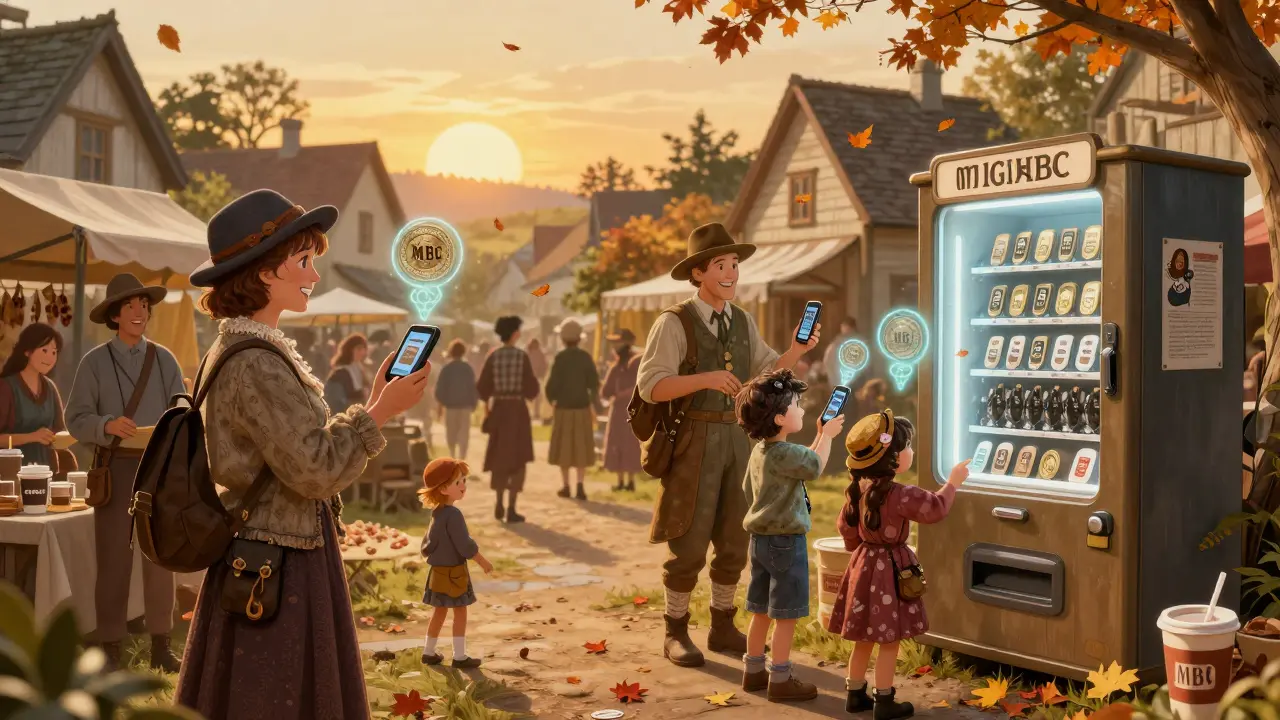
Where You Can Use MBC Right Now
As of mid-2025, MicroBitcoin trades on three main exchanges: LBank, Coinstore, and XeggeX. The main trading pair is MBC/USDT. Trading volume hit $269,600 in July 2025 - all of it on these three platforms. You can’t buy a pizza with MBC yet. There’s no public list of merchants accepting it. But the project’s goal isn’t to partner with Starbucks. It’s to let anyone build their own micro-payment system on top of it. The official documentation says MBC is meant to be “the fuel and foundation” for Layer-2 tokenization. That means developers could create apps where users pay in MBC for things like:- Unlocking a single video clip
- Donating $0.10 to a streamer
- Buying a digital sticker pack
- Accessing a pay-per-read news article
Think of it like email - no one owns email, but everyone uses it. MicroBitcoin wants to be the same for micro-payments.
Who’s Behind It?
There’s no big company. No VC funding. No celebrity endorsements. MicroBitcoin is community-driven. Contributors are based in Korea, the U.S., and Ukraine. The code is open-source, and anyone can submit changes. The official website - microbitcoin.org - is the only central hub. It hosts documentation, whitepapers, and links to community forums. No team members are named publicly. No roadmap with deadlines. That’s intentional. It’s designed to feel like Bitcoin in 2009: a project built by people who believe in the idea, not by marketers.How It Compares to Other Micro-Transaction Coins
There are other coins trying to solve the same problem:- Nano uses a block-lattice structure. Each user has their own chain. Fast and feeless, but complex to understand.
- IOTA uses Tangle - a DAG instead of a blockchain. Works well for IoT, but has had security issues.
- Bitcoin Lightning Network - the most popular solution. Lets you send Bitcoin instantly with near-zero fees. But it requires a separate wallet, extra setup, and still depends on Bitcoin’s security.
MicroBitcoin’s edge? It doesn’t require a second layer. It’s Bitcoin, but rebuilt from the start for micro-payments. You don’t need to learn a new system. You just use MBC like you’d use cash.
The Big Challenges
MicroBitcoin has serious hurdles:- Too small to matter? A price of $0.00000000039 is hard for exchanges and wallets to handle. Most systems have minimum transaction limits. Sending 1 MBC might not even be allowed.
- No real-world adoption - There’s no data showing merchants, apps, or services using MBC. It’s still theoretical.
- Security concerns - With lower hash power than Bitcoin, the network could be more vulnerable to attacks. No independent security audit has been published.
- Competition - Lightning Network already works. Why switch?
Its biggest strength - being CPU-minable - might also be its weakness. If too many people start mining with old laptops, the network could get slow. If too few mine, it becomes centralized again.
Is MicroBitcoin Worth It?
If you’re looking to get rich quick - probably not. The price is tiny. The volume is low. It’s not on Coinbase or Binance. But if you believe in Satoshi’s original vision - that crypto should be used for daily transactions, not just speculation - then MBC is one of the few projects still trying to make that real. It’s not perfect. It’s not proven. But it’s one of the few coins that doesn’t just want to be a store of value. It wants to be used. Like cash. Like email.What’s Next for MicroBitcoin?
The July 2025 listing on Coinstore was a big step. It gave MBC visibility. The project’s next phase seems to be about building tools for developers to create tokenized services on top of MBC. No official roadmap exists. No team promises timelines. But the community is active. If enough people start building apps that use MBC for micro-payments, adoption could grow organically. For now, it’s a quiet experiment. A long shot. But in the world of crypto, sometimes the quietest projects are the ones that change everything.Is MicroBitcoin (MBC) a good investment?
MBC isn’t designed as a speculative asset. Its value comes from utility - if people start using it for micro-payments, the price could rise. But right now, trading volume is low, liquidity is thin, and there’s no proof of real-world use. Treat it like a high-risk experiment, not a stock.
Can I mine MicroBitcoin with my laptop?
Yes. That’s the whole point. MBC uses the Power2b algorithm, which is designed to run efficiently on regular CPUs. You don’t need expensive ASICs like you do for Bitcoin. Even an old desktop from 2015 can mine MBC, though profitability depends on electricity costs and hardware efficiency.
How is MBC different from Bitcoin’s Lightning Network?
Lightning Network is a second-layer solution built on top of Bitcoin. It lets you send Bitcoin quickly and cheaply, but you still need Bitcoin to use it. MBC is its own blockchain with its own coins. You don’t need Bitcoin at all. MBC is simpler to use for micro-payments because it’s built for them from the start.
Where can I buy MicroBitcoin (MBC)?
As of mid-2025, you can buy MBC on LBank, Coinstore, and XeggeX. The main trading pair is MBC/USDT. It’s not listed on major exchanges like Coinbase or Binance, so you’ll need to use one of these smaller platforms. Always check the exchange’s reputation before depositing funds.
Does MicroBitcoin have a wallet?
Yes. The official website, microbitcoin.org, provides links to wallet software compatible with MBC. There are also community-developed wallets for desktop and mobile. Always download wallets only from official sources - scams are common with lesser-known coins.
Will Pimblett
February 1, 2026 AT 07:10Rico Romano
February 1, 2026 AT 12:52Meenal Sharma
February 3, 2026 AT 10:27Freddy Wiryadi
February 4, 2026 AT 15:35Calvin Tucker
February 5, 2026 AT 11:22Gustavo Gonzalez
February 6, 2026 AT 11:17Dahlia Nurcahya
February 7, 2026 AT 00:09Lori Quarles
February 8, 2026 AT 12:36Jeremy Dayde
February 8, 2026 AT 22:50Steven Dilla
February 10, 2026 AT 18:04Tom Sheppard
February 10, 2026 AT 21:41Aaron Poole
February 11, 2026 AT 10:38