
The MTA token isn’t just another crypto coin. It’s the heartbeat of mStable, a DeFi protocol built to fix a real problem: stablecoins are broken. They’re scattered across different platforms, each with its own risks, and if one fails - like TUSD or USDT losing its peg - you could lose money. mStable tried to fix that by creating mUSD, a stablecoin made from a mix of other stablecoins. And MTA is what lets people run it.
What MTA Actually Does
MTA isn’t meant to be a currency. You don’t use it to buy coffee or pay for gas. It’s a governance tool. If you hold MTA and stake it, you become a Governor. That means you vote on big decisions: which stablecoins get added to mUSD, how much of each one you can hold, what fees to charge, and even which price oracles the system trusts.
There’s also a safety net built into MTA. If one of the stablecoins in the mUSD basket permanently breaks its $1 peg - say, USDC crashes and never recovers - the protocol automatically mints new MTA tokens and sells them on the open market. The money raised from those sales is used to buy back the broken asset and restore the peg. This is called re-collateralization. It’s not magic. It’s math. And it’s rare in DeFi.
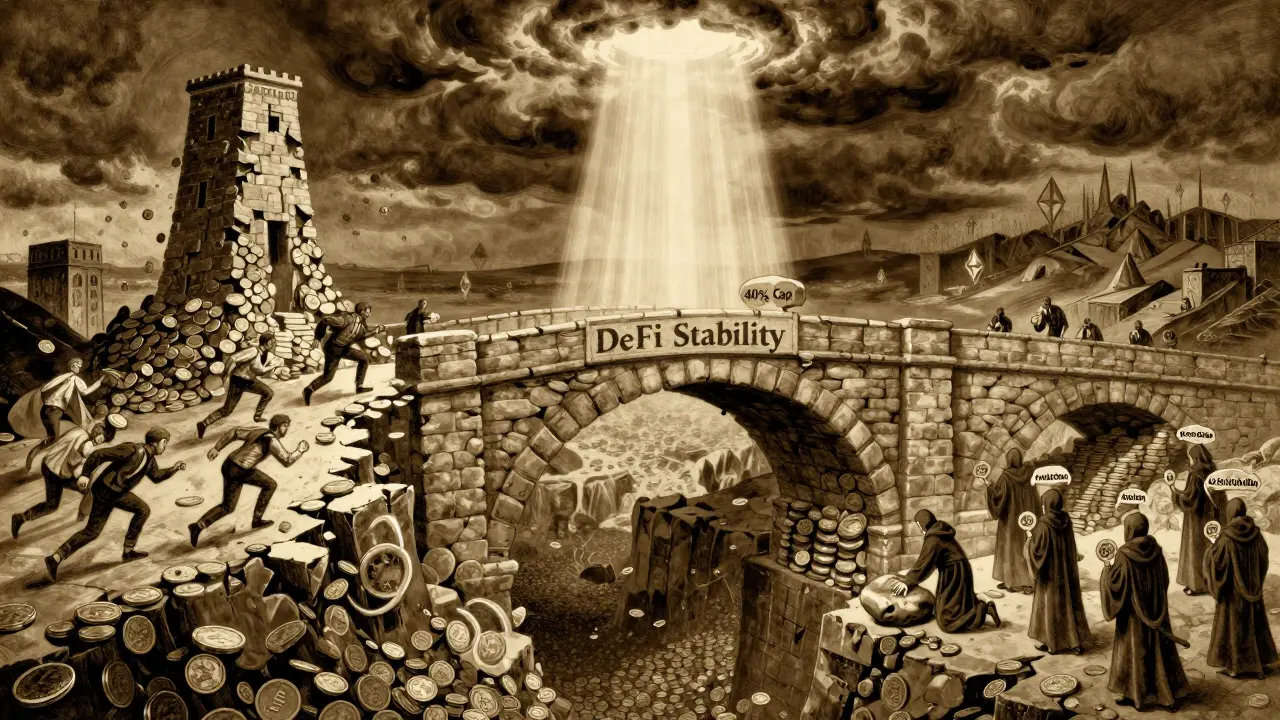
Most stablecoin protocols, like Curve Finance, just pool assets and hope for the best. If one fails, liquidity providers get wiped out. mStable’s maximum weight system stops that. Once any single stablecoin hits 40% of the basket, you can’t add more of it. That forces diversification. It’s a built-in shock absorber.
How MTA Compares to Other Tokens
People often compare MTA to CRV from Curve or YFI from Yearn. But the comparison doesn’t hold up. CRV rewards liquidity providers. YFI is about yield aggregation. MTA is about governance and survival.
Curve’s pools can lose millions if a stablecoin depegs. mStable’s design tries to prevent that. In 2022, when TerraUSD collapsed, Curve’s users saw massive losses. mStable didn’t have a single stablecoin that could trigger a total collapse - because it never let any one asset dominate.
But here’s the catch: no one uses it. At its peak in early 2021, mStable had $250 million locked in. By late 2023, that number was under $10 million. That’s a 96% drop. Why? Because the user experience is terrible.
The User Experience Problem
Most DeFi apps are confusing. mStable is worse. You need to understand the difference between mUSD and imUSD. mUSD is the stablecoin. imUSD is the version that earns yield. But the interface doesn’t make that clear. According to mStable’s own support data, 62% of help tickets in 2023 came from users mixing them up.
And getting involved in governance? It’s not a click-and-go process. You need to buy MTA on Binance or KuCoin, transfer it to a wallet like MetaMask, then stake it in the governance contract. After that, you’re expected to read proposals, understand voting mechanics, and track on-chain activity. The DeFi Education Fund found that users need 15 to 20 hours of study just to vote effectively.
And the documentation? It’s outdated. The mStable GitHub repo still lists mBTC - a feature that was killed in 2022. Users rate the docs 3.2 out of 5. That’s not good enough for something this complex.
Why MTA’s Price Is All Over the Place
MTA’s price is a mess. In early 2023, one exchange listed it at $1.14. By October, another exchange had it at $0.029. That’s not volatility. That’s data inconsistency. Some platforms are showing old prices. Others are using low-volume trades as the “market price.”
The circulating supply is around 63.7 million tokens out of a max of 100 million. But with only 42% of tokens staked for governance, voting power is concentrated in the hands of a few big wallets. That’s a problem. If five addresses control half the votes, it’s not decentralized. It’s oligarchic.
Trading volume? Sometimes it’s under $10,000 in 24 hours. Compare that to CRV, which trades over $100 million daily. MTA is a ghost town. Social mentions dropped from 15,000 per month in 2021 to just 1,842 in 2023. The community isn’t dead - but it’s barely breathing.
Is MTA Still Alive?
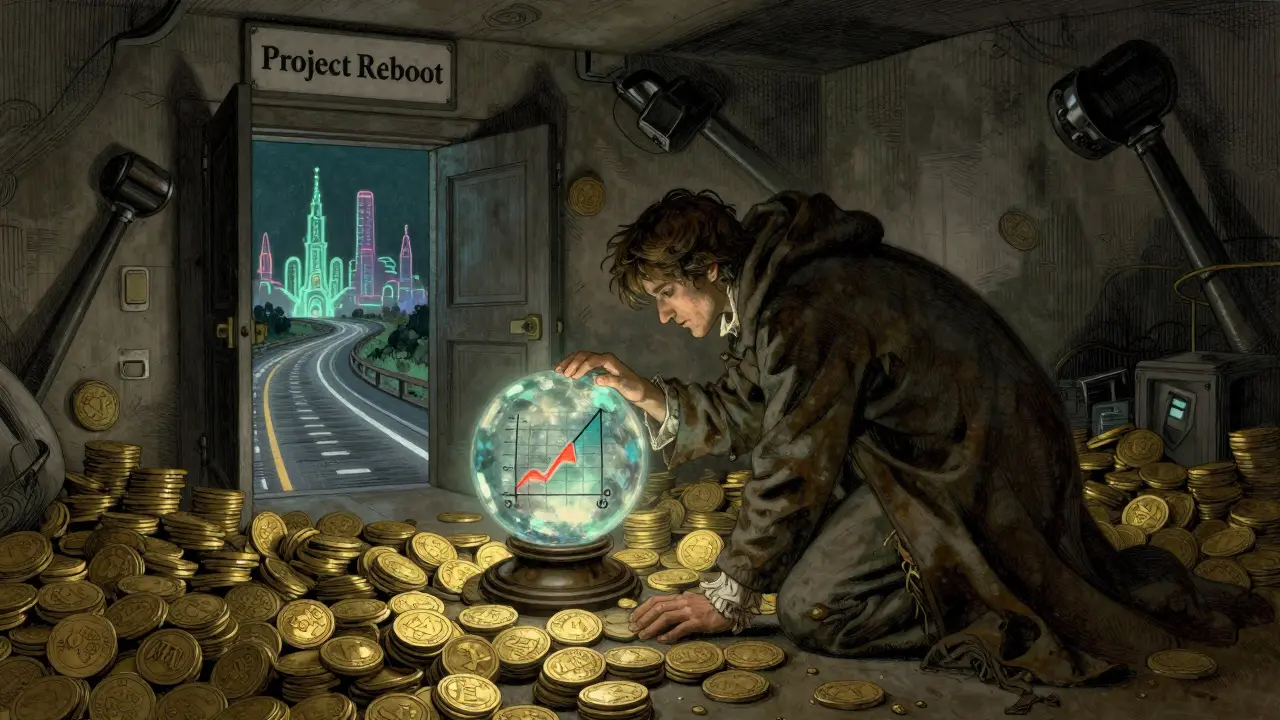
Yes, but barely. The team behind mStable - led by the same people who started Aave - didn’t give up. In August 2023, they launched “Project Reboot.” The plan: move to Ethereum Layer 2, cut gas fees, and partner with bigger DeFi projects.
They’re trying to fix the UI, simplify the process, and make governance easier. But the community doesn’t trust them anymore. Previous roadmap deadlines were missed. Users remember when they promised “mStable v2” in 2022 - and it never came.
Regulators are watching too. The EU’s MiCA rules, which go live in 2024, will force stablecoin protocols to prove their collateral is safe and transparent. mStable’s basket of USDT, USDC, sUSD, and TUSD might not meet those standards. If they can’t adapt, the protocol could be forced to shut down.
Who Should Hold MTA?
If you’re a retail investor looking to get rich? Don’t touch MTA. The price is unstable, the volume is low, and the chances of a big rebound are slim.
If you’re a long-term DeFi believer who thinks stablecoin fragmentation is the biggest unsolved problem in crypto? Then MTA might be worth holding. It’s one of the few protocols that actually tried to solve the core risk of stablecoins - not just the price, but the system failure.
Some holders still swear by it. One Trustpilot review from mid-2023 said: “I appreciate how mStable’s design protects against single-point failures. It’s a safety feature worth holding for the long term.” That’s not hype. That’s a real insight from someone who understands the architecture.
But here’s the truth: MTA isn’t a coin you buy. It’s a bet on whether a broken system can be rebuilt. And right now, the odds are against it.
How to Get Started With MTA (If You Must)
If you still want to try it, here’s how:
- Buy MTA on Binance, KuCoin, or Crypto.com. Search for “MTA/USDT” or “MTA/ETH.”
- Transfer it to your MetaMask or WalletConnect wallet.
- Go to app.mstable.org and connect your wallet.
- Stake your MTA in the governance contract. You’ll need to pay gas fees in ETH.
- Wait for proposals to appear. Read them carefully. Vote.
Don’t expect to earn yield from holding MTA. You don’t. You earn influence. And influence only matters if people care.
What Happens If MTA Dies?
If the protocol shuts down, your MTA tokens won’t vanish. They’ll just become worthless. The smart contracts won’t disappear - but they’ll stop working. There’s no emergency redemption. No buyback. No rescue plan.
That’s the risk. mStable isn’t backed by a company. It’s backed by code. And code can fail. Or be ignored.
Right now, mStable is in a race against time. Can they fix the UI? Can they get users back? Can they survive regulation? If they can’t, MTA will join the graveyard of DeFi experiments - a clever idea that never found its audience.
But if they pull it off? MTA could become the blueprint for the next generation of stablecoin systems. One that doesn’t just track price - but protects against collapse.
What is MTA crypto used for?
MTA is the governance token for the mStable protocol. It lets holders vote on key decisions like which stablecoins are included in mUSD, what fees to charge, and how to respond to peg failures. It’s not a currency - it’s a tool for managing a decentralized system.
Can you earn interest on MTA?
No, you cannot earn interest directly by holding MTA. However, if you stake MTA to become a Governor, you gain voting power - not yield. Some users stake MTA to influence protocol changes, but there’s no built-in reward like staking ETH or SOL. Any income would come from trading or participating in external yield farms, which carry high risk.
Is MTA a good investment?
For most people, no. MTA has very low trading volume, a shrinking user base, and a history of missed development milestones. Its price has dropped over 95% from its all-time high. It’s only worth considering if you’re a long-term DeFi enthusiast who believes in its underlying architecture - not if you’re looking for returns.
What’s the difference between mUSD and imUSD?
mUSD is the base stablecoin pegged to $1, made from a basket of other stablecoins like USDC and USDT. imUSD is the interest-bearing version of mUSD. When you deposit mUSD into the mStable protocol, you get imUSD in return, which accrues yield from fees and lending. But the interface doesn’t make this clear, and confusion between the two is the #1 reason users contact support.
Why is MTA’s price so inconsistent across exchanges?
MTA has extremely low trading volume, often under $10,000 per day. This means a single trade can swing the price dramatically. Some exchanges use outdated data or low-liquidity trades as their price feed, leading to wild differences. For example, one exchange might show $0.03 while another shows $1.14 - not because the market changed, but because one is using a real-time trade and the other is showing a 6-month-old price.
Is mStable safe?
The smart contracts have been audited by CertiK and are considered technically sound. But safety isn’t just about code - it’s about adoption. With TVL under $10 million and governance participation below 50%, the protocol lacks real-world resilience. If the team abandons it or regulators shut it down, there’s no backup. It’s safe in theory, risky in practice.
If you’re thinking about MTA, ask yourself: Are you buying a coin - or betting on a broken system’s chance to heal? Most people choose the first. The few who choose the second are the ones still holding.
Robert Mills
January 29, 2026 AT 15:44Will Pimblett
January 29, 2026 AT 16:15Brianne Hurley
January 30, 2026 AT 06:47Raju Bhagat
January 30, 2026 AT 18:28Rob Duber
January 31, 2026 AT 18:20Christopher Michael
January 31, 2026 AT 21:49Nickole Fennell
February 2, 2026 AT 13:39Meenal Sharma
February 3, 2026 AT 07:07Tressie Trezza
February 4, 2026 AT 22:16Dylan Morrison
February 5, 2026 AT 07:39Andrea Demontis
February 7, 2026 AT 04:00Kevin Thomas
February 8, 2026 AT 19:59Devyn Ranere-Carleton
February 8, 2026 AT 20:29Sunil Srivastva
February 10, 2026 AT 15:01Jerry Ogah
February 12, 2026 AT 08:39Joseph Pietrasik
February 14, 2026 AT 07:13mary irons
February 16, 2026 AT 00:04Dylan Morrison
February 17, 2026 AT 14:11laurence watson
February 19, 2026 AT 08:56Parth Makwana
February 20, 2026 AT 16:08