
You might have seen SuiAI popping up in your crypto feeds and wondered if it’s just another hype-driven meme coin or something with actual teeth. Here is the short answer: SuiAI (SUAI) is a cryptocurrency token built on the Sui Network, designed specifically to power an ecosystem of autonomous, on-chain AI agents. It isn’t just a speculative asset; it acts as the fuel for a platform where you can deploy, own, and interact with AI characters that live permanently on the blockchain.
If you are looking to understand whether this project has legs or if it’s just noise, you need to look past the price charts and into what the token actually does. This guide breaks down exactly what SuiAI is, how its utility works, and why the team insists it is "not just a meme coin." We will also look at the risks, because let’s be honest-early-stage tokens like this come with volatility that would make a rollercoaster look tame.
The Core Concept: Autonomous Agents on Sui
To get SuiAI, you first need to understand the problem it tries to solve. Most AI chatbots today are centralized. They run on company servers, their memory resets when you close the tab, and you don’t really "own" the interaction. SuiAI.fun changes this by putting AI agents directly on the Sui blockchain. These aren't just simple scripts; they are described as autonomous entities capable of performing tasks, generating revenue, and interacting with other users without human intervention.
The Sui Network itself is a Layer-1 blockchain known for high throughput and parallel execution, which makes it technically suitable for handling the frequent micro-transactions required by active AI agents. The platform allows creators to deploy these agents in seconds. Once deployed, these agents exist on-chain. You can discover them, co-own them, and even trade them. Think of it less like hiring a customer service bot and more like adopting a digital pet that can actually work and earn money for you.
| Feature | Description | User Benefit |
|---|---|---|
| On-Chain Deployment | AI agents are registered via smart contracts on Sui. | Permanent existence and verifiable ownership. |
| Co-Ownership | Users can split ownership of an agent. | Shared risk and reward in agent performance. |
| Generative AI Integration | Agents use generative models for text/image output. | Dynamic, non-repetitive interactions. |
| Revenue Generation | Agents can perform tasks that generate fees. | Potential passive income for holders. |
Utility: What Does the SUAI Token Actually Do?
A common complaint in crypto is tokens that have no reason to exist other than being traded. The SuiAI team argues that SUAI is a utility token essential to the platform's operation. If you strip away the marketing, here is where the token flows:
- Agent Customization: When you create or upgrade an AI agent, you likely need to pay fees in SUAI. This includes configuring personality traits, skills, or visual assets.
- Liquidity Provision: To trade these tokenized agents, there needs to be liquidity pools. SUAI serves as one half of these trading pairs, allowing users to swap between stablecoins or SUI and specific agent tokens.
- NFT Minting: The platform supports minting NFTs related to AI agents. SUAI is used to cover the gas costs or minting fees associated with creating these digital collectibles.
- Staking and Governance: While details vary by update, staking SUAI typically secures the network or grants voting rights on future protocol upgrades and IDO (Initial DEX Offering) allocations.
The distinction the team makes is crucial: they want SUAI to be seen as the currency of an economy, not just a lottery ticket. If the AI agents become popular and start generating real value through tasks or social media engagement, the demand for SUAI should theoretically rise because people need it to participate in that economy.
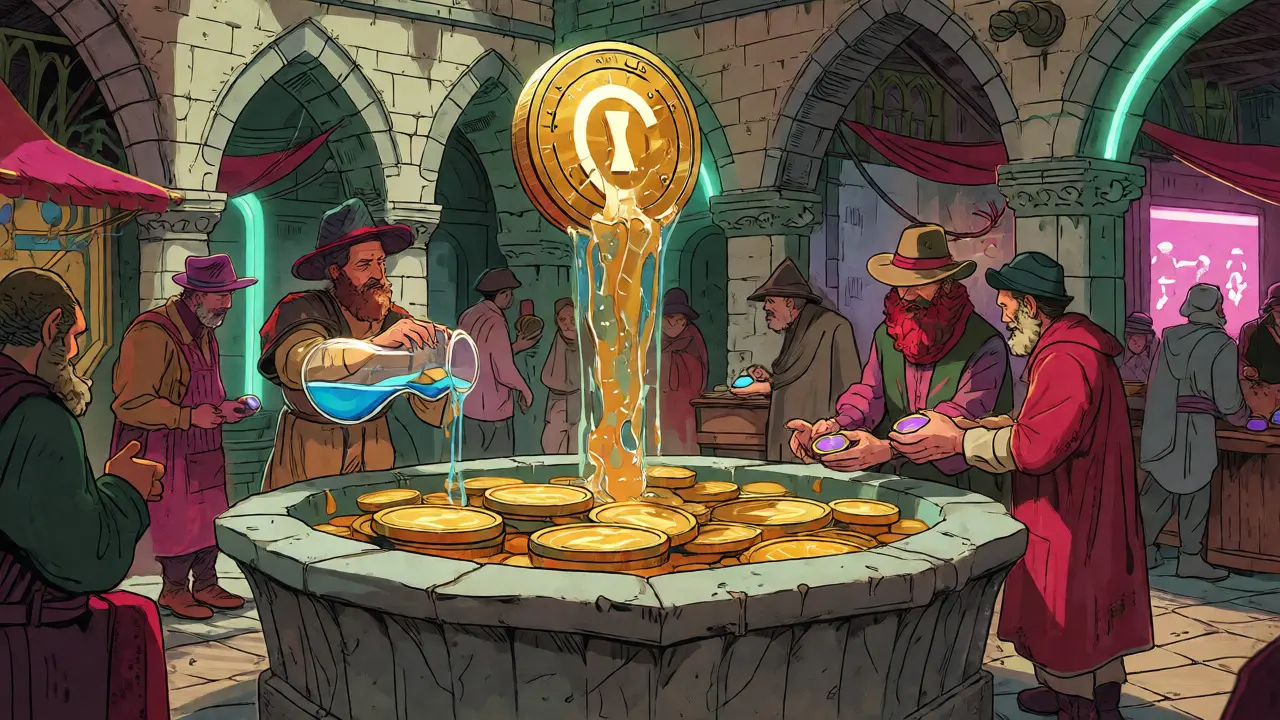
Tokenomics and Market Reality Check
Here is where things get tricky. Because SuiAI is still very early-stage, data from different aggregators doesn’t always match. This is a red flag for anyone doing due diligence. One source might list a market cap of $5 million, while another lists it under $300,000. Why? Because circulating supply definitions vary wildly in the early days.
Most sources agree on a total supply of 1,000,000,000 SUAI. However, whether all of those tokens are currently circulating is debated. Some trackers show a fully diluted valuation (FDV) based on the full billion, while others assume only a fraction is live. As of late 2024 and into 2026, the price has seen extreme volatility. It hit an all-time high of roughly $0.065 in December 2024, only to crash to fractions of a cent shortly after. This kind of swing is typical for small-cap tokens but requires a strong stomach.
There is also a lack of transparent token allocation breakdowns in public listings. You won’t easily find a pie chart showing how much went to the team versus the community. Without clear vesting schedules, investors face the risk of sudden sell-offs if large portions of the supply unlock unexpectedly. Always check the official documentation at docs.suiai.fun for the most current numbers, as third-party sites often lag behind.
How to Buy and Use SuiAI
If you decide to take the plunge, getting your hands on SUAI involves standard crypto procedures, but with a few caveats regarding availability. Not every major exchange lists it yet. For instance, Crypto.com tracks the price but notes it is "not tradable yet" on their spot market. This means you cannot buy it directly there; you have to go elsewhere.
- Choose an Exchange: Look for exchanges that actively list SUAI. Bitget and MEXC are frequently cited as venues where the token is available. Ensure you verify the contract address to avoid scams.
- Create an Account: Sign up for the chosen exchange and complete KYC (Know Your Customer) verification if required. This usually takes minutes but can delay access if documents are rejected.
- Deposit Funds: Deposit USDT, USDC, or SUI into your exchange wallet. Stablecoins are often the easiest way to enter since direct fiat-to-SUAI pairs may not exist.
- Execute Trade: Navigate to the SUAI trading pair (e.g., SUAI/USDT) and place a limit order. Given the low liquidity, market orders can sometimes result in slippage, so limit orders are safer.
- Withdraw to Wallet (Optional): For long-term holding or interacting with dApps on Sui, withdraw your SUAI to a compatible Web3 wallet like Sui Wallet or Ethos.

Risks and Transparency Issues
Let’s talk about the elephant in the room: transparency. Unlike established projects like Ethereum or Solana, SuiAI’s public footprint is thin. There are no prominent founder biographies listed on major aggregators like CoinMarketCap or Blockspot. The team operates somewhat anonymously, which is common in DeFi but adds a layer of trust risk.
Furthermore, technical specifics are scarce. We know the agents use generative AI, but we don’t know which models. Are they using open-source LLMs? Proprietary tech? How do they handle off-chain inference costs? If the cost of running the AI exceeds the revenue it generates, the economic model could collapse. Currently, there are no detailed whitepapers breaking down these engineering challenges publicly accessible in search results.
Community sentiment is hard to gauge too. While there is a Telegram group, engagement metrics aren’t widely reported. Price predictions from algorithmic tools like CoinCodex suggest bearish trends, noting that reaching $10 would require a nearly 5,000% increase, which many analysts deem unlikely in the near term. Treat any "moon shot" claims with skepticism until you see actual user adoption data.
Final Verdict: Is It Worth Watching?
SuiAI represents a fascinating intersection of two hot narratives: Artificial Intelligence and Blockchain. The idea of owning a piece of an autonomous AI agent is compelling. However, the project is undeniably early. The discrepancy in market data, the lack of team transparency, and the extreme price volatility mark it as a high-risk, high-potential play.
If you believe that on-chain AI agents will become a mainstream use case for blockchains like Sui, then SUAI is worth keeping on your radar. But treat it as a speculative venture, not a safe investment. Keep an eye on the development activity on their GitHub or Discord, because code commits matter more than tweets in the long run.
Is SuiAI (SUAI) a meme coin?
The team explicitly states that SUAI is not just a meme coin. It is positioned as a utility token powering the SuiAI.fun platform, which hosts autonomous AI agents. While it shares some characteristics with meme coins, such as high volatility and community-driven hype, its primary purpose is to facilitate transactions, staking, and governance within an AI-agent ecosystem on the Sui Network.
Where can I buy SUAI tokens?
Availability varies by region and time. As of recent updates, exchanges like Bitget and MEXC have listed SUAI. Major platforms like Crypto.com may track the price but not offer direct trading. Always check the latest listing status on CoinMarketCap or the official SuiAI website before attempting to purchase, as listings can change rapidly for small-cap assets.
What is the maximum supply of SUAI?
The total supply of SUAI is fixed at 1,000,000,000 tokens. However, the circulating supply can differ depending on the data provider and the stage of token unlocks. Some aggregators report the entire supply as circulating, while others indicate lower figures, leading to discrepancies in market cap calculations.
Can I stake SUAI?
Yes, staking is a core feature of the SuiAI ecosystem. Users can stake SUAI to secure the network, earn rewards, or gain access to exclusive features like early participation in Initial DEX Offerings (IDOs) for new AI agents launched on the platform.
Who founded SuiAI?
Public information regarding the individual founders of SuiAI is limited. Major cryptocurrency aggregators do not prominently list founder names or detailed team bios. The project emphasizes its technology and community over individual identities, which is common in decentralized finance projects but can pose transparency risks for investors.