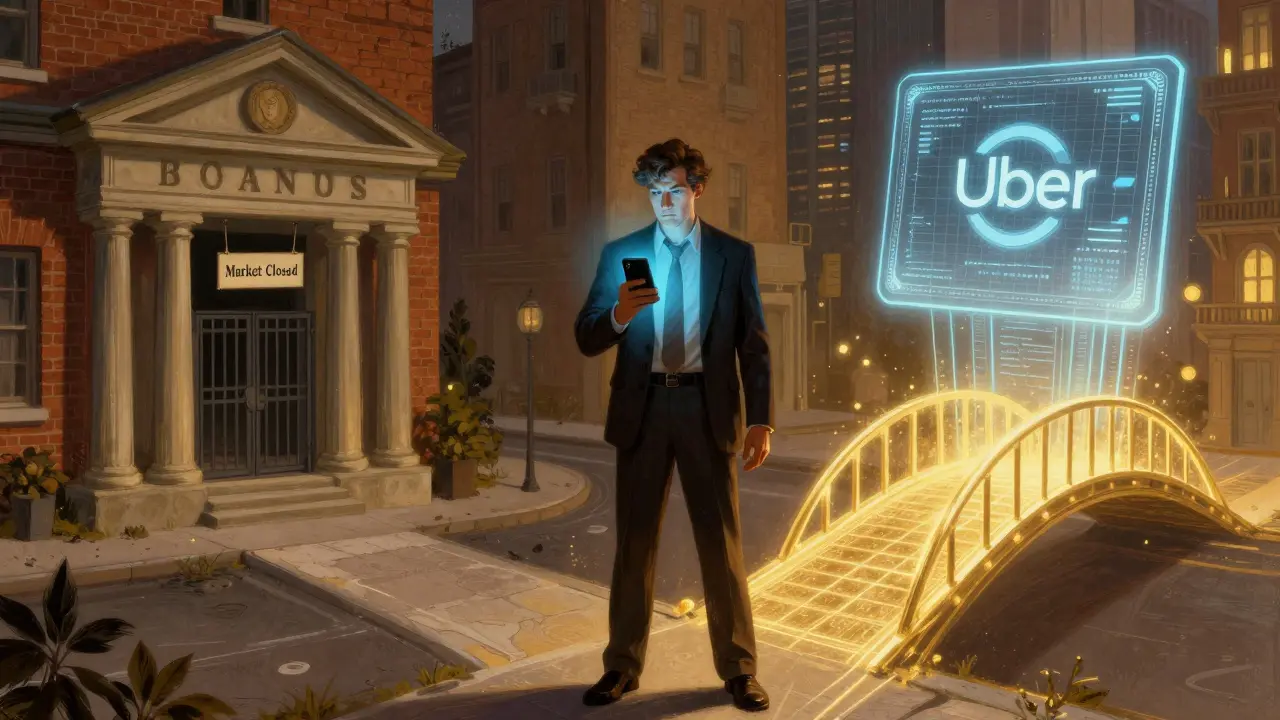
Imagine buying a share of Uber without opening a brokerage account, paying trading fees to a bank, or waiting for the New York Stock Exchange to open on Monday morning. You can do exactly that with Uber Tokenized Stock, known in the crypto world as UBERon. It is a digital token created by Ondo Finance that tracks the price of actual Uber shares while living on the blockchain. For many investors, this sounds like the best of both worlds: the stability of a blue-chip tech company mixed with the speed and accessibility of cryptocurrency.
But how does it actually work? Is it just another meme coin hoping for a pump, or is there real value behind the ticker symbol? Let’s break down what UBERon is, who made it, and whether it fits into your investment strategy in 2026.
Who Created UBERon?
To understand UBERon, you first need to know who built it. The token was launched by Ondo Finance, which is a regulated fintech company specializing in bringing traditional financial assets onto the blockchain. Unlike many crypto projects that start in anonymous Discord groups, Ondo operates with a focus on compliance and institutional standards. They are part of the growing "Real-World Asset" (RWA) movement, which aims to digitize things like stocks, bonds, and real estate.
Ondo didn’t just create UBERon out of thin air. They structure these products to comply with securities regulations, often working through entities in jurisdictions like Bermuda. This regulatory approach is crucial because holding a token that represents a stock is legally different from holding a speculative utility token. Ondo’s goal is to bridge the gap between TradFi (Traditional Finance) and DeFi (Decentralized Finance), allowing users to interact with familiar assets using modern blockchain tools.
How Does UBERon Work Technically?
Under the hood, UBERon is an ERC-20 token operating on the Ethereum blockchain. If you use a wallet like MetaMask or Phantom, you will recognize this format. The contract address for UBERon is 0x5bcd8195e3ef58f677aef9ebc276b5087c027050. This technical standard means the token is compatible with most Ethereum-based decentralized exchanges (DEXs) and wallets.
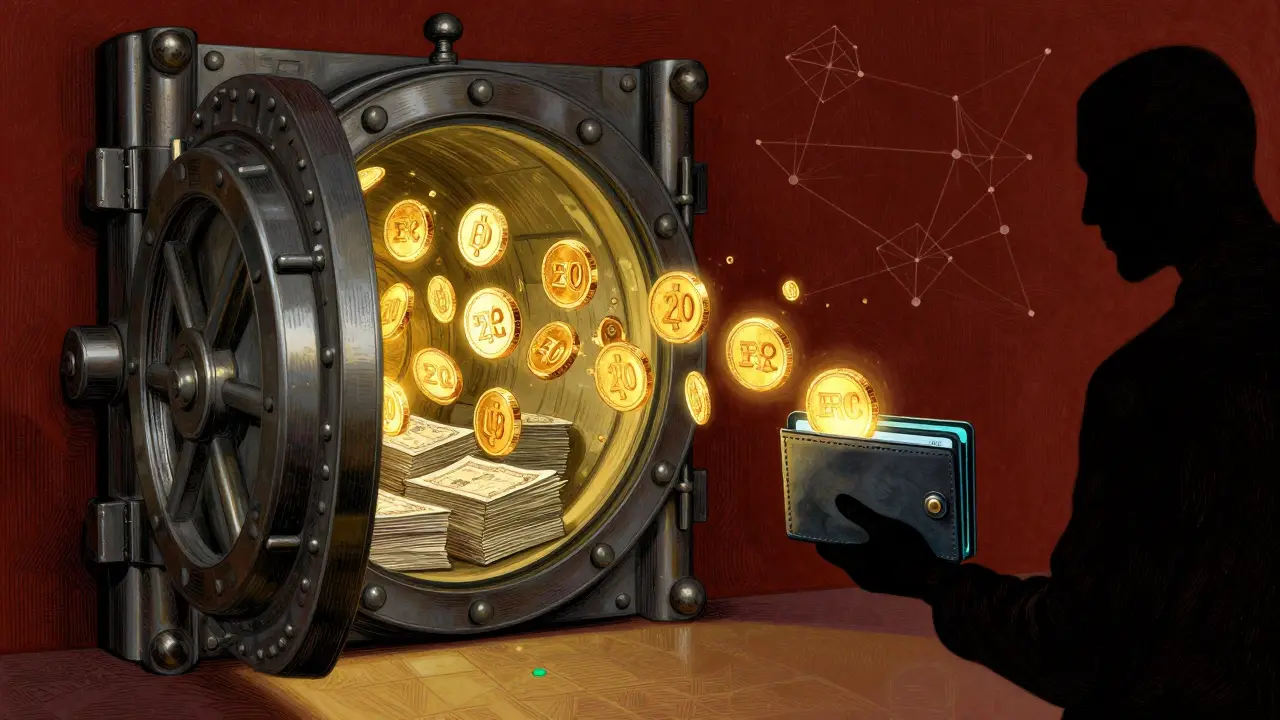
Here is the key mechanism: when you buy one UBERon token, you are not buying a direct share of Uber Inc. Instead, you are buying a token that is fully collateralized by actual Uber shares held by a regulated custodian. Think of it like a receipt. The custodian holds the real stock in a secure vault, and Ondo issues the digital tokens to represent ownership of that value. One UBERon token is designed to track the economic performance of one share of Uber stock (NYSE: UBER).
This setup allows for features that traditional stocks don’t have. For example, dividends paid by Uber are automatically reinvested into the pool, increasing the value of each token over time. You don’t need to manually claim rewards; the smart contract handles it.
Why Would You Choose UBERon Over Regular Uber Stock?
If you already have a brokerage account, buying regular Uber stock is straightforward. So why bother with UBERon? There are three main reasons people choose the tokenized version:
- 24/7 Trading: The NYSE closes at 4 PM Eastern Time. Crypto markets never sleep. With UBERon, you can buy or sell your exposure to Uber at 3 AM on a Sunday if market news breaks overnight. This liquidity flexibility is a huge draw for active traders.
- Fractional Ownership: Buying a single share of some high-priced stocks can be expensive. While Uber shares are more affordable than Amazon, tokenization allows for extreme fractionalization. You can invest $10 or $1000. In late 2023, data showed you could buy as little as 0.01 UBERon for roughly $0.93 USD, lowering the barrier to entry significantly.
- Global Access: Some international investors face restrictions or high fees when trying to access US stock markets. By using a global crypto exchange or DEX, they can bypass traditional banking barriers, provided their local laws allow it.
- Set Up a Wallet: You need an Ethereum-compatible wallet. MetaMask is the industry standard, but Phantom also supports it. Ensure you back up your seed phrase securely.
- Complete KYC: Because UBERon is a security token, you cannot buy it anonymously. You must go through Ondo Finance’s platform or a supported exchange and complete Know Your Customer (KYC) verification. This involves uploading ID documents. Expect this to take 24-72 hours.
- Fund Your Account: You will likely need stablecoins like USDT or USDC. On centralized exchanges, you might convert fiat directly. On decentralized platforms, you swap ETH or stablecoins for UBERon.
- Execute the Swap: Use a decentralized exchange (DEX) or Ondo’s interface to swap your stablecoin for UBERon. Watch out for gas fees. In 2023, Ethereum gas fees averaged around $1.87 per transaction, but this varies wildly based on network congestion.
The Risks and Downsides
It would be irresponsible to talk about UBERon without addressing the risks. This isn’t risk-free money. In fact, it carries unique dangers that regular stocks do not.
Liquidity Issues: This is the biggest problem. When I looked at market data from 2023, the daily trading volume for UBERon was often less than $100,000. Compare that to Uber’s daily volume on the NYSE, which regularly exceeds $2 billion. Low liquidity means two things: wide bid-ask spreads (you pay more to buy, get less to sell) and slippage. If you try to sell a large amount of UBERon quickly, you might crash the price temporarily because there aren't enough buyers.
Tracking Error: Because UBERon trades on crypto exchanges, its price doesn't always match the NYSE price of Uber perfectly. During periods of high volatility, you might see a "tracking error" where UBERon trades at a premium or discount to the actual stock. In September 2023, analysts noted discrepancies ranging from 1.2% to 2.3%. That might sound small, but in trading, those percentages eat into profits.
Regulatory Uncertainty: The US Securities and Exchange Commission (SEC) has been tough on crypto projects that resemble securities. While Ondo tries to stay compliant, the legal landscape is still shifting. If regulators crack down on tokenized stocks in your country, you could face tax complications or even restrictions on holding the asset.
No Voting Rights: When you hold actual Uber stock, you have the right to vote on shareholder proposals. With UBERon, you have economic exposure only. You profit if the price goes up, but you have no say in how the company is run.
| Feature | Uber Stock (NYSE) | UBERon (Ondo) |
|---|---|---|
| Trading Hours | Mon-Fri, Market Hours | 24/7/365 |
| Minimum Investment | 1 Share (or fractional via broker) | Very Low (~$1 equivalent) |
| Voting Rights | Yes | No |
| Liquidity | High (Billions daily) | Low (Thousands/Millions daily) |
| Dividends | Cash payout to broker | Auto-reinvested into token value |
| Tax Complexity | Standard Capital Gains | Complex (Crypto + Security rules) |
Market Performance and Data
Looking at historical data helps set realistic expectations. As of late 2023, UBERon traded in a range between $91 and $98 USD. Its all-time high was around $104, and its low was near $89. These numbers closely mirrored Uber’s stock price during that period, proving the tracking mechanism works reasonably well under normal conditions.
However, the holder count tells a different story. Reports indicated only about 32 unique wallet addresses held UBERon at certain points. This concentration of ownership is risky. If one of the few large holders decides to dump their tokens, the price could swing wildly due to the low liquidity. This is typical for niche RWA tokens that haven't yet achieved mass adoption.

How to Buy and Hold UBERon
If you decide to proceed, here is the practical path:
Be aware of the fees. Besides gas, there may be transaction fees charged by the protocol or the exchange. One user reported that a 0.5% transaction fee plus gas costs ate into their short-term profits significantly.
The Future of Tokenized Stocks
UBERon is just one piece of a much larger puzzle. Ondo Finance has tokenized other major companies like Apple (AAPLon) and Amazon (AMZNon). The broader Real-World Assets sector is projected to grow exponentially, with estimates suggesting it could reach $16 billion by 2025. Institutional interest is rising; surveys show nearly 40% of institutional clients are interested in tokenized equities for diversification.
However, success depends on regulatory clarity. If the SEC provides clear guidelines for tokenized securities, products like UBERon could become mainstream. If regulations tighten or ban such structures for retail investors, the market could shrink. Until then, UBERon remains an innovative but experimental tool for sophisticated investors who understand both crypto mechanics and equity markets.
Is UBERon a safe investment?
UBERon carries significant risks compared to traditional stocks. While it is backed by real Uber shares, it suffers from low liquidity, potential tracking errors, and regulatory uncertainty. It is generally considered suitable only for experienced investors who understand blockchain technology and can afford to lose their capital.
Can I vote on Uber shareholder proposals with UBERon?
No. UBERon provides economic exposure to the stock price, meaning you benefit from price increases and dividends. However, you do not hold the actual legal shares, so you forfeit voting rights associated with traditional stock ownership.
What happens to dividends with UBERon?
Unlike traditional stocks where dividends are paid out as cash to your brokerage account, UBERon automatically reinvests dividends. This reinvestment increases the underlying asset pool, which should theoretically increase the value of each token over time.
Do I need to pay taxes on UBERon?
Yes, but it is complex. In many jurisdictions, selling UBERon for a profit triggers capital gains tax. Additionally, because it is a security token, dividend reinvestments might be taxable events depending on local laws. Always consult a tax professional familiar with crypto assets in your country.
Which wallet supports UBERon?
Since UBERon is an ERC-20 token on the Ethereum network, it is supported by any Ethereum-compatible wallet. Popular choices include MetaMask, Trust Wallet, and Ledger hardware wallets. Phantom Wallet also added support for Ethereum networks, making it another viable option.
Kwon Bill
June 11, 2026 AT 18:24From a macroeconomic perspective, the tokenization of equities represents a significant shift in capital allocation efficiency. By leveraging ERC-20 standards on Ethereum, Ondo Finance is essentially creating a synthetic derivative that decouples ownership rights from economic exposure. This allows for seamless cross-border liquidity without the friction of traditional settlement cycles like T+2. The integration of real-world assets (RWA) into decentralized finance protocols is not just a trend; it is an inevitable convergence of TradFi and DeFi infrastructures.
Benjamin Eisen
June 13, 2026 AT 00:32hey guys this looks really cool i think its great that we can trade anytime. but i am a bit worried about the fees though. does anyone know if the gas fees are still high? i dont want to lose all my money on transactions lol. maybe someone can explain it simpler for me please?
Kenneth Riley
June 13, 2026 AT 11:44you people are absolutely clueless if you think this is safe. the liquidity is practically non-existent. less than $100k daily volume? thats a joke. you cant exit when you need to. its a trap for retail investors who dont understand market microstructure. odo finance is just another scam waiting to happen. wake up sheeple
ravi mahla
June 14, 2026 AT 06:41haha nice try kenneth but you sound like a broken record. seriously though this is amazing for us in india where buying us stocks is a pain. why should we wait for market hours? crypto never sleeps so our investments shouldnt either. lets gooo! 🚀
Mark Brunschwiler
June 15, 2026 AT 18:24i feel like we are missing the point here. what is the soul of investing if not trust? these tokens have no soul. they are cold numbers on a blockchain. i worry about the human element being stripped away. we become mere data points in a algorithmic void. it makes me sad really. very sad.
Sonya O'Brien
June 17, 2026 AT 14:13I completely agree with the sentiment regarding the accessibility of these assets, and I think it is wonderful that more people can participate in the growth of major tech companies like Uber without needing large sums of capital upfront. However, I do have some concerns about the regulatory landscape shifting under our feet, which could potentially impact the viability of holding these tokens long term, so it might be wise to diversify your portfolio rather than putting all your eggs in one basket, especially given the volatility inherent in cryptocurrency markets.
Filbert Reeves
June 19, 2026 AT 06:37its all part of the plan to track every move you make. kyck verification means they have your id and biometrics. soon they will know what you buy before you do. dont fall for the hype. keep your cash under the mattress. the government wants to control everything through these digital tokens. its surveillance capitalism at its finest. stay woke.
Nick Rice
June 19, 2026 AT 07:06Let's cut through the noise. If you're serious about trading, you need to understand the bid-ask spread implications here. Low liquidity means slippage will eat your margins alive. But if you're looking for 24/7 exposure to UBER stock price action, this is currently the only game in town for crypto natives. Just manage your risk accordingly.
Amit Thakur
June 19, 2026 AT 19:41The RWA narrative is strong right now. Institutional adoption is key. When big players start moving billions into tokenized treasuries and equities, the infrastructure will mature. Ondo is positioning itself well as a compliant bridge. We need to focus on the fundamentals of the underlying asset and the custodial structure rather than FUD about short-term liquidity issues.
Eric Scheinberg
June 19, 2026 AT 21:53It is imperative to note that the legal distinction between holding a security token and holding the actual equity is profound. Investors must consult with legal counsel regarding tax implications in their respective jurisdictions. The automatic reinvestment of dividends creates a compounding effect that is mathematically advantageous but tax-complex.
pankaj chawla
June 21, 2026 AT 19:00Good breakdown. I think the fractional ownership aspect is the most compelling feature for new investors. It lowers the barrier to entry significantly. I would like to see more educational content on how to safely store these tokens and manage private keys.
Jessica Lane
June 23, 2026 AT 12:56I appreciate the detailed explanation of the risks involved. It is crucial for investors to understand that while the technology is innovative, the lack of voting rights is a significant drawback for those who care about corporate governance. I will likely stick to traditional brokerage accounts for now until the regulatory framework becomes clearer.
Charles Pawlikowski
June 23, 2026 AT 15:39typical american greed trying to sell you something risky. in my country we value stability. but hey if you want to gamble your life savings on some internet token go ahead. just dont cry when the sec shuts it down. :)
Andrea Burd
June 25, 2026 AT 13:18boring. another crypto article pretending to be finance news. the writing is dry and uninteresting. i skimmed it and found nothing worth reading. waste of time.
Akeem Whittaker
June 26, 2026 AT 00:24For those interested in the technical side, ensure your wallet supports ERC-20 tokens properly. MetaMask is standard, but hardware wallets like Ledger offer better security for long-term holds. Never share your seed phrase. That is rule number one in crypto.
Manish Prajapat
June 26, 2026 AT 04:04The philosophy behind tokenization is interesting. It questions the nature of ownership in a digital age. Do we own the asset or just the claim to its value? This distinction has deep implications for property rights and financial autonomy. Food for thought.
John Doe
June 27, 2026 AT 09:22I tried buying a small amount last week. The process was smoother than expected, but the tracking error during the market open was noticeable. It lagged behind the NYSE price by about 1%. Not ideal for day trading, but okay for swing trades.
Mekz Wheoki
June 28, 2026 AT 07:51Oh look, another 'revolutionary' product that solves a problem nobody asked to have. You can already buy fractional shares on robinhood for free. Why pay crypto premiums and deal with smart contract risk? Typical over-engineered solution.
Skm Shubham
June 29, 2026 AT 05:20The holder concentration is alarming. Only 32 wallets? That is centralization disguised as decentralization. One whale dump and the chart goes vertical downwards. Not a good sign for retail participants.
Rob Aronson
June 29, 2026 AT 11:07Great overview 👍 I think the key takeaway is understanding your own risk tolerance. If you need the money, don't touch it. If you're experimenting with DeFi, this is a low-cap way to get exposure. Always DYOR 🔎