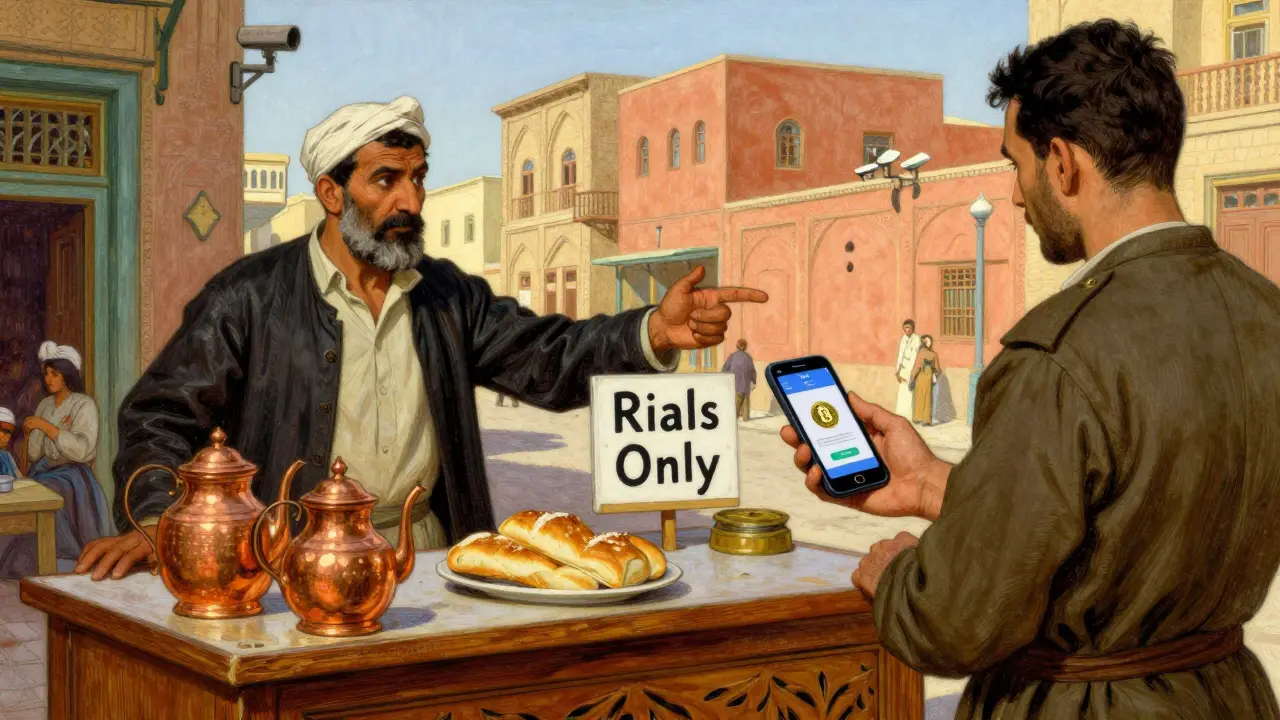
Can you buy coffee with Bitcoin in Tehran right now? The short answer is no. But the long answer is complicated, risky, and constantly changing. If you are trying to figure out if crypto payments are legal in Iran, you need to understand that the rules shift faster than the market itself. As of early 2026, the landscape is defined by a strict paradox: the government loves the revenue from mining but hates the freedom of spending.
You might hear conflicting stories. Some say it’s totally banned; others claim everyone uses it daily. Both are partially true, but missing the crucial nuance. The Iranian government does not want you using crypto to bypass sanctions or hide money. They do, however, want to control every transaction that happens. This guide breaks down exactly what is allowed, what is forbidden, and how the recent regulatory crackdowns affect your ability to move money.
The Current Legal Status: Controlled Permission
To understand where things stand today, we have to look at the major pivot that happened between late 2024 and early 2025. For years, the approach was ambiguous. Then, in December 2024, the Central Bank of Iran (CBI) pulled the plug on most direct fiat-to-crypto payment gateways. It felt like a total ban. But by January 2025, the strategy shifted from prohibition to surveillance.
President Masoud Pezeshkian designated the CBI as the sole authority for regulating the cryptocurrency market. What this means for you is that cryptocurrency exchanges can operate again, but only under extreme conditions. These platforms must use the government’s own API system. Every time you swap Rials for Tether or Bitcoin, the authorities see it. They have unrestricted access to your data, statistics, and records.
This is not "freedom." It is a controlled environment. You can trade, but you cannot hide. The requirement for all brokers to conduct Rial transactions through designated accounts approved by the central bank ensures that no money moves without state oversight. If you are looking for privacy, this setup is not for you.
Mining vs. Spending: The Double Standard
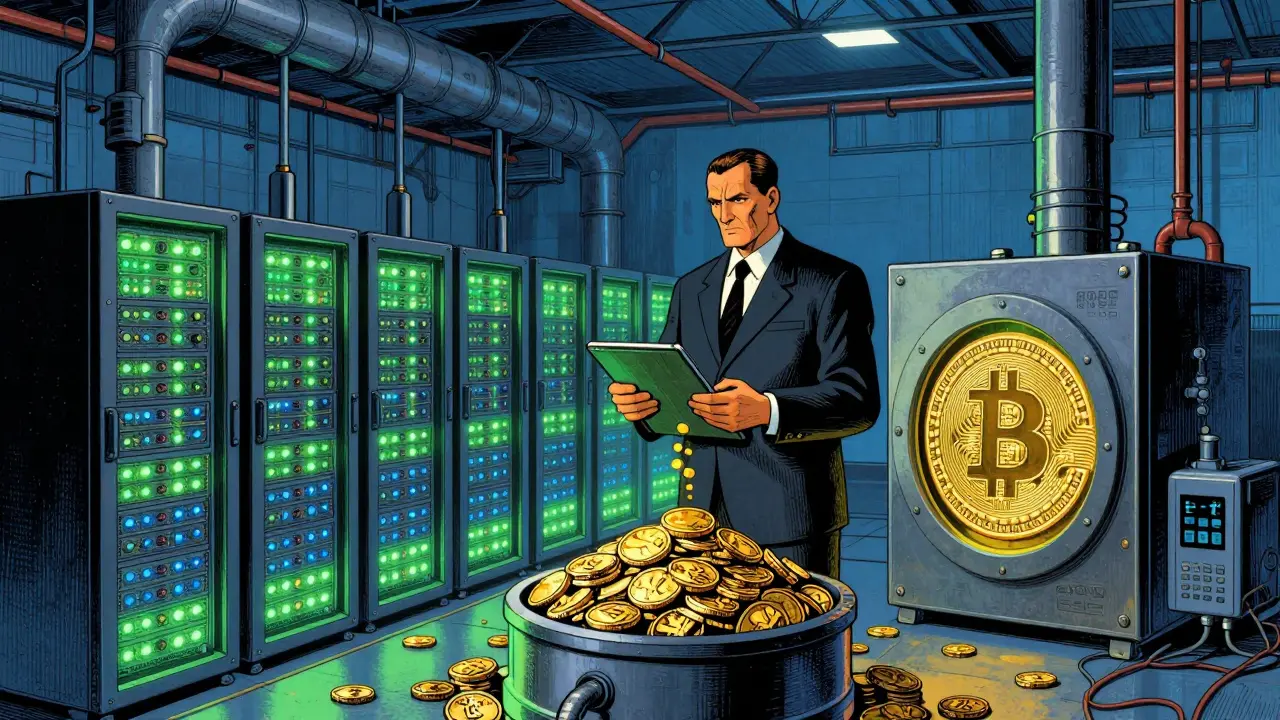
One of the biggest sources of confusion is the difference between earning crypto and spending it. Iran has become a global powerhouse in Bitcoin mining. Why? Because electricity is cheap, and the government sees mining as a way to generate foreign currency revenue amidst heavy international sanctions.
Mining remains legal, provided you follow strict rules. You need a license from the Ministry of Industry, Mine and Trade. You must use approved hardware. And perhaps most importantly, you often have to sell your mined coins directly to the Central Bank. This allows the state to capture the value of the energy used.
However, just because you can mine doesn’t mean you can spend freely. The government distinguishes between production (which they tax and control) and circulation (which they fear). Using crypto for domestic payments-buying goods or services locally-is effectively prohibited for peer-to-peer transactions. The goal is to prevent capital flight and protect the Rial’s stability, even though the Rial continues to face depreciation pressures.
The Advertising Ban and Public Awareness
If you walk around Tehran or browse local social media, you won’t see ads for crypto wallets. In February 2025, the Iranian government imposed a comprehensive nationwide ban on cryptocurrency advertising. This covers both online spaces and physical billboards. It is one of the most restrictive advertising policies globally.
Why ban ads? To limit public exposure. By making it harder for new users to discover crypto platforms, the government reduces speculative activity. Less speculation means less volatility in the local market. For existing users, this means finding information requires more effort. You won’t find easy tutorials or promotional offers. The barrier to entry is intentionally high.
How Iranians Actually Move Money
So, if direct payments are restricted and ads are banned, how does anyone use crypto? The reality is that many Iranians still rely on virtual private networks (VPNs) to access foreign exchanges. Local platforms like Nobitex operate under stringent regulations, prohibiting the use of foreign-mined cryptocurrencies for domestic transactions to reinforce government control.
Despite these measures, the demand remains high due to economic instability. When the Rial loses value quickly, people turn to stablecoins like USDT (Tether) to preserve their wealth. Between January and July 2025, Iran recorded approximately $3.7 billion in total cryptocurrency flows. While this was an 11% decline from the previous year, showing the impact of regulatory pressure, it proves that the market is far from dead.
Most transactions happen through licensed, government-monitored platforms. Direct peer-to-peer payments for everyday goods remain rare and risky. Instead, crypto serves primarily as a store of value or a tool for cross-border transfers, rather than a daily currency for buying bread or paying rent.
International Pressure and Sanctions Evasion
You cannot discuss crypto in Iran without mentioning international sanctions. Iran’s interest in digital currencies began around 2017 when traditional banking channels were cut off. Crypto became a lifeline for bypassing financial restrictions. However, this has drawn intense scrutiny from global financial institutions.
In July 2025, Tether executed its largest-ever freeze of Iranian-linked funds. They froze 42 addresses, many of which had substantial exposure to local exchanges like Nobitex. This demonstrates that while the Iranian government controls internal data, international entities still enforce compliance rules.
The involvement of groups like the Islamic Revolutionary Guard Corps (IRGC) in crypto activities has raised further concerns. International compliance actions specifically target IRGC-linked wallets. For ordinary citizens, this means that holding large amounts of crypto linked to sanctioned entities can lead to frozen assets. The risk of losing your funds to external freezes is real.
The Digital Rial: The Government’s Alternative
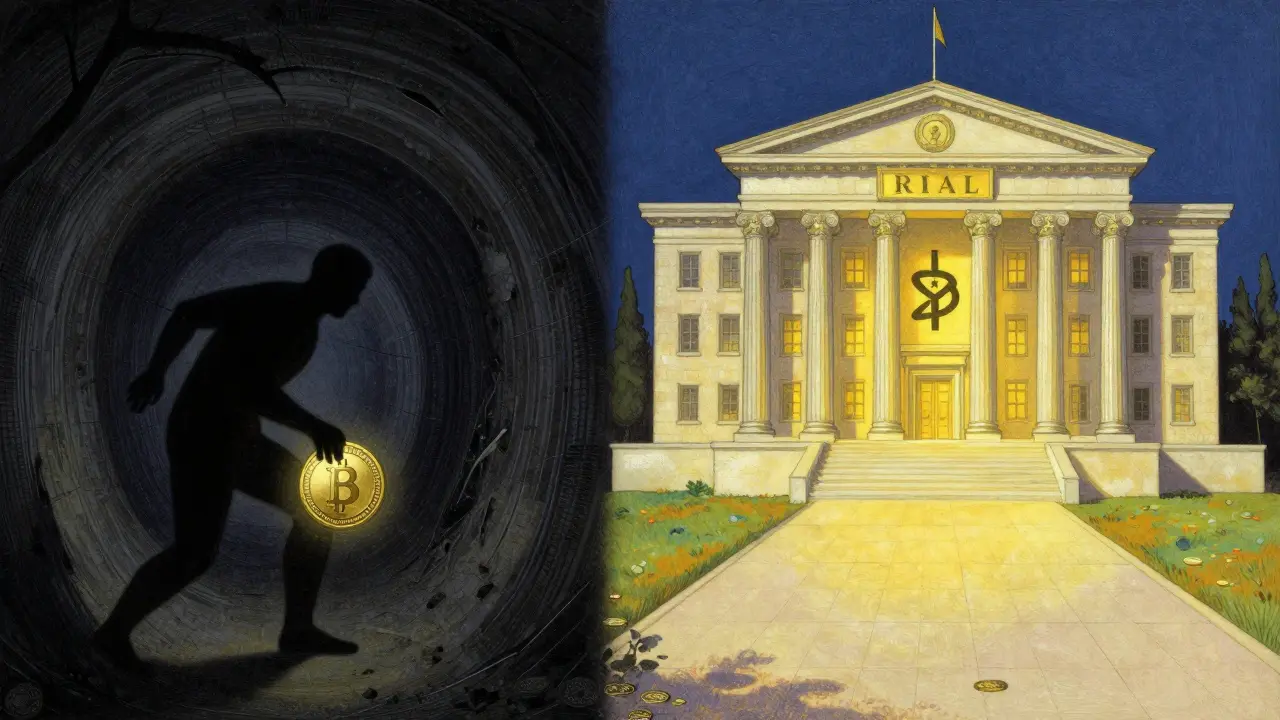
If the government wants to control digital money, why not make their own? Enter the Digital Rial. Iran is developing a Central Bank Digital Currency (CBDC) called "Rial Currency." Unlike Bitcoin, this cannot be mined. Its supply is regulated exclusively by the central bank.
The Digital Rial aims to reduce dependency on the US dollar and provide a modern, traceable payment method. Pilot programs have been tested on Kish Island. The goal is to offer the convenience of digital payments without the anonymity or volatility of decentralized cryptocurrencies. For merchants and consumers, this represents the future of compliant digital finance in Iran. It is fast, secure, and fully monitored.
Risks and Pitfalls to Avoid
If you are considering engaging with the Iranian crypto market, whether as a resident or a foreign investor, you must understand the risks. First, the regulatory framework is volatile. Rules that exist today may change tomorrow. Second, energy constraints are severe. Mining operations account for about 4.5% of global activity, straining the electrical grid. Rolling power outages are common, and unauthorized mining can lead to judicial action.
Third, beware of scams. With limited advertising and official guidance, misinformation spreads easily. Always verify that any platform you use is licensed by the Central Bank of Iran. Unlicensed platforms operate in a legal gray area and offer no protection if they collapse or are shut down.
| Activity | Legal Status | Key Restrictions |
|---|---|---|
| Cryptocurrency Mining | Legal (Licensed) | Requires ministry license; high energy tariffs; must sell to CBI. |
| Domestic Trading (Exchange) | Controlled | Must use government-approved APIs; full data transparency required. |
| P2P Payments for Goods | Effectively Prohibited | No legal tender status; high risk of account freezing. |
| Crypto Advertising | Banned | Nationwide ban on online and offline promotion since Feb 2025. |
| Digital Rial Usage | Encouraged | Government-backed CBDC; fully traceable; pilot phases ongoing. |
Conclusion: Navigating the Gray Area
Are crypto payments allowed in Iran? Technically, yes, but only within a tightly fenced cage. You can trade on licensed platforms, but you are being watched. You can mine, but you must pay the state. You cannot advertise, and you cannot easily spend it on local goods. The system is designed to extract value for the state while minimizing the threat to monetary sovereignty.
For the average person, crypto remains a vital tool for preserving wealth against inflation, but it is not a replacement for the Rial in daily life. The introduction of the Digital Rial suggests that the government intends to co-opt digital technology rather than fight it. Until then, proceed with caution, prioritize security, and stay updated on the latest directives from the Central Bank of Iran.
Is Bitcoin legal in Iran?
Yes, owning and trading Bitcoin is legal, but it is heavily regulated. You must use licensed exchanges that report all transactions to the Central Bank of Iran. Unauthorized mining or using unapproved platforms can lead to penalties.
Can I use crypto to buy goods in Iran?
Direct peer-to-peer crypto payments for goods and services are effectively prohibited. Merchants generally accept Rials or the emerging Digital Rial. Using crypto for daily purchases carries significant legal and financial risks.
What happened to crypto ads in Iran?
In February 2025, the Iranian government banned all cryptocurrency advertising, both online and offline. This includes social media posts, billboards, and website promotions, aiming to reduce public speculation and exposure.
Is mining crypto profitable in Iran?
Mining is legal but challenging. While electricity costs are low, licensed miners face high tariffs and must often sell their output to the Central Bank. Many operations run underground to avoid caps, risking power cuts and legal action.
What is the Digital Rial?
The Digital Rial is Iran’s Central Bank Digital Currency (CBDC). Unlike decentralized cryptocurrencies, it is issued and controlled by the Central Bank of Iran. It aims to provide a secure, traceable alternative to cash and foreign cryptocurrencies.
Amanda Macy
May 2, 2026 AT 14:48The paradox of mining being encouraged while spending is restricted reveals a fundamental misunderstanding of monetary sovereignty by the state. It is not merely about control, but about the philosophical implication of value extraction without circulation. The government seeks the utility of blockchain technology for revenue generation while simultaneously rejecting its core tenet of decentralized trust. This creates an environment where the asset exists only as a speculative instrument rather than a medium of exchange. The surveillance aspect transforms every transaction into a data point for the state apparatus. One must consider whether this model is sustainable in the long term given the technological inevitability of privacy-preserving solutions. The Digital Rial represents an attempt to co-opt innovation rather than foster it organically.
Chloe Fletcher
May 4, 2026 AT 11:29This is such a complex situation and I really appreciate how you broke down the nuances! 🌟 It’s scary to think that people are risking so much just to preserve their wealth against inflation. The part about Tether freezing addresses was shocking 😱. I hope everyone stays safe and informed because these rules change so fast. You did a great job explaining the difference between mining and spending too! 💪
Mitali Rajvanshi
May 6, 2026 AT 09:52I found the section on the advertising ban particularly interesting. It seems like a strategy to limit public awareness rather than address the underlying economic issues. By making information scarce, they reduce the velocity of money in crypto assets. It reminds me of similar patterns in other emerging markets where regulation follows panic rather than foresight. The reliance on licensed platforms ensures that the state always has a backdoor into user data.
Ralph Espinosa
May 7, 2026 AT 12:41It is important to note that the Central Bank's API integration is not just a formality; it is a comprehensive surveillance tool. Every transaction is logged, analyzed, and potentially flagged for compliance checks. Users should understand that 'licensed' does not mean 'private.' The requirement to sell mined coins to the CBI further consolidates state power over digital assets. This is a classic example of regulatory capture where the regulator becomes the primary beneficiary of the market activity.
Lex Harley
May 7, 2026 AT 15:40i think the whole thing with the IRGC linked wallets is super sketchy tho. like if u hold onto ur coins and they get frozen by tether or some other entity its basically gone right? the tech stack here is kinda fragile when u add in international sanctions pressure. its wild how they use cheap electricity for mining but then try to stop ppl from using it. feels like a lose-lose for the average joe trying to survive inflation.
Tony Phan
May 7, 2026 AT 18:28Look at this mess. They want the money but not the freedom. Typical government greed. You mine it, they take it. You spend it, they watch you. It’s a trap. Everyone knows it. But they keep digging deeper into the hole. The Digital Rial is just another chain around their ankles. Wake up people. It’s all about control. Nothing more. Nothing less. Pathetic really.
Bevon Findley
May 9, 2026 AT 01:59One might observe that the Iranian approach is somewhat... quaint in its inefficiency. :P They attempt to regulate a borderless technology with local decrees. It is amusing, really. The elite likely have their own channels, untouched by these petty restrictions. The rest of us are left to navigate this bureaucratic maze. A fascinating study in futility, wouldn’t you say? :-)
Kristi Swartz
May 9, 2026 AT 06:58the moral implications of this system are deeply troubling. to force citizens into a monitored financial ecosystem is a violation of basic rights. there is no room for privacy in a free society yet here we see the opposite. the state demands total transparency while offering none in return. it is unjust and unethical. one should resist such systems whenever possible. the digital rial is a step towards total authoritarianism and we must recognize it as such
Alex Mazonowicz
May 10, 2026 AT 22:44Despite the challenges, I believe there is hope! The resilience of the Iranian people is incredible. They find ways to adapt and thrive even under strict regulations. The fact that $3.7 billion still flows through crypto shows that demand cannot be suppressed entirely. Technology will eventually outpace regulation. We should support initiatives that promote financial literacy and security for those navigating this gray area. Stay positive! 🌈
Veronica Bago
May 10, 2026 AT 22:54I just read through this and it’s quite eye-opening. I never realized how much the government intervenes in something as personal as currency. It makes sense why people would turn to stablecoins though. When your local currency keeps losing value, you need something stable. Thanks for sharing this info, it’s really helpful to understand the bigger picture.
Arti Jain
May 11, 2026 AT 22:31Iranian economy is a disaster of their own making. Sanctions are not the only reason. Corruption is rampant. They blame external factors while stealing internally. Crypto is just another tool for them to loot resources. Do not sympathize with them. Their leadership chooses isolation. The result is poverty. Simple cause and effect. Stop making excuses for failed states.
Harvey Alford
May 12, 2026 AT 09:37So you’re telling me I can’t just buy Bitcoin and send it to my cousin in Tehran? That’s pretty rude of the government. I guess I’ll have to find another way to help him out. Maybe wire transfer? No wait, that’s banned too. What a joke. Why do they care so much? Just let people live their lives. It’s not my problem really. But it’s annoying.
VIVEK SINGH
May 13, 2026 AT 03:12The irony is palpable. A nation that prides itself on resistance to Western hegemony adopts a financial model that is strictly hierarchical and controlled. The 'freedom' of crypto is mocked by the reality of state-sponsored surveillance. It is a theater of sovereignty. The people are the audience, trapped in the seats. The miners are the props, generating heat and light for the stage. Who is laughing last? Probably the algorithms.
Lloyd I
May 13, 2026 AT 17:50We can learn a lot from this case study. It highlights the importance of community support and education in times of economic uncertainty. Let’s encourage each other to stay informed and safe. If you know someone dealing with this, share this article. Knowledge is power. Together we can help make the digital space safer for everyone. Let’s keep the conversation going!
Robert Smith
May 14, 2026 AT 10:46Crazy stuff 🤯. I don’t get why they bother banning ads if everyone already knows about it. Seems like a waste of time. But hey, if it makes them feel better, go ahead. 🙄