
China’s stance on cryptocurrency is one of the strictest in the world. If you are trying to trade Bitcoin or Ethereum from within Chinese borders, you aren't just dealing with high fees or slow transfers; you are navigating a legal minefield. The People's Bank of China (PBOC) has systematically dismantled access to centralized cryptocurrency exchanges platforms that facilitate the buying, selling, and holding of digital assets like Bitcoin and Ethereum since 2017. For many users, this means their favorite platforms are invisible, their bank accounts are monitored, and even holding assets carries risk.
The situation isn't static. While the core ban remains, rumors of total ownership bans circulate constantly, causing market panic. Understanding what is actually illegal versus what is merely restricted helps you make safer decisions. This guide breaks down which exchanges are blocked, how enforcement works, and where the real action happens now.
Key Takeaways
- All centralized exchanges are effectively banned for Chinese residents, including global giants like Binance and Coinbase.
- The ban targets trading and mining, but holding crypto privately is not explicitly criminalized by current law, despite viral rumors.
- Enforcement relies on the Great Firewall, KYC checks, and banking restrictions rather than direct app removals.
- Many Chinese traders have shifted to Over-The-Counter (OTC) deals and Decentralized Exchanges (DEXs) to bypass restrictions.
- The state-backed e-CNY is being promoted as the official alternative to private cryptocurrencies.
Which Exchanges Are Actually Banned?
Technically, no specific exchange is listed on a public "banned list" because the restriction applies to the act of trading itself. However, in practice, every major centralized exchange is inaccessible to Chinese users through normal channels. Here is how the landscape looks:
| Exchange Name | Access Status | Primary Barrier |
|---|---|---|
| Binance | Blocked/Restricted | Great Firewall IP blocking, KYC flags |
| Coinbase | Inaccessible | No local entity, firewall block |
| Kraken | Inaccessible | Geographic restriction, firewall block |
| Huobi (HTX) | Domestic Ops Stopped | Regulatory pressure, moved HQ off-shore |
| OKX | Restricted | IP blocking, banking cutoffs |
Since September 2017, when the PBOC first banned centralized exchanges, the net has tightened. By 2021, the ban expanded to include Initial Coin Offerings (ICOs) and mining. Today, if you try to log into Binance using a Chinese phone number or ID card, your account may be frozen. The platform might still load if you use a Virtual Private Network (VPN), but the financial rails-bank transfers-are cut off.
This creates a two-tier system. International users can trade freely, while Chinese residents must go underground. The ban doesn't stop the apps from existing; it stops the money from flowing legally.
How Enforcement Works in Practice
You might wonder how Beijing blocks trillions of dollars worth of digital assets without a central server to shut down. It’s a multi-layered approach that combines technology, finance, and law.
- The Great Firewall (GFW): China’s national internet censorship system blocks direct access to most foreign crypto websites. If you’re on a standard Chinese ISP connection, sites like CoinMarketCap or Binance often time out or show error pages.
- Banking Blackouts: In 2021, regulators ordered banks to stop servicing crypto-related businesses. This means you can’t easily wire RMB to an exchange. If you do transfer money via P2P channels, your bank account might get flagged for "suspicious activity."
- KYC Monitoring: Foreign exchanges require Know Your Customer (KYC) verification. If a user uploads a Chinese ID, algorithms flag the account. While not all flagged accounts are immediately closed, they become targets for scrutiny. Some users report receiving emails asking them to prove they don’t live in China.
- Criminal Prosecution: The biggest fear isn't losing your coins; it’s going to jail. Courts have prosecuted individuals under "illegal fundraising" and "capital flight" statutes. If you run a large OTC desk or help others move money out of China, you risk criminal charges.
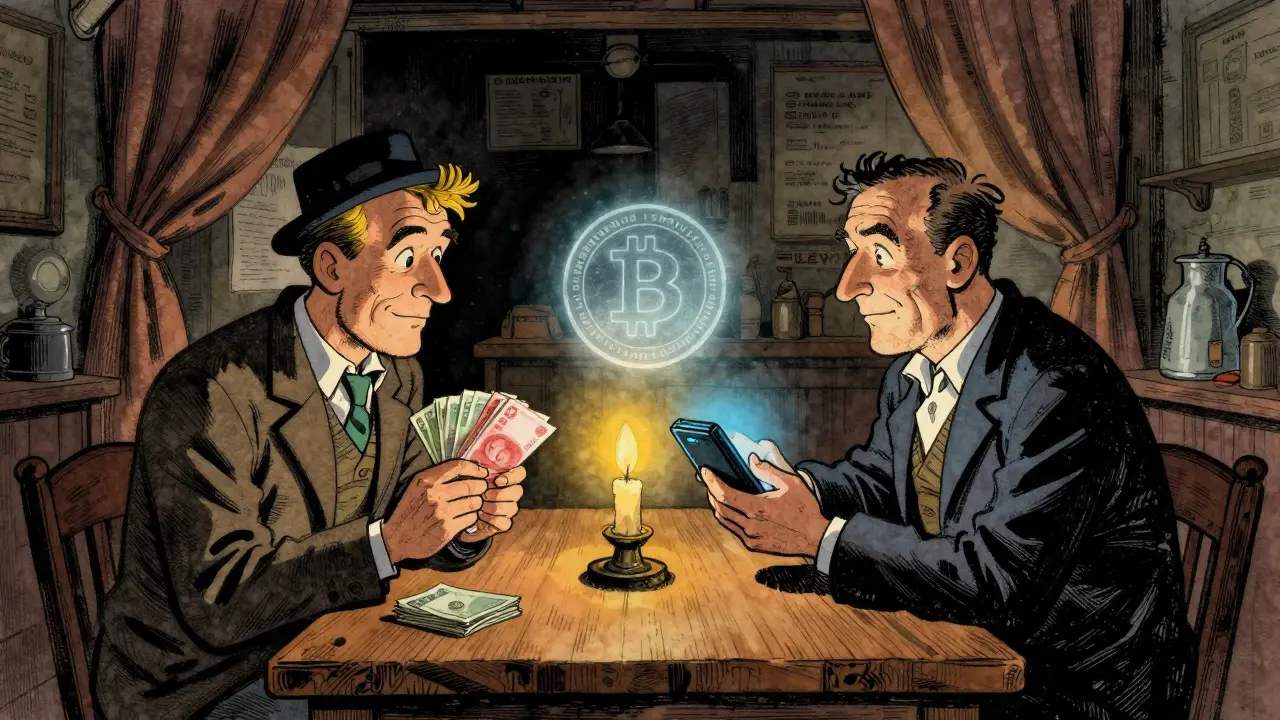
It’s important to distinguish between *trading* and *holding*. There is no statute that says "it is illegal to own Bitcoin." However, because the only way to buy it is often through gray-market channels, the act of acquiring it becomes legally murky. Once you hold it, the risk is lower, but moving it back to fiat currency is where the danger lies.
Rumors vs. Reality: Did China Ban Holding Crypto?
In mid-2025, social media exploded with claims that China had made *holding* cryptocurrency completely illegal. Posts claimed that as of May 31, 2025, any citizen found with crypto assets would face penalties. These rumors caused a sharp dip in Bitcoin prices, dropping from $111,000 to under $104,000 in hours.
Was this true? No. Fact-checkers and regulatory analysts confirmed these were recycled headlines from the 2021 ban. The 2021 rules banned *exchanges* and *miners*, not individual holders. As of August 2026, no new legislation has been passed that criminalizes simple possession. The confusion stems from aggressive enforcement rhetoric and the lack of clear official communication from Beijing.
Why does this matter? Because fear drives markets. When people think they must dump their coins to avoid arrest, liquidity dries up, and prices crash. Smart investors watch for these rumor cycles to find entry points, knowing the legal ground hasn't actually changed.
Where Do Chinese Traders Go Now?
If the big exchanges are blocked and banks are watching, how does anyone trade? The answer is creativity. The Chinese crypto community has adapted, creating a robust underground ecosystem.
Over-The-Counter (OTC) Trading
OTC trading is the backbone of the Chinese market. Instead of using an app, buyers and sellers meet directly, often through Telegram groups or specialized forums. A seller offers USDT at a discount, and the buyer wires RMB to a personal bank account. Both parties trust each other (or use escrow services) to complete the swap. This method avoids exchange KYC entirely but carries counterparty risk-if the other person runs away with your money, you have little recourse.
Decentralized Exchanges (DEXs)
Platforms like Uniswap or PancakeSwap operate on blockchain networks, meaning there is no central company to ban. You connect your wallet directly to the protocol. Since no ID is required, DEXs are popular among tech-savvy Chinese users. The downside? Gas fees and complexity. You need to manage your own private keys, and mistakes are irreversible.
Offshore Accounts and VPNs
Many wealthy individuals open bank accounts in Singapore, Hong Kong, or the UAE. They use these accounts to fund international exchanges like Kraken or Coinbase. Combined with a reliable VPN, this allows them to trade like any other global citizen. It’s expensive and requires effort, but it’s the safest route for high-net-worth individuals.
The Rise of the e-CNY
While banning private crypto, China is pushing its own solution: the e-CNY, or digital yuan. Launched in pilot phases starting in 2020, the e-CNY is a Central Bank Digital Currency (CBDC). Unlike Bitcoin, which is decentralized and anonymous, the e-CNY is fully controlled by the state.
Authorities position the e-CNY as the modern, efficient alternative to cash and the chaotic crypto market. It offers instant settlement, programmable features (like expiring coupons), and full traceability. For the government, this is the win-win: citizens get digital convenience, and the state maintains monetary control. For crypto enthusiasts, it’s a reminder that the future of money in China will likely be state-managed, not peer-to-peer.
Future Outlook: Will the Ban Lift?
Most analysts believe the comprehensive ban on centralized exchanges will persist through 2026 and beyond. Why? Because the government sees crypto as a threat to financial stability and capital controls. Allowing free trading would make it too easy for money to leave the country, undermining the value of the Yuan.
However, cracks are showing. In July 2025, statements from Shanghai’s State-owned Assets Supervision and Administration Commission hinted at a possible softening. Officials suggested that "the rapid evolution of digital assets" might lead to a more targeted approach, such as licensed domestic exchanges with strict KYC. If this happens, it wouldn’t mean freedom-it would mean regulation. Trading would be allowed, but only on approved platforms, with full surveillance.
For now, the strategy for those inside China remains cautious: use OTC for small amounts, DEXs for DeFi, and keep records clean. The ban isn't going away, but the market finds a way.
Is it illegal to hold Bitcoin in China?
No, holding Bitcoin is not currently illegal. The laws ban trading, mining, and ICOs, but private ownership is not explicitly criminalized. However, buying or selling through unauthorized channels can lead to legal issues related to capital flight or illegal fundraising.
Can I use Binance in China?
You can access Binance using a VPN, but it is risky. The site is blocked by the Great Firewall, and your account may be frozen if your KYC details identify you as a Chinese resident. Banking transfers are also difficult due to institutional restrictions.
What is the difference between the e-CNY and Bitcoin?
The e-CNY is a state-controlled digital currency issued by the central bank, with full traceability and no decentralization. Bitcoin is a decentralized asset with a fixed supply, managed by a global network of nodes, offering privacy and independence from government control.
Are there any legal ways to trade crypto in China?
Are there any legal ways to trade crypto in China?
Currently, there are no fully legal, domestic centralized exchanges for retail investors. Trading happens primarily through OTC desks, offshore accounts, or decentralized protocols. Any future legal framework would likely involve licensed, regulated platforms with strict oversight.
Why did Bitcoin drop in May 2025?
Bitcoin dropped sharply due to viral rumors that China had banned holding crypto. Although these rumors were later debunked as recycled news, the initial fear caused significant sell-offs and volatility in the global market.