
Imagine finding a gemstone in your backyard, but the only place to sell it is a tiny roadside stand with three customers a day. That’s Thruster v3 in a nutshell. It’s not trying to be the next Uniswap or compete for global dominance. Instead, this decentralized cryptocurrency exchange (DEX) operates exclusively on the Blast blockchain, serving as a launchpad for early-stage projects that bigger exchanges ignore. If you’re already deep in the Blast ecosystem, Thruster v3 might be your go-to spot. But if you’re looking for deep liquidity and low slippage, you might find yourself staring at empty order books.
What Is Thruster v3?
Launched in 2024, Thruster v3 is a pure DeFi platform built directly on Blast’s Layer 2 infrastructure. Unlike centralized exchanges, it doesn’t hold your funds; smart contracts handle everything. The mission is straightforward: provide a home for Blast-native tokens from their earliest days until they grow enough to list elsewhere. Currently, the platform lists just 14 coins across 24 trading pairs. Don’t let the small number fool you-this isn’t an oversight; it’s a feature. By focusing narrowly, Thruster aims to reduce noise for traders hunting for specific Blast assets.
The interface is stripped down to the essentials. You get price charts, pair selection, and basic order flow. There’s no cluttered dashboard or overwhelming analytics suite. For experienced Web3 users, this minimalism is refreshing. For beginners, it can feel like flying blind. The platform supports three distinct liquidity models within one interface:
- Classic AMM: A constant product model similar to older Uniswap versions.
- Concentrated Liquidity: Allows providers to set specific price ranges, boosting capital efficiency.
- Stable Swap: Optimized for pegged assets like USDB/USDC to minimize impermanent loss.
Liquidity and Trading Volume Reality Check
Here’s where expectations need a hard reset. According to data from October 2024, Thruster v3 averages about $1.1 million in daily trading volume. Compare that to Uniswap v3, which processes over $1.2 billion daily, or PancakeSwap’s $380 million. Thruster sits firmly in the bottom 5% of active DeFi platforms by activity. Why does this matter? Low volume means high slippage.
CoinCodex analysis reveals that Thruster’s liquidity depth is 98.7% lower than the DeFi average. If you try to trade more than $5,000, expect slippage exceeding 3.8%. The industry standard is closer to 0.85%. This makes Thruster v3 excellent for micro-transactions or buying into new launches with small amounts, but terrible for moving larger positions. The WETH/USDB pair dominates activity, accounting for roughly 68% of all trades. Everything else is long-tail, meaning thin books and wide spreads.
| Metric | Thruster v3 | Uniswap v3 | PancakeSwap |
|---|---|---|---|
| Daily Volume | $1.1 Million | $1.2 Billion | $380 Million |
| Trading Pairs | 24 | 14,000+ | 1,200+ |
| Network | Blast Only | Ethereum + L2s | BNB Chain + L2s |
| Avg Slippage ($5k Trade) | >3.8% | <0.1% | <0.5% |
| KYC Required | No | No | No |
The Treasure-Ticket Reward System
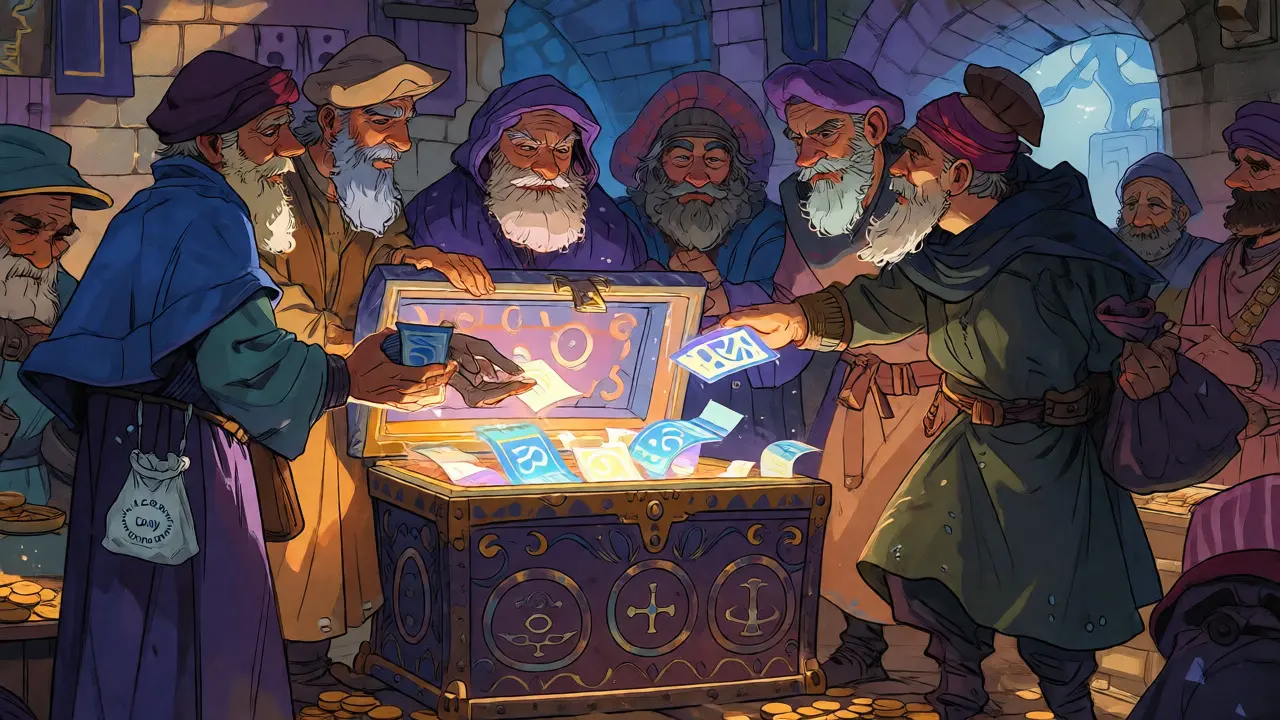
To keep users engaged despite low volumes, Thruster introduced a unique incentive mechanism called Treasure tickets. This system rewards users for providing liquidity and participating in governance. Early adopters reported average daily rewards of 0.87% on their liquidity positions. While this sounds attractive, it comes with caveats.
The reward allocation is 0.05% per trade, funded from fees. Decrypt’s technical analysis noted that this structure might disadvantage larger liquidity providers because the fixed percentage dilutes value as trade size increases. However, for smaller players, these rewards can offset some of the costs associated with high gas fees or minor slippage. It’s a clever way to bootstrap liquidity in a niche market, but don’t count on it generating passive income comparable to major yield farms.
Security and Regulatory Risks
If you’re risk-averse, proceed with caution. Thruster v3 has not undergone formal third-party audits. Its smart contracts are publicly accessible on GitHub, allowing community review, but there’s no guarantee from a firm like CertiK or OpenZeppelin. CoinDesk’s DeFi specialist Elena Rodriguez pointed out that this lack of audit represents an "unacceptable risk" for anyone other than highly experienced traders.
Furthermore, there is zero KYC (Know Your Customer) or AML (Anti-Money Laundering) compliance. While this appeals to privacy advocates, it poses regulatory risks. Emerging frameworks like the EU’s MiCA could force changes or shutdowns if regulators decide non-compliant DEXs must adapt. As of late 2024, Thruster remains fully permissionless, but the regulatory landscape is shifting fast.

How to Start Using Thruster v3
Getting started requires a few steps that might confuse newcomers. First, you need a compatible Web3 wallet like MetaMask or Rabby. Next, you must configure it for the Blast network. Since Blast uses ETH for gas but USDB as its primary stablecoin, many users mistakenly think USDB covers gas fees. It doesn’t. Insufficient ETH for gas is the most common reason for failed transactions, accounting for 42% of support requests.
- Setup Wallet: Install MetaMask and add Blast Network parameters manually.
- Bridge Assets: Use the official Blast bridge to move ETH and USDB from Ethereum mainnet to Blast.
- Connect: Link your wallet to Thruster v3’s interface.
- Trade or Provide Liquidity: Select your pair and execute swaps or add funds to pools.
Documentation is sparse, limited to a 27-page GitHub wiki. Community support lives on Discord, where response times average 37 minutes. If you’re new to DeFi, budget extra time for troubleshooting.
Who Should Use Thruster v3?
This platform isn’t for everyone. It shines for a specific type of user: the Blast-native degen trader looking for early access to new tokens before they hit larger exchanges. Users have reported massive returns on early entries, such as SquidGrow delivering 173x gains. If you’re willing to tolerate high slippage and potential contract risks for the chance at moonshots, Thruster offers a legitimate avenue.
However, if you prioritize safety, deep liquidity, or cross-chain flexibility, look elsewhere. Aggregators like 1inch or established DEXs on Ethereum and BNB Chain offer better execution quality for most trades. Thruster v3 occupies a narrow niche with limited expansion potential unless Blast’s ecosystem grows significantly beyond its current 1.7 million active wallets.
Is Thruster v3 safe to use?
It carries higher risk than audited exchanges. The smart contracts have not been formally audited by third parties, and the platform lacks regulatory licensing. It is best suited for experienced users who understand DeFi risks.
Does Thruster v3 require KYC?
No, Thruster v3 is a decentralized exchange that does not require Know Your Customer (KYC) verification. You can trade anonymously using a Web3 wallet.
Why is my transaction failing on Thruster v3?
The most common cause is insufficient ETH in your wallet for gas fees. On the Blast network, ETH pays for gas, not USDB or other stablecoins. Ensure you have enough ETH before attempting trades.
What are the fees on Thruster v3?
Fees follow standard AMM structures, estimated between 0.25% and 0.3% per trade. There is no published maker/taker differentiation, and fees contribute to the Treasure-ticket reward pool.
Can I trade Bitcoin on Thruster v3?
Not directly. Thruster v3 focuses on Blast-native tokens and wrapped assets like WETH. Major assets like Bitcoin may be available as wrapped versions (WBTC), but liquidity for these pairs is often very thin compared to WETH/USDB.