For many Iranians, accessing global financial systems isn’t just difficult-it’s often impossible. Bank accounts are frozen, international transfers blocked, and inflation eats away at savings. In this environment, cryptocurrency isn’t a luxury. It’s a lifeline. But with the Central Bank of Iran now demanding full access to every crypto transaction and major stablecoins like USDT being frozen en masse, the game has changed. So what options are left for Iranians wanting to use decentralized exchanges (DEXs)? The answer isn’t simple, but it’s not hopeless either.
Why Centralized Exchanges Are No Longer Safe
Nobitex used to be the go-to platform for over 11 million Iranians. It was fast, local, and easy to use. But in June 2025, it got hacked for over $90 million. That wasn’t the worst part. Later analysis showed many of its wallets were tied to IRGC-linked addresses. Then, in July 2025, Tether froze 42 Iranian-linked addresses-more than half of them connected to Nobitex. Suddenly, the exchange that felt like a local bank turned into a surveillance tool. The government didn’t need to shut it down. It already owned it. The Central Bank of Iran now requires every crypto user to register, report transactions, and give them direct access to wallet data. If you’re trading on Nobitex, they see everything: who you send money to, how much, when, and even what device you used. For many, that’s a dealbreaker. The fear isn’t just losing money-it’s being tracked, targeted, or worse.The Shift to DAI on Polygon
After the Tether freezes, something unexpected happened. Iranian crypto communities-coordinated by influencers, traders, and even government-aligned channels-started pushing one thing: DAI on the Polygon network. Why? USDT, the dominant stablecoin, became toxic. Every transaction could be traced, frozen, or flagged. DAI, on the other hand, is a decentralized stablecoin built on open blockchains. It’s not controlled by any company. And Polygon? It’s fast, cheap, and doesn’t require the same level of scrutiny as Ethereum. Transactions cost pennies and confirm in seconds. This wasn’t just a trend. It was a survival strategy. Iranians started swapping their USDT for DAI using DEXs like QuickSwap or SushiSwap, accessed through VPNs. They moved funds off centralized platforms and into wallets they controlled. The result? A quiet but massive migration away from sanctioned infrastructure and into truly decentralized systems.How Iranians Are Accessing DEXs Today
There’s no official DEX for Iran. No app on the App Store. No website approved by the government. But people are still getting access. Here’s how:- VPNs are essential-Most Iranians use reliable, non-logging VPNs like ExpressVPN or NordVPN to bypass local internet filters. Without one, sites like Uniswap or PancakeSwap are blocked.
- Self-custody wallets-MetaMask is the most common. Users generate their own keys, never storing them on exchange servers. They fund these wallets using peer-to-peer (P2P) trades or crypto ATMs in neighboring countries.
- Polygon is the preferred chain-Low fees and fast speeds make it ideal for small traders. DAI on Polygon is the de facto standard for liquidity.
- P2P networks-Telegram groups and local forums connect buyers and sellers who trade fiat for crypto directly. These are informal, cash-based, and hard to track.
The Risks Are Real-But So Are the Rewards
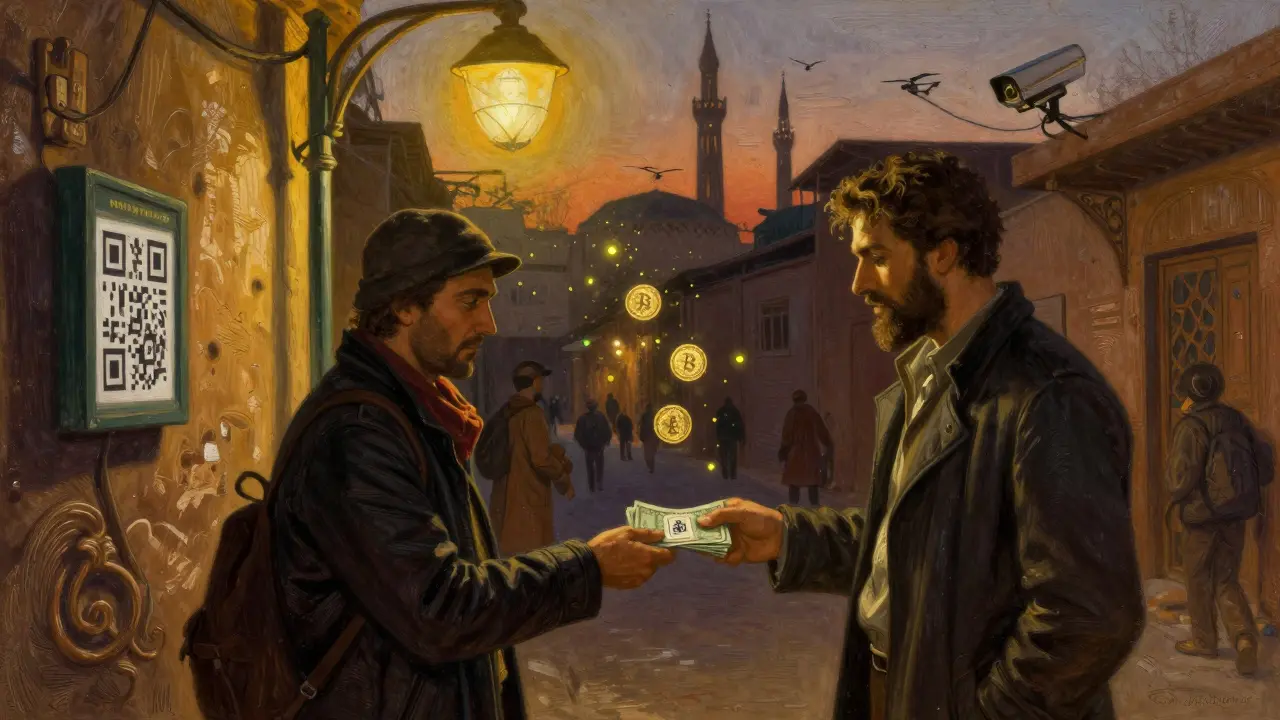
This isn’t risk-free. In August 2025, Iran passed a law taxing crypto profits like gold or real estate. The tax is still being rolled out, but it signals the government’s intent to monitor and profit from crypto activity. If you’re using a DEX and your wallet gets flagged, you could face fines, asset seizures, or even legal trouble. Then there’s the power crisis. In December 2024, rolling blackouts hit major cities. Officials blamed illegal Bitcoin mining. They raided homes, confiscated hardware, and arrested miners. If you’re running a node or mining on the side, you’re playing with fire. But here’s what the government can’t stop: peer-to-peer transfers. You can’t regulate what happens between two people in a park exchanging cash for a QR code. You can’t freeze a wallet if you don’t know its address. And you can’t shut down a decentralized exchange that runs on thousands of computers around the world.What DEXs Actually Work Right Now?
There’s no official list. But based on usage patterns and community reports in early 2026, these are the platforms Iranians are using most:| DEX | Chain | Stablecoin Preference | Speed | Ease of Use |
|---|---|---|---|---|
| QuickSwap | Polygon | DAI | Very Fast | High |
| SushiSwap | Polygon, Ethereum | DAI, USDC | Fast | Medium |
| Uniswap | Ethereum | DAI | Slow | Medium |
| PancakeSwap | BSC | BUSD, USDT | Fast | High |
What Doesn’t Work Anymore
Some options that used to be popular are now dangerous:- USDT on Ethereum or TRON-Still widely frozen. Avoid unless you’re willing to risk losing funds.
- Nobitex and other local CEXs-Under full government control. Your data is not private.
- Centralized wallets like Binance or Coinbase-Iranian IPs are blocked. Accounts get frozen fast.
- Using Iranian bank accounts to buy crypto-The Central Bank tracks every transaction. It’s a trap.
The Bigger Picture: Why This Matters
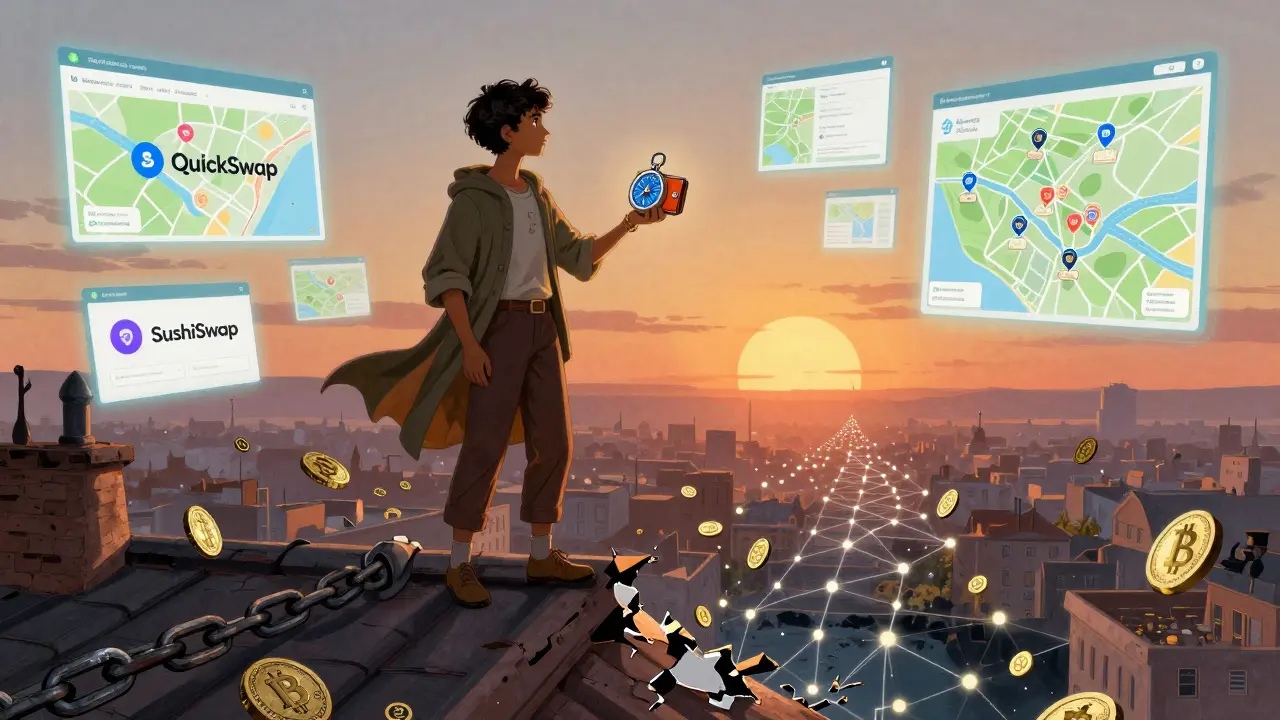
This isn’t just about crypto. It’s about financial freedom under oppression. Iran’s government wants to control every dollar. But decentralized finance doesn’t need permission. It doesn’t need a bank. It doesn’t need a passport. Iranians aren’t just using DEXs to trade. They’re building an underground financial system-one that’s faster, cheaper, and harder to shut down than any state-controlled network. They’re proving that when people are locked out of the system, they don’t wait for permission. They build their own. The U.S. sanctions, the Central Bank’s surveillance, the Tether freezes-they all aimed to isolate Iran. Instead, they forced innovation. The result? A generation of Iranians who understand blockchain better than most bankers.How to Get Started Safely
If you’re in Iran and want to try a DEX, here’s a simple path:- Get a reliable, no-log VPN (ExpressVPN or NordVPN recommended).
- Download MetaMask on your phone or browser.
- Generate a new wallet. Write down your 12-word recovery phrase. Store it offline.
- Add the Polygon network to MetaMask (RPC: https://polygon-rpc.com).
- Buy DAI from a P2P trader via Telegram or local meetup. Send it to your wallet.
- Go to QuickSwap.org (via VPN) and swap DAI for other tokens.
What’s Next?
The Iranian government won’t stop trying to control crypto. They’re building their own blockchain, CIMS, to bypass SWIFT. They’re cracking down on miners. They’re taxing traders. But they can’t control what happens on open networks. The next wave might be DEX aggregators that auto-route trades across multiple chains to avoid detection. Or privacy-focused DEXs using zk-SNARKs to hide transaction details. Or even local DEX nodes running on home routers, hidden inside encrypted mesh networks. One thing’s certain: Iranians aren’t waiting for permission. They’re building the future-one transaction at a time.Can Iranians legally use decentralized exchanges?
There is no explicit law banning DEX usage, but the Central Bank of Iran requires all cryptocurrency activity to be licensed and reported. Using a DEX without registering could be considered a violation. However, since DEXs are decentralized and don’t require user registration, enforcement is technically difficult. Most users operate in a legal gray area, relying on anonymity tools like VPNs and self-custody wallets to avoid detection.
Is it safe to use DAI on Polygon in Iran?
Yes, DAI on Polygon is currently one of the safest options. DAI is decentralized and not controlled by any single entity, making it harder to freeze than USDT. Polygon’s low fees and fast confirmations make it ideal for small, frequent trades. Since July 2025, Iranian users have widely adopted this combination after USDT freezes disrupted traditional stablecoin use. It’s the de facto standard for liquidity in Iran’s underground crypto economy.
Why can’t Iranians use Binance or Coinbase?
Binance and Coinbase block Iranian IPs due to U.S. sanctions compliance. Even if you use a VPN, these platforms require KYC (identity verification), and Iranian users are routinely flagged and frozen. In 2025, multiple Iranian accounts were permanently suspended after being linked to sanctioned entities or suspicious activity patterns. Centralized exchanges are too risky-your identity and funds are vulnerable to government and corporate control.
What happens if my crypto wallet gets flagged by the Iranian government?
If your wallet is linked to a known exchange like Nobitex or a flagged address, the Central Bank could trace your activity through ISP logs or bank records. You might face fines, asset seizures, or legal investigation under the 2025 Taxation of Speculation law. However, if you use a non-custodial wallet, avoid P2P platforms tied to known entities, and never link your real identity to transactions, the chances of being targeted drop significantly. Most enforcement is opportunistic-not comprehensive.
Can I mine Bitcoin in Iran without getting caught?
Legally, only licensed miners can operate, and they must sell all mined Bitcoin to the Central Bank at fixed rates-making mining unprofitable. Unauthorized mining is illegal and has led to arrests and home raids, especially after the December 2024 power outages. While underground mining still exists, the risk is high. For most, trading or using DEXs is a safer alternative to mining.
Alexis Dummar
January 15, 2026 AT 22:44Man, this is wild. People in Iran are basically building a new financial internet from scratch, and we’re over here arguing about whether Dogecoin is a meme or a movement. It’s not just crypto-it’s civil disobedience with wallets. The fact that DAI on Polygon became the default because it’s decentralized and cheap? That’s genius. No bank, no gatekeeper, no middleman. Just code and courage.
And the VPNs? Those aren’t tools-they’re lifelines. I used to think crypto was about getting rich. Now I see it’s about staying free.
Shaun Beckford
January 17, 2026 AT 19:07Let’s be real-this isn’t innovation, it’s desperation dressed up in blockchain jargon. DAI on Polygon? Cute. But you’re still trading in a black market economy where the only thing more volatile than the price is the risk of getting your door kicked in at 3 a.m. by some guy with a badge and a laptop. This isn’t finance. It’s guerrilla accounting.
And don’t even get me started on ‘peer-to-peer cash trades in parks.’ That’s not DeFi. That’s barter with a QR code.
Alexandra Heller
January 18, 2026 AT 10:29It’s heartbreaking to see how people are forced to become cryptographers just to buy bread. The fact that a government would turn its own citizens into outlaws for wanting to protect their savings says more about authoritarianism than any protest ever could.
And yet-people are still choosing autonomy over safety. That’s not just smart. It’s sacred. We talk about freedom like it’s a slogan. These folks are living it, one cold wallet at a time.
Meanwhile, I’m still debating whether to buy a Tesla or a Prius. The moral weight of that contrast is crushing.
myrna stovel
January 19, 2026 AT 10:16Hey, if you're thinking about trying this out, I just want to say-you're not alone. There are so many of us rooting for you.
Just remember: your seed phrase is your soul. Write it down, keep it safe, and never, ever type it into a chat. You’ve got this. One step at a time. And if you need help setting up MetaMask, I’m happy to walk you through it. No judgment. No pressure. Just support.
You’re building something beautiful, even if no one else sees it yet.
Hannah Campbell
January 19, 2026 AT 22:37Oh wow look at the little crypto rebels with their VPNs and DAI and their little ‘self-custody’ fantasies
Meanwhile in Iran the power grid is falling apart because some guy in Tehran is running 20 ASICs in his bathroom and now the whole city has a blackout
And you want to talk about ‘freedom’? Honey, you’re not building a future-you’re just making the power company mad
Callan Burdett
January 20, 2026 AT 20:37This is the most inspiring thing I’ve read all year. People are turning oppression into innovation. No one handed them tools-they built them. No one gave them permission-they took it.
DAI on Polygon isn’t just a tech stack. It’s a revolution in slow motion. And honestly? The fact that it’s working? That’s the real crypto miracle.
Shoutout to every Iranian trader using a VPN and a handwritten seed phrase. You’re not just surviving-you’re rewriting the rules.
Anthony Ventresque
January 21, 2026 AT 23:42Interesting how the government’s crackdown ended up accelerating decentralization. It’s like they threw a wrench into the system, and instead of breaking it, people just rewired it.
I’m curious-how many of these users are actually technical? Or are they just following guides from Telegram groups? Also, has anyone tried using a local node on a Raspberry Pi hidden in a closet? That’d be next-level.
Anna Gringhuis
January 23, 2026 AT 05:36Of course the government is trying to tax it. They always do. When people find a way out, the state doesn’t shut it down-they try to monetize it. Classic.
And yet, here we are. People are using crypto not to gamble, not to speculate, but to survive. That’s the quietest, most powerful protest there is.
And no, I don’t care if you think it’s risky. Risk is the price of dignity.
Stephen Gaskell
January 23, 2026 AT 18:29Iranians using crypto? Big deal. The U.S. has sanctions for a reason. They’re a rogue state. If they want to trade, they should play by the rules.
Stop romanticizing lawbreaking.
ASHISH SINGH
January 24, 2026 AT 13:18Everything you said is a CIA psyop. DAI isn’t decentralized-it’s controlled by MakerDAO, which is just a front for the IMF. Polygon? Built by American devs funded by VC money that traces back to BlackRock. Even your VPN is probably logging your IP and selling it to the NSA.
They want you to think you’re free. That’s the trap. The real revolution is staying offline.
Vinod Dalavai
January 24, 2026 AT 15:25Been using QuickSwap for 8 months now. DAI on Polygon is the real deal. No drama, no freezes. Just send, swap, sleep.
My cousin in Tabriz got arrested last year for mining-he’s out now, but lost his laptop and 2 years of savings. So yeah, DEXs are safer.
Just keep your keys safe. And don’t post about it on Instagram. 😅
Tony Loneman
January 25, 2026 AT 05:45Oh please. You’re all acting like this is some underground hero story. Newsflash: DAI is pegged to the dollar. The dollar is controlled by the U.S. Federal Reserve. So you’re not free-you’re just using a different flavor of the same colonial currency.
And Polygon? It’s centralized. The validators are all in the U.S. or Europe. You think you’re decentralized? You’re just a customer in a different bank.
Real freedom? Cash. Physical. No blockchain. No QR code. Just bills and silence.