Why Iceland’s Crypto Mining Boom Hit a Wall
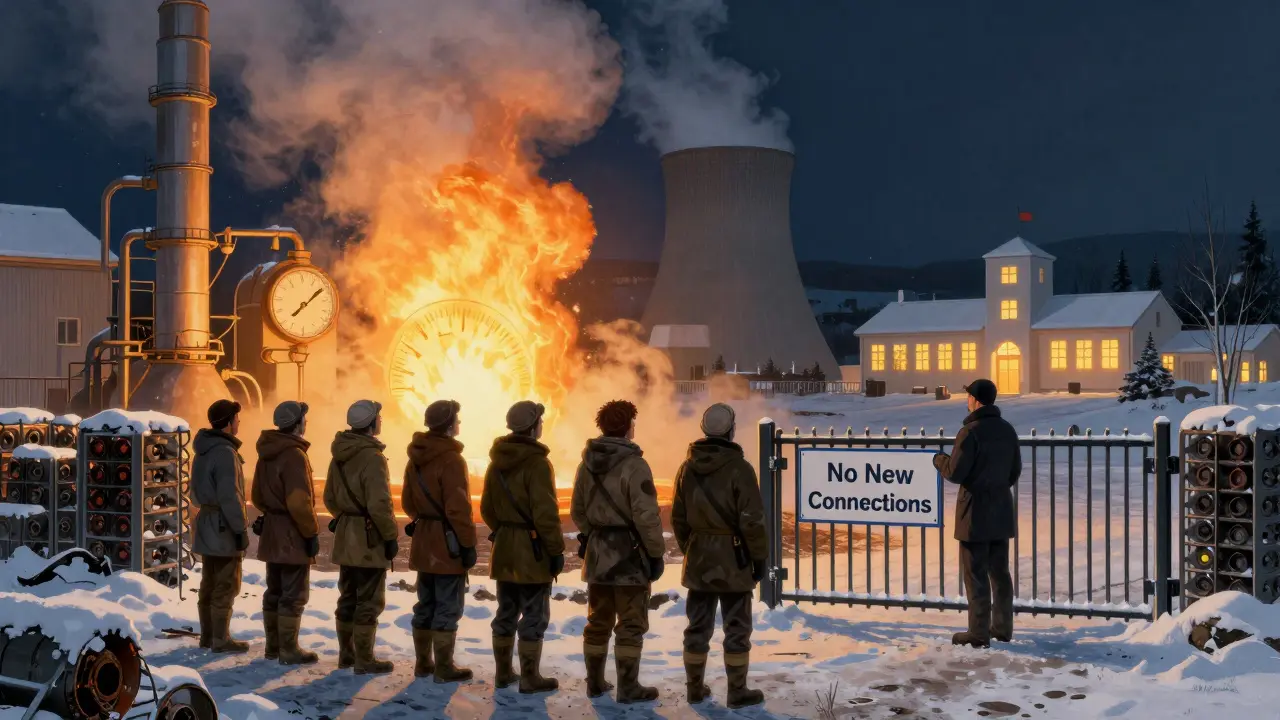
Iceland used to be the dream location for crypto miners. Cold air for free cooling, 100% renewable power from volcanoes and waterfalls, and a government that welcomed the industry. By 2023, crypto mining was using 8% of the country’s total electricity. That’s more than the entire aluminum industry used just a decade ago. But today, the party’s over. New miners can’t get power. Existing ones can’t expand. And the government is quietly pulling the plug.
The Energy That Made Iceland Famous Is Already Maxed Out
Iceland doesn’t burn coal or gas. Its electricity comes from two natural sources: geothermal (25%) and hydroelectric (75%). Both are clean. Both are limited. The geothermal plants are tapping into the same underground heat vents that power hot springs and greenhouses. The hydroelectric dams are running rivers that haven’t changed flow in centuries. There’s no spare capacity.
In 2024, Iceland’s grid was operating at 98% of its maximum output. That’s not a glitch-it’s the ceiling. Every new megawatt of mining demand means taking power away from something else: a hospital, a school, a data center, or even a family’s heating system. The National Energy Authority confirmed that no new large-scale power plants have been built since 2017. The country’s energy infrastructure hasn’t grown. But mining did.
Who’s Using the Power-and Why It Matters
Crypto mining isn’t the only heavy user. Aluminum smelting, which has been in Iceland since the 1970s, still consumes the largest share of electricity. But here’s the difference: aluminum plants employ thousands of people, pay taxes, and export metal with stable demand. Crypto mining? It’s mostly foreign-owned, creates few local jobs, and its profits vanish when Bitcoin’s price drops.
Now, the government is looking at alternatives. Hydrogen production for export. AI data centers that need less power per dollar of value. Tourism infrastructure upgrades. Even a national digital currency. All of these use electricity, but they offer more long-term benefits than mining a digital token that can be mined anywhere.
Miners Are Stuck-Newcomers Can’t Get In
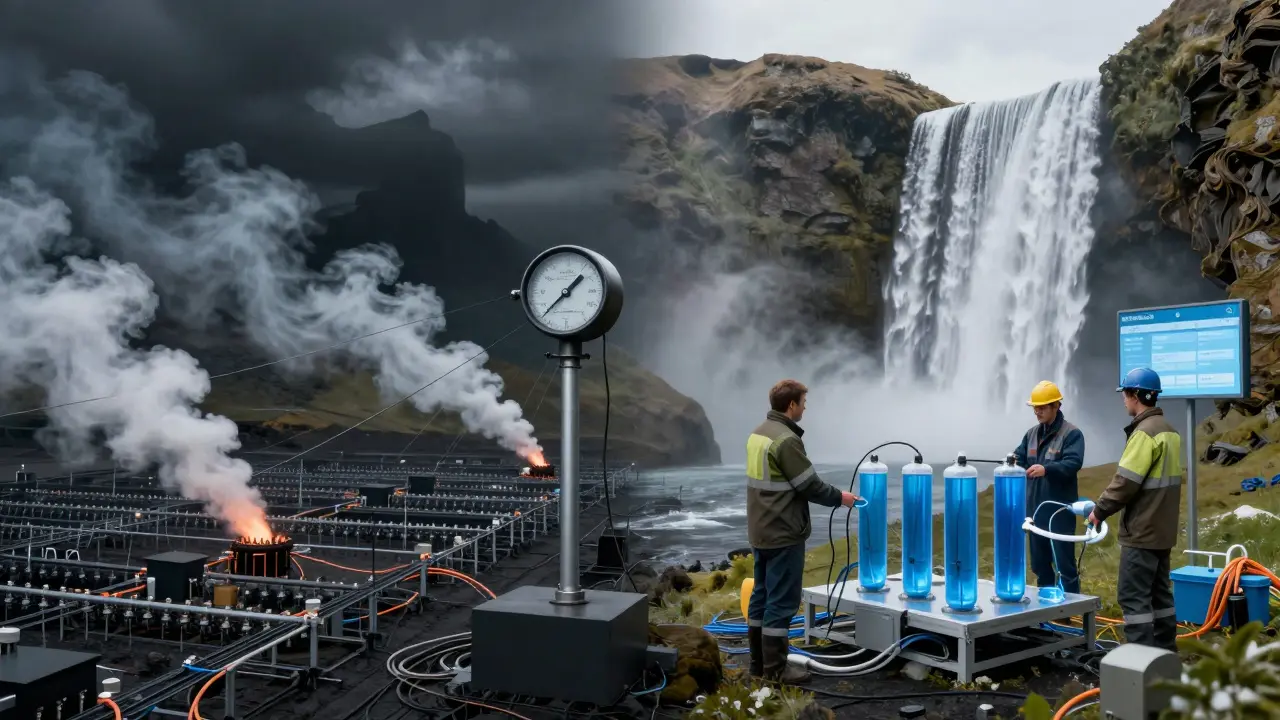
If you started mining in Iceland between 2013 and 2017, you’re golden. You locked in cheap, long-term power contracts. Your equipment runs on geothermal energy at half the cost of Texas or Kazakhstan. But if you’re trying to set up shop today? Forget it.
Grid connection waiting lists are years long. Power purchase agreements are frozen. The government now requires miners to prove their operations won’t displace essential services. Even established companies like Genesis Mining and Advania are hitting walls. One miner on Reddit posted in late 2024 that his request to add 500 more ASICs was denied because the local substation couldn’t handle the load. He’s been stuck at his current capacity for 18 months.
The Policy Shift: From Welcome Mat to Warning Sign
In 2021, Iceland’s prime minister called crypto mining a “smart use of renewable energy.” By March 2024, she said the country needed to “reduce its dependence on energy-intensive industries that offer little lasting value.” That’s a 180-degree turn.
The government isn’t banning mining outright. But it’s making it impossible to grow. Electricity prices for new mining contracts have jumped by over 60% since 2022. Permits now require environmental impact studies that take 12-18 months to approve. And new applicants must show they’re using the latest, most efficient hardware-like the Antminer S19 XP or Whatsminer M50S-just to get considered.
It’s not about morality. It’s about scarcity. Iceland has a finite amount of clean energy. The government is choosing who gets to use it-and miners are losing the lottery.
What’s Next for Iceland’s Crypto Industry?
The mining sector isn’t disappearing. It’s shrinking into a niche. The existing operations will keep running. They’re profitable. The power cost is still low. But no new large-scale farms will open. The industry is now locked in place.
Iceland is pivoting toward blockchain applications that don’t need massive power. Think supply chain tracking for fisheries, digital land registries, or a central bank digital currency (CBDC). These projects use blockchain technology but draw the same energy as a small office. That’s the future the government is betting on.
Is There Any Hope for Miners?
Not really. Unless Iceland builds new geothermal plants or hydro dams-which would take 7-10 years and face major environmental reviews-there won’t be enough power for expansion. Even then, new projects will likely go to hydrogen or AI, not Bitcoin.
Miners who are already there should focus on efficiency. Upgrade to the latest ASICs. Monitor power usage per terahash. Keep your costs low. But don’t plan on growing. Iceland is no longer a growth market. It’s a maintenance zone.
What This Means for the Global Mining Landscape
Iceland’s story is a warning for other places. Canada, Norway, Finland-they all have renewable energy and cold climates. But if they don’t plan their grid growth carefully, they’ll end up like Iceland: popular at first, then blocked by their own success.
The days of mining anywhere there’s cheap power are ending. The future belongs to places that can scale energy supply fast-like Texas, with its deregulated grid and wind farms, or Paraguay, with its massive hydro dams still underutilized. Iceland taught the world that renewable doesn’t mean unlimited. And that’s a lesson every miner needs to learn.
Steven Dilla
January 27, 2026 AT 18:01Akhil Mathew
January 29, 2026 AT 02:18Aaron Poole
January 29, 2026 AT 17:20Ramona Langthaler
January 31, 2026 AT 09:41Sunil Srivastva
February 2, 2026 AT 04:08Devyn Ranere-Carleton
February 3, 2026 AT 04:29Kevin Thomas
February 4, 2026 AT 01:29Robert Mills
February 5, 2026 AT 18:38Jerry Ogah
February 5, 2026 AT 21:56Andrea Demontis
February 6, 2026 AT 05:46Joseph Pietrasik
February 7, 2026 AT 11:20Raju Bhagat
February 7, 2026 AT 19:38laurence watson
February 8, 2026 AT 00:04Elizabeth Jones
February 9, 2026 AT 20:10Pamela Mainama
February 10, 2026 AT 19:11Rachel Stone
February 12, 2026 AT 08:56