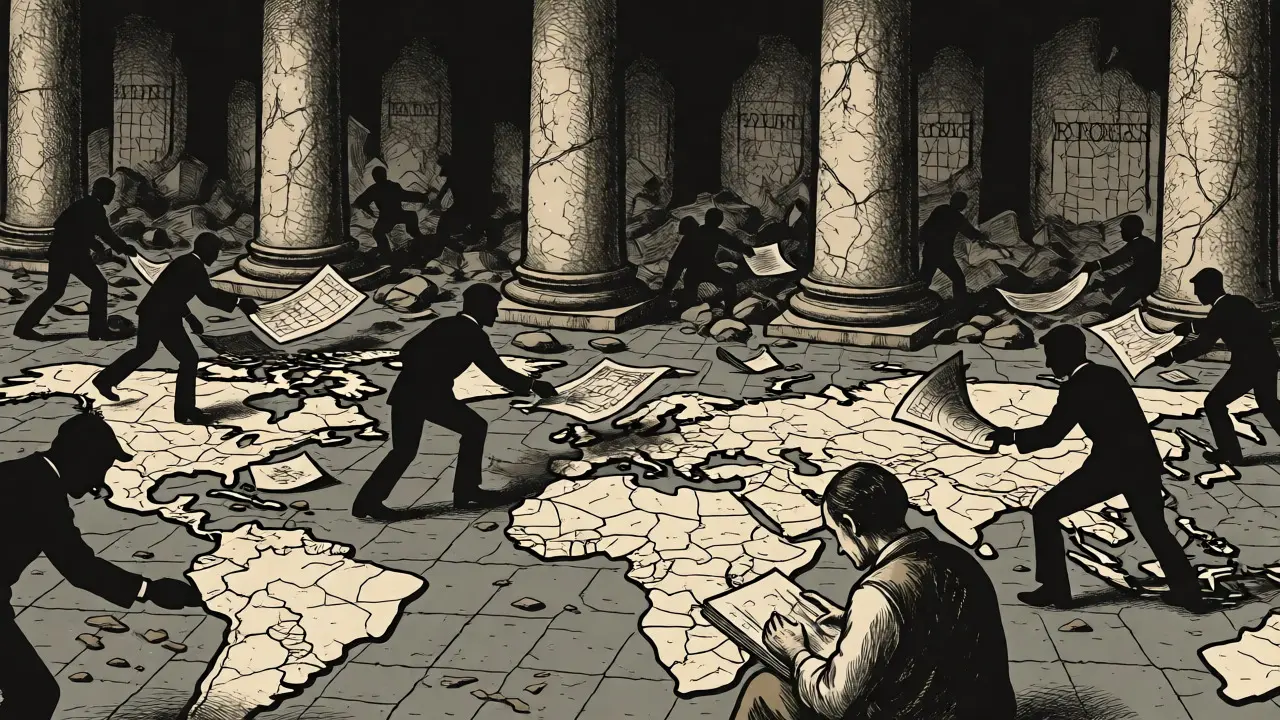
You just spent six months designing a logo. You upload it to three different platforms. Two weeks later, you see it on a t-shirt in a country you've never visited, sold by someone who claims they created it last month. Who do you believe? In the traditional world, proving your claim involves lawyers, paper trails, and expensive litigation that often costs more than the infringement itself.
This is where Blockchain enters the picture. It’s not just about cryptocurrency anymore. As of late 2026, blockchain has become the backbone for verifying who owns what in the digital realm. It creates an immutable, timestamped record that says, "This person owned this idea at this exact moment." No central authority can delete it, and no one can quietly change the date. This shift is moving intellectual property (IP) from a legal headache into a manageable, automated asset class.
The Core Problem with Traditional IP Systems
Traditional IP protection relies on centralized registries. Think of national patent offices or copyright agencies. These systems are slow, expensive, and geographically fragmented. If you want to protect your invention in ten countries, you need ten separate registrations, each with its own fees, laws, and timelines. The process is manual, prone to human error, and vulnerable to fraud.
Moreover, enforcement is reactive. You only know someone stole your work when you find it, which could be years after the fact. By then, the infringer might have made their money and disappeared. The gap between creation and protection is where theft happens. Blockchain closes this gap by allowing instant, global registration without needing to wait for bureaucratic approval.
How Blockchain Secures Intellectual Property
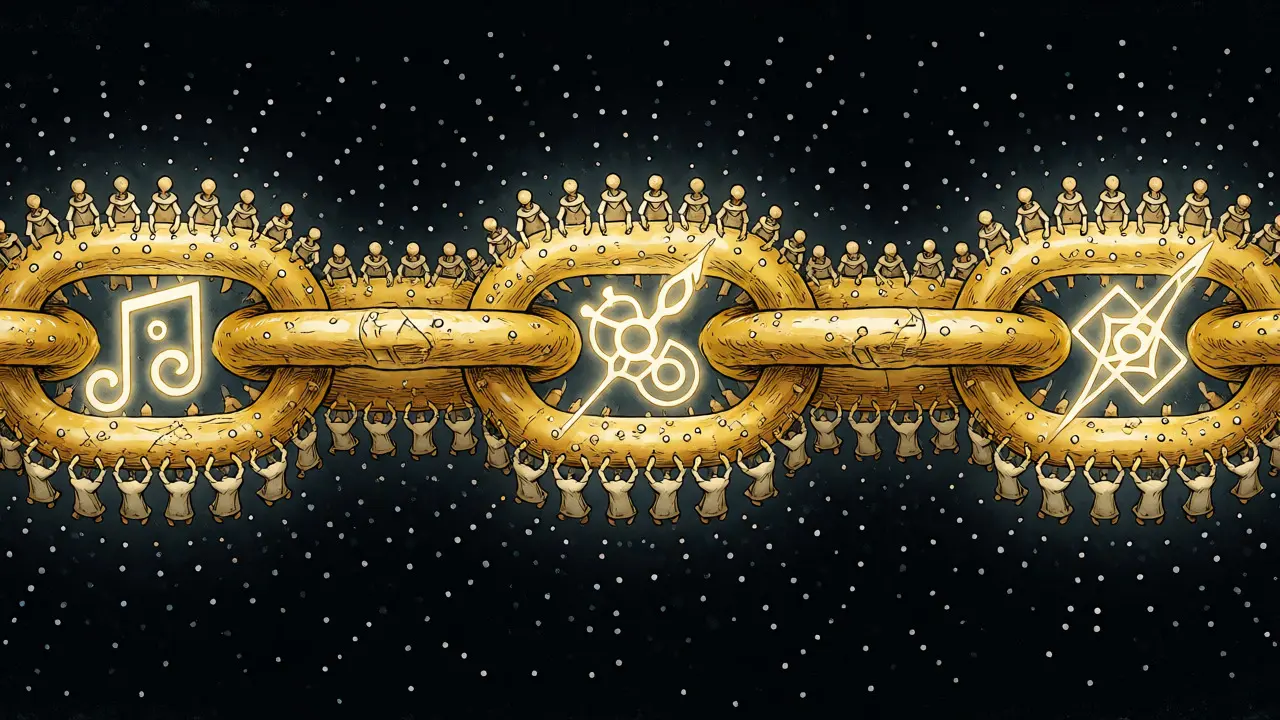
At its heart, blockchain is a distributed ledger. When you register a piece of IP on a blockchain, you aren't just storing a file; you're creating a cryptographic hash-a unique digital fingerprint-of that work. This hash is added to a block, linked to previous blocks, and broadcast to thousands of computers worldwide. Once recorded, it cannot be altered without changing every subsequent block, which requires massive computational power and consensus. This makes the record effectively permanent.
Three key features make this powerful for IP:
- Immutability: The record of ownership cannot be tampered with. If a dispute arises, you can prove exactly when you registered your claim.
- Transparency: Anyone can view the history of an asset. Buyers and licensees can verify the chain of title instantly, building trust without intermediaries.
- Decentralization: There is no single point of failure. Unlike a database controlled by one agency, a blockchain network remains operational even if some nodes go down.
This technology doesn't replace the law entirely, but it provides irrefutable evidence that supports legal claims. It shifts the burden from "proving you didn't steal it" to "showing the unchangeable record of who did create it."
Smart Contracts: Automating Licensing and Royalties
If immutability solves proof of ownership, Smart Contracts solve the payment problem. A smart contract is code stored on the blockchain that automatically executes actions when conditions are met. For IP, this means licensing agreements can run themselves.
Imagine a musician uploads a song to a blockchain platform. They encode a rule: "Every time this track is streamed, send 5% of the revenue directly to my wallet." No record label takes a cut first. No quarterly statements arrive six months late. The payment happens instantly, transparently, and globally. This eliminates administrative overhead and reduces disputes over unpaid royalties.
For inventors and companies, this streamlines complex licensing deals. Instead of negotiating individual contracts for every use case, creators can set standard terms on-chain. Businesses can browse these available licenses, pay via crypto or fiat integrations, and gain immediate usage rights. It turns IP from a static legal document into a dynamic, tradable asset.
Tokenization: Turning Ideas into Tradable Assets
One of the most exciting developments in 2026 is IP Tokenization. This process converts rights to intellectual property into digital tokens. These tokens can represent full ownership, partial shares, or specific usage rights.
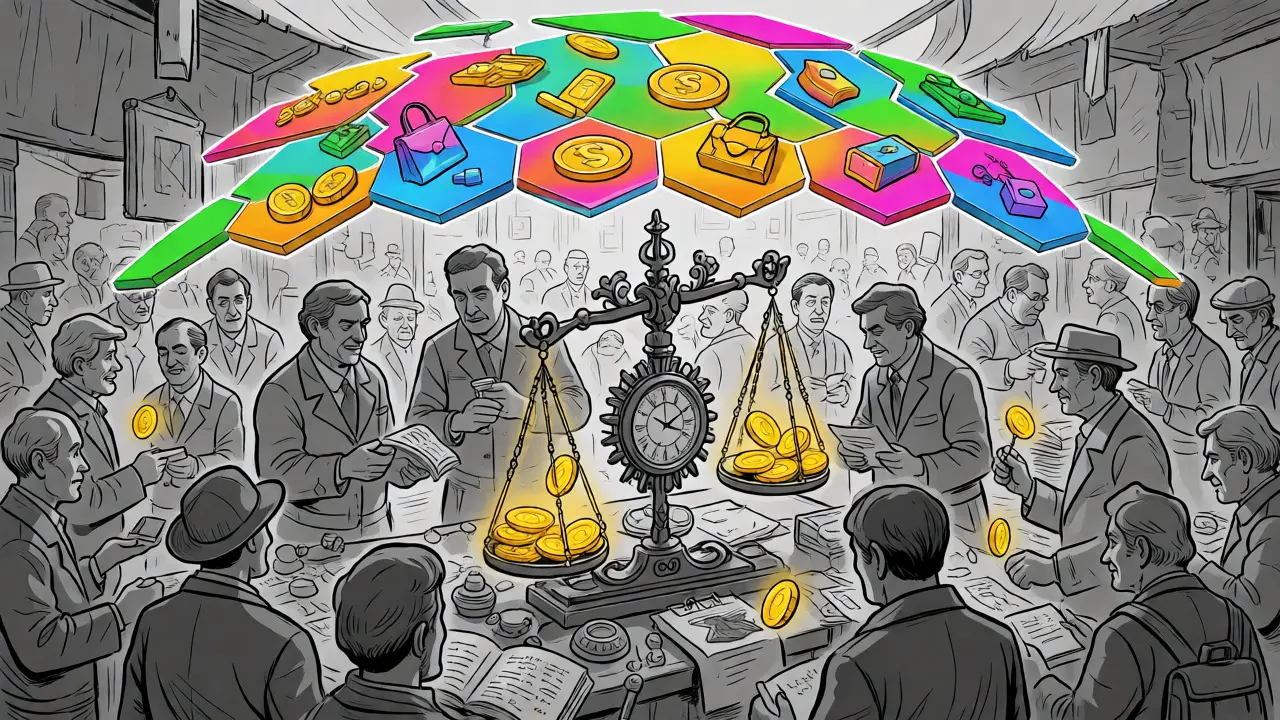
Why does this matter? Liquidity. Traditionally, selling a patent or a music catalog is a slow, illiquid process involving private negotiations. With tokenization, you can break down a valuable patent portfolio into smaller units. Investors can buy shares in a pharmaceutical patent, earning royalties as the drug generates revenue. This democratizes access to IP investment, allowing smaller players to participate in markets previously dominated by large corporations.
Platforms specializing in Real-World Asset (RWA) tokenization are booming. They provide the infrastructure to mint these tokens, ensuring they comply with relevant securities regulations. While regulatory clarity is still evolving, the trend is clear: IP is becoming a financial instrument, not just a legal right.
Combating Counterfeits and Protecting Brands
Counterfeiting costs the global economy hundreds of billions annually. Luxury goods, electronics, and pharmaceuticals are frequent targets. Blockchain offers a solution through supply chain transparency. Each product gets a unique digital identity on the blockchain at the point of manufacture. As it moves through the supply chain-from factory to distributor to retailer-each transfer is recorded.
Consumers can scan a QR code on a handbag or a medicine box to trace its entire journey back to the source. If the digital record doesn't match the physical item's history, it's likely fake. This immutable trail makes it incredibly difficult for counterfeiters to insert fake goods into the legitimate market without detection. Major luxury brands and pharmaceutical companies are already piloting these systems to protect brand integrity and consumer safety.
The Role of AI and WIPO Standards
Technology rarely works in isolation. The future of IP protection involves combining blockchain with Artificial Intelligence (AI). AI algorithms can monitor blockchain networks and the wider internet to detect potential infringements. If someone uses your trademarked image in a new ad campaign, AI can flag it, compare it against your on-chain record, and alert you instantly. This proactive monitoring is far more efficient than manual searches.
Institutional support is also growing. The World Intellectual Property Organization (WIPO) has established a Blockchain Task Force to develop standards. Their goal is to ensure interoperability between different blockchain systems and align them with international legal frameworks. This move signals that blockchain is no longer seen as a niche experiment but as essential infrastructure for global IP management.
Challenges Still Standing in the Way
Despite the hype, hurdles remain. Legal recognition varies by jurisdiction. A blockchain record might be strong evidence in court in one country but carry less weight in another. Interoperability is another issue; many blockchain platforms don't talk to each other seamlessly, creating silos of data.
There's also the "garbage in, garbage out" problem. If a bad actor registers stolen work on the blockchain before the true owner does, the system records the wrong claim. Blockchain proves existence, not necessarily truthfulness of the initial entry. Therefore, verification processes and reputation systems within these platforms are critical.
Finally, user experience needs improvement. Managing private keys and understanding gas fees can be intimidating for non-technical creators. As interfaces become simpler and wallets more secure, adoption will accelerate, but we aren't quite there yet.
| Feature | Traditional System | Blockchain System |
|---|---|---|
| Registration Speed | Months to Years | Minutes to Hours |
| Cost | High (Legal fees, government fees) | Low (Transaction fees, minimal admin) |
| Geographic Scope | Jurisdiction-specific | Global/Borderless |
| Royalty Payments | Manual, delayed, opaque | Automated, instant, transparent |
| Vulnerability | Centralized databases can be hacked/altered | Immutable, decentralized, resistant to tampering |
What the Future Looks Like
We are moving toward a world where IP protection is invisible to the end-user but robust underneath. Creators won't think about "filing patents"; they'll simply publish their work, and the blockchain will handle the rest. Smart contracts will manage payments across borders without friction. Tokens will allow anyone to invest in creative projects.
By 2030, experts predict that blockchain-based registries will complement, if not partially replace, traditional government databases. The focus will shift from protecting assets after they are stolen to preventing theft through verifiable provenance. For businesses, this means reduced litigation costs and faster time-to-market. For creators, it means fair compensation and control over their livelihoods.
The question isn't whether blockchain will transform IP protection-it already is. The question is how quickly regulators, courts, and industries will adapt to this new reality. Those who adopt early will build competitive advantages in trust, efficiency, and asset liquidity.
Does blockchain replace traditional patent offices?
Not entirely, at least not yet. Blockchain complements traditional offices by providing instant proof of creation and timestamping. However, formal patent grants usually still require examination by government bodies to determine novelty and non-obviousness. Blockchain handles the registration and tracking layer, while legal authorities handle the substantive validation.
Is a blockchain record legally binding in court?
It depends on the jurisdiction. Many courts now accept blockchain records as strong evidence because of their immutability and transparency. However, it is not automatically "binding" in all cases. Lawyers often use blockchain entries to corroborate other evidence, such as emails or drafts, strengthening the overall case for ownership.
Can anyone edit a copyright record on the blockchain?
No. Once a transaction is confirmed and added to a block, it becomes part of the chain. To change it, you would need to alter every subsequent block and gain consensus from the majority of the network. This makes retroactive editing practically impossible for public blockchains like Ethereum or Bitcoin.
What are the main risks of using blockchain for IP?
The primary risks include legal uncertainty regarding cross-border enforcement, the "garbage in, garbage out" problem where false claims are registered first, and technical barriers like managing private keys securely. Additionally, if a creator loses their private key, they may lose access to their assets unless recovery mechanisms are built into the platform.
How do smart contracts help musicians?
Smart contracts automate royalty distribution. When a song is used or streamed, the contract splits the payment according to predefined percentages and sends funds directly to the artist's wallet. This removes intermediaries, ensures faster payments, and provides a transparent audit trail of every transaction.