
The Hidden Weakness in the Rules
Most people think of cyberattacks as a hooded figure typing rapidly to bypass a firewall. But governance attacks are quieter. They exploit gaps in oversight, accountability, and policy enforcement. According to the 2023 Verizon Data Breach Investigations Report, these vectors account for about 37% of successful breaches. Why? Because they use legitimate channels. If an attacker can manipulate a change management process to escalate their own privileges, they aren't "hacking" in the traditional sense-they are just following a broken process. In blockchain environments, this often looks like a "governance takeover," where a malicious actor acquires enough voting tokens to push through a proposal that drains the treasury. They didn't break the encryption; they just played the game better than the defenders.Common Governance Vulnerabilities and Technical Gaps
Governance failures usually manifest in a few predictable ways. One of the most common is the violation of the principle of least privilege. When a company fails to govern who has access to what, you end up with "privileged creep," where users have far more power than they need. CyberArk's 2023 Identities Report found that 68% of enterprises have at least 10% of privileged accounts lacking any real oversight. Then there are the cloud misconfigurations. We see this constantly with AWS S3 buckets being left open to the public. It is rarely a technical failure of AWS; it is a governance failure. The organization didn't have a policy to audit bucket permissions, or they had a policy but no one was actually enforcing it. Palo Alto Networks noted that these governance-driven misconfigurations represent 65% of all cloud breaches.| Feature | Technical Attack Vector | Governance Attack Vector |
|---|---|---|
| Primary Target | Software bugs / CVEs | Policies / Oversight gaps |
| Detection Rate | Higher (via IDS/IPS) | Lower (looks like normal activity) |
| Average Cost | ~$3.21 million | ~$4.87 million |
| Entry Method | Exploits / Phishing | Authorized access pathways |

Where the System Breaks Down
Governance attacks thrive in complexity. If you have a multinational corporation with decentralized teams, you likely have inconsistent policy enforcement. This creates "seams" that attackers love. For example, a security policy might be strictly followed in the New York office but completely ignored in the Singapore branch. An attacker will find the weakest link and use it as a beachhead. Specific areas where governance often fails include:- Segregation of Duties: When one person has the power to both request a payment and approve it, you have a governance disaster. This was found in 41% of financial institutions according to FFIEC data from 2023.
- Third-Party Risk: You might have great security, but does your marketing agency? Gartner's 2023 analysis shows that 54% of supply chain breaches stem from insufficient third-party risk management.
- Patch Management Governance: It's not that the patch doesn't exist; it's that the process to deploy it is broken. BitSight reported that organizations take an average of 197 days to patch critical vulnerabilities because of poor governance.
The High Price of Oversight Failures
Why should you care about this more than a standard SQL injection? Because the impact is usually much worse. Forrester's 2023 study shows that breaches originating from governance failures cost significantly more-about $4.87 million per incident-than purely technical ones. This is because governance attacks often give the intruder "the keys to the kingdom," allowing them to stay undetected for longer and move deeper into the network. In the blockchain space, the cost is even more immediate. If a governance attack succeeds in a DeFi protocol, the money is gone in one transaction. There is no "undo" button. The attacker doesn't need to find a zero-day vulnerability in the smart contract if they can simply vote to change the contract's owner to themselves.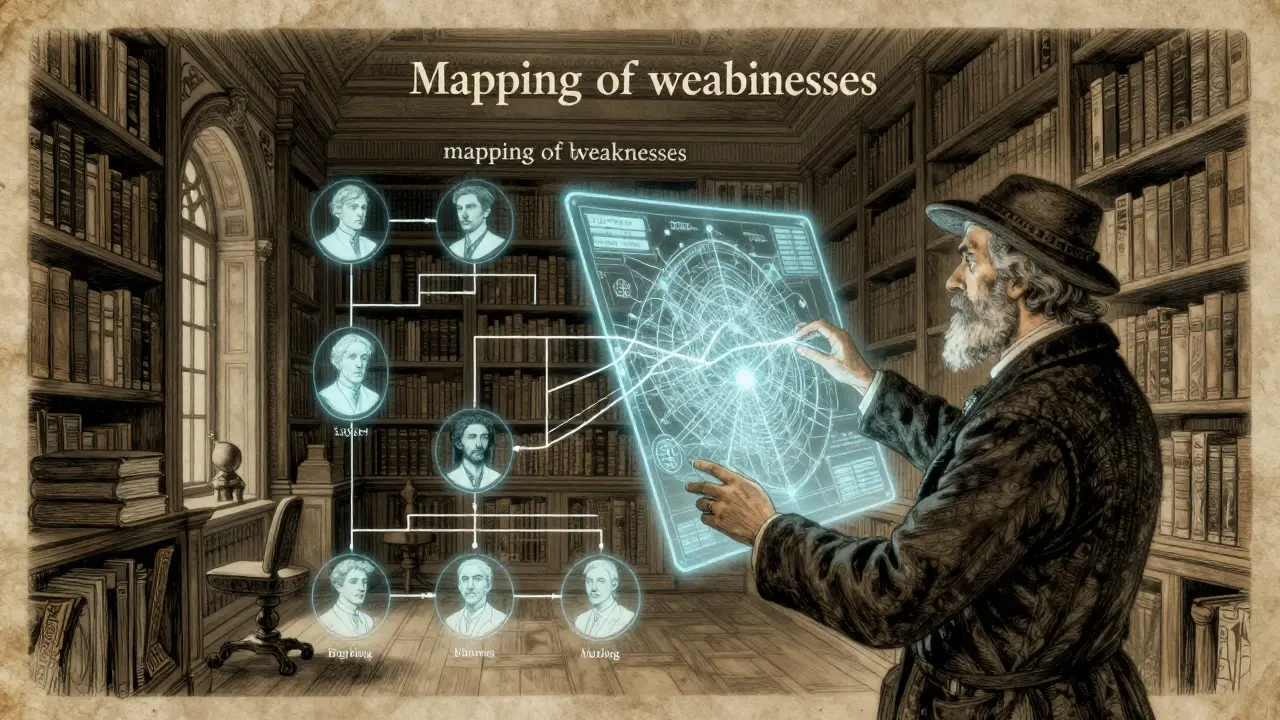
How to Plug the Gaps
Fixing governance isn't about buying a new piece of software; it's about changing how you operate. Most organizations spend 12 to 18 months building a real governance monitoring system. The first step is usually a 3-to-6-month assessment to find where the rules are being ignored. To get a handle on this, look toward established frameworks. The NIST CSF (National Institute of Standards and Technology Cybersecurity Framework) provides a great roadmap for mapping your current state to a desired security posture. Other options include ISO 27001 for a more formal certification approach or COBIT 5 for those focused on enterprise IT governance. If you want to automate this, tools like RSA Archer or ServiceNow GRC can help. SANS reports that organizations integrating these tools reduce the success rate of governance attacks by 73%. However, the tool is only as good as the people using it. If your executives don't support governance initiatives-which 52% of professionals on Hacker News cited as a major problem-the software won't save you.The Future: AI and Automated Governance
We are entering a dangerous new phase. Microsoft's 2024 Security Intelligence Report warned about "AI-driven governance exploitation." Attackers are now using machine learning to scan public documents, LinkedIn profiles, and corporate charters to find weaknesses in an organization's decision-making structure. They can map out who reports to whom and identify the person most likely to approve a fraudulent request without questioning it. To counter this, we need continuous governance monitoring. This means moving away from the "annual audit" (which is basically a snapshot of the past) and moving toward real-time visibility. CISA is already pushing federal agencies toward this model with Binding Operational Directive 23-01. By 2026, Gartner predicts that governance attack vectors will account for 45% of all successful breaches. If you aren't treating your policies as part of your attack surface, you are leaving the door wide open.What exactly is a governance attack vector?
It is a method of attacking a system by exploiting weaknesses in its policies, oversight, and decision-making processes. Instead of breaking the code, the attacker exploits a loophole in the rules or a lack of enforcement of those rules to gain unauthorized access or control.
How does this differ from a social engineering attack?
Social engineering targets human psychology (like tricking someone into clicking a link). A governance attack targets the systemic process. For example, if a company's policy says "any manager can approve a password reset via email," the attacker isn't just tricking a person; they are exploiting a fundamentally flawed governance policy.
Can blockchain governance be attacked?
Yes, frequently. In DAOs, this often happens through "governance attacks" where an entity acquires a majority of voting tokens to pass malicious proposals, or by exploiting low voter turnout to push through changes that benefit the attacker at the expense of the protocol.
Which frameworks help mitigate these risks?
The NIST CSF is highly regarded for its clarity and flexibility. ISO 27001 is excellent for establishing a formal Information Security Management System (ISMS), and COBIT 5 is a strong choice for aligning IT goals with business governance.
What is the first step to securing a governance attack surface?
Start with a gap analysis. Identify your critical assets, map out who has the authority to change or move those assets, and look for "single points of failure" where one person has too much unchecked power (lack of segregation of duties).
June Coleman
April 8, 2026 AT 03:05Oh sure, because letting the manager leave the key under the mat is exactly how we've all been doing it for decades... truly a shocking revelation here.
Robert Coskrey
April 8, 2026 AT 06:35The distinction between technical vulnerabilities and governance failures is quite profound!!! I believe that implementing a more rigid adherence to the NIST CSF would benefit many of the organizations mentioned here...
Lauren Gilbert
April 9, 2026 AT 15:29It is quite fascinating to consider how the structure of our collective decision-making processes actually mirrors the fragility of human trust, because when we create these complex systems of rules, we often forget that the rules themselves are just human constructs designed to alleviate anxiety about control, and thus the 'seams' mentioned in the post are not just technical gaps but reflections of our own psychological need to delegate authority to a system rather than a person, which ironically creates the very vulnerability that an attacker exploits by simply following the letter of the law while ignoring the spirit of security.
Sonya Bowen
April 10, 2026 AT 19:45Focus on the gap analysis first. It's the only way to see where the actual risk lies.
Siddharth Bhandari
April 12, 2026 AT 04:16In my experience with GRC tools, the automation part only works if the underlying policy is documented clearly. Most firms just buy the software and expect it to fix a culture of negligence, which obviously doesn't happen.
Matthew Wright
April 14, 2026 AT 02:25Wait, the cost difference is that high??? $4.87 million vs $3.21 million is a massive jump!!! I wonder if the dwell time for governance attacks is significantly longer since it looks like legitimate traffic???
Arwyn Keast
April 14, 2026 AT 18:02Absolute shambles. The reliance on these bloated frameworks like COBIT is just another layer of bureaucratic obfuscation that does nothing for the actual sovereignty of the network. It's all just corporate theater to appease the auditors while the actual infrastructure remains a sieve of inefficiency.
Emily 2231
April 16, 2026 AT 08:19THEY WANT US TO THINK ITS JUST A POLICY GAP BUT ITS OBVIOUSLY COORDINATED SURVEILLANCE BY GLOBAL ENTITIES TO MAP OUR WEAKNESSES. The AI-driven exploitation is just a cover for the deep state to institutionalize control over every single digital transaction. Wake up people.
alex rodea
April 18, 2026 AT 04:28This is really helpful. I'll try to check if my team has too many people with the same keys.
Brooke Herold
April 19, 2026 AT 10:06It's interesting how different corporate cultures handle these gaps across different countries.