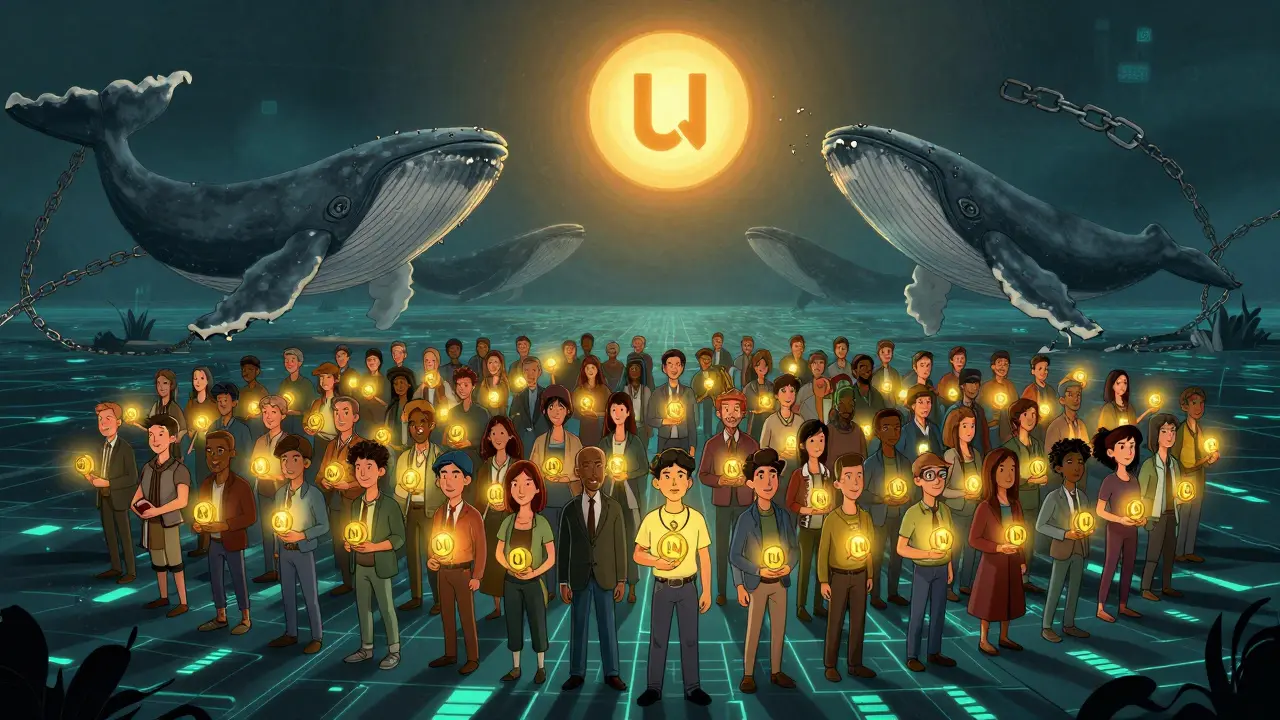
When a blockchain project launches a governance token, it’s not just handing out digital coins. It’s handing out power. The way those tokens are distributed determines who gets to vote on protocol changes, who controls the future of the network, and whether the system stays truly decentralized-or collapses under the weight of a few big holders.
Look at Uniswap’s 2020 airdrop. They gave out 400 UNI tokens to anyone who had ever used their exchange before September 2020. That wasn’t a giveaway-it was a strategy. By rewarding real users, not speculators, they built a base of 250,000 active participants overnight. Most of those people held less than 1% of the total voting power. That’s intentional. It’s what separates a healthy DAO from a corporate shell wearing a blockchain mask.
Why Distribution Matters More Than the Token Itself
Many teams focus on price, supply, or marketing. But the real make-or-break factor is who holds the votes. A governance token with 10 million holders is more resilient than one with 100 whales. If 10 people control 60% of the voting power, you don’t have a decentralized network-you have a private company with public branding.
Take EOS in 2018. Their token sale raised $4 billion, but within six months, 40% of the tokens ended up in the hands of exchanges and a handful of large investors. The result? Governance became a backroom deal. Proposals were pushed through without real community input. The network lost credibility. Today, it’s a ghost of its former self.
On the flip side, MakerDAO’s MKR token has stayed relevant for nearly a decade because they distributed power slowly and deliberately. Early sales went to trusted partners, but the bulk of tokens were released over time through protocol revenue, staking rewards, and community incentives. They didn’t try to give everything away at once. They let the ecosystem grow into its governance.
The Five Standard Allocation Buckets
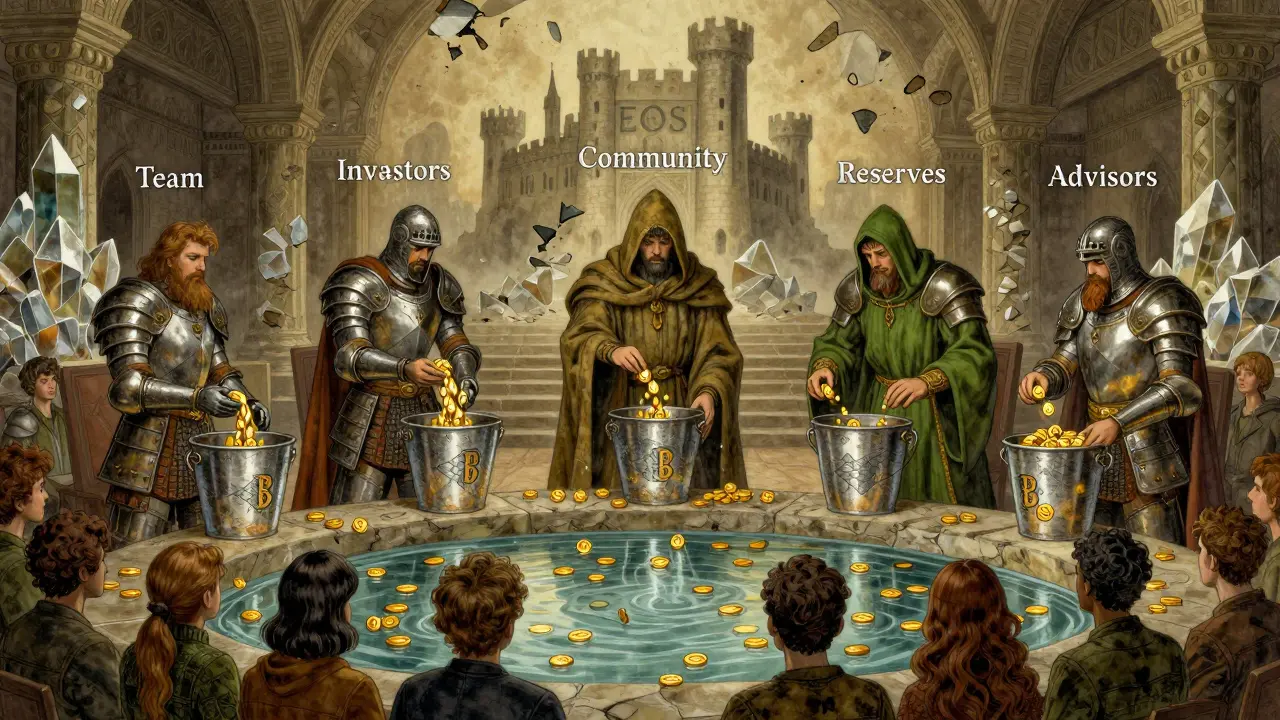
Most successful governance token distributions follow a similar structure. These aren’t arbitrary numbers-they’re battle-tested ratios from projects that survived regulatory scrutiny, market crashes, and governance attacks.
- Team (10-15%): Developers and core contributors. Must be locked up for 4 years with a 12-month cliff. No exceptions. If the team can cash out early, they have zero incentive to build long-term value.
- Investors (15-20%): VCs and private buyers. Vesting schedules here are critical. A 24-month linear unlock after a 12-month cliff is standard. Avoid 6-month cliffs-those invite dumps.
- Community (30-50%): This is the heart of decentralization. Airdrops, liquidity mining, referral rewards, and contribution bonuses go here. Uniswap put 42.5% here. MakerDAO now allocates 35% through ongoing revenue sharing.
- Ecosystem & Reserves (20-25%): Reserved for future grants, partnerships, and unexpected needs. This isn’t a slush fund. It’s a strategic reserve. Projects that spend this too fast burn out.
- Advisors (2-5%): Experts who help with legal, compliance, or technical design. Vesting terms should match the team. Don’t give advisors more than you give your engineers.
These percentages aren’t set in stone. But if your community allocation is under 25%, you’re likely building a centralized project. If it’s over 60%, you risk running out of funds before the protocol matures.
Paid vs. Unpaid: The Distribution Divide
There are two main ways to get tokens into people’s hands: paying for them, or giving them away.
Paid models include private sales, SAFT agreements, and public token sales on launchpads like CoinList. These raise capital fast and signal investor confidence. But they come with risks. The SEC’s 2024 crackdown on CoinList showed that even well-intentioned public sales can be classified as unregistered securities if they’re marketed as investments rather than utility access.
Private sales are cleaner from a legal standpoint, but they concentrate power. Terraform Labs’ 2022 collapse was fueled by early investors holding 70% of voting power. When the price dropped, they voted to change the rules to save themselves-overriding the community.
Unpaid models like airdrops and liquidity mining are more democratic. Uniswap’s airdrop reached 250,000 unique wallets. But they’re vulnerable to bots. Balancer’s 2020 airdrop got hijacked by farming bots that claimed 37% of tokens. These bots don’t care about governance-they just want to sell.
The solution? Make eligibility harder to game. Uniswap required users to have interacted with their protocol before a specific date. MakerDAO ties rewards to actual usage of their lending system. Some projects now require proof of identity or wallet history to qualify.
How to Prevent Whale Domination
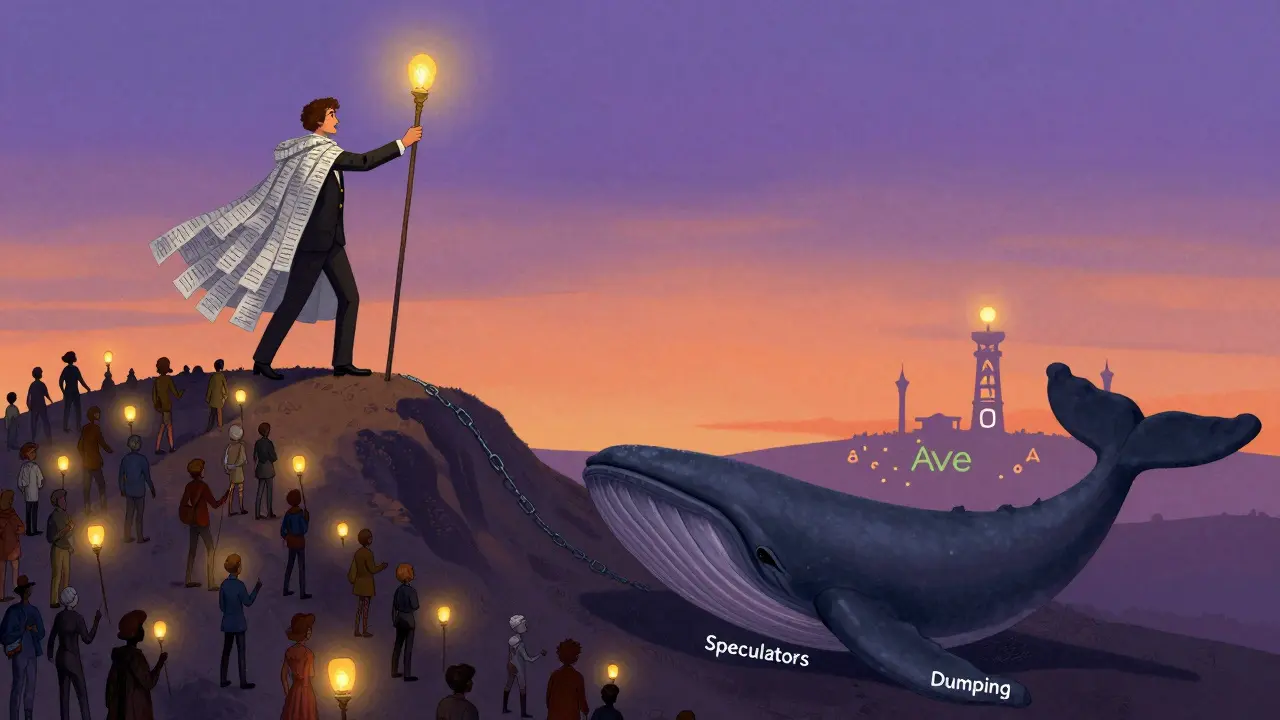
Even with fair distribution, a few wallets can still dominate. That’s why the top projects don’t just distribute-they manage voting power.
Uniswap introduced delegation. Instead of every small holder having to vote, they can assign their vote to someone else-like a governance delegate who follows proposals closely. Today, 78% of UNI voting power is delegated. That means active participants carry the weight, not passive holders.
Aave is testing quadratic voting. In this system, voting power doesn’t scale linearly with token count. If you hold 100 tokens, you get 10 votes. If you hold 10,000, you don’t get 1,000 votes-you get 100. That crushes whale influence.
Curve Finance’s veCRV model locks tokens for up to four years. In return, users get 2.5x voting power. This turns short-term speculators into long-term stakeholders. The result? 80% of veCRV holders have held for over a year.
These aren’t just technical tricks. They’re behavioral design. You’re not just giving out tokens-you’re shaping how people think about their role in the protocol.
Legal Landmines You Can’t Ignore
The SEC’s 2024 framework says a governance token is a security unless it’s distributed to at least 5,000 unaffiliated holders who control 75% of the voting power. That’s not a suggestion-it’s a rule.
Projects targeting U.S. users now run two separate distribution tracks: one for Americans with KYC/AML checks, and another for international users with broader airdrops. Some, like Lido (LDO), even limit voting rights for U.S. holders to avoid regulatory overlap.
The EU’s MiCA regulation (effective January 2025) adds another layer: governance tokens must prove “substantial utility.” That means you can’t just say “this token lets you vote.” You have to show how voting changes real outcomes-like fee adjustments, risk parameters, or treasury spending.
Ignoring this isn’t an option. In 2025, 73% of failed governance token launches were blocked or shut down due to regulatory missteps-not technical ones.
What Works Today (And What Doesn’t)
Here’s what the top 5 governance tokens (UNI, MKR, COMP, AAVE, LDO) have in common in 2025:
- They all use Snapshot for off-chain voting (no gas fees, faster results)
- Proposal thresholds are low enough for small holders to initiate votes (Uniswap: 0.1% of supply)
- Voting periods are 3-7 days-long enough to debate, short enough to move fast
- They have dedicated governance teams-Compound employs 5 full-time facilitators
- They track participation rates and adjust thresholds if turnout drops below 10%
What fails? Projects that:
- Give 100% of tokens to the team and investors
- Use no vesting-tokens unlock immediately
- Set proposal thresholds too high (e.g., 10,000 MKR-only 8% of holders can even propose)
- Don’t document their governance process
- Ignore voter apathy-average participation across DeFi is still under 15%
How to Build Your Own Strategy
If you’re launching a governance token, here’s your step-by-step checklist:
- Define your goal: Are you trying to attract users? Raise capital? Build a community? Your goal shapes your distribution.
- Choose your allocation mix: Stick to the 30-50% community range. Don’t be greedy.
- Implement vesting: Team and investors get 12-month cliffs, 4-year unlocks. No exceptions.
- Use a hybrid model: Combine a small private sale (for capital) with a broad airdrop (for community).
- Prevent sybil attacks: Require wallet history, proof of interaction, or identity verification.
- Build delegation: Make it easy for small holders to delegate to trusted participants.
- Document everything: Publish your tokenomics, vesting schedule, and voting rules on a public GitBook. Transparency is your shield.
- Test your contracts: Get audited by OpenZeppelin or CertiK. A single bug can drain your treasury.
- Plan for regulation: Separate U.S. and international distribution. Consult legal firms like Perkins Coie.
It takes 3-6 months to build this right. Rush it, and you’ll regret it for years.
The Future: Progressive Decentralization
The best governance models today aren’t fully decentralized from day one. They’re progressively decentralized.
MakerDAO’s “Endgame” plan for 2026 includes integrating decentralized identity to prevent fake wallets. Aave is testing quadratic voting. Ethereum’s EIP-7251 will make voting gasless for everyone.
The goal isn’t to give everyone a vote tomorrow. It’s to build a system where, over time, power naturally flows from insiders to the community. Projects that do this well live longer. Electric Capital’s 2025 report found that governance tokens with balanced distribution have 3.2x higher protocol longevity.
Those that don’t? They fade into the background-just another failed blockchain experiment.
What happens if too many people hold governance tokens?
More holders aren’t a problem-they’re the point. The issue isn’t quantity, it’s concentration. If 10 wallets hold 70% of voting power, the network isn’t decentralized, no matter how many total holders there are. The goal is broad, dispersed ownership with mechanisms like delegation to ensure active participants drive decisions.
Can I get governance tokens without buying them?
Yes. Many projects distribute tokens for free through airdrops, liquidity mining, or contribution rewards. Uniswap gave tokens to users who swapped on their platform before September 2020. MakerDAO rewards users who borrow or lend using their protocol. These methods target real users, not speculators.
Why do some governance tokens have vesting schedules?
Vesting prevents insiders from dumping tokens right after launch. A 12-month cliff followed by a 4-year linear unlock ensures that team members and investors stay aligned with the project’s long-term success. Without vesting, governance becomes a short-term exit strategy, not a community-driven system.
Are governance tokens regulated like stocks?
In the U.S., they can be. The SEC considers a token a security if it’s sold as an investment with an expectation of profit based on others’ efforts. But if the token grants meaningful governance rights and is distributed broadly (5,000+ unaffiliated holders controlling 75% of votes), it may avoid classification as a security. The EU’s MiCA rules also require proof of utility. Legal compliance is now non-negotiable.
What’s the difference between governance and utility tokens?
Utility tokens give access to a service-like paying for storage or computing power. Governance tokens give you a vote on how the protocol evolves. You can have both in one token (like UNI or MKR), but the key difference is voting power. If you can’t change the rules, it’s not a governance token.
How do I know if a DAO’s governance is working?
Look at three things: participation rate (above 15% is good), proposal diversity (not just the same few people proposing), and delegation activity (if most votes are delegated to active participants, it’s healthy). Also check if the treasury is being used for real development-not just payouts. Tools like DeepDAO and Snapshot let you track this in real time.
Shaun Beckford
January 13, 2026 AT 15:15Hannah Campbell
January 14, 2026 AT 22:33myrna stovel
January 16, 2026 AT 02:44Sarah Baker
January 17, 2026 AT 09:44Rod Petrik
January 18, 2026 AT 15:27Ashlea Zirk
January 20, 2026 AT 08:35Bharat Kunduri
January 21, 2026 AT 05:51Alexandra Heller
January 22, 2026 AT 23:12Chris Evans
January 24, 2026 AT 11:44Bryan Muñoz
January 25, 2026 AT 01:04Pramod Sharma
January 26, 2026 AT 04:17Liza Tait-Bailey
January 27, 2026 AT 20:09nathan yeung
January 29, 2026 AT 05:32Chris O'Carroll
January 29, 2026 AT 22:03Pat G
January 30, 2026 AT 18:41