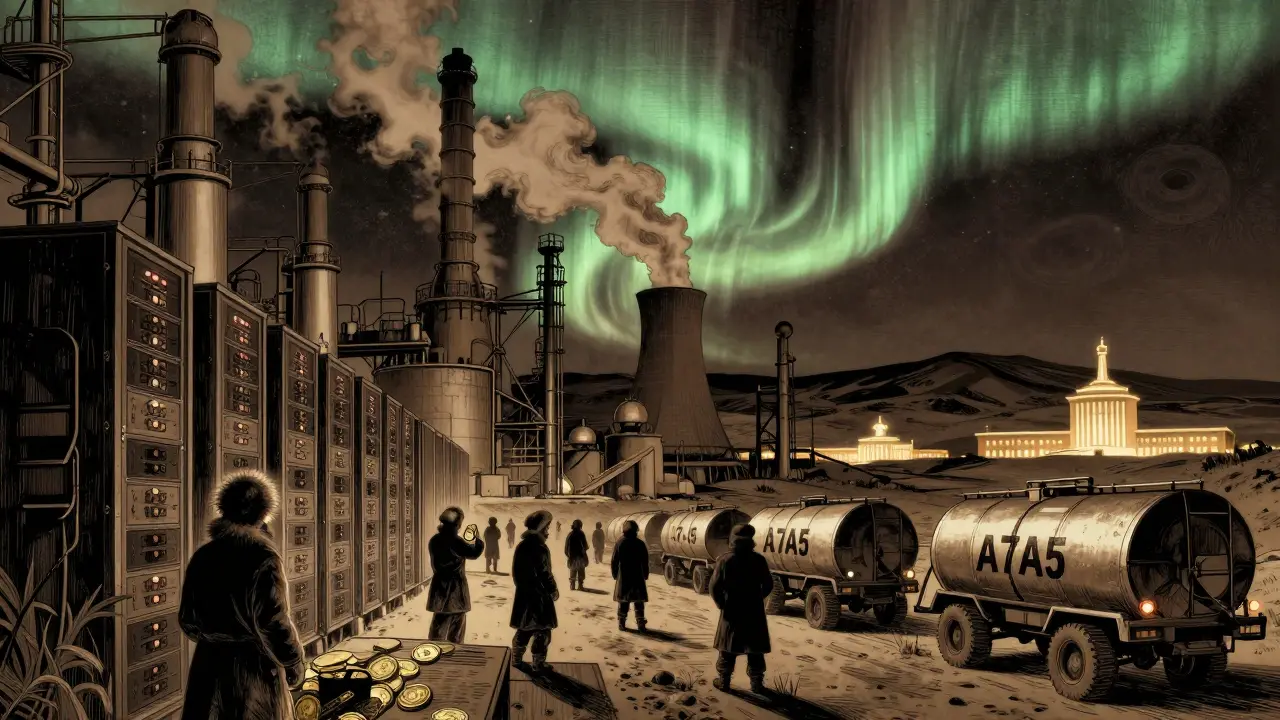
When Russia legalized cryptocurrency mining in 2025, it wasn’t about embracing the future of finance. It was about survival. After Western sanctions cut off access to dollar-clearing systems, frozen central bank reserves, and blocked access to SWIFT, Russia turned to something it could control: blockchain. The move wasn’t accidental. It was a calculated play to build a parallel financial system-one that doesn’t need the dollar, doesn’t need Western banks, and doesn’t need permission.
How Russia Turned Mining Into a Sanctions Shield
Russia didn’t just allow crypto mining. It turned it into a state-backed infrastructure project. The country now runs the world’s third-largest crypto mining operation, using cheap electricity from Siberia and the Urals to power massive server farms. These aren’t hobbyists running rigs in garages. These are industrial-scale operations, often linked to state-owned energy companies and sanctioned banks like Promsvyazbank. The real goal? To generate crypto that can be traded outside Western oversight. Mining produces Bitcoin, Ethereum, and other coins-but Russia didn’t stop there. It created its own stablecoin: A7A5. Backed by the ruble, issued by a Kyrgyz company tied to Russian oligarchs, and traded mostly on sanctioned exchanges like Garantex and Grinex, A7A5 became the backbone of Russia’s shadow economy. By July 2025, A7A5 had moved over $51 billion in transactions. That’s not retail users buying coffee. That’s oil exporters in India paying Russian suppliers. That’s Iranian arms dealers trading weapons for grain. That’s Chinese manufacturers getting paid in crypto instead of dollars. And because A7A5 moves through a closed loop of sanctioned exchanges and Kyrgyzstani banks, Western regulators struggle to track it.The Shadow Crypto Network: Who’s Really Running It?
Russia didn’t build this alone. It leaned on a network of sanctioned players who had nowhere else to go. Garantex, once Russia’s biggest crypto exchange, was blacklisted by the U.S. in 2022. Its founders didn’t shut down. They built Grinex in 2024-specifically designed to bypass sanctions. The U.S. Treasury called it a “sanctions evasion tool” and slapped it with sanctions in August 2025. Around the same time, the UK targeted Old Vector (the issuer of A7A5), Meer (a Kyrgyz crypto service), and eight other entities tied to the network. The infrastructure goes deeper. Kyrgyz banks are used to move money. Luxembourg-based shell companies handle the paperwork. Russian oligarchs like Ilan Shor and Konstantin Malofeyev-both sanctioned-are quietly funding the backend. Even Russian military procurement agencies are using crypto to buy components from third-country suppliers. Chainalysis found that these networks aren’t just moving money. They’re moving weapons, dual-use tech, and raw materials. And here’s the kicker: Russia’s own citizens are now being pulled in. The A7A5 website lets people buy tokens using PSB bank cards. That’s not just for businesses anymore. It’s for ordinary Russians trying to protect their savings from inflation and capital controls.Why Bitcoin Won’t Save Russia
You might think Russia is flooding the world with Bitcoin to dodge sanctions. It’s not. Bitcoin’s market cap is around $1.2 trillion. Russia’s annual exports before the war were $400 billion. Even if every ruble were converted to Bitcoin, the market couldn’t absorb that volume without crashing the price. Bitcoin is too volatile. Too slow. Too expensive to move at scale. Russia knows this. That’s why it didn’t bet on Bitcoin. It built its own stablecoin-A7A5-pegged to the ruble, designed for predictability, and locked inside a walled garden of sanctioned nodes. It’s not about replacing the dollar. It’s about creating a parallel currency that doesn’t need the dollar to function. The Bitcoin Policy Institute put it bluntly: Bitcoin is “ill-suited” for sanctions evasion. Russia isn’t using crypto to replace global trade. It’s using it to survive it.
Western Counterattacks: The First Mining Company Sanctioned
For years, Western governments treated crypto mining as a gray area. In August 2025, that changed. The U.S. Treasury’s Office of Foreign Assets Control (OFAC) sanctioned a Russian crypto mining company for the first time ever. That’s a major shift. It’s no longer just about exchanges or wallets. It’s about the hardware, the power plants, the cooling systems-all part of the evasion machine. The UK followed suit, targeting the same network. The message was clear: if you’re mining crypto to fund Russia’s war, you’re a target. The sanctions didn’t just freeze assets. They blocked access to U.S. financial systems, banned U.S. citizens from dealing with them, and forced global banks to cut ties. But Russia isn’t backing down. It’s doubling down. New mining rigs are being installed. Power contracts are being rewritten. And the A7A5 network keeps growing-even as its exchanges get shut down, new ones pop up in Kazakhstan, Armenia, and Moldova.The Flaw in the Plan: Blockchains Don’t Lie
Here’s the irony: the very technology Russia is using to hide is also exposing it. Every A7A5 transaction is recorded on a public blockchain. Every transfer, every exchange, every wallet address leaves a digital fingerprint. Chainalysis, Elliptic, and other forensic firms are mapping the entire network. They can trace how funds move from Russian mining farms to Kyrgyz banks, then to Chinese manufacturers, then to Iranian arms dealers. The blockchain doesn’t care about borders or sanctions. It just records. And that’s why Western sanctions are getting smarter. Instead of trying to block every transaction, they’re targeting the nodes-specific exchanges, specific banks, specific individuals-based on real, on-chain data. Russia thought it could go dark. But crypto is the opposite of dark. It’s the most transparent financial system ever created.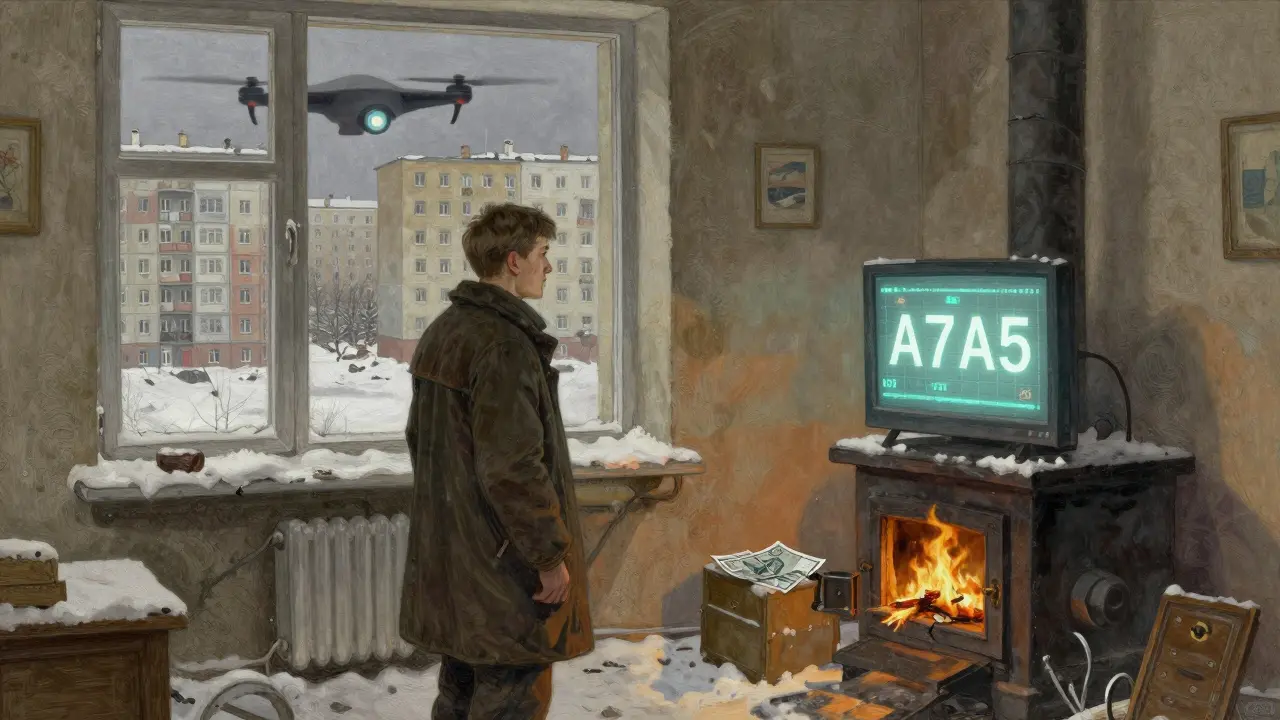
Jake Mepham
December 24, 2025 AT 09:10Let’s be real-Russia didn’t invent crypto sanctions evasion, but they turned it into an industrial sport. The A7A5 stablecoin? Genius in its simplicity. Pegged to the ruble, locked in a walled garden, and moving through Kyrgyz banks like a ghost. Western regulators are still chasing wallets while Russia’s mining rigs hum 24/7 in Siberia. Blockchain transparency? Yeah, it’s a double-edged sword. The ledger doesn’t lie, but it doesn’t care who’s holding the knife either.
And here’s the kicker: no one’s using Bitcoin for this. Too volatile. Too slow. Too expensive. A7A5 is the real weapon-not crypto as a revolution, but crypto as a utility. Like using a chainsaw to cut firewood instead of a butter knife.
Meanwhile, China and India? They’re doing barter deals with cash couriers. Smarter. Quieter. Less traceable. Russia’s playing chess with a flamethrower while everyone else is using stealth mode.
Craig Fraser
December 24, 2025 AT 09:29It’s all just a distraction. The real issue is that Russia’s economy is rotting from the inside. Crypto mining consumes insane amounts of power-power that could be going to hospitals, schools, or heating homes. And for what? A $51 billion shadow economy when their GDP was over $1.7 trillion pre-war? This isn’t innovation. It’s desperation dressed up as tech.
Jacob Lawrenson
December 25, 2025 AT 16:34OMG this is wild 😱 Russia turning mining into a sanctions shield?? Like… legit genius move?? 🤯 A7A5 is basically their own digital ruble army!! And the fact that they’re using Kyrgyz banks to dodge US sanctions?? BRUH. The West is scrambling like a cat in a room full of laser pointers 🔥🔥🔥
Sybille Wernheim
December 27, 2025 AT 11:26I love how people act like this is some new hack, but honestly? This is just capitalism adapting. When you cut off one door, people build a window. Russia didn’t invent crypto, but they did what any desperate country would do-use what’s available. And honestly? The fact that ordinary Russians are using A7A5 to protect their savings? That’s not evil. That’s survival.
Also, props to the miners in Siberia. Imagine working in -40°C just to keep a financial system alive. That’s grit.
Cathy Bounchareune
December 28, 2025 AT 22:50It’s like watching a mob boss try to launder money through a TikTok livestream-chaotic, absurd, and weirdly brilliant. A7A5 isn’t currency. It’s a narrative. A digital rumor wrapped in blockchain code. The West thinks they’re tracking transactions, but they’re chasing smoke. Every time they shut down Grinex, three more pop up like mushrooms after rain. And the real beauty? No one’s buying A7A5 because they believe in it. They’re buying it because they have no other choice. That’s not adoption. That’s resignation with a public ledger.
Meanwhile, China’s quietly using physical gold shipments and barter deals with cash stuffed in suitcases. The future of sanctions evasion isn’t crypto. It’s analog.
Megan O'Brien
December 29, 2025 AT 22:25Hybrid blockchain architecture with off-chain settlement layers and sanctioned node clustering. A7A5’s design vector exploits regulatory arbitrage via jurisdictional fragmentation. The liquidity sink is non-linear, and the counterparty risk is obfuscated through Kyrgyzstani shell banking infrastructure. OFAC’s enforcement model is fundamentally outdated-on-chain forensic analytics are reactive, not predictive. This is a systemic failure of traditional financial governance frameworks.
Earlene Dollie
December 30, 2025 AT 11:52They’re all just pawns in a game no one asked for 🥲
My grandma’s pension is worth less than a Bitcoin meme and Russia’s out here building a digital empire with stolen electricity 😭
Who wins? No one. We all just keep scrolling.
Why does it feel like the world’s ending and everyone’s just buying NFTs?
Dusty Rogers
January 1, 2026 AT 05:55People keep acting like this is some kind of tech breakthrough, but it’s just a workaround. Like using duct tape to fix a leaking roof. It holds for a while, but the house is still falling apart. Russia’s mining rigs are just a bandage on a bullet wound. The real problem? The economy’s dying. And no amount of crypto is going to bring back the engineers, doctors, and students who left.
And yeah, the blockchain tracks everything. So they’re not hiding. They’re just… hoping no one’s looking hard enough.
Kevin Karpiak
January 2, 2026 AT 14:42Sanctions are for cowards. Russia’s fighting back. The West wants to choke them with rules. Russia just built a new system. That’s strength. You don’t like it? Tough. The dollar’s been rigged for decades anyway. A7A5 is the future. Get used to it.
Helen Pieracacos
January 3, 2026 AT 13:11So let me get this straight-Russia’s using crypto to bypass sanctions… and you’re surprised? The same people who called Bitcoin ‘digital gold’ are now acting like it’s a magic spell. It’s not. It’s accounting. With more steps. And more electricity bills.
Also, ‘A7A5’? Really? That’s the name of their entire shadow economy? Someone at the Kremlin had a bad day at the keyboard.
Dustin Bright
January 4, 2026 AT 02:30bro this is wild 🤯 like imagine your whole country’s economy is running on a bunch of servers in a snowstorm and you’re just… hoping no one notices
also a7a5?? that’s the name?? 😅
but honestly… i feel bad for regular russians who just wanna buy groceries without getting flagged by some american algorithm 🥺
tech is cool but it’s not magic… and the blockchain? it remembers everything 😔
Melissa Black
January 4, 2026 AT 06:55Strategic monetary decoupling via algorithmic asset issuance within a federated permissioned blockchain topology. The A7A5 protocol represents a non-sovereign, state-aligned monetary layer that bypasses traditional correspondent banking networks. Its success hinges on three factors: energy arbitrage, jurisdictional fragmentation, and the degradation of Western financial intelligence capabilities. The blockchain’s immutability is not a vulnerability-it’s a feature. The West’s failure lies in treating crypto as a currency rather than a transactional infrastructure. This is not evasion. It’s evolution.
Bitcoin’s volatility renders it irrelevant. Stablecoins are the new reserve asset class in a multipolar world. The dollar’s dominance is not being replaced-it’s being circumvented. And the architects of this system are not hackers. They are central bankers with access to power grids.
Ashley Lewis
January 4, 2026 AT 07:36This is not innovation. It is economic malpractice. The use of state-backed stablecoins to circumvent international financial norms is a violation of the very principles upon which global monetary stability rests. The fact that such an operation is even possible reflects a catastrophic failure of multilateral enforcement mechanisms. The West must act decisively-not with sanctions, but with structural reform of the global financial architecture.
SHEFFIN ANTONY
January 5, 2026 AT 06:13Wait so Russia’s using crypto to dodge sanctions but China and India are using cash couriers? So… the real winners are the guys with suitcases full of euros? LMAO. You think blockchain is the future? Nah. The future is a guy on a train with a backpack full of cash and zero digital footprint. This whole crypto thing is just a distraction for people who think tech fixes everything.
Also A7A5? That’s not a currency. That’s a typo that got promoted to CEO.