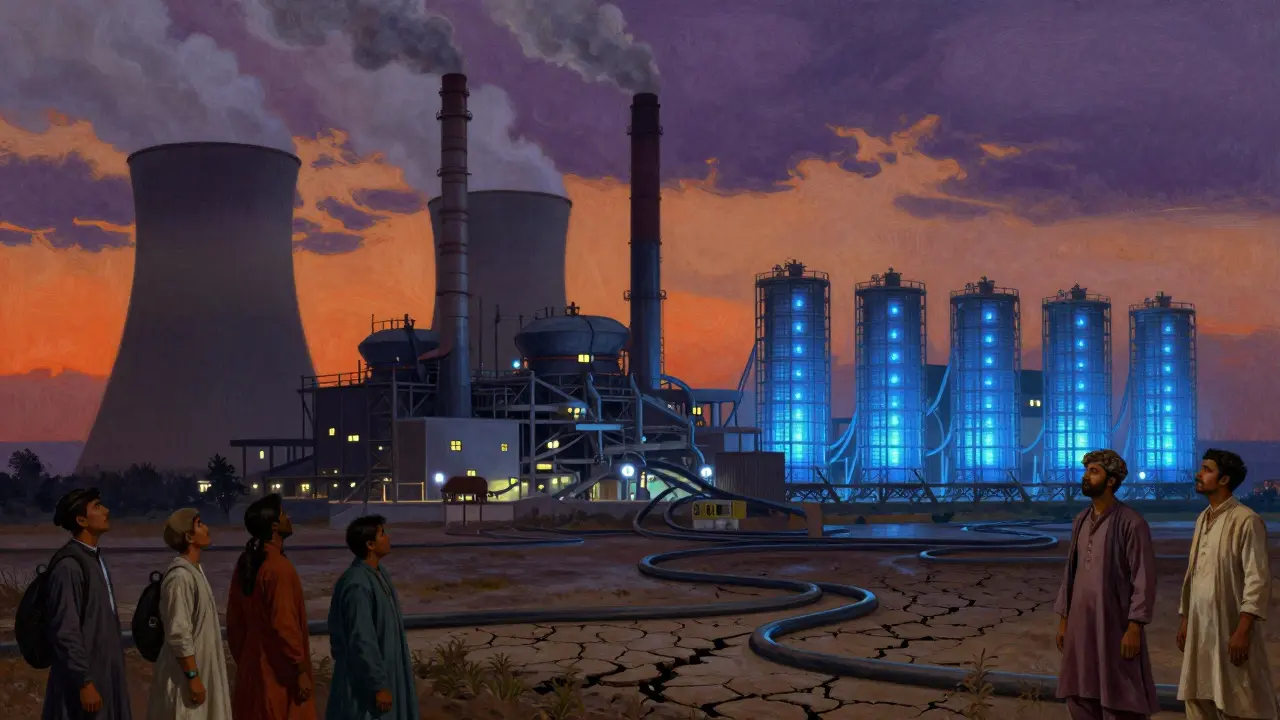
Pakistan Crypto Mining Calculator
Pakistan has allocated 2,000 MW (2,000,000 kW) of electricity for crypto mining at $0.08/kWh. At current rates, this could generate up to 17,000 Bitcoin annually, worth about $1.8 billion.
Comparison: This rate is half of what miners pay in Texas and a third of what they pay in Germany.
Your Potential Mining Output
How Pakistan Compares
Note: These calculations are simplified for educational purposes. Actual mining depends on hardware efficiency, network difficulty, and other factors.
Pakistan's allocation of 2,000 MW could generate up to 17,000 BTC annually ($1.8 billion) at current prices.
Pakistan just gave 2,000 megawatts of electricity to crypto mining - and no one agrees if it’s genius or reckless
In May 2025, Pakistan announced it would redirect 2,000 MW of surplus power to Bitcoin mining and AI data centers. That’s enough electricity to power a medium-sized country. It’s also the largest government-backed crypto mining project ever launched. The move stunned global observers. Some called it a bold economic lifeline. Others warned it could sink Pakistan’s already fragile energy system.
The numbers don’t lie. Pakistan has 7,000 MW of unused electricity sitting idle - mostly from coal plants running at just 15% capacity. Meanwhile, households and businesses pay some of the highest electricity rates in South Asia. The government’s solution? Let crypto miners use the waste power. For $0.08 per kWh, miners get rates cheaper than most of the world. That’s half what miners pay in Texas and a third of what they pay in Germany.
At that rate, the 2,000 MW allocation could generate up to 17,000 Bitcoin a year. At today’s prices, that’s roughly $1.8 billion in annual value. For a country drowning in $2.8 trillion rupees of losses from underused power plants, it’s tempting. The Pakistan Crypto Council, formed in March 2025 under Finance Minister Muhammad Aurangzeb, is pushing this as Phase 1 of a digital economy revolution.
Why Pakistan? Surplus power, not cheap energy
This isn’t about cheap coal or solar. It’s about waste.
Most countries that mine Bitcoin - like the U.S., Kazakhstan, or Russia - fight over electricity. They compete with homes, factories, and hospitals. Pakistan doesn’t. It has more power than it can use. The problem isn’t generation. It’s distribution, corruption, and mismanagement. Coal plants built for 5,000 MW are running at 750 MW. Hydro stations sit half-empty during monsoon season. The grid is broken, but the power is there.
By locking 2,000 MW into mining, Pakistan isn’t adding new demand - it’s putting idle capacity to work. Think of it like renting out empty warehouse space. The electricity would’ve been lost anyway. Now, it’s being sold to tech companies that need massive, stable power.
That’s why the initiative isn’t just about Bitcoin. It’s also about AI data centers. These facilities need constant, reliable electricity. They’re not like home miners with a few rigs. These are warehouses full of servers running 24/7. And Pakistan is betting it can become a regional hub for them.
Who’s running this? The Pakistan Crypto Council
The Pakistan Crypto Council (PCC) is the government’s new face for crypto. It’s not a private company. It’s a state-backed body reporting directly to the Ministry of Finance. Its leadership includes top officials and international names - including Changpeng Zhao, co-founder of Binance, who was appointed as a strategic adviser in April 2025.
The PCC’s job is to cut through red tape. They’re negotiating with power companies like WAPDA and private grid operators like PTCL and Multinet. They’re also drafting Pakistan’s first-ever legal framework for digital assets, which was unveiled in April 2025. That’s huge. Before this, crypto was a gray area. Now, it’s regulated - even if controversially.
The council has set up three mining zones: Lahore, Karachi, and Islamabad. Twenty-two existing data centers are already licensed to operate. The University of Turbat even built a 1MW solar-powered data center in June 2023 - a test case for renewable-powered mining.

The IMF says no - and they’re not backing down
Not everyone is celebrating. The International Monetary Fund (IMF) is pushing back hard. They’ve held multiple technical meetings with Pakistani officials since June 2025. Their concern? Subsidies.
The IMF argues that giving crypto miners electricity at $0.08/kWh while regular consumers pay $0.18-$0.25/kWh is unfair. It creates a two-tier system. The IMF has seen this before. In the past, similar subsidies for fertilizer, fuel, or industry failed to create jobs or growth - they just fueled corruption and debt.
Dr. Fakhray Alam Irfan, Secretary of Power, admitted the IMF questioned how Pakistan plans to phase out these subsidies. “We’ve done this before,” he said. “It didn’t work.”
But Pakistan isn’t backing down. Officials say the subsidy is temporary - only for the first 18 months to attract investors. After that, rates will shift to market levels. The problem? No one knows what market level means in a country where power prices are politically controlled, not economically set.
Meanwhile, the IMF hasn’t blocked the plan. They’re still talking. That’s unusual. Usually, the IMF says “no” and walks away. Here, they’re staying at the table. Why? Because Pakistan’s economy is collapsing. They need foreign cash. Crypto mining could bring it.
Will it actually work? The real risks
There’s a big difference between announcing a plan and making it work.
First, the grid. Pakistan’s electricity network is unstable. Blackouts happen daily. Mining rigs don’t care about brownouts. They need steady power. One spike or drop can fry thousands of machines. That’s not just expensive - it’s a waste of energy.
Second, the money. $1.8 billion in Bitcoin value sounds great. But most of that won’t stay in Pakistan. Miners will pay for hardware in China, software in the U.S., and cloud services in Europe. Profits will go to foreign shareholders. Local jobs? Maybe 5,000-10,000 tech roles. Not enough to move the needle on unemployment.
Third, reputation. Pakistan is still on the FATF grey list for anti-money laundering risks. If crypto miners use the system to launder money, the country could face global financial isolation. The PCC says they’re building KYC and AML systems. But no one’s seen them yet.
And then there’s the environment. Critics say using coal power for mining is a greenwash. But Pakistan’s coal plants are already running. If they’re not mining, they’re just burning coal for nothing. Some experts argue this could be the cleanest use of that power yet.
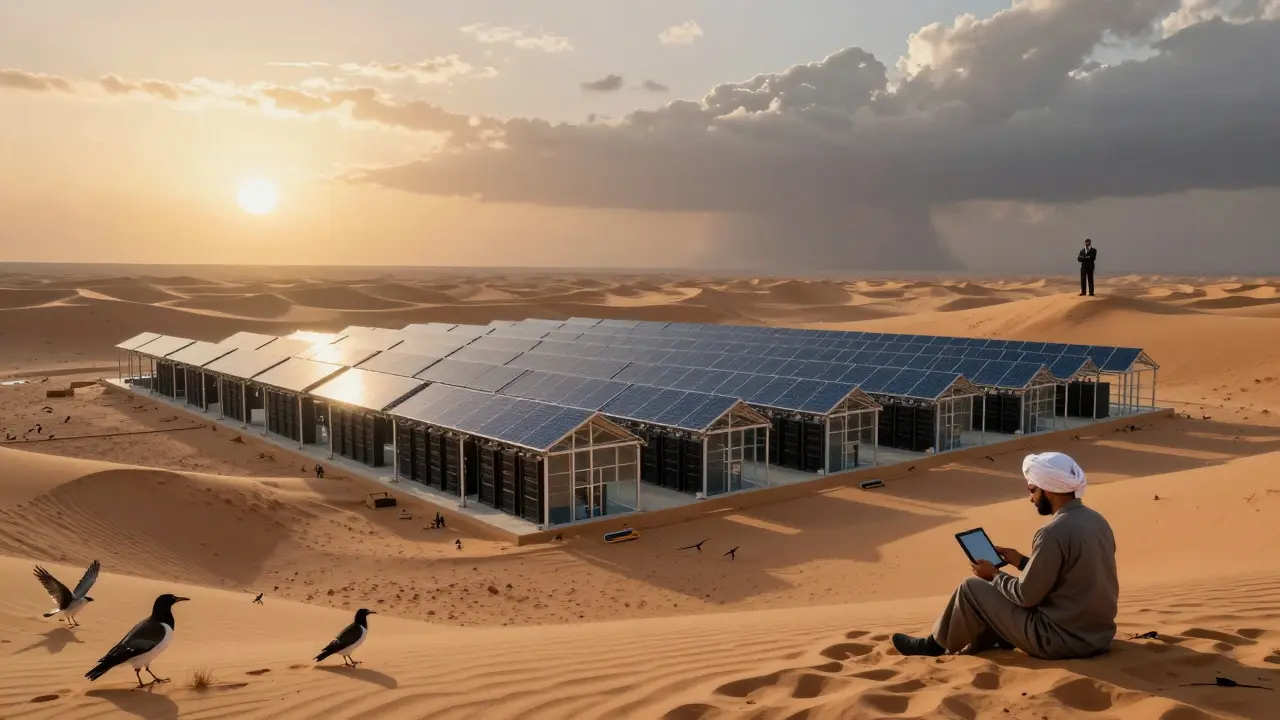
What’s next? Phase 2 and beyond
The real test comes in 2026. If Phase 1 runs smoothly - if miners don’t crash the grid, if foreign companies show up, if the IMF doesn’t cut funding - Pakistan may expand to 5,000 MW or more.
There are already whispers of a national Bitcoin reserve. At the Bitcoin 2025 conference, Pakistan unveiled its first government-held Bitcoin wallet. It’s not a lot - maybe 500 BTC - but it’s symbolic. This isn’t just mining. It’s adoption.
Other countries are watching. Nigeria has surplus gas. Indonesia has idle geothermal plants. Egypt has solar potential. If Pakistan succeeds, they’ll copy it. If it fails, they’ll avoid it.
The world’s biggest crypto mining hubs used to be China, then the U.S. Now, the new frontier is countries with surplus power and desperate economies. Pakistan is betting everything on that bet.
What this means for you
If you’re a miner: Pakistan offers the cheapest electricity in the world - if you can get in. But don’t expect hand-holding. You’ll need legal counsel, local partners, and backup generators.
If you’re an investor: This is high-risk, high-reward. The regulatory environment is still forming. The IMF could change its mind. But if this works, early players could see 10x returns.
If you’re a Pakistani citizen: This isn’t about your electricity bill. It’s about whether your country can turn waste into wealth. The success of this project will define Pakistan’s digital future - for better or worse.
Is crypto mining legal in Pakistan?
Yes. In April 2025, Pakistan launched its first official policy framework for digital assets, making cryptocurrency mining, trading, and holding fully legal under regulated conditions. The Pakistan Crypto Council oversees compliance and licensing.
How much electricity does crypto mining use in Pakistan?
The government has allocated exactly 2,000 megawatts (MW) for Bitcoin mining and AI data centers. This represents about 28.5% of Pakistan’s total 7,000 MW surplus electricity capacity. No other sectors are receiving this level of dedicated power.
Why is the IMF against this plan?
The IMF opposes the subsidized electricity rate of $0.08/kWh for miners, arguing it unfairly advantages crypto companies over regular consumers and businesses. They fear it sets a precedent for untargeted subsidies that historically failed to create sustainable growth in Pakistan.
Can regular people in Pakistan mine Bitcoin too?
Technically yes, but not at the same rate. The 2,000 MW allocation is reserved for large-scale, licensed operators - not individuals. Home miners must buy electricity at market rates, which are higher and less reliable. The government is not encouraging small-scale mining.
What happens if the power grid crashes because of mining?
The Pakistan Crypto Council requires all mining operators to install grid-stabilizing equipment and backup power systems. Any facility causing instability can be shut down immediately. So far, no major disruptions have been reported, but experts warn the system is untested at this scale.
Is Pakistan becoming a Bitcoin nation?
Not yet. But the government has created a Bitcoin reserve and is building legal infrastructure to support digital assets. This is a strategic move to attract foreign tech investment, not a full shift to cryptocurrency as currency. Bitcoin is being treated as an asset class, not money.
Joe B.
December 1, 2025 AT 19:29Rod Filoteo
December 3, 2025 AT 12:33Layla Hu
December 4, 2025 AT 10:23Nelia Mcquiston
December 6, 2025 AT 03:28Ivanna Faith
December 6, 2025 AT 14:30Akash Kumar Yadav
December 7, 2025 AT 06:18samuel goodge
December 8, 2025 AT 11:53alex bolduin
December 9, 2025 AT 01:40Vidyut Arcot
December 9, 2025 AT 19:48Jay Weldy
December 10, 2025 AT 15:10Melinda Kiss
December 10, 2025 AT 15:54Christy Whitaker
December 12, 2025 AT 05:26Nancy Sunshine
December 14, 2025 AT 00:57Alan Brandon Rivera León
December 15, 2025 AT 20:04Ann Ellsworth
December 17, 2025 AT 18:46Sharmishtha Sohoni
December 17, 2025 AT 21:14Althea Gwen
December 18, 2025 AT 03:35Steve Savage
December 18, 2025 AT 18:37Andrew Brady
December 20, 2025 AT 14:03