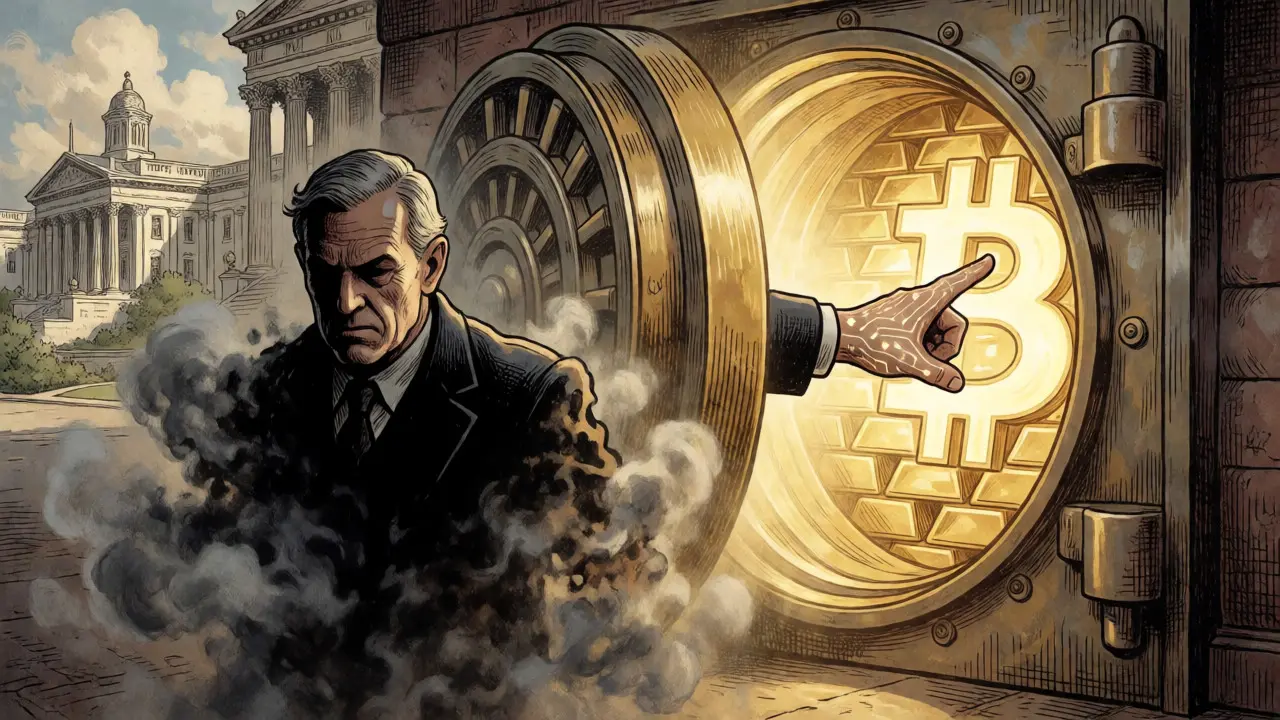
Imagine waking up to find the U.S. government holding over 200,000 Bitcoin as a strategic reserve asset, never to be sold. That isn't a sci-fi plot; it's the reality created by the Trump administration's 2025 crypto policy reversal. For years, American regulators treated digital assets with suspicion, leaning heavily on enforcement rather than innovation. Then, in January 2025, everything flipped. The goal shifted from "how do we control this?" to "how do we lead this?" If you've been wondering how these changes affect your portfolio or business, you're looking at one of the most aggressive regulatory pivots in modern financial history.
The End of Enforcement-First Regulation
To understand where we are, you have to look at where we were. Under the previous administration, the Securities and Exchange Commission (SEC) operated under an "enforcement-first" doctrine. They sued exchanges, froze assets, and made compliance feel like a minefield. The Trump administration scrapped this approach almost immediately. On January 23, 2025, President Trump signed the Executive Order titled "Strengthening American Leadership in Digital Financial Technology." This wasn't just a suggestion; it was a directive to dismantle the existing framework that had stifled growth. This order revoked Executive Order 14067, which had previously tasked agencies with studying a Central Bank Digital Currency (CBDC). More importantly, it explicitly prohibited the creation of a future CBDC. Why does this matter? Because a CBDC could potentially crowd out private stablecoins and blockchain-based payment systems. By banning it, the administration signaled that they wanted private-sector innovation to drive digital finance, not a government-controlled ledger. This shift removed the looming threat of a state-run dollar replacing private crypto rails, giving businesses the confidence to invest without fearing imminent obsolescence.
The Strategic Bitcoin Reserve: A New Asset Class for the Treasury
The most headline-grabbing move came on March 6, 2025, when the administration established the Strategic Bitcoin Reserve. Unlike traditional gold reserves, this new entity holds only BTC. Here is the critical detail that separates it from past government holdings: these coins will never be sold. They are classified as "U.S. reserve assets," managed directly by the Treasury Department.
Where did the coins come from? Not from taxpayer-funded purchases, but from criminal and civil asset forfeitures. When the DOJ seizes crypto from illegal operations, those assets now flow into the Reserve instead of being auctioned off. As of March 31, 2025, the Reserve held approximately 214,000 BTC, valued at around $14.2 billion. Projections suggest this could grow significantly as more seizures occur. The logic is straightforward: if the U.S. believes Bitcoin has long-term value, why sell it cheaply during a legal process? Hold it, let it appreciate, and strengthen the national balance sheet. However, experts like Laura Peterson from Galaxy Research warn that locking up these assets limits Treasury flexibility during fiscal emergencies. You can't spend what you refuse to sell.
Understanding the U.S. Digital Asset Stockpile
While the Strategic Bitcoin Reserve gets the spotlight, there’s a sibling entity: the U.S. Digital Asset Stockpile. This stockpile handles non-Bitcoin assets seized by the government-think Ethereum, Solana, or various altcoins. The rules here are different. While no new purchases are authorized for this stockpile, the Treasury Secretary retains the authority to determine strategies for stewardship, including potential sales. This distinction is crucial for market dynamics. It means the government acts as a holder of Bitcoin but remains a flexible trader of other digital assets. For investors, this suggests that while BTC might see reduced selling pressure from the U.S. government, altcoins could still face volatility if the Treasury decides to liquidate large positions.
The GENIUS Act: Codifying the Rules
Executive orders can be reversed by the next president. Legislation sticks. In July 2025, the GENIUS Act was signed into law, providing the statutory backbone for the new policy. Described by supporters as the most significant crypto legislation since Wyoming’s early blockchain bills, the GENIUS Act addresses market structure, stablecoin regulation, and tax treatment. It creates clear definitions for digital commodities versus securities, reducing the ambiguity that plagued the SEC era. For example, it clarifies that many tokens function as commodities, placing them under the jurisdiction of the Commodity Futures Trading Commission (CFTC) rather than the SEC. This shift streamlines compliance for projects that don’t fit the classic "security" mold, lowering barriers to entry for startups.
| Feature | Biden Administration Approach | Trump Administration Approach (2025) |
|---|---|---|
| Regulatory Philosophy | Enforcement-led; high scrutiny | Innovation-led; supportive growth |
| CBDC Stance | Explored development (EO 14067) | Prohibited future CBDC creation |
| Government Holdings | Sold seized assets regularly | Retained BTC in Strategic Reserve |
| Primary Regulator Focus | SEC dominance | CFTC empowerment for commodities |
| Key Legislation | No major comprehensive bill passed | GENIUS Act (July 2025) |
Market Impact and Industry Reaction
Did the policies work? The numbers say yes. Between December 2024 and June 2025, the U.S. crypto market grew from $1.2 trillion to $2.7 trillion-a 125% increase. Institutional capital deployment hit $84 billion in the first half of 2025 alone, tripling previous records. According to a CoinDesk survey of 500 industry executives, 87% rated the changes favorable, and 72% planned to expand U.S. operations immediately. Reddit communities buzzed with excitement, noting that the announcement of the Strategic Bitcoin Reserve sent BTC prices up 18% in 24 hours. This wasn't just hype; it reflected genuine institutional confidence returning to American markets after years of regulatory uncertainty.
However, it hasn't been all smooth sailing. Smaller firms struggle with the speed of implementation. A BHFS legal analysis found that 32% of surveyed startups needed external consultants to navigate the new framework. Additionally, some critics argue the focus on Bitcoin and stablecoins leaves gaps for other ecosystems. Vlad Zamfir, an Ethereum researcher, pointed out that the GENIUS Act creates regulatory uncertainty for non-BTC networks. If you’re building on a platform other than Bitcoin or major stablecoins, you might still face questions about how the CFTC will classify your specific token type.

Implementation Challenges and Future Outlook
The administration moved fast, delivering the President's Working Group report in exactly 180 days. But speed comes with risks. Former CFTC Chair Gary Gensler warned that complex financial regulation developed in six months can create "dangerous gaps." We are already seeing this in the form of interagency coordination issues. The SEC and CFTC must now align their rulemaking processes, a task complicated by overlapping jurisdictions. The roadmap includes SEC guidance on stablecoins by January 2026 and CFTC guidance on derivatives by March 2026. Until these are finalized, businesses operate in a transitional zone.
Looking ahead, the Congressional Budget Office warns of potential market distortion if the Strategic Bitcoin Reserve grows too large. If the U.S. holds more than 500,000 BTC (about 2.4% of total supply), its mere presence could influence global price discovery. Despite this, the trajectory seems set. With job postings up 189% and venture funding flowing back into the U.S., the reversal appears successful in achieving its primary goal: making America attractive again for digital finance.
Frequently Asked Questions
What is the Strategic Bitcoin Reserve?
The Strategic Bitcoin Reserve is a U.S. government entity established by Executive Order in March 2025. It holds Bitcoin seized through criminal and civil asset forfeiture proceedings. Crucially, these assets are designated as permanent reserve assets and will not be sold, distinguishing it from previous practices where seized crypto was auctioned off.
How does the GENIUS Act change crypto regulation?
Signed in July 2025, the GENIUS Act provides statutory clarity on digital assets. It defines market structures, regulates stablecoins, and clarifies tax treatments. Importantly, it shifts regulatory oversight for many digital commodities from the SEC to the CFTC, reducing the burden of securities registration for projects deemed commodities.
Did the U.S. ban Central Bank Digital Currencies?
Yes. The January 2025 Executive Order explicitly prohibited the creation of a U.S. Central Bank Digital Currency (CBDC). This reverses the previous administration's exploration of a digital dollar, signaling support for private-sector stablecoins and blockchain solutions instead.
Can the government sell Bitcoin from the Strategic Reserve?
No. The White House fact sheet states that Bitcoin in the Strategic Bitcoin Reserve will never be sold. It is maintained as a long-term reserve asset. However, non-Bitcoin assets in the separate U.S. Digital Asset Stockpile may be sold based on Treasury discretion.
Who leads the President's Working Group on Digital Assets?
The group is chaired by David Sacks, appointed as the 'Crypto and AI Czar.' The working group includes representatives from the SEC, CFTC, Treasury, Commerce, and the Attorney General's office. They delivered their comprehensive report on July 30, 2025.
Ian Munro
September 3, 2026 AT 06:51Clear breakdown. The shift from SEC to CFTC jurisdiction is the real story here for institutional adoption.
Matthew O'Neill
September 3, 2026 AT 07:37This entire narrative reeks of confirmation bias and regulatory capture masquerading as innovation. You conveniently ignore that the 'enforcement-first' doctrine was a necessary corrective to the Wild West chaos of 2017-2021, where retail investors were systematically fleeced by unregistered securities offerings disguised as utility tokens. By pivoting to a 'innovation-led' framework under Trump, we are essentially dismantling the consumer protection apparatus in favor of corporate deregulation. The GENIUS Act doesn't provide clarity; it provides ambiguity wrapped in jargon-heavy statutory language that will require years of litigation to parse. Furthermore, the Strategic Bitcoin Reserve is not a sound monetary policy but a speculative gamble funded by forfeiture proceeds, which distorts market signals and creates moral hazard for criminal enterprises whose assets now become sovereign reserves rather than liquidated cash. This isn't leadership; it's ideological posturing that ignores the systemic risks of concentrating volatile digital assets on the national balance sheet without proper hedging mechanisms or liquidity provisions for fiscal emergencies. The so-called 'growth' in market cap is merely a reflection of macroeconomic liquidity injections, not regulatory efficacy. We are trading stability for speed, and history shows that such trades often end in tears for the average taxpayer who lacks the sophistication to navigate this new landscape of regulatory arbitrage.
Ashwini Chaskar
September 4, 2026 AT 03:15it feels like they just swapped one set of problems for another
i mean sure the enforcement stopped but now we have this weird limbo where nobody knows if their altcoin is a security or commodity until the cftc gets around to writing guidance in 2026 which is basically forever in crypto time
and the reserve thing feels performative honestly because you cant spend what you hold and if the treasury needs cash during a crisis do they really not sell? or do they borrow against it which defeats the purpose?
also ignoring the environmental impact completely while talking about energy intensive mining seems disingenuous given the global climate goals everyone pretends to care about
liam & the bees
September 5, 2026 AT 16:02Really insightful read! 🌟 It’s fascinating to see how quickly the tone has shifted from suspicion to strategic embrace. For those of us watching from Europe, the prohibition of a CBDC is particularly interesting because it forces private stablecoins to step up their game regarding transparency and reserves.
The distinction between the Strategic Bitcoin Reserve and the Digital Asset Stockpile is crucial for understanding market supply dynamics. By locking up BTC, the US government effectively reduces circulating supply, which theoretically supports price floors, whereas the flexibility on altcoins allows for more dynamic management.
I also appreciate the mention of the challenges smaller firms face. While big institutions love clarity, startups often thrive in gray areas where they can move fast and ask forgiveness later. The need for external consultants highlights a gap in accessible legal education within the industry.
Overall, this pivot seems like a net positive for long-term infrastructure building, even if the short-term implementation hurdles are steep. It’s a bold experiment in integrating decentralized finance into traditional statecraft. 🚀
Liam Grimes
September 6, 2026 AT 04:44spot on liam & the bees. its actually quite clever when you think about it. by banning the cbdc they forced the private sector to fill the void with stablecoins which are easier to regulate via existing money transmission laws than a brand new central bank ledger system would be.
the genious act is definitely messy though. i spoke to a few devs last week and theyre still confused about which tokens fall under cftc vs sec. its gonna take at least 18 months for the case law to settle down imo.
but yeah the reserve idea is cool. holding btc as an asset class alongside gold makes sense in a multi-polar world. good post!
Sean Dalton
September 7, 2026 AT 13:07Oh, please. Spare me the breathless excitement. Another day, another American imperialist fantasy projected onto the global stage. The EU is already moving ahead with MiCA, providing actual regulatory certainty, while your neighbors across the pond play musical chairs with executive orders that change every four years depending on who wins the election.
You call it a 'pivot,' I call it instability. Who wants to build a business on a foundation that shifts with the political winds? The arrogance of assuming the world will simply align with US policy is staggering. We watched you destroy Silicon Valley Bank with lax oversight, and now you’re trying to apply that same cowboy logic to blockchain.
The 'Strategic Reserve' is nothing more than a PR stunt to distract from the fact that your inflation numbers are still a mess. You don’t need Bitcoin to save your economy; you need competent governance. But then again, competence hasn't been a strong suit of the administration lately, has it? 🙄
Sam Ariafar
September 8, 2026 AT 22:23It is deeply troubling that we are normalizing the use of seized criminal assets as a primary source for national reserves. This creates a perverse incentive structure where law enforcement agencies might prioritize crypto seizures over other types of restitution, potentially skewing justice outcomes.
Furthermore, the claim that this benefits the 'average investor' is misleading. Institutional players with access to sophisticated derivatives markets benefit most from reduced selling pressure, while retail investors remain exposed to extreme volatility. The regulatory clarity touted in the GENIUS Act primarily serves large incumbents who can afford compliance teams, leaving smaller participants vulnerable to classification errors. We must remember that regulation exists to protect the public interest, not just to facilitate capital formation for venture capitalists. If the government holds these assets permanently, it becomes a whale in the pool, influencing prices through mere presence rather than fundamental value. This is not free-market capitalism; it is state-managed speculation.
Edward Ogunfolaju
September 10, 2026 AT 14:17LET'S GOOOO!!! 🔥🔥🔥 Finally some common sense prevails! I've been screaming into the void for years that the SEC was strangling innovation with outdated frameworks. This reversal is exactly what we needed to unleash American ingenuity again.
The ban on CBDCs is HUGE. A government-controlled digital dollar would have killed privacy and stifled competition. Now, private companies can compete on merit, offering better user experiences and lower fees. That's how markets work!
And the Strategic Bitcoin Reserve? Genius. Absolutely genius. It validates Bitcoin as 'digital gold' and sends a signal to the rest of the world that the US is serious about leading the tech revolution. No more hesitation, no more fear-based regulation. Just pure, unadulterated growth.
Look at the job postings up 189%! Look at the VC funding flowing back in! The momentum is undeniable. We are witnessing history in the making. If you're sitting on the sidelines, get off them NOW. The train is leaving the station and it's heading straight for the moon. 🚀💸 Don't let FUD keep you from participating in the greatest wealth transfer of our generation. Wake up, smell the roses, and buy the dip!
Valentine Okpala
September 11, 2026 AT 07:48While the enthusiasm is palpable, I find myself pausing to consider the philosophical implications of a nation-state adopting a decentralized asset as a store of value. There is an inherent irony in the centralization of power (Treasury management) applied to a technology designed for decentralization.
We must ask ourselves: does this validate the underlying technology, or does it merely co-opt the narrative? The exclusion of a CBDC suggests a preference for private intermediaries over public infrastructure, which raises questions about accountability and democratic oversight in financial systems.
Moreover, the rapid implementation timeline worries me slightly. Complex systems require iteration, not just declaration. The 'dangerous gaps' mentioned by Gensler are not trivial; they represent potential points of failure in a system that is becoming increasingly interconnected with traditional finance.
Perhaps the true test lies not in the initial price surge, but in how the system handles stress tests during the next recession. Will the Treasury stick to its 'never sell' promise when faced with a genuine fiscal crisis? Or will principles bend under the weight of practical necessity? 🤔 Time will tell, but caution is the better part of valor here. 😊
Jane yuan
September 12, 2026 AT 00:44America first means America leads. And right now, we are leading. The rest of the world can talk about 'cautious approaches' and 'regulatory harmonization' while we are actively accumulating hard assets and clearing out bureaucratic red tape. This is strength. This is sovereignty. We are taking control of our financial future instead of letting foreign entities dictate terms. The GENIUS Act is a tool for dominance, not just compliance. When the dust settles, those who bet against American innovation will be left behind. We are building the fortress, brick by digital brick. Let them laugh now; they will cry later when the dollar-backed stablecoins dominate global trade and the US Treasury sits atop the largest pile of untouchable value in history. It is not just policy; it is destiny. 🇺🇸💪