
Imagine walking into a busy farmer's market. You want to buy apples. One vendor has them for $3 a pound, but another is desperate to sell their last batch for just $2.50. You look around, see who is buying, who is selling, and where the prices are heading before you hand over your cash. That mental map of supply and demand? That is exactly what an order book is in cryptocurrency trading.
If you have ever clicked on "Buy" or "Sell" on a simple app interface, you likely never saw this tool. But if you want to trade like a pro, avoid getting ripped off by hidden fees, or understand why Bitcoin’s price suddenly spiked, you need to know how to read it. The order book is the heartbeat of any centralized crypto exchange. It is not just a list; it is a real-time battle between buyers and sellers that determines the actual price of every coin.
How the Order Book Works: Bids vs. Asks
At its core, the order book is a digital ledger. It lists every pending order for a specific trading pair, like BTC/USDT (Bitcoin against Tether). Think of it as a two-sided auction happening thousands of times per second.
The book is split into two distinct sides:
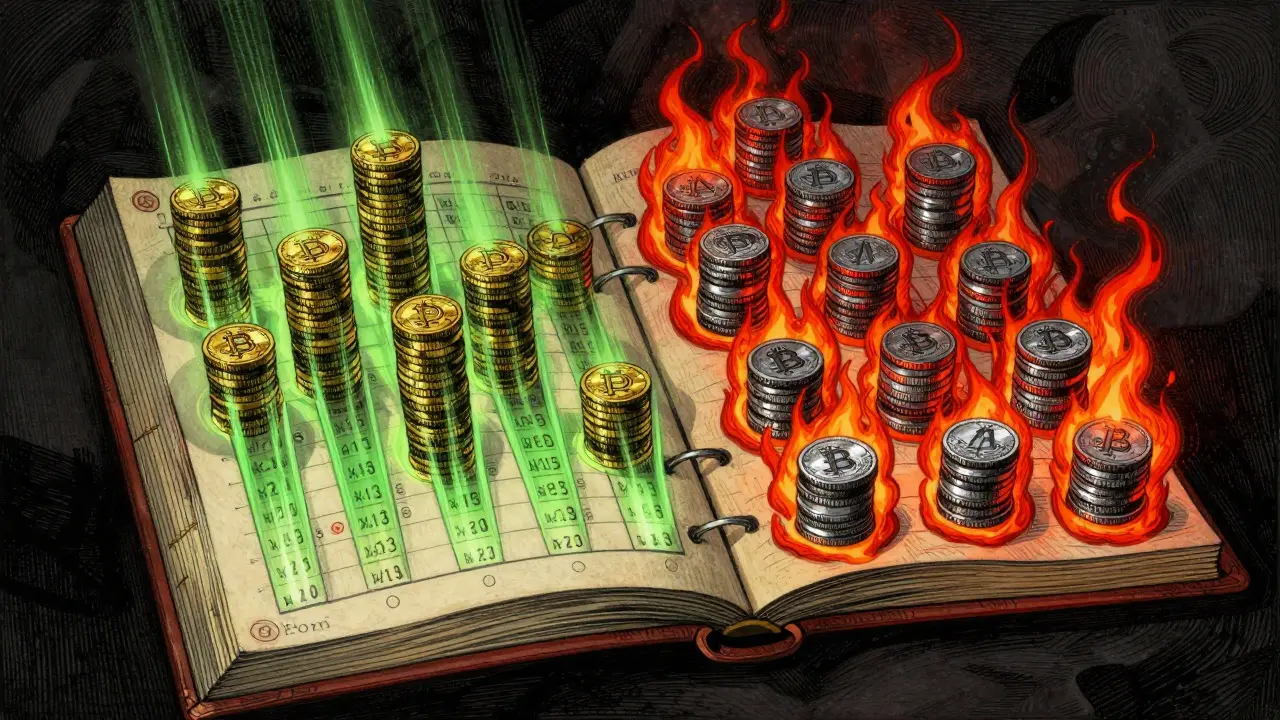
- The Bid Side (Buy Orders): Usually displayed in green, this side shows people who want to buy the asset. They are listing the highest price they are willing to pay. The highest bid sits at the top because those buyers are closest to making a deal.
- The Ask Side (Sell Orders): Typically shown in red, this side displays people who want to sell. They list the lowest price they will accept. The lowest ask appears at the bottom of this column, right next to the highest bid.
Let’s look at a concrete example. Suppose you are looking at Ethereum (ETH). On the bid side, you might see a buyer offering $3,000 for 1 ETH. Just above them, another buyer offers $3,001. On the ask side, a seller wants $3,005 for 1 ETH, while another asks for $3,006.
Notice the gap? There is no immediate trade happening at $3,001 or $3,005. For a trade to occur, someone must cross that gap. If you really want to buy ETH right now, you have to pay the seller’s price ($3,005). If you are patient, you can place a limit order at $3,001 and wait for a seller to come to you. This dynamic creates the current market price.
Understanding the Bid-Ask Spread
The difference between the highest bid and the lowest ask is called the bid-ask spread. In our example, the spread is $4 ($3,005 - $3,001).
Why does this matter to you? Because the spread represents the cost of immediacy. When you click "Market Buy," you are paying the ask price. When you instantly sell, you get the bid price. The spread is essentially a fee paid to the market makers-the entities providing liquidity-just for executing your trade quickly.
In highly liquid markets like Bitcoin or Ethereum, this spread is often tiny, sometimes just fractions of a cent. However, in smaller, less popular altcoins, the spread can be wide. If you try to trade a low-volume token with a wide spread, you could lose 1% or more of your value the moment you enter the trade. Always check the spread before clicking buy. A narrow spread indicates a healthy, active market. A wide spread suggests caution.
Reading Market Depth and Liquidity
Look beyond the top price. The rows below the best bid and ask show the market depth. This tells you how much volume exists at different price levels.
Imagine the bid side looks like this:
- $3,000: 5 ETH
- $2,990: 50 ETH
- $2,980: 100 ETH
This visualization helps you predict price movement. If a large seller dumps 20 ETH onto the market, they will eat up the 5 ETH at $3,000, then the 50 ETH at $2,990, and so on. The price will drop significantly because there wasn't enough "depth" to absorb the sale without moving the price down.
Conversely, if you see massive buy orders stacked up at lower prices, those act as support levels. Sellers know that if they push the price down too far, they will hit these walls of buyers. Similarly, large sell orders above the current price act as resistance, capping how high the price can go easily.
| Term | Definition | What It Tells You |
|---|---|---|
| Bid | Highest price a buyer will pay | Immediate selling pressure |
| Ask | Lowest price a seller will accept | Immediate buying pressure |
| Spread | Difference between Best Bid and Best Ask | Transaction cost and liquidity health |
| Volume | Total amount of coins at each price level | Market depth and potential support/resistance |
Limit Orders vs. Market Orders
Your interaction with the order book depends entirely on the type of order you place. Understanding this distinction is crucial for saving money.
Market Orders are the "I want it now" option. When you place a market buy order, the exchange’s matching engine automatically pairs you with the cheapest available sellers in the book. You get filled instantly, but you pay the ask price, including the spread. In volatile markets, market orders can suffer from slippage, meaning you end up paying slightly more than the last quoted price because the top layers of liquidity were consumed faster than expected.
Limit Orders are the "I have a price in mind" option. You specify the exact price you want to pay. Your order then sits in the order book until a seller matches it. If you set a limit buy order below the current market price, you become part of the bid side. You might wait hours or days, but when it fills, you often pay less than the market rate and may even earn small rebates on some exchanges. Limit orders add liquidity to the market, which is why exchanges reward them.
The Dark Side: Spoofing and Fake Walls
Here is where things get tricky. The order book is transparent, but it is not always honest. Sophisticated traders and algorithms use a tactic called spoofing.
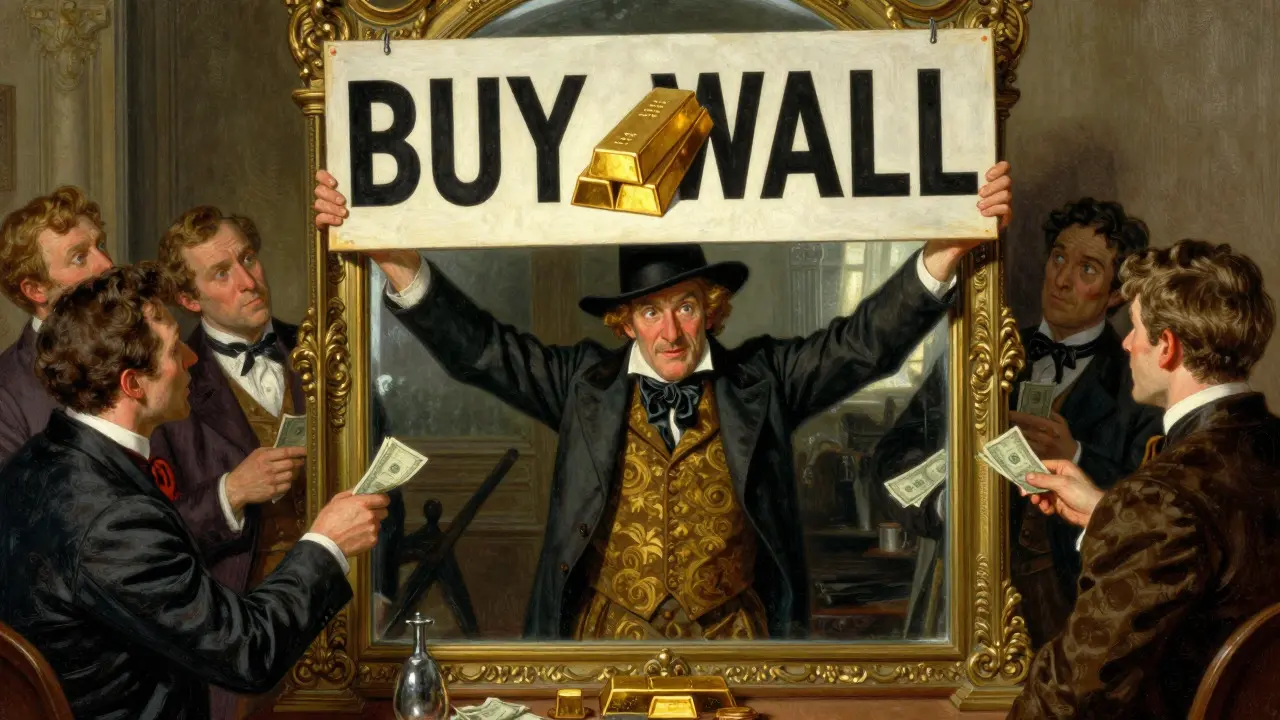
Imagine you see a massive wall of buy orders for Bitcoin at $90,000. This makes the market look strong, suggesting that price won’t drop below that level. Retail traders see this, feel confident, and start buying, pushing the price up. Suddenly, just as the price approaches $90,000, that huge buy wall vanishes. The trader who placed it cancelled it before it was executed. They bought higher due to the artificial confidence they created, then sold into the rising price.
This is illegal in traditional stock markets but harder to police in the fragmented crypto space. How do you spot it?
- Watch for rapid changes: If large orders appear and disappear within seconds, they are likely fake.
- Check multiple exchanges: Real liquidity tends to be consistent across major platforms like Binance, Coinbase, and Kraken. If a huge wall exists only on one obscure exchange, be skeptical.
- Look at trade history: The order book shows intent; the trade tape (recent transactions) shows reality. If the book shows heavy buying but no actual trades are occurring, something is off.
Centralized vs. Decentralized Order Books
Most beginners interact with Centralized Exchanges (CEXs) like Binance or Coinbase. These platforms use traditional order books managed by a central server. They are fast, efficient, and handle millions of orders per second. This is why you can buy Bitcoin in milliseconds.
Decentralized Exchanges (DEXs) like Uniswap traditionally did not use order books. Instead, they used Automated Market Makers (AMMs), where you trade against a pool of funds rather than other users. This eliminated the need for a central ledger but often resulted in worse prices due to impermanent loss and slippage.
However, the landscape is shifting. Newer DEXs and hybrid models are introducing on-chain order books to bring the efficiency of CEXs to decentralized environments. While still slower than centralized engines due to blockchain confirmation times, these systems offer greater transparency and custody control. For now, if speed and tight spreads are your priority, centralized order books remain superior. If self-custody is key, you may have to tolerate wider spreads on AMMs.
Practical Tips for Using the Order Book
You don’t need to be a Wall Street quant to benefit from order book data. Here are three actionable steps to improve your trading today:
- Use Limit Orders for Entry: Unless the market is moving violently, avoid market buys. Set a limit order slightly below the current price. You save the spread cost and reduce slippage risk.
- Identify Key Levels: Before entering a trade, scan the depth chart. Are there large clusters of orders above or below the current price? Use these as your take-profit or stop-loss reference points.
- Monitor Volume, Not Just Price: A price move supported by high volume in the order book is more reliable than a price move on thin volume. High volume confirms genuine interest; low volume suggests manipulation or lack of conviction.
Remember, the order book is a snapshot in time. It changes every millisecond. Do not make long-term investment decisions based solely on what you see in the book right now. Use it for tactical execution-entering and exiting positions efficiently-not for fundamental analysis.
Is the order book available on all crypto exchanges?
Not all interfaces show it by default. Simple "lite" apps often hide the order book to keep things user-friendly. To access it, you usually need to switch to "Pro" mode or use the advanced trading view on platforms like Binance, Coinbase Advanced, or Kraken. Decentralized exchanges (DEXs) may not have traditional order books at all, relying instead on liquidity pools.
What causes the bid-ask spread to widen?
The spread widens during periods of high volatility or low liquidity. When news breaks (like a regulatory announcement or a hack), market makers pull their orders to avoid risk, creating a gap between buyers and sellers. Additionally, trading obscure altcoins with few participants naturally results in wider spreads because there are fewer orders to match.
Can I see past order book data?
Standard exchange interfaces only show the current state. However, many exchanges provide APIs (Application Programming Interfaces) that allow developers and advanced traders to download historical order book data. Third-party tools like Kaiko or CryptoCompare also aggregate this historical data for analysis, helping you study how depth changed during past market events.
Does the order book affect my trading fees?
Yes. Most exchanges charge lower fees for "maker" orders (limit orders that add liquidity to the book) compared to "taker" orders (market orders that remove liquidity). By placing limit orders that sit in the book until filled, you can often reduce your trading costs significantly, sometimes even earning rebates on high-volume accounts.
How do I distinguish between a real buy wall and a spoofed one?
Real walls tend to stay stable or grow gradually as price approaches. Spoofed walls often appear suddenly, sit rigidly at round numbers, and vanish just before the price reaches them. Watch the trade tape: if the price is rising but no actual trades are hitting the wall, it’s likely fake. Also, check if similar depth exists on other major exchanges; genuine institutional interest is rarely isolated to one platform.