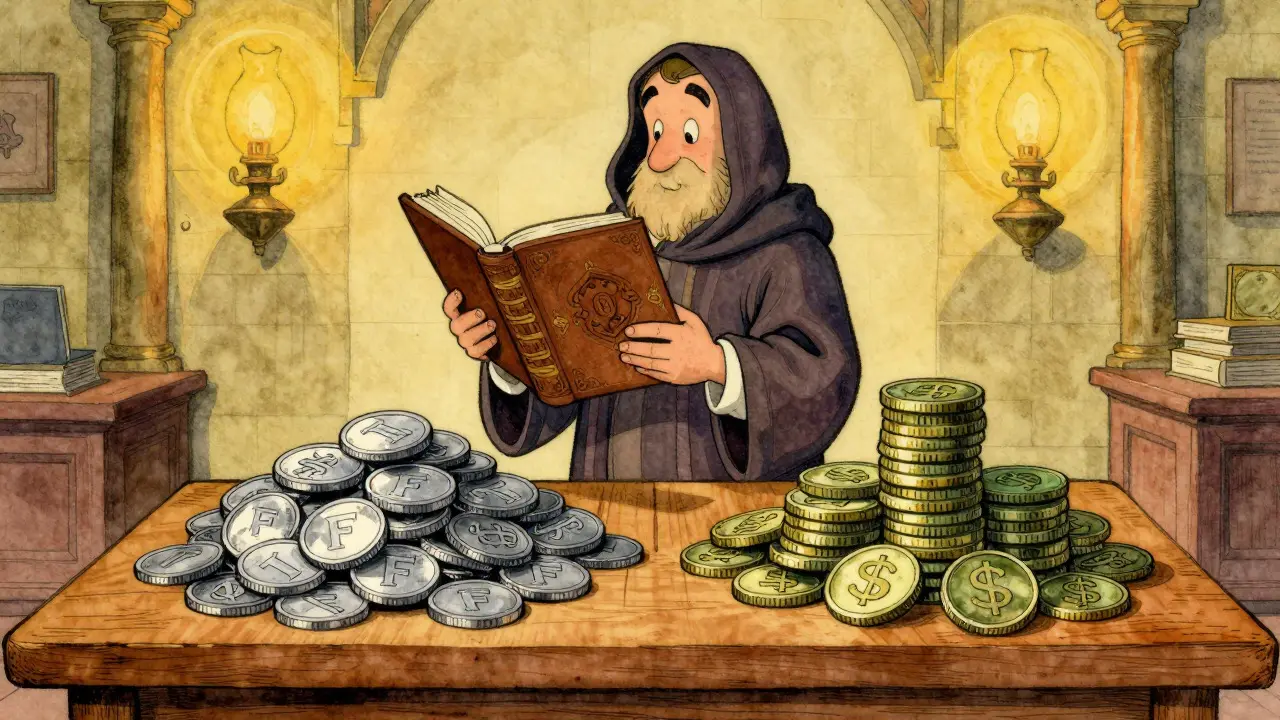
Imagine you want to swap one stablecoin for another without worrying about wild price swings or high fees. That’s exactly what CRVFRAX is designed to do. It isn’t a standard coin you hold for speculation; it’s a receipt proving you’ve provided liquidity to a specific pool on the Curve.fi platform. This pool connects FRAX, an algorithmic stablecoin, with USDC, a fiat-backed stablecoin. If you’re looking at this token in your portfolio or considering adding it, understanding how it works is crucial because its value is tied directly to trading activity and stability rather than market hype.
Key Takeaways
- CRVFRAX is a Liquidity Provider (LP) token representing ownership in a Curve.fi pool for FRAX and USDC.
- The pool uses an Automated Market Maker (AMM) model to enable low-slippage swaps between these two stablecoins.
- Holders earn yields from trading fees generated within the pool, plus potential staking rewards via Frax Finance.
- As of mid-2026, the token trades near $1.01 USD, reflecting the combined value of its underlying assets minus impermanent loss factors.
- It operates on the Ethereum blockchain, offering transparency through smart contracts but requiring users to manage gas fees and DeFi risks.
What Exactly Is CRVFRAX?
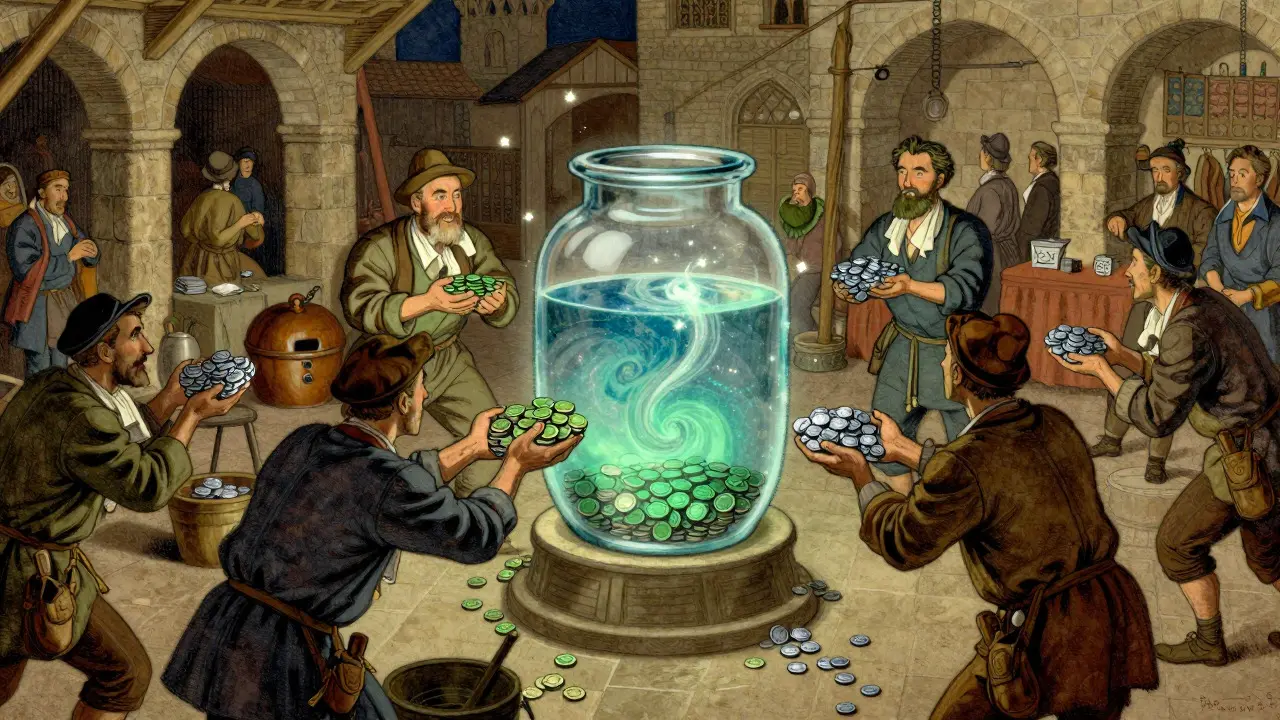
To understand CRVFRAX, you first need to grasp the concept of a liquidity pool. In traditional finance, a bank stands ready to buy or sell currency. In DeFi, there is no bank. Instead, anyone can deposit tokens into a shared pot called a pool. When you deposit equal amounts of FRAX and USDC into the Curve.fi pool, you receive CRVFRAX tokens in return. These tokens act as a claim on your share of the pool.
If you decide to exit, you burn your CRVFRAX tokens to retrieve your original FRAX and USDC, adjusted for any profits or losses incurred while you were providing liquidity. The token itself doesn’t have intrinsic value like gold; its value is derived entirely from the assets inside the pool and the fees it generates. This makes it a yield-bearing asset rather than a speculative one. You aren’t betting that the price will go up; you are earning interest on stable assets.
How the FRAX/USDC Pool Works
Curve.fi specializes in stablecoin exchanges. Unlike other decentralized exchanges that handle volatile assets like Bitcoin or Ethereum, Curve focuses on pairs where the prices should stay close to each other-like dollars to dollars. The FRAX/USDC pool leverages this by using a specialized AMM formula optimized for stable assets. This means if someone wants to swap 1,000 USDC for FRAX, the price impact is minimal. You won’t lose 5% of your money just because the trade size was large.
The pool maintains a balance between FRAX and USDC. As traders swap between them, the ratio shifts slightly. However, arbitrageurs quickly step in to rebalance the pool, keeping prices tight. For you, the LP, this constant trading activity generates fees. Every time a user swaps, they pay a small fee (typically around 0.04% to 0.2%, depending on the tier), which is distributed pro-rata to all CRVFRAX holders. This is your primary source of income from holding the token.
Earning Yields: Fees and Staking
Holding CRVFRAX in a wallet is a passive start, but you can boost your returns by staking. On platforms like Frax Finance, you can stake your CRVFRAX tokens to earn additional rewards. This creates a dual-income stream:
- Trading Fees: Earned automatically from every swap occurring in the pool.
- Staking Rewards: Additional tokens (often FRAX or other governance tokens) distributed for locking up your LP position.
These yields fluctuate based on market conditions. During periods of high volatility or heavy trading volume between stablecoins, fees increase. Conversely, during quiet markets, yields drop. It’s important to monitor the annual percentage yield (APY) regularly, as it is not fixed. Currently, yields reflect the demand for efficient stablecoin conversion, making this pool attractive to institutions and individual users alike who need to move large sums without slippage.
Risks and Considerations
While stablecoin pools seem safer than crypto-to-crypto pools, they aren’t risk-free. The biggest concern is impermanent loss. If the price of FRAX deviates significantly from USDC-for example, if FRAX drops to $0.98 due to depeg fears-your exit value might be lower than simply holding both coins separately. This is rare for well-established stablecoins but possible during stress events.
Other risks include smart contract bugs. Since everything runs on Ethereum smart contracts, a vulnerability in the Curve protocol could theoretically lead to funds being locked or stolen. Additionally, regulatory changes affecting stablecoins could impact the utility of the pool. Always check the current audit status of the protocols involved and consider diversifying your DeFi exposure rather than putting all your capital into a single pool.
| Feature | CRVFRAX (LP Token) | Standard Stablecoin (e.g., USDC) |
|---|---|---|
| Primary Function | Liquidity provision & yield generation | Store of value & medium of exchange |
| Price Volatility | Low, but subject to impermanent loss | Very low, pegged to USD |
| Income Source | Trading fees + Staking rewards | None (unless staked elsewhere) |
| Risk Profile | Smart contract risk, depeg risk | Custodial risk, regulatory risk |
| Liquidity Depth | Moderate (dependent on pool size) | High (widely accepted) |

Current Market Context
As of late August 2026, CRVFRAX has been trading around the $1.01 mark. This price point indicates that the pool is functioning normally, with the value of the LP token closely tracking the sum of its underlying assets. The total supply sits at approximately 55.43 million tokens, with a market cap hovering near $56 million according to major trackers. While daily trading volumes vary, the pool remains active, serving as a key venue for swapping between the two leading algorithmic and fiat-backed stablecoins.
The holder count has remained relatively stable, with hundreds of unique wallets participating. This suggests a community of dedicated DeFi users who understand the mechanics and are comfortable managing their positions. For new entrants, the moderate liquidity means you can enter and exit positions without significant slippage, provided you don’t move exceptionally large amounts in a single transaction.
Frequently Asked Questions
Is CRVFRAX a safe investment?
It is considered lower risk than volatile crypto assets because it holds stablecoins. However, it carries smart contract risk and impermanent loss risk if FRAX depegs from the dollar. It is not risk-free, but it is less speculative than buying Bitcoin or Ethereum.
Can I use CRVFRAX to pay for goods?
Generally, no. Merchants accept stablecoins like USDC or DAI, not LP tokens. To spend the value, you must first redeem your CRVFRAX back into FRAX or USDC by burning the tokens on the Curve interface.
What happens if FRAX loses its peg?
If FRAX drops below $1, the value of your CRVFRAX token may decrease relative to holding pure USDC. This is known as impermanent loss. Once FRAX recovers, the value typically normalizes. Severe depegs require careful monitoring of the pool’s balance.
Where can I buy CRVFRAX?
You usually don’t 'buy' it on an open market. You create it by depositing FRAX and USDC into the Curve.fi pool. Alternatively, you can find it listed on some decentralized exchanges (DEXs) or centralized platforms that support ERC-20 tokens, though direct creation is often cheaper due to lower spread costs.
Do I need to pay taxes on CRVFRAX yields?
In most jurisdictions, yes. Trading fees earned are often treated as income, and staking rewards may be taxed upon receipt or sale. Keep detailed records of your deposits, withdrawals, and reward accruals. Consult a tax professional familiar with DeFi for accurate reporting.