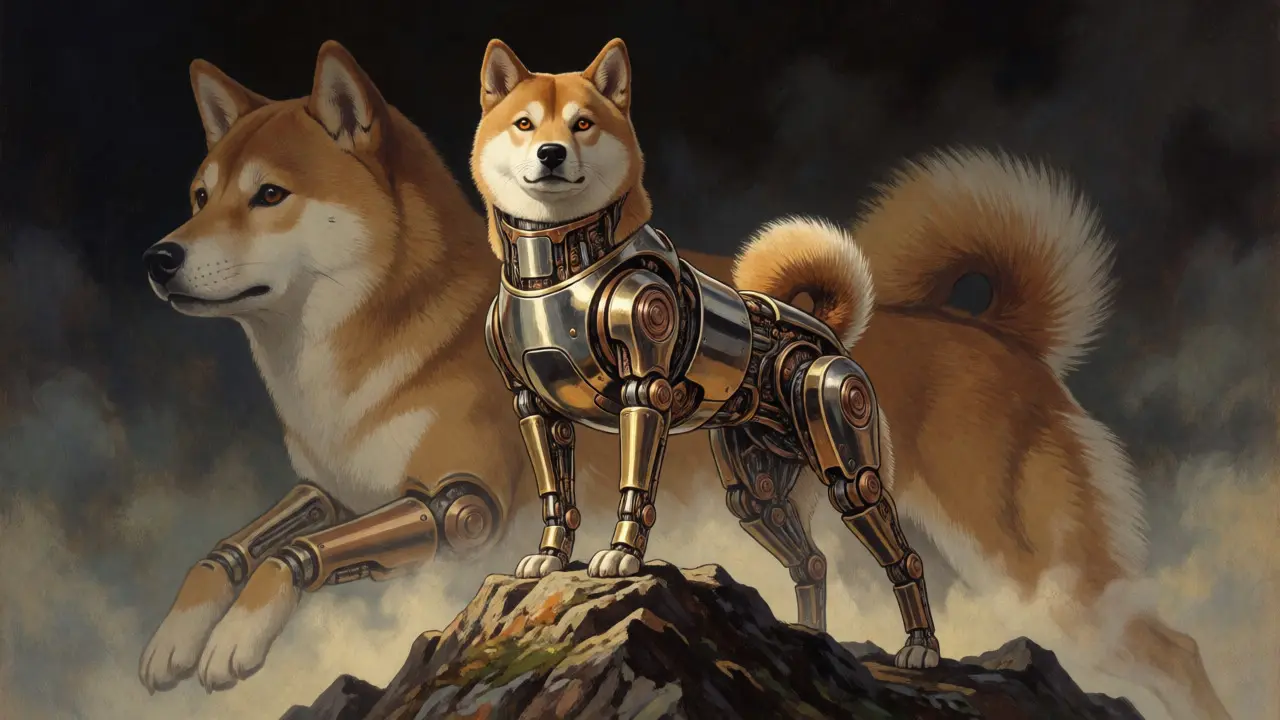
Imagine buying a slice of digital history that pays tribute to Kabosu, the original Shiba Inu behind the Doge meme, but with a robotic twist. That is the core pitch of Robotic Doge (DOGER), a community-driven meme cryptocurrency that launched on May 31, 2024. Unlike its inspiration, Dogecoin, which runs on its own blockchain and has an infinite supply, DOGER operates as a BEP-20 token on the BNB Chain with a fixed, capped supply. It positions itself as a "futuristic" successor to traditional dog-themed coins, combining meme culture with scarcity-based economics.
If you are wondering whether this micro-cap asset is worth your attention or just another fleeting internet joke, you need to look past the marketing fluff. This guide breaks down exactly what Robotic Doge is, how its tokenomics differ from other memecoins, where you can trade it, and the significant risks involved in holding such a small-cap asset in the volatile crypto market.
The Core Concept: Why Robotic Doge Exists
Robotic Doge isn't trying to solve complex computational problems like Ethereum or facilitate smart contracts like Solana. Its value proposition is purely cultural and speculative. The project explicitly markets itself as being "in memory of Kabosu," aiming to capture the nostalgia of the early Dogecoin era while introducing modern DeFi mechanics. It calls itself an "independent memecoin," signaling that it wants to stand apart from the thousands of copycat tokens that flooded the market after Dogecoin's initial success.
The "robotic" theme is largely aesthetic, serving as a branding device to suggest evolution or a next-generation approach to meme coins. However, the substance lies in its technical setup on the BNB Chain. By choosing this network, DOGER benefits from lower transaction fees and faster block times compared to Ethereum, making it more accessible for retail traders who might be priced out by high gas fees during bullish market cycles.
Tokenomics: Deflationary Supply vs. Dogecoin’s Inflation
The most critical difference between Robotic Doge and its predecessor is supply. Dogecoin is inflationary; new coins are mined every minute forever, diluting existing holders over time. Robotic Doge takes the opposite approach. It features a hard-capped total supply of 144,520,466,384 DOGER tokens. There is no mining process; all tokens were created at deployment.
This fixed supply model creates artificial scarcity. If demand increases even slightly, the price per token should theoretically rise because there are no new tokens entering circulation to absorb that demand. Additionally, the project claims zero transaction fees at the protocol level, removing friction for users moving funds around. While attractive, remember that these are self-reported metrics from the project's listings, not necessarily audited financial statements.
| Feature | Robotic Doge (DOGER) | Dogecoin (DOGE) |
|---|---|---|
| Blockchain | BNB Chain (BEP-20 Token) | Dogecoin Blockchain (Native Coin) |
| Total Supply | ~144.5 Billion (Fixed) | Infinite (Inflationary) |
| Mining | No (Pre-mined) | Yes (Proof-of-Work) |
| Liquidity Lock | Claimed 100 Years | N/A (Exchange based) |
| Market Cap Range (2024-2026) | $12K - $48K (Micro-cap) | Billions (Large-cap) |

Where to Buy and Trade DOGER
Because Robotic Doge is a BEP-20 token, it does not have its own native wallet software. You will need a wallet that supports the Binance Smart Chain, such as MetaMask configured for BNB Chain, Trust Wallet, or Coinbase Wallet. Once you have your wallet set up, you need some BNB (Binance Coin) to pay for any necessary gas fees, although DOGER itself claims zero transfer fees.
The primary venue for trading DOGER is decentralized exchanges (DEXs). PancakeSwap is the most popular platform, specifically through the DOGER/WBNB liquidity pool. Centralized exchanges offer mixed availability. While platforms like Bybit, Binance, and Crypto.com list DOGER for price tracking, many do not allow direct buying and selling of the token on their main exchange interfaces. For instance, Crypto.com notes that DOGER is "not tradable yet" on its own exchange, meaning you can only view the price there. Always verify current listing status before attempting to buy, as these micro-cap tokens frequently move between venues.
Risks: Liquidity and Volatility
Here is the uncomfortable truth about Robotic Doge: it is extremely small. As of recent data snapshots in late 2025 and early 2026, its market capitalization hovered between $12,000 and $48,000. To put that in perspective, major cryptocurrencies are valued in the billions. DOGER represents less than 0.01% of the total crypto market.
This tiny size leads to two major risks:
- Low Liquidity: Daily trading volume on DEXs can sometimes drop below $100. This means if you want to sell a large position, you might struggle to find a buyer without crashing the price yourself. Slippage-the difference between the expected price and the executed price-can be significant.
- High Volatility: With such a low market cap, a single large buy or sell order can swing the price by double-digit percentages. Historical data shows DOGER experienced a drawdown of nearly 90% from its all-time high shortly after launch, illustrating how quickly speculative fervor can evaporate.

Community and Development Transparency
One area where Robotic Doge struggles compared to established projects is transparency. Major data aggregators like CoinGecko and CoinMarketCap list DOGER, but they often lack detailed information about the development team. There are no widely publicized GitHub repositories, whitepapers with deep technical specifications, or named developers visible in standard listings. This is common for meme coins, which often rely on anonymous teams or pseudonymous leaders, but it requires extra due diligence from investors.
The community aspect is driven by social media hype rather than utility. Users engage with DOGER primarily for speculative gains or to participate in the meme culture surrounding Kabosu. There is no documented roadmap for future technological upgrades or partnerships, suggesting the project's lifespan may depend entirely on sustained social media engagement.
Is Robotic Doge Right for You?
You should consider Robotic Doge if you are looking for a high-risk, high-reward speculative play within the meme coin sector. It appeals to those who believe in the power of scarcity and prefer the low fees of the BNB Chain. However, if you are looking for a store of value or a technology investment, DOGER likely fails the test. It lacks the institutional adoption, security audits, and real-world use cases of larger assets.
Before investing, check the current liquidity lock status independently. While the project claims a 100-year lock, verifying this on-chain ensures the team cannot withdraw the liquidity and run off with the funds-a common scam in the meme coin world. Treat any money put into DOGER as money you are willing to lose completely.
Is Robotic Doge (DOGER) a good investment?
It depends on your risk tolerance. DOGER is a micro-cap meme coin with a market cap under $50k, making it highly volatile and risky. It offers potential for high percentage gains if the meme trend catches fire, but also carries a high risk of total loss due to low liquidity and lack of fundamental utility.
How do I buy Robotic Doge?
You typically buy DOGER on decentralized exchanges like PancakeSwap. First, get a BNB-compatible wallet (like MetaMask), fund it with BNB, and then swap WBNB for DOGER using the DOGER/WBNB pair. Some centralized wallets support holding it, but trading is mostly done via DEXs.
What is the maximum supply of DOGER?
The maximum supply of Robotic Doge is fixed at 144,520,466,384 tokens. Unlike Dogecoin, which has an unlimited supply, DOGER is deflationary in design, meaning no new tokens will ever be minted.
Does Robotic Doge have a real use case?
Currently, DOGER has no practical utility beyond speculation and community engagement. It functions primarily as a meme asset and a vehicle for trading on the BNB Chain, similar to many other short-lived meme coins.
Is Robotic Doge audited?
There is limited public information regarding formal third-party security audits for Robotic Doge. Investors should verify contract details on blockchain explorers like BscScan and look for any audit reports published by the community, though none are prominently featured in major aggregator listings.