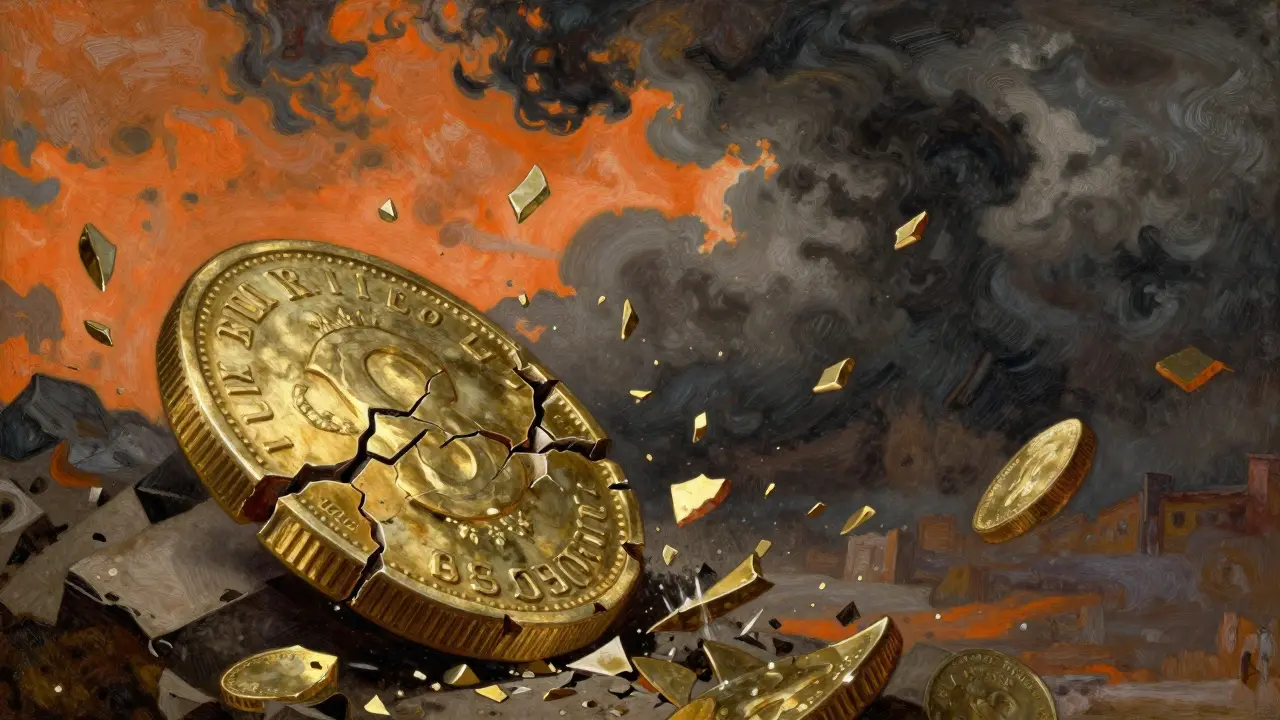
Imagine waking up to find that the digital asset you bought has a price point so low that the cost of sending it is higher than the value of the coin itself. That is the reality for many who held the original version of Wall Street Games. This project is a prime example of how a great gaming idea can be nearly ruined by bad math, and how a total structural overhaul is sometimes the only way to survive in the volatile world of crypto.
Wall Street Games is a hybrid blockchain gaming platform designed as a play-to-earn (P2E) ecosystem. In simple terms, it is a place where people play skill-based games to earn cryptocurrency and collect digital assets (NFTs) that can be traded. While the concept sounds straightforward, the project is currently split between a failing legacy version and a new, modernized attempt to save the ecosystem.
The Great Token Confusion: Old WSG vs. New WSG
If you are looking at price charts for WSG, you will likely see two wildly different stories. This is the most critical part of understanding this project: there is an "old" token and a "new" token. They are not the same, and the difference is staggering.
The original WSG token is the legacy cryptocurrency associated with the first version of the Wall Street Games platform. It suffered from what we call "inflationary collapse." The supply was set at an astronomical nearly 1 quadrillion tokens. Because there were so many coins and not enough buyers, the price plummeted to roughly $0.0000000001. To put that in perspective, if you wanted to hold $25 worth of the old token to access full game features, you would need to own 250 trillion coins. It is practically unusable.
To fix this, the team launched a new version of the token on the Arbitrum Network is a Layer 2 scaling solution for Ethereum that allows for faster and cheaper transactions. This new version has a much more sensible total supply of about 499.62 million tokens. By slashing the supply from quadrillions to millions, the project attempted to reset its economic foundation and give the token a chance to actually hold value.
| Feature | Old WSG Token | New WSG Token |
|---|---|---|
| Blockchain | Legacy Network | Arbitrum (ARB) |
| Total Supply | ~1 Quadrillion | 499.62 Million |
| Approx. Price | $0.0000000001 | Significantly higher (Sustainable model) |
| Market Status | Near-total value loss | Revitalization phase |
How the Gaming Ecosystem Actually Works
At its heart, the platform wants to be a GameFi is the integration of gaming and decentralized finance (DeFi) to allow players to earn real-world value from in-game activities. hub. Instead of spending hours grinding in a complex RPG, Wall Street Games focuses on short, skill-based challenges that are easy to learn. This makes it more accessible to casual players who don't want to spend 40 hours a week "working" their game.
Currently, the platform features two main titles: Coin Explorer and The Trader. The gameplay is designed to be fast-paced, allowing users to jump in and out quickly. To participate, you need a web3 wallet (like MetaMask or Coinbase Wallet) to connect to the platform.
One of the more recent additions is the introduction of Gold is a specialized in-game currency used within the Wall Street Games ecosystem to separate gameplay wagering from the main token's volatility. This was a smart move. By using Gold for wagering in multiplayer lobbies, the developers prevent the main WSG token's price swings from ruining the game's economy. Now, you can create private lobbies to compete against friends or join public matches to prove your skills.
Earning Potential and NFT Utility
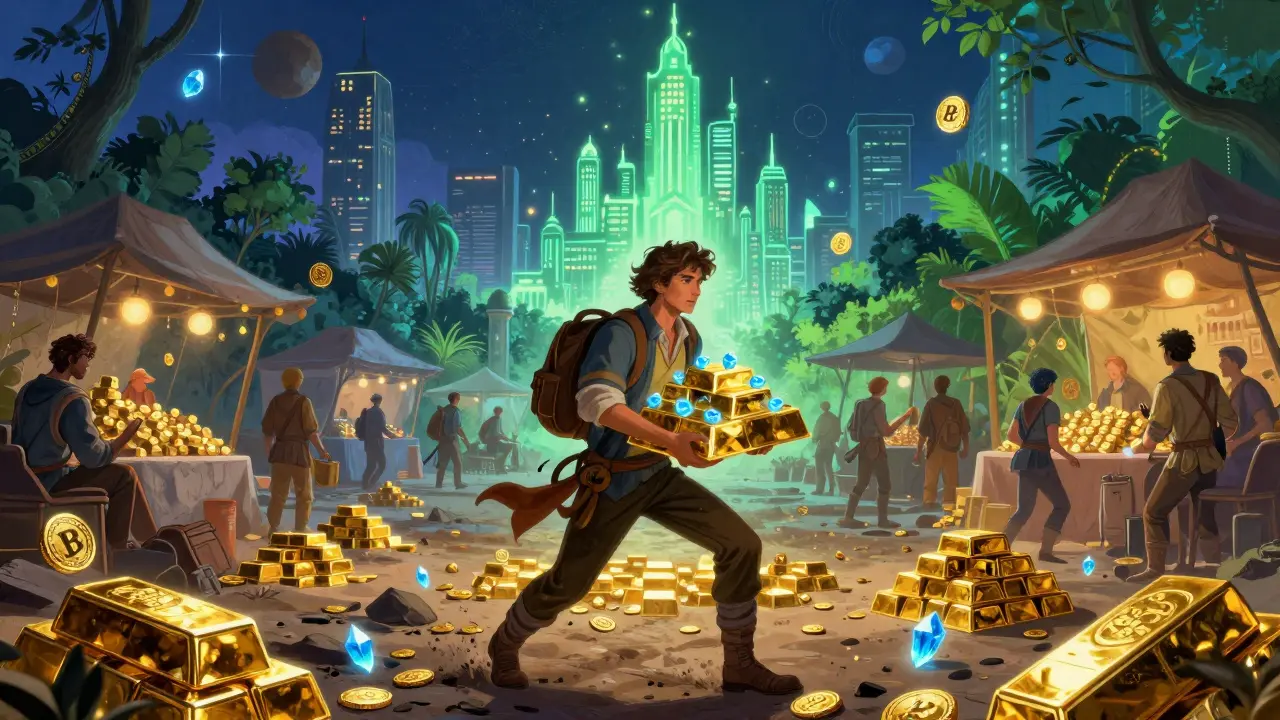
The "earn" part of this play-to-earn model comes from a few different angles. First, there are the skill-based rewards. If you win games, you earn crypto. Second, the platform uses a referral system where you get a portion of the fees when you bring new players into the fold. This is a common growth tactic in crypto, though it depends heavily on the project's overall health.
Then there are the NFTs (Non-Fungible Tokens). In many games, NFTs are just expensive JPEGs. In Wall Street Games, they serve a functional purpose. Holding specific NFTs allows you to enter lotteries for grand prizes, adding a layer of chance to the skill-based environment. This keeps users engaged even when they aren't actively playing a match.
The Reality Check: Is it a Good Investment?
If we look at the numbers, Wall Street Games is a tiny fish in a very big pond. When you compare it to giants like Axie Infinity is one of the world's most popular blockchain games where players breed, raise, and battle digital creatures. or The Sandbox is a decentralized virtual world where users can buy land and build their own gaming experiences., WSG is almost invisible. The market caps of the leaders are in the hundreds of millions or billions, while the old WSG version hovered around a meager $110,000.
The move to Arbitrum was a necessary survival tactic. By lowering transaction costs and fixing the token supply, the team has removed the "impossible barrier" where gas fees cost more than the rewards. However, the project still faces a massive uphill battle in gaining trust. Many users were burned by the original token's collapse, and recovering that reputation takes more than just a new contract address.

Getting Started and Potential Pitfalls
If you're curious about trying it out, the process is simple: download a compatible wallet, fund it with some ARB (for gas fees) and the new WSG token, and connect to the site. The games are designed to be played on mobile, so you don't need a high-end gaming rig.
But be careful. One of the biggest pitfalls is accidentally buying the "old" WSG token on an exchange. Always check the blockchain network and the total supply before you hit the buy button. If the price looks like it has ten zeros after the decimal, you are likely looking at the legacy token that the project is trying to move away from.
Is Wall Street Games a scam?
There is no definitive proof that it is a scam in the legal sense, but the original tokenomics were disastrous, leading to a near-total loss of value for early holders. This is often seen as a red flag or poor management. The move to the Arbitrum network and the new token supply suggests the team is trying to fix these mistakes, but as with all low-cap crypto projects, the risk is extremely high.
What is the difference between WSG and Gold?
WSG is the primary governance and utility token of the ecosystem. Gold is an in-game currency used specifically for wagering and multiplayer activities. This separation is designed to keep the game's economy stable even if the market price of the WSG token fluctuates wildly.
Which blockchain does the new WSG use?
The new version of Wall Street Games operates on the Arbitrum Network. Arbitrum is a Layer 2 solution for Ethereum, which means it offers significantly lower transaction fees and faster speeds than the main Ethereum chain.
How do I earn money on the platform?
You can earn through skill-based gameplay rewards, participating in referral programs by inviting other users, and using specific NFTs to enter lotteries for larger prizes.
Why did the old token price drop so much?
The primary reason was a flawed tokenomics design. With a total supply approaching 1 quadrillion tokens, the market was completely flooded. Without massive demand to offset that supply, the price naturally crashed to near-zero values.
Next Steps for Players
If you're coming from the old version, your first priority should be checking the official project documentation for migration details. If you're a new player, start by experimenting with the free or low-cost games to see if you enjoy the mechanics before committing significant funds. Remember, in the GameFi space, the utility of the token is only as strong as the number of people actually playing the game.