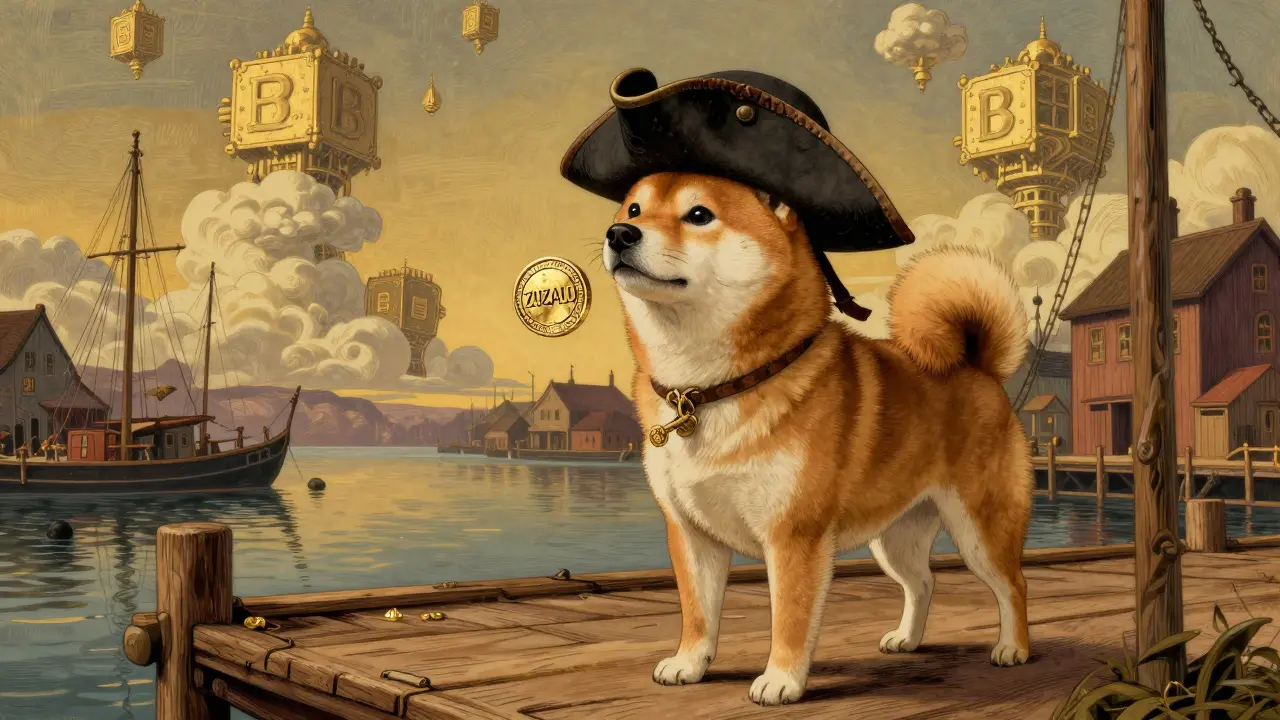
Have you seen Zuzalu Inu popping up in your crypto feeds? It’s a meme coin that tries to ride the wave of Ethereum’s popularity by attaching itself to the name of its founder. If you are wondering what this token actually is, why it exists, and whether it has any real value beyond the hype, you are not alone. The crypto space is flooded with thousands of tokens that look similar but behave very differently.
Zuzalu Inu (ticker: ZUZALU) is a cryptocurrency memecoin launched on March 26, 2023, explicitly positioned as "Vitalik Buterin's leading memecoin" according to CoinMarketCap and described as a "vitalik buterin memecoin" by MEXC exchange. It operates on the Ethereum blockchain. Before we get into the nitty-gritty of prices and charts, let’s clear up a huge misconception right away: this project is community-driven. There is no evidence that Vitalik Buterin personally endorses or runs this token. That distinction matters more than you might think when you are risking your own money.
The Origin Story: Why the Name?
To understand ZUZALU, you have to look at where the name comes from. The token is named after the Zuzalu project, which was an exclusive residency program for builders and thinkers in the Web3 space. The mascot for the token is reportedly inspired by Vitalik Buterin’s own rescued dog. This is a classic move in the memecoin world. By linking the brand to a well-known figure like Vitalik Buterin, creators hope to borrow credibility.
However, borrowing a name is not the same as having official backing. When you see a coin called "ElonGate" or "TrumpCoin," you know it’s speculative. ZUZALU falls into the same bucket. It relies on the association with Ethereum’s creator to attract attention, but it lacks the technical infrastructure or development team that usually backs serious projects. Understanding this difference between "inspired by" and "created by" is crucial for anyone looking at their portfolio.
Technical Specs: How Does It Work?
From a technical standpoint, ZUZALU is built on the Ethereum blockchain. This means it uses the ERC-20 standard, just like many other tokens you might already know. The total supply is fixed at 1 billion ZUZALU tokens. This number does not change. You cannot mint more, and the supply is capped.
The project claims to have implemented several security features to protect investors. According to documentation from exchanges like MEXC and Coinbase, the token has:
- Zero Tax: No transaction fees are taken by the developers when you buy or sell.
- Burned Liquidity Pool: The liquidity tokens were sent to a dead address, meaning they cannot be pulled out by the creators (a common tactic in rug pulls).
- Renounced Contract Authority: The smart contract ownership was given up, so no single person can pause trading or blacklist wallets.
These features sound great on paper. They are designed to prevent the most obvious types of scams. However, having a renounced contract does not mean the token has value. It just means the code cannot be easily manipulated by the original deployer. It does not guarantee liquidity, demand, or price stability.
Price Volatility and Market Data Confusion
If you check the price of ZUZALU today, you might get different answers depending on which website you visit. This is one of the biggest red flags for micro-cap coins. Let’s look at the data available as of mid-2026.
| Platform | Reported Price (USD) | 24h Volume | All-Time High |
|---|---|---|---|
| CoinGecko | $0.00009907 | $59.44 | $0.033709 (via MEXC data) |
| Coinbase | $0.000205 | $144.93K | $0.0088 |
| CoinMarketCap | ~$0.000079 | $0 USD | N/A |
Notice the massive differences here. CoinGecko shows a tiny volume of under $60, while Coinbase reports over $144,000. CoinMarketCap shows zero volume. This inconsistency suggests that liquidity is fragmented across different decentralized exchanges (DEXs). Most trading happens on Uniswap V2, but the lack of unified data makes it hard to know the true market sentiment.
The all-time high varies wildly too. Some sources claim a peak of $0.033, while others say $0.0088. Regardless of which number you pick, the current price is down over 97% from those peaks. This is typical for memecoins that spike during hype cycles and then fade as interest wanes. The token is currently trading in the sub-cent range, meaning you need millions of tokens to equal even a few dollars.
The Promised Utility: A Comic Alliance Platform?
Here is where things get interesting. Unlike Dogecoin or Shiba Inu, which started purely as jokes, ZUZALU has a stated vision. According to MEXC’s description, the token aims to become a "globally influential comic alliance platform." The goal is to drive the worldwide comic industry and create an ecosystem for comic-related enterprises.
The plan involves using ZUZALU for payments, incentives, and rewards within this blockchain-based comic platform. The rollout strategy was supposed to start in South Korea and Japan, expand across Asia, and then move to Europe and America. This sounds ambitious. It attempts to give the token a real-world use case beyond speculation.
But here is the catch: there is little evidence that this platform is fully operational or widely adopted. As of now, there are no major updates confirming widespread usage of ZUZALU for purchasing comics or rewarding creators. The "utility" remains largely theoretical. Without active users buying comics with ZUZALU, the token continues to function primarily as a speculative asset rather than a utility currency.
Risks You Need to Know Before Buying
If you are considering adding ZUZALU to your wallet, you need to be aware of the specific risks involved. This is not a blue-chip investment like Bitcoin or Ethereum. It is a high-risk, low-liquidity asset.
- Liquidity Risk: With such low trading volumes on some platforms, selling large amounts of ZUZALU could crash the price. You might find yourself unable to sell without slippage eating up your profits.
- Data Discrepancies: The conflicting data between exchanges makes it hard to track your portfolio accurately. One site might show you a gain, while another shows a loss.
- No Official Endorsement: Remember, Vitalik Buterin does not run this project. Any news about "Ethereum upgrades" does not automatically benefit ZUZALU.
- Micro-Cap Status: With a market cap hovering around $79,000 to $82,000, this token is extremely small. Small caps are prone to wild swings based on a single tweet or a small whale moving funds.
The holder count is also relatively low, with around 4,040 token holders reported. For comparison, top-tier memecoins have hundreds of thousands or millions of holders. This limited base means the community is small and potentially less resilient to negative news.

How to Buy ZUZALU (If You Still Want To)
Since ZUZALU is not listed on major centralized exchanges like Binance or Kraken, you will need to use a decentralized exchange. Here is the general process:
- Set Up a Wallet: You need a non-custodial wallet like MetaMask or Trust Wallet. Make sure you are on the Ethereum network.
- Get ETH: Buy Ethereum (ETH) on a reputable exchange and send it to your wallet. You will need ETH to pay for gas fees and to swap for ZUZALU.
- Connect to Uniswap: Go to the Uniswap interface and connect your wallet.
- Add the Token: Paste the ZUZALU contract address (verify this carefully from multiple sources to avoid fake tokens) into the search bar.
- Swap: Set your slippage tolerance appropriately (often higher for low-liquidity tokens) and confirm the transaction.
Be cautious of fake contracts. Scammers often copy the names of popular tokens. Always double-check the contract address on trusted aggregators like CoinGecko or Etherscan before you sign any transactions.
Is ZUZALU Worth It?
Only you can decide if ZUZALU fits your risk profile. If you are looking for stable growth or long-term utility, this token likely won’t deliver. It lacks the proven adoption and consistent development updates that serious projects offer. The comic platform vision is intriguing, but without tangible progress, it remains just a promise.
On the other hand, if you enjoy high-risk speculation and are willing to lose your entire investment for the chance of a small moonshot, ZUZALU offers that possibility. Its low entry price and renounced contract provide a basic level of safety against developer fraud, but they do not protect you from market forces. The extreme volatility means the price can drop 50% in a day or rise just as fast. Treat it like a lottery ticket, not a savings account.
Is Zuzalu Inu officially endorsed by Vitalik Buterin?
No. While the token is named after the Zuzalu project and uses a mascot inspired by Vitalik Buterin's dog, there is no official endorsement or involvement from Vitalik Buterin or the Ethereum Foundation. It is a community-driven memecoin.
Where can I buy ZUZALU tokens?
ZUZALU is primarily traded on decentralized exchanges (DEXs) like Uniswap V2 on the Ethereum blockchain. It is not currently listed on major centralized exchanges like Binance or Coinbase Pro, though it may appear on smaller platforms.
Why are the prices different on CoinGecko and Coinbase?
The discrepancies arise because ZUZALU has low liquidity and trades on various fragmented venues. Different exchanges may have different order books, and data aggregation delays can cause significant variations in reported prices and volumes.
What is the total supply of ZUZALU?
The total supply of ZUZALU is fixed at 1 billion tokens. This supply is capped and cannot be increased.
Does ZUZALU have any real-world utility?
The project aims to build a comic alliance platform where ZUZALU can be used for payments and rewards. However, as of now, this utility is largely theoretical, and there is limited evidence of widespread adoption for these purposes.