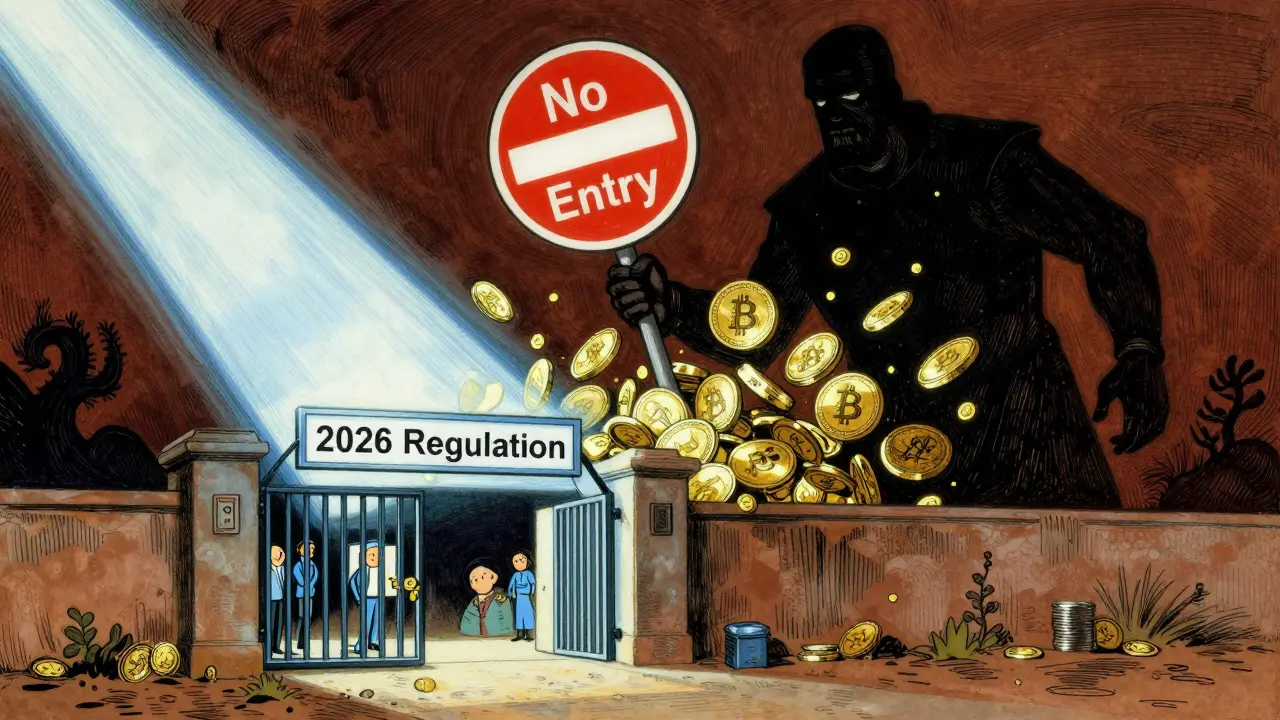
It used to be simple. If you wanted to trade Bitcoin in Namibia, the Bank of Namibia is the central banking authority responsible for monetary policy and financial stability in Namibia told you to stay away. In 2018, they were blunt: cryptocurrencies weren't commodities, and trading them wasn't supported. Fast forward to May 2026, and the landscape has shifted from outright skepticism to a structured, albeit cautious, regulatory framework. But here is the catch that trips up many investors and entrepreneurs: just because there are rules doesn't mean it's open season. The current system is built on strict provisional licensing, heavy compliance burdens, and a clear line drawn against legal tender status.
If you are looking to operate a crypto business or simply want to understand where your digital assets stand in Namibia right now, you need to look past the hype. The reality is a hybrid model. Trading remains technically restricted under general law unless you are part of a licensed entity, while merchants have some discretion to accept payments if they choose. This article breaks down exactly how the Bank of Namibia’s crypto policy works today, what the Virtual Assets Act is legislation passed in 2023 (Act No. 10) that regulates virtual assets and service providers in Namibia demands, and why getting a license takes longer than you might think.
The Shift from Ban to Regulation
To understand the current restrictions, you have to see where we came from. For years, the Bank of Namibia viewed crypto with deep suspicion. They warned about fraud, manipulation, and misrepresentation. Their stance was protective: keep the public out of unregulated markets. However, the global pressure to regulate rather than prohibit grew too strong. By 2022, the tone softened slightly, acknowledging that Bitcoin could be used as payment at a merchant's discretion, even if it wasn't legal money.
The real turning point arrived in mid-2023. The National Assembly passed two critical pieces of legislation:
- The Virtual Assets Act (Act No. 10 of 2023): This created the specific legal structure for digital assets.
- The Payment System Management Act (Act No. 14 of 2023): This regulated payment service providers more broadly.
Who Can Operate? Understanding VASP Licensing
You cannot just set up a website and start swapping Namibian Dollars for USDT. Under the new rules, any entity providing services related to virtual assets must register as a Virtual Asset Service Provider is a licensed entity authorized to facilitate cryptocurrency transactions, exchanges, or custody services in Namibia (VASP). The regulator overseeing this isn't just the Bank of Namibia; it involves the Namibia Financial Institutions Supervisory Authority is NAMFISA, the government agency responsible for supervising financial institutions and enforcing compliance in Namibia (NAMFISA).
Here is how the licensing process actually works in practice, based on recent authorizations granted in early 2025:
- Provisional Authorization: You apply, and if approved, you get a provisional license. This lasts for six months.
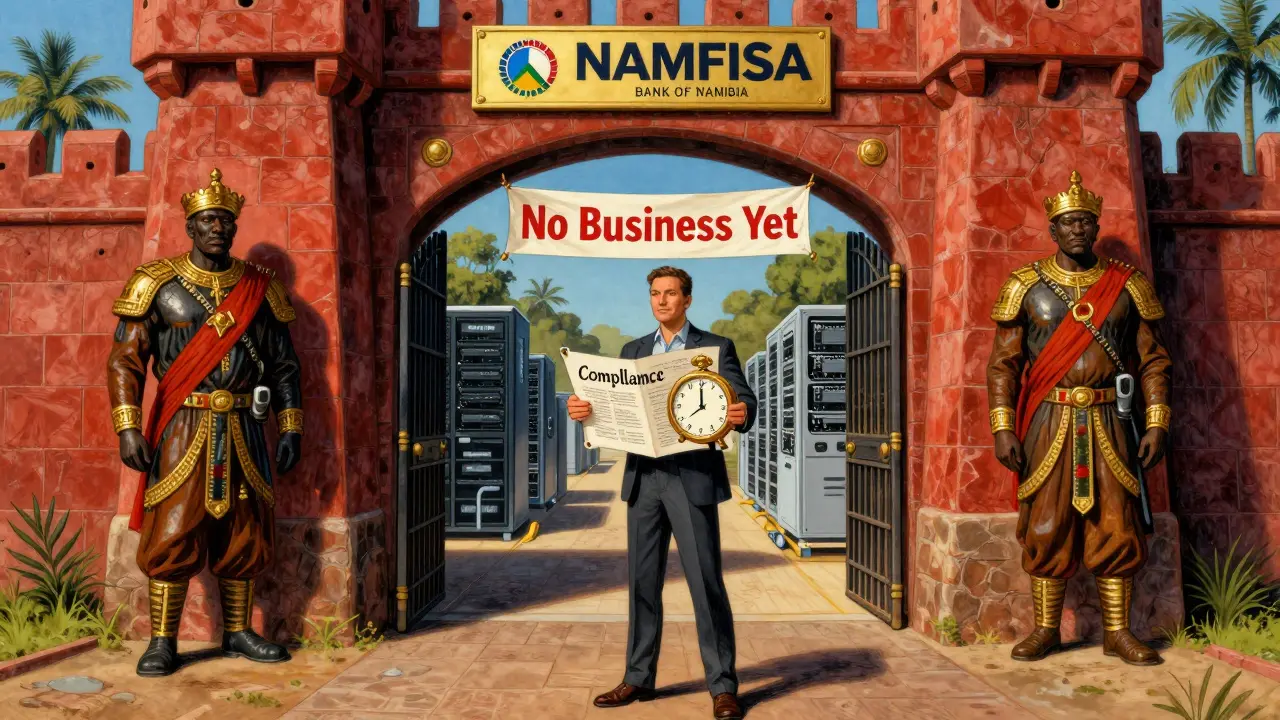
- The "Sandbox" Phase: During these six months, you are strictly forbidden from conducting business. You cannot engage with individuals or entities in Namibia. Your job is to hire staff, buy servers, install software, and set up compliance systems. Think of it as building the car before you're allowed to drive it.
- Inspection: Once you believe you are ready, the Bank inspects your setup. If everything meets the strict anti-money laundering (AML) and counter-terrorist financing (CTF) standards, you move to the next step.
- Full Operational License: Only after passing inspection do you get full approval to engage the public.
This phased approach is unique. In many countries, you can operate under supervision immediately. In Namibia, the six-month silence period is mandatory. Why? Because the Bank wants zero risk of consumer harm during the setup phase. It ensures that when you finally open your doors, your infrastructure is solid.
Key Restrictions Every User Must Know
Even with licenses in place, significant restrictions remain. These are not minor details; they define the daily experience of using crypto in Namibia.
| Restriction Area | Current Rule | Implication |
|---|---|---|
| Legal Tender Status | None | Crypto is not official currency. Shops don't have to accept it. |
| Foreign Exchanges | Banned | You cannot use offshore exchanges like Binance or Coinbase directly. Services must be hosted locally. |
| Transaction Reporting | Travel Rule applies above NAD 20,000 | Large transfers require sharing sender/receiver IDs and account details. |
| Initial Coin Offerings (ICOs) | Strongly Discouraged | The Bank does not support public engagement in ICOs due to high fraud risk. |
Let's talk about the ban on foreign exchanges. This is a major shift for users accustomed to global platforms. The law mandates that VASPs must be based in Namibia. This means if you want to trade, you must use a local, licensed provider like Mindex Virtual Asset Exchange or Landifa Bitcoin Trade (both of which received provisional authorization in January 2025). While this protects consumers from overseas scams, it also limits choice and may result in higher fees or lower liquidity compared to global giants.
Then there is the Travel Rule. For any transaction exceeding NAD 20,000 (roughly USD 1,000), privacy goes out the window. VASPs must collect and share detailed information about both the sender and the receiver. This includes names, identification numbers, and account details. If you value anonymity, Namibia's crypto market is not for you. The priority here is transparency and preventing illicit finance.
Real-World Implementation: What Happened in 2025?
Policies on paper are one thing; execution is another. In January 2025, the Bank of Namibia granted provisional authorization to four entities. Two were payment service providers (Finatic Technologies and United PayPoint), and two were VASPs (Mindex and Landifa). This marked the first time the new framework went live.
However, the rollout hit bumps. By mid-2025, several of these firms requested extensions to their six-month provisional periods. Landifa Bitcoin Trade extended until July 2025, and Mindex until November 2025. Why the delays? Setting up compliant infrastructure is expensive and complex. Hiring qualified compliance officers, securing robust cybersecurity, and integrating with local banking rails takes time. The Bank responded by maintaining strict conditions: even during the extension, no business activities were allowed. This shows the regulator's commitment to quality over speed. They would rather wait than approve an unready player.
Looking Ahead: rCBDC and Future Trends
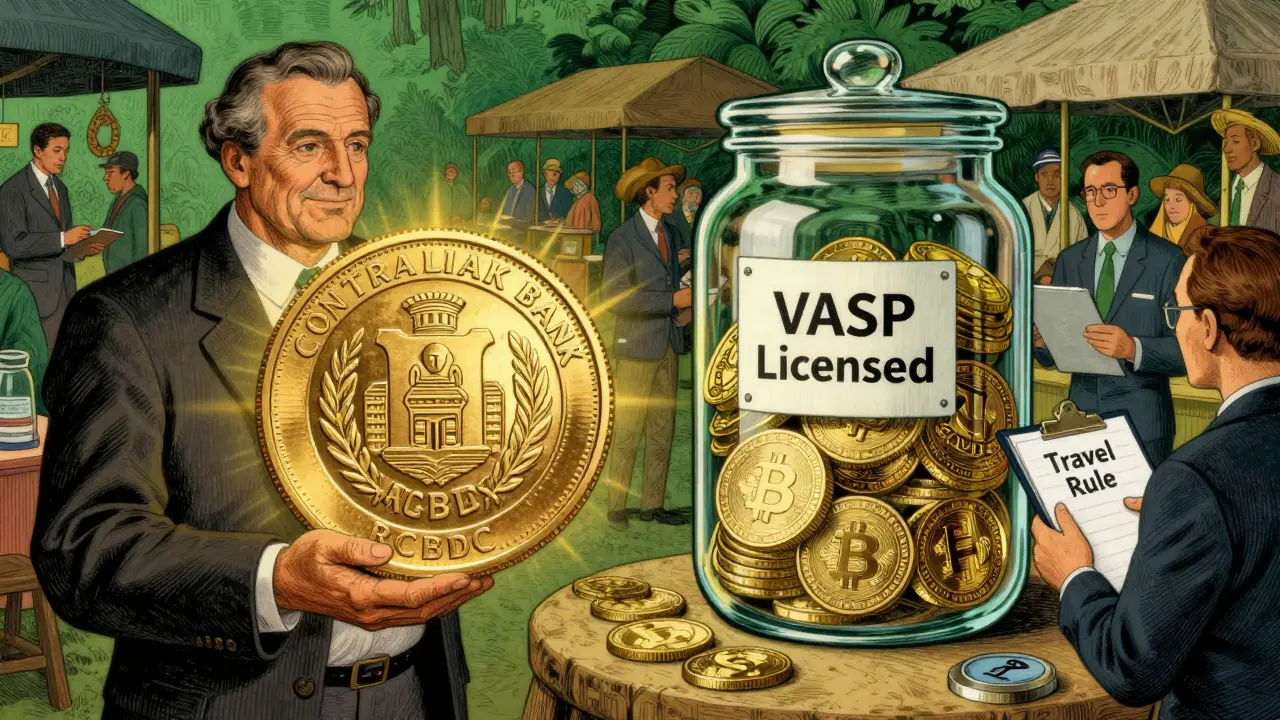
While private crypto faces hurdles, the Bank of Namibia is actively exploring its own digital currency. Known as a Retail Central Bank Digital Currency (rCBDC), this project aims to modernize the financial system, improve cross-border payments, and boost financial inclusion. Technical assistance from the International Monetary Fund (IMF) in 2025 highlighted that BON is analyzing the potential value propositions and drawbacks carefully.
An rCBDC would differ significantly from Bitcoin or Ethereum. It would be a direct liability of the central bank, stable in value, and fully legal tender. If launched, it could coexist with the regulated private VASP sector, creating a hybrid ecosystem. For now, however, the focus remains on tightening the screws on private virtual assets to ensure the financial system remains stable.
Frequently Asked Questions
Is cryptocurrency legal in Namibia in 2026?
Cryptocurrency is not illegal to hold, but trading and providing services are heavily regulated. General trading remains restricted unless conducted through a licensed Virtual Asset Service Provider (VASP). Cryptocurrencies do not have legal tender status, meaning they are not recognized as official currency by the state.
Can I use Binance or Coinbase in Namibia?
No. The Virtual Assets Act bans the use of crypto-exchanges not based in Namibia. You must use a locally registered and licensed VASP to conduct transactions legally. Foreign platforms are prohibited from serving Namibian residents directly.
How long does it take to get a crypto license in Namibia?
The process typically takes at least six months for the provisional phase alone. During this time, you cannot conduct business. After the provisional period, you must pass an inspection to receive full operational licensing. Extensions are possible but do not allow business activity.
What is the Travel Rule threshold in Namibia?
The Travel Rule applies to transactions exceeding NAD 20,000 (approximately USD 1,000). Above this amount, VASPs must collect and share sender and receiver information, including names, IDs, and account details, to comply with anti-money laundering regulations.
Are Initial Coin Offerings (ICOs) allowed?
The Bank of Namibia strongly discourages ICOs. They view them as high-risk for fraud, manipulation, and misrepresentation. The Bank does not advocate or support public engagement in initial coin offerings, making it a difficult path for startups seeking funding via tokens.