
Imagine trying to buy a coffee with Bitcoin in Shanghai. It’s not just difficult; it’s illegal. For years, the global crypto community watched China with a mix of fascination and confusion as its stance shifted from cautious tolerance to outright hostility. But if you think the current situation is just about "mining bans" or "exchange closures," you’re missing the bigger picture. As of late 2025 and into 2026, China has implemented what is arguably the world's most comprehensive prohibition on private cryptocurrency engagement. This isn't a gray area anymore. For Chinese citizens, holding, trading, or even facilitating transactions with decentralized digital assets carries significant legal risk.
The shift didn’t happen overnight. It was a slow tightening of the screws, starting with warnings in 2013 and culminating in a full-blown ban by mid-2025. Today, if you are a resident of mainland China, your relationship with crypto is defined by exclusion. You can’t legally hold Bitcoin on your balance sheet. You can’t use Alipay to buy Ethereum. And if you try to bypass these rules using offshore exchanges, you’re navigating a minefield of financial surveillance designed specifically to catch you. Let’s break down exactly what these restrictions mean for individuals and businesses right now.
The Full Ban: What Is Actually Illegal?
In June 2025, the People's Bank of China (PBOC) issued Circular No. 237, which effectively declared all cryptocurrency-related business activities as illegal financial activities. This wasn't just a suggestion; it was a mandate with teeth. Under this framework, several specific actions became prohibited for anyone operating within China’s jurisdiction.
- Trading: Exchanging legal tender (Yuan) for cryptocurrency, or vice versa, is banned.
- Intermediation: Providing information services, pricing data, or acting as a central counterparty for crypto trades is illegal.
- Token Issuance: Conducting Initial Coin Offerings (ICOs) or similar financing mechanisms through tokens is prohibited.
- Mining: The energy-intensive process of validating transactions and creating new coins remains banned due to environmental and financial stability concerns.
Crucially, this ban extends beyond just domestic entities. Foreign crypto exchanges that serve Chinese residents without proper approval are also targeted. Since there is no systematic licensing regime for offshore entities to market crypto products in China, any foreign platform accepting Chinese users is operating in a regulatory vacuum, often forcing them to withdraw entirely. Within a month of the 2025 circular, more than ten major exchanges pulled out of the mainland market, recognizing that compliance was impossible under the new rules.
How Authorities Enforce the Rules
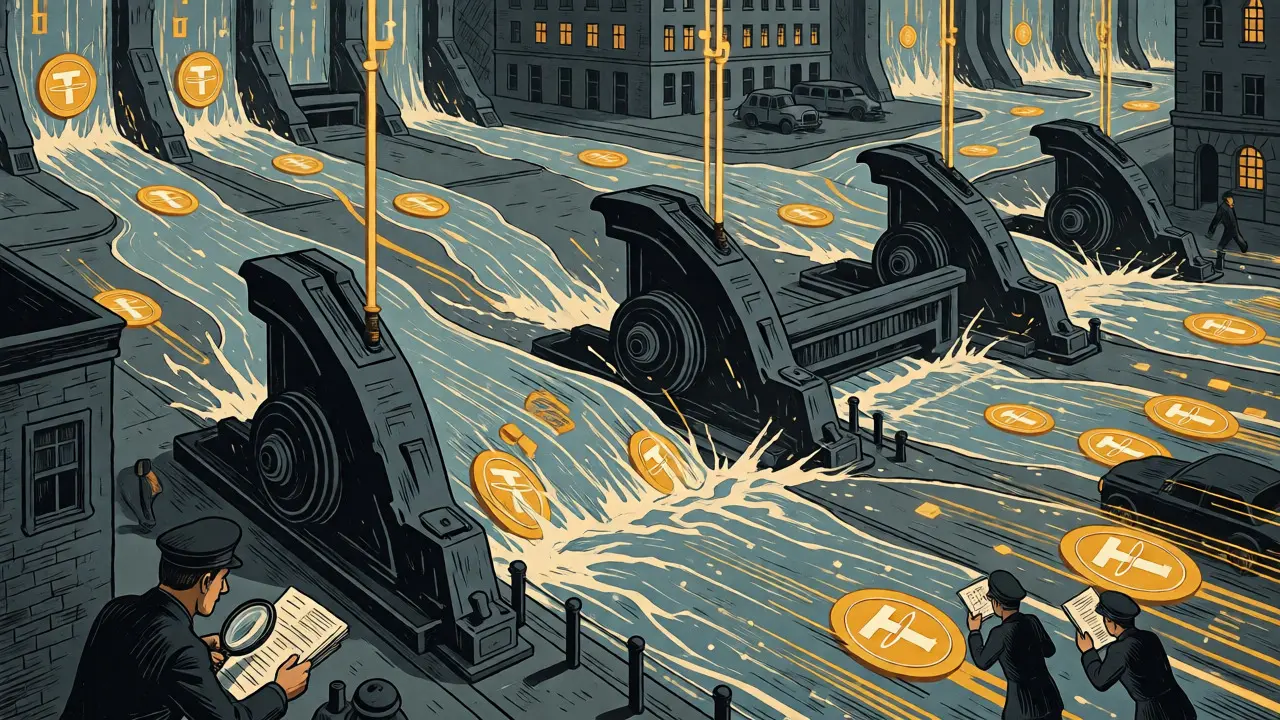
You might wonder how a government stops millions of tech-savvy individuals from using peer-to-peer networks. The answer lies in technological sophistication and aggressive enforcement. The PBOC didn’t just write laws; they upgraded their monitoring systems. Financial institutions, including major banks and payment giants like Alipay, were ordered to cut off payment channels for crypto transaction funds. They had to implement enhanced monitoring models to detect abnormal transactions linked to virtual currency activities.
This means your bank account is under scrutiny. If you suddenly receive a large transfer from an unknown individual followed by a withdrawal, algorithms flag it. In July 2025, police and regulators launched coordinated crackdowns on schemes using Tether (USDT) for illicit cross-border transfers. Why Tether? Because stablecoins are often used to move value across borders while evading traditional banking rails. By targeting USDT flows, authorities aimed to curb Yuan depreciation pressures and stop capital outflows disguised as crypto trades.
| Mechanism | Target | Impact on Users |
|---|---|---|
| Payment Channel Cutoff | Banks & Alipay | No direct fiat-to-crypto purchases via mainstream apps. |
| Abnormal Transaction Monitoring | Bank Accounts | Unusual P2P transfers trigger audits or freezes. |
| OTC Broker Crackdowns | Over-the-Counter Dealers | High risk of asset seizure for informal traders. |
| VPN & Website Blocking | Foreign Exchanges | Access to global platforms becomes unstable and risky. |
The Rise of the Digital Yuan (e-CNY)
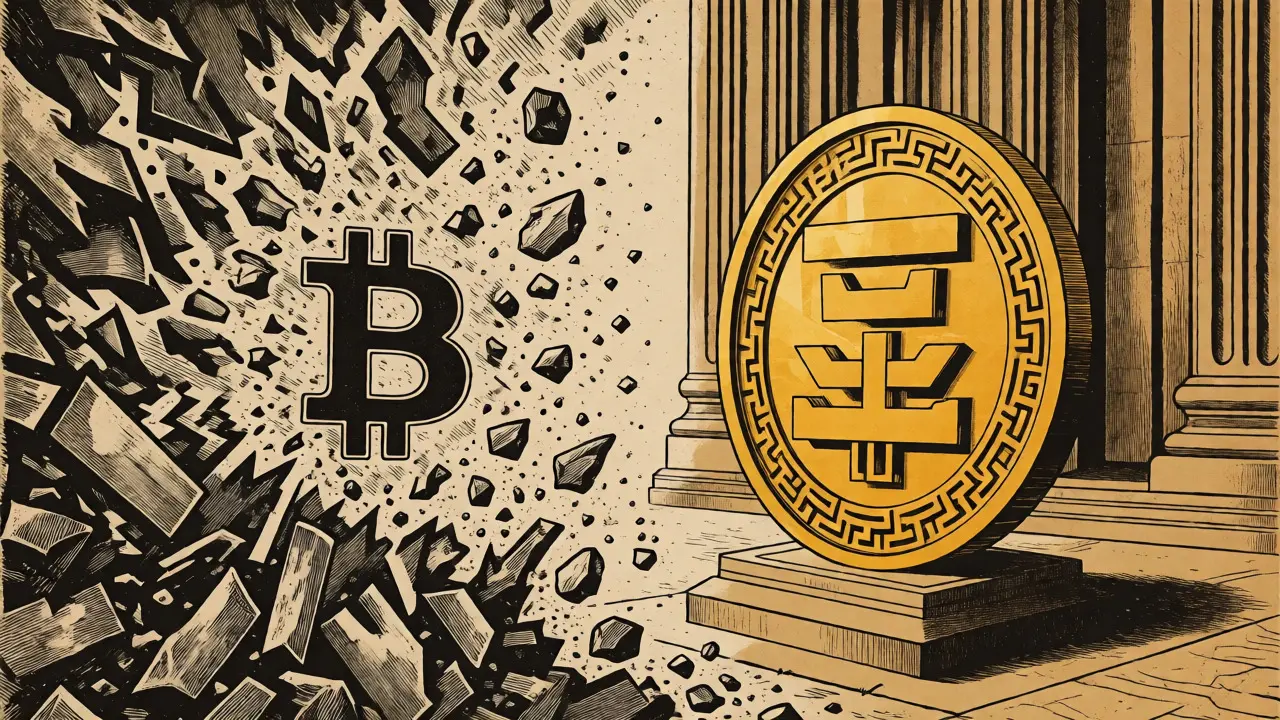
To understand why China is so strict, you have to look at what they want instead. The ban on decentralized crypto is closely tied to the promotion of the Digital Yuan (e-CNY), China’s state-backed Central Bank Digital Currency (CBDC). While Bitcoin offers decentralization and anonymity, the e-CNY offers control and traceability. The government sees decentralized cryptocurrencies as a threat to monetary sovereignty because they allow people to bypass the central bank’s influence over money supply and flow.
By outlawing private crypto ownership, the state removes competition for the digital yuan. It forces citizens to stay within the regulated financial ecosystem. Even discussions about a yuan-pegged stablecoin remain at the research stage, with pilots limited to controlled environments like Shanghai or Hong Kong. The message is clear: if you want digital money in China, it will be the version the government issues, not the version miners create.
Hong Kong vs. Mainland China: A Tale of Two Cities
It’s important to distinguish between mainland China and Hong Kong. While Beijing maintains its uncompromising prohibition, Hong Kong has positioned itself as a regulated hub for digital assets. This divergence creates a complex landscape for investors. A Chinese citizen living in Shenzhen cannot legally trade on a local exchange, but someone with residency or business ties in Hong Kong might access regulated platforms there.
However, this doesn’t mean you can easily arbitrage the difference. Cross-border capital controls remain tight. Moving money from mainland accounts to fund a Hong Kong crypto portfolio involves navigating strict limits on annual foreign exchange quotas. Furthermore, any offshore entity intending to conduct crypto business involving Chinese clients must obtain relevant approvals, which are rarely granted for pure speculation purposes. So, while Hong Kong offers a gateway, it’s not an open door for everyone.
Practical Implications for Individuals
If you are a Chinese citizen interested in crypto today, here is the harsh reality. Traditional on-ramps and off-ramps are closed. You cannot walk into a bank and ask to convert Yuan to Bitcoin. Most attempts to do so involve Peer-to-Peer (P2P) markets, where you send Yuan to another person’s bank account in exchange for crypto sent to your wallet. This method is fraught with danger.
First, there is the risk of fraud. Second, and more importantly, there is the risk of "tainted" funds. If the Yuan you receive comes from criminal activity (like telecom fraud, which authorities are aggressively hunting), your bank account could be frozen during an investigation. Police have been known to freeze accounts for months while tracing the source of funds. Third, tax implications are murky because the activity itself is technically illegal, making standard reporting frameworks non-existent.
Some users attempt to circumvent restrictions using Virtual Private Networks (VPNs) to access foreign exchanges like Binance or OKX. However, the June 2025 ban explicitly targets the facilitation of these transactions. Even if you successfully execute a trade, converting those profits back into spendable Yuan requires finding a compliant exit route, which is increasingly difficult. Many find themselves holding digital assets they cannot legally liquidate domestically.
Future Outlook: Will Anything Change?
Looking ahead to 2026 and beyond, experts see little sign of relaxation. The ban reinforces two core government objectives: financial stability and control over capital flows. With the global economy facing uncertainties, Beijing is unlikely to loosen its grip on money leaving the country. The rapid expansion of stablecoins and decentralized finance (DeFi) presents regulatory challenges that the PBOC prefers to solve by elimination rather than regulation.
While some niche sectors, like blockchain technology for supply chain management or data asset financing (seen in the Shanghai Data Exchange), continue to thrive, speculative crypto investment remains persona non grata. If you are planning to enter the Chinese market as a crypto entrepreneur, focus on infrastructure and enterprise solutions, not retail trading. For the average citizen, the era of casual crypto investing in mainland China appears to be over, replaced by a strictly monitored digital yuan ecosystem.
Is it illegal for Chinese citizens to own Bitcoin privately?
Yes, under the comprehensive ban effective since June 2025, individual ownership and private transactions of cryptocurrencies like Bitcoin are classified as illegal financial activities. While possession alone might not always lead to immediate arrest, the inability to legally transact or exchange makes holding practically unviable and legally risky.
Can I use a VPN to trade on foreign exchanges from China?
Technically, yes, you can access websites via VPN. However, the regulatory framework prohibits financial institutions from processing payments related to these trades. Banks actively monitor and block transactions linked to crypto exchanges, meaning you may struggle to deposit Yuan or withdraw profits without triggering account freezes or investigations.
Why did China ban crypto mining?
The initial ban on mining cited environmental concerns due to high energy consumption. However, subsequent measures focused on financial stability. Mining supports decentralized networks that challenge the central bank's control over monetary policy. Banning mining helps consolidate the government's push toward the state-controlled Digital Yuan (e-CNY).
Are stablecoins like USDT still used in China?
Stablecoins are heavily scrutinized. In July 2025, authorities cracked down on schemes using Tether (USDT) for illicit cross-border transfers. While they aren't physically confiscated from wallets, using them for significant value transfers often flags accounts for review, especially if the movement suggests capital flight from the Yuan.
What is the difference between mainland China and Hong Kong crypto rules?
Mainland China enforces a total ban on private crypto trading and mining. Hong Kong, operating under "One Country, Two Systems," allows regulated crypto exchanges and tokenization projects. However, moving funds between the two regions is subject to strict cross-border capital controls, limiting easy arbitrage for mainland residents.