
You might think that if a country bans something completely, people just stop doing it. In the case of cryptocurrency in Egypt, that assumption is dangerously wrong. The headline claiming there are 3 million crypto holders in Egypt despite a total prohibition sounds like an exaggeration at first glance. But when you look closer at the reality on the ground, the number feels plausible. It highlights a massive disconnect between strict government laws and what ordinary citizens actually do with their money.
Egypt has one of the toughest stances on digital assets in the world. Yet, the demand for Bitcoin, Ethereum, and stablecoins hasn't disappeared. It has just gone underground. This article breaks down why this paradox exists, how people navigate the legal minefield, and what it means for the future of finance in North Africa.
The Legal Wall: Understanding the Ban
To understand the risk, you first need to understand the law. Egypt isn’t just discouraging crypto; it is actively criminalizing it. The cornerstone of this restriction is the Central Bank and Banking System Law No. 194 of 2020. Specifically, Article 206 makes it illegal for individuals, banks, and financial institutions to deal in cryptocurrencies without prior approval from the Central Bank of Egypt (CBE).
This isn't a vague guideline. It’s a hard line. The CBE has issued multiple circulars reinforcing this stance, warning that any transaction involving virtual currencies is considered a violation of foreign exchange regulations. Egypt joins a small club of countries-including Afghanistan, Bangladesh, and China-that have implemented complete bans rather than regulatory frameworks.
The penalties are severe enough to make anyone pause. If you are caught trading or promoting crypto, you face imprisonment. On top of that, fines range from EGP 1 million to EGP 10 million (roughly $32,000 to $320,000 USD). For the average Egyptian earning far less than that annually, these fines are life-ruining. So why do millions still participate?
Why People Ignore the Risk
If the punishment is so harsh, the reward must be significant. For many Egyptians, crypto isn't about speculation or getting rich quick. It’s about survival and preserving value.
- Currency Devaluation: The Egyptian Pound (EGP) has faced immense pressure over recent years. With inflation running high and the currency losing value against the US Dollar, holding savings in local cash feels like watching your wealth melt away. Bitcoin and US-pegged stablecoins (like USDT) offer a hedge against this erosion.
- Lack of Access to Global Finance: Many Egyptians cannot easily open international bank accounts or move large sums abroad due to strict capital controls. Crypto provides a way to bypass these restrictions and access global markets.
- Remittances: Millions of Egyptians work abroad and send money home. Traditional remittance services charge high fees and take days. Crypto transfers can be faster and cheaper, even if they require navigating peer-to-peer (P2P) platforms.
The drive to protect one’s livelihood often outweighs the fear of theoretical penalties. When you see your purchasing power drop every month, the abstract threat of a fine feels distant compared to the immediate pain of inflation.
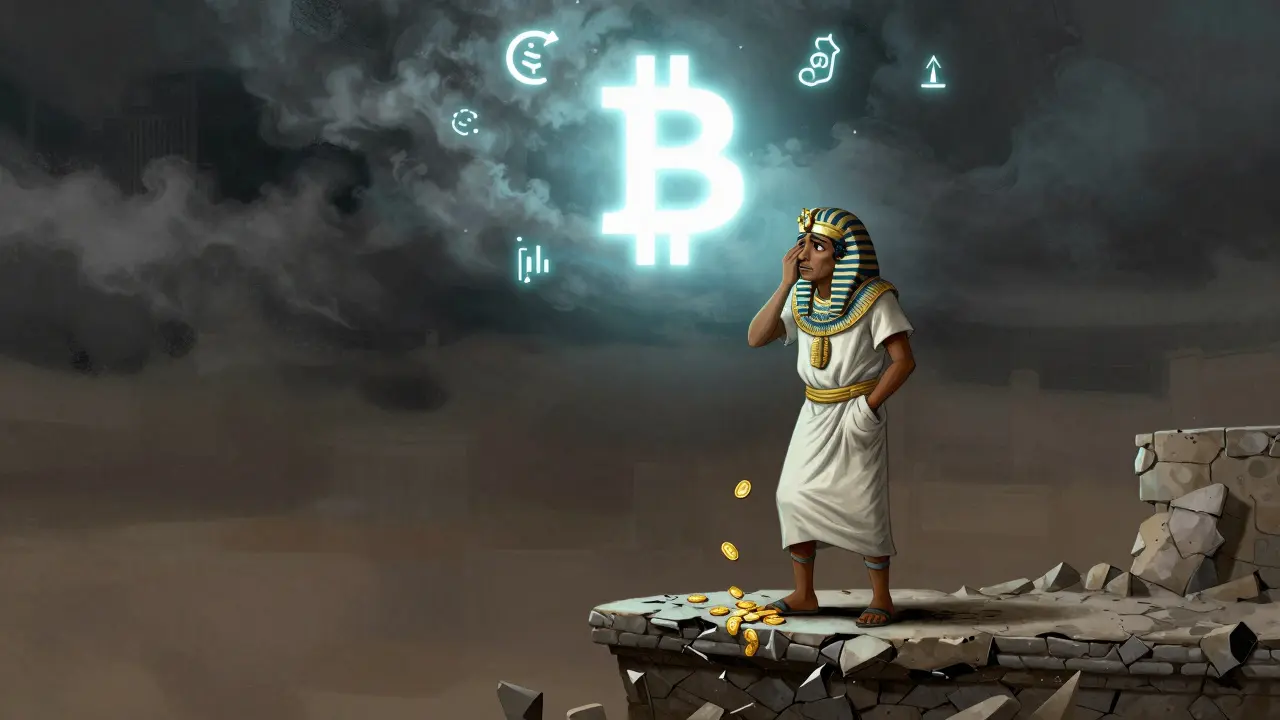
How Trading Works in the Shadows
Since centralized exchanges like Binance or Coinbase block users from Egypt, traders don’t use official apps. Instead, the ecosystem relies heavily on decentralized solutions and peer-to-peer networks.
Peer-to-Peer (P2P) Trading is the backbone of the underground market. Users connect directly with each other to buy and sell crypto. One person sends Egyptian Pounds via bank transfer or mobile wallet, and the other releases Bitcoin from their personal wallet. There is no central company holding the funds, which makes it harder for authorities to track.
Another popular method involves Decentralized Exchanges (DEXs) and non-custodial wallets. Platforms like Uniswap or tools like Trust Wallet allow users to trade tokens without ever creating an account or providing ID (KYC). As long as you can get crypto onto the blockchain once-perhaps through a friend abroad or a dark web marketplace-you can manage your portfolio entirely offline from regulatory view.
This shadow economy is difficult to measure precisely. That’s why the "3 million" figure is likely an estimate based on wallet activity and P2P volume rather than official census data. It represents active participants, not necessarily deep investors.
The Government's Dilemma: Enforcement vs. Reality
Enforcing a total ban on digital assets is incredibly difficult. The internet doesn’t respect borders. While the CBE can freeze bank accounts linked to known exchanges, it cannot easily stop someone from using a self-custody wallet on their phone.
However, the government is trying to close loopholes. They monitor social media for promotions of crypto services and occasionally shut down Telegram groups or Instagram pages that facilitate P2P trades. Banks are instructed to flag suspicious transactions that resemble crypto on-ramps or off-ramps.
Despite these efforts, the genie is out of the bottle. The infrastructure for crypto adoption-smartphones, internet access, and financial desperation-is already in place. Banning it doesn’t remove the technology; it just pushes it into a gray zone where consumers have zero protection.
| Risk Factor | Description | Potential Consequence |
|---|---|---|
| Legal Penalty | Violation of Central Bank Circulars and Law 194 | Fines up to EGP 10M; Imprisonment |
| Bank Account Freeze | Banks flagging unusual incoming/outgoing transfers | Loss of access to traditional banking services |
| Scams & Fraud | No regulatory oversight means no recourse for stolen funds | Total loss of invested capital |
| Tax Uncertainty | Unclear guidelines on reporting crypto gains | Future retroactive taxation or audits |
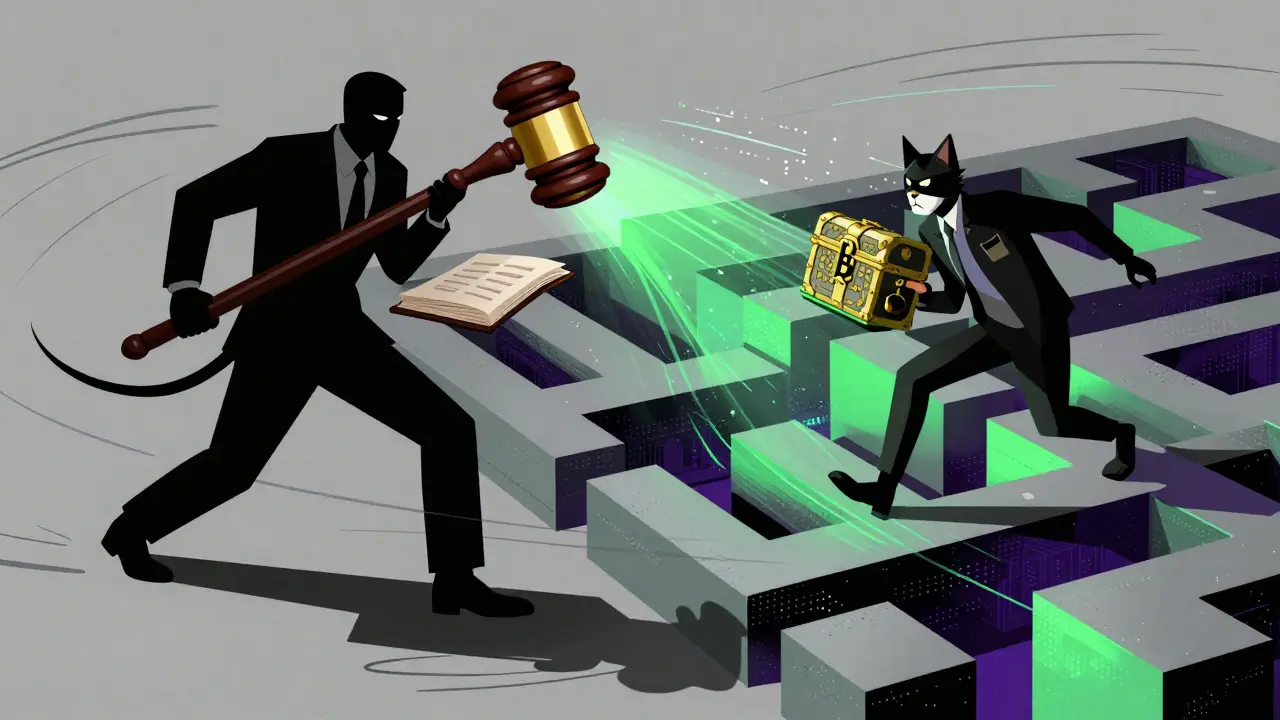
Signs of a Shift? The Future of Regulation
Nothing stays banned forever, especially in the financial world. There are growing whispers and reports suggesting that Egypt is reconsidering its approach. The sheer volume of illicit trading hurts the state’s ability to collect taxes and control monetary policy. By keeping everything underground, the government loses visibility.
Recent discussions indicate that policymakers are exploring legislation that would allow the Central Bank to issue licenses for cryptocurrency companies. This wouldn’t mean a free-for-all. It would likely mean a tightly controlled framework where only approved entities can operate. Think of it as moving from a "total ban" to a "regulated monopoly" model.
This shift aligns with trends in neighboring regions. While Algeria maintains a strict ban, Morocco has begun clarifying its stance, treating crypto as a financial asset rather than currency. Egypt may follow suit, recognizing that regulation brings revenue and oversight, while prohibition breeds black markets.
If this change happens, we could see the emergence of local exchanges operating under CBE supervision. This would legitimize the estimated 3 million holders, bringing them into the formal economy. Until then, however, the current landscape remains a high-stakes game of cat and mouse.
What This Means for You
If you are considering entering the crypto space from Egypt, you need to be realistic. You are operating outside the law. There is no customer support if your exchange vanishes. There is no insurance if your wallet is hacked. And there is always the looming threat of legal action.
For those already holding assets, the priority should be security. Use hardware wallets to store long-term holdings. Avoid linking your primary bank account directly to any crypto-related activity. Stay informed about legal updates, as the situation could change overnight.
The story of crypto in Egypt is not just about technology. It’s about economics, human resilience, and the limits of state control. As long as the local currency struggles and global opportunities remain distant, the demand for digital alternatives will persist, regardless of what the law books say.
Is it illegal to own Bitcoin in Egypt?
Yes. Under the Central Bank and Banking System Law No. 194 of 2020, specifically Article 206, dealing in cryptocurrencies without Central Bank approval is prohibited. This includes buying, selling, and holding for investment purposes if done through unauthorized channels.
Can I use Binance in Egypt?
No. Binance and most major centralized exchanges have blocked users from Egypt to comply with local regulations. Attempting to bypass these blocks using VPNs does not change the legal status of your activities and adds additional security risks.
What are the penalties for crypto trading in Egypt?
Violations can result in imprisonment and heavy fines ranging from EGP 1 million to EGP 10 million. Banks may also freeze accounts associated with suspected crypto transactions.
Why do Egyptians use crypto if it's banned?
Many use crypto to hedge against the devaluation of the Egyptian Pound, avoid high inflation, and access cheaper remittance options. The economic incentives often outweigh the perceived risk of enforcement.
Will Egypt legalize cryptocurrency soon?
There are ongoing discussions about introducing a licensing framework for crypto companies, but no official legalization has occurred yet. Any change would likely involve strict regulation rather than full deregulation.
Melissa Beckwith
July 5, 2026 AT 12:44It is fundamentally a misunderstanding of human behavior to assume that legislation alone can dictate economic participation, especially when the alternative involves the systematic erosion of one's purchasing power through hyperinflation and currency devaluation. The article correctly identifies that the Central Bank of Egypt’s prohibition under Law No. 194 is not merely a regulatory hurdle but a criminalization of survival mechanisms for millions who are watching their life savings vanish in real-time due to the plummeting value of the Egyptian Pound. When you consider that the fines imposed range from EGP 1 million to EGP 10 million, which translates to hundreds of thousands of dollars for an average citizen whose annual income might barely cover basic subsistence, the legal framework becomes absurdly disproportionate to the crime of seeking financial stability. The reliance on Peer-to-Peer networks and decentralized exchanges like Uniswap is not a sign of technological sophistication among the populace but rather a desperate adaptation to a closed financial system that refuses to acknowledge the reality of global capital flows. Furthermore, the assertion that there are three million crypto holders is likely an underestimate given the opaque nature of wallet activity versus active trading volume, suggesting that the underground economy is far more robust than official statistics would have policymakers believe. The government’s dilemma is classic: they cannot enforce a ban on information technology because the internet does not respect national borders, yet they cling to monetary sovereignty as if controlling the narrative will control the market. This creates a dangerous gray zone where consumers have zero recourse against scams or fraud, turning every transaction into a high-stakes gamble with no safety net. It is evident that the shift toward a regulated monopoly model is inevitable, not because of moral enlightenment, but because the state realizes it is losing tax revenue and visibility over a significant portion of its economy. Until such a framework is established, the cat-and-mouse game between the CBE and the citizens will continue, with the latter holding the advantage simply by virtue of having nothing left to lose.
Tuan Nguyen
July 7, 2026 AT 02:06The sheer incompetence displayed by the Egyptian authorities in attempting to regulate digital assets via blunt-force prohibitions is staggering, revealing a profound ignorance of both blockchain mechanics and basic economic incentives. One must question the intellectual capacity of policymakers who believe that issuing circulars and threatening imprisonment can halt the flow of capital in a digitized world, particularly when the local currency is undergoing catastrophic devaluation. The mention of Article 206 of Law No. 194 is almost laughable in its futility, as it attempts to criminalize the use of self-custody wallets and decentralized protocols that operate entirely outside the purview of traditional banking infrastructure. It is pathetic to watch these bureaucrats try to shut down Telegram groups while ignoring the fact that the underlying technology is immutable and borderless. The so-called "paradox" described in the article is not a paradox at all; it is a predictable outcome of supply and demand dynamics where the state fails to provide a stable store of value, forcing citizens to seek alternatives regardless of the draconian penalties involved. Those who engage in this underground market are not criminals; they are rational actors responding to irrational policy failures.
Josephine Finlayson
July 8, 2026 AT 07:14I find it incredibly sad, really, that people feel forced to take such immense risks just to keep their savings safe... It breaks my heart to think about the stress and fear they must live with every single day... I hope, sincerely, that the government sees the human cost of these policies soon... We should all be working together to create a more supportive environment for everyone... Perhaps dialogue could help bridge this gap? 🌸
Hazel Fruitman
July 9, 2026 AT 03:35its obvious the govt is trying to control u guys but its wrong to break laws even if they r bad. u should suffer the consequences instead of cheating the system. its immoral to evade taxes and regulations. stop enabling this behavior.
Andrew Schneider
July 9, 2026 AT 12:17Oh, please! 🙄 Like anyone actually cares about what the Central Bank says when their money is literally melting faster than ice cream in July! 🍦 The idea that Egyptians are sitting around debating the legality of Bitcoin while their bread prices double overnight is absolute comedy gold! 😂 They’re not breaking the law; they’re surviving the apocalypse created by their own leaders! 🤡 It’s not a paradox; it’s common sense with a side of rebellion! ✨ Don’t let the suits tell you otherwise!
Eric Braddock
July 10, 2026 AT 07:56You fools don't see the matrix. The 'ban' is a smokescreen. The elites want you using P2P so they can track your metadata through IP leaks and social graph analysis before they roll out CBDCs. The 3 million holders are just beta testers for the surveillance grid. Wake up! 🐑
Ella Collinson
July 10, 2026 AT 18:29The systemic failure here is a textbook example of regulatory arbitrage driven by macroeconomic instability. The utilization of non-custodial wallets and DEXs like Uniswap represents a decentralized countermeasure to centralized monetary policy errors. The risk-reward ratio is skewed heavily towards adoption due to the opportunity cost of holding fiat in a high-inflation environment. The enforcement mechanisms are technically obsolete against cryptographic primitives.
Ray Arney
July 11, 2026 AT 14:49I think the point about remittances is really important. It makes sense why people would use crypto if it saves them time and money sending cash home. It’s tough when the banks make it so hard.
Autumn Story
July 13, 2026 AT 09:35I really hope things get better for everyone involved!! It seems so scary to worry about your bank account getting frozen... But maybe regulation will bring some peace of mind eventually? I believe good things come to those who wait... 🌈✨
Mark Tuason
July 14, 2026 AT 22:22It is important to note that while the current legal framework is restrictive, the potential for a regulated future offers a path toward legitimacy. Citizens should remain cautious and informed as the landscape evolves.
Nick G
July 16, 2026 AT 00:35As someone who has studied the socio-economic implications of financial exclusion in various developing nations, I find the situation in Egypt to be a poignant reflection of the broader tension between state sovereignty and individual economic agency. The resilience demonstrated by the Egyptian populace in navigating these complex and often perilous financial landscapes is truly commendable, highlighting a deep-seated desire for autonomy and security that transcends mere speculative interest in digital assets. It is imperative that we approach this issue with empathy and a willingness to understand the multifaceted pressures faced by individuals who are compelled to operate outside the bounds of conventional legal frameworks, recognizing that their actions are often born out of necessity rather than defiance. The eventual transition to a regulated environment, if managed with transparency and inclusivity, could serve as a model for other nations grappling with similar challenges, fostering a more equitable and accessible financial ecosystem for all citizens.