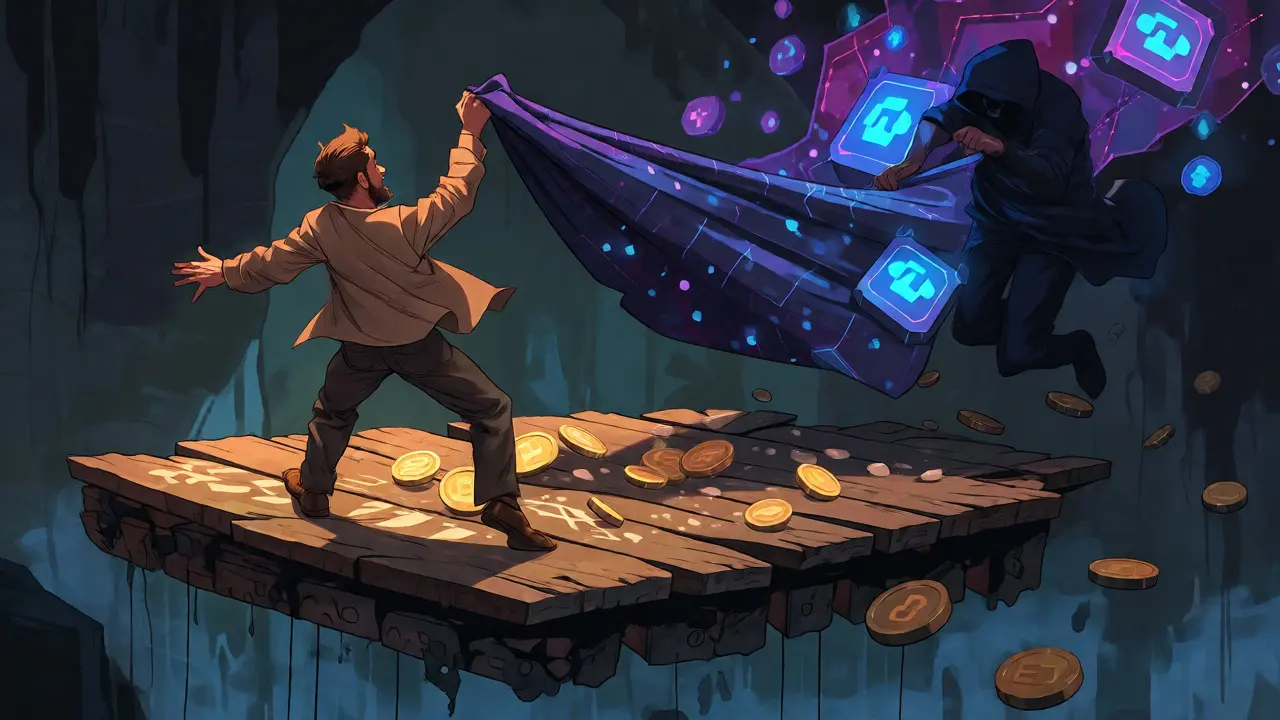
Imagine you put your hard-earned savings into a new cryptocurrency token because the charts looked amazing and the community was buzzing. You check the price every hour, watching it climb. Then, one morning, you wake up to find the token is worth zero. You try to sell, but nothing happens. The money is gone. This isn't bad luck; it's a Rug Pull. It’s the most common way scammers steal from people in decentralized finance (DeFi), and it’s happening more often than you might think.
If you’ve ever wondered how someone can just vanish with millions of dollars overnight, or why some tokens crash to zero instantly, this guide breaks down exactly how these scams work. We’ll look at the mechanics behind the theft, the warning signs you missed, and what you can actually do to protect your wallet. No jargon-heavy lectures-just straight talk about keeping your crypto safe.
What Exactly Is a Rug Pull?
At its core, a rug pull is an exit scam. Think of it like a magician pulling a tablecloth out from under a set of dishes. In the traditional stock market, if a company fails, there are usually regulations, audits, and legal recourse. In DeFi, things move fast, and anyone can create a token. A rug pull happens when the developers of a new token suddenly remove all the liquidity from the trading pool. Liquidity is essentially the pile of real money (like ETH or BNB) that allows people to buy and sell the token. When the devs pull that money out, the token has no value left to trade against. It collapses to zero, and the investors are left holding digital confetti.
This isn’t just a minor inconvenience. According to data from Chainalysis, rug pulls accounted for over $2.8 billion in losses in 2021 alone. That’s a staggering amount of money stolen from everyday people who were just trying to participate in the new economy. The scale is massive, with Solidus Labs documenting over 300,000 scam tokens created in recent years. If you’re investing in DeFi, you aren’t just competing with other traders; you’re navigating a minefield where the ground can disappear beneath your feet without warning.
The Two Main Types: Hard vs. Soft
Not all rug pulls look the same. Understanding the difference between a "hard" and a "soft" rug pull helps you spot them earlier.
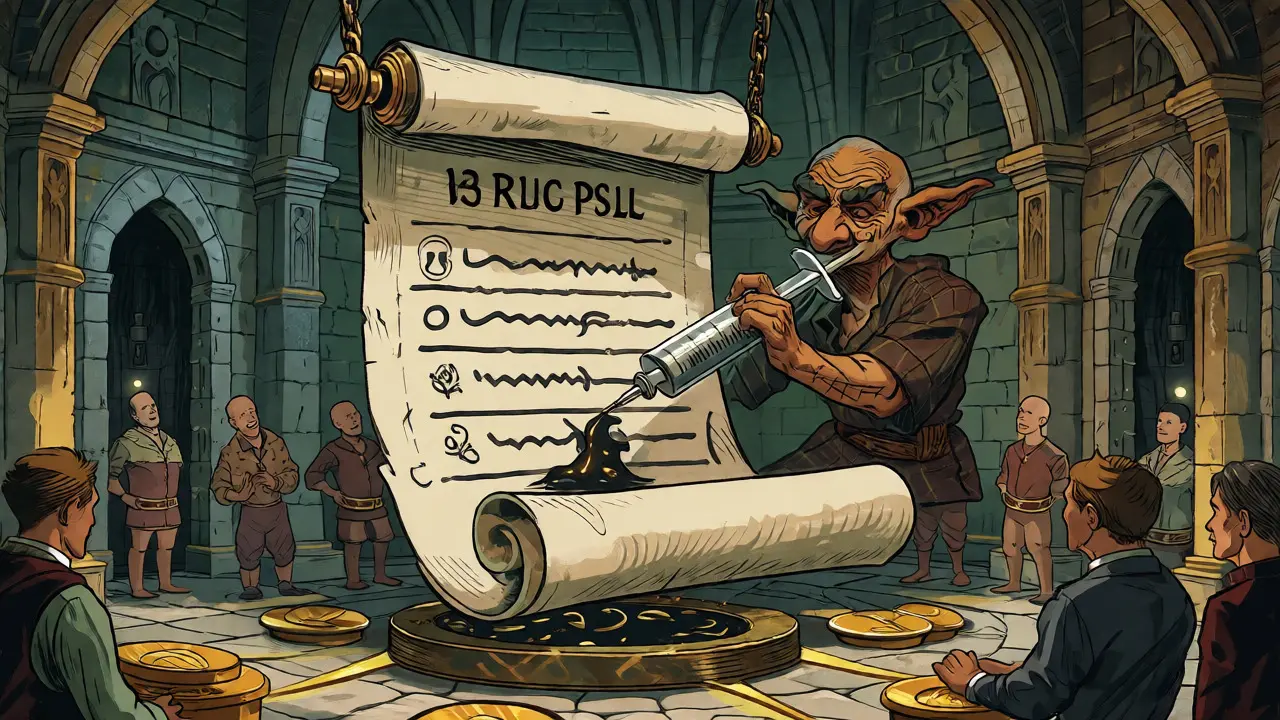
A Hard Rug Pull is premeditated theft. The code itself is rigged from day one. Developers write malicious functions into the smart contract-the digital agreement running on the blockchain-that allow them to manipulate the system. For example, they might include a function that lets only the owner mint unlimited new tokens, flooding the supply and crashing the price. Or, they might add a "honeypot" feature, which means you can buy the token, but the code prevents you from selling it. Only the developer can sell. By the time you realize you’re trapped, they’ve already drained the pool.
A Soft Rug Pull is sneakier. It looks legitimate at first. The team launches the project, builds a website, and maybe even delivers a product. But then, slowly, they stop updating. They dump their own large holdings of the token onto the open market, causing the price to slide. Eventually, they abandon the project entirely, leaving investors with devalued assets. While hard rug pulls are clearly criminal, soft rug pulls often hide behind vague excuses like "market conditions," making them harder to prosecute but equally damaging to your portfolio.
How the Mechanics Work: The Liquidity Trap
To understand how they get away with it, you need to know how decentralized exchanges (DEXs) like Uniswap or PancakeSwap work. Unlike a bank, these platforms don’t hold your money. Instead, they use Automated Market Makers (AMMs). To trade a new token, you need a liquidity pool. This is a pair of assets: the new token and a established coin like Ethereum (ETH).
- Creation: The scammer creates a token and pairs it with their own ETH in a liquidity pool on a DEX.
- Hype: They market the token heavily. People start buying, swapping their ETH for the new token. As more people buy, the amount of ETH in the pool grows, and the price of the token rises.
- The Drain: Once enough ETH has accumulated, the scammer calls the
removeLiquidityfunction. Because they own the liquidity provider (LP) tokens (the receipt for putting money into the pool), they can withdraw all the ETH at once. - The Crash: With the ETH gone, there is no counterparty to buy the remaining tokens. The price plummets to near zero instantly.
This process can happen in seconds. One minute you’re up 50%, the next you’re down 99%. The technical ease of this execution is what makes it so dangerous. There’s no central authority to freeze the transaction or reverse the withdrawal.
Red Flags: How to Spot a Scam Before It Happens
You don’t need to be a coder to spot many of these traps. Most rug pulls leave clues. Here is a checklist of red flags that should make you hit the brakes:
- Anonymous Team: If the developers won’t reveal who they are, ask yourself why. Legitimate projects usually have public founders. Anonymity makes it easy to disappear after taking the money.
- No Code Audit: Reputable security firms like CertiK or Hacken review smart contracts to find bugs or malicious code. If a high-yield token hasn’t been audited by a known firm, treat it with extreme suspicion.
- Unrealistic Yields: If a project promises 10,000% APY (Annual Percentage Yield) while the rest of the market offers 5-10%, it’s likely unsustainable. High returns require high risk, and often, that risk is fraud.
- Concentrated Ownership: Check the token distribution on a block explorer like Etherscan. If the top 5 wallets hold 80% of the supply, those holders control the market. If they decide to sell, the price crashes.
- Mint Function Enabled: Look at the contract code. If the owner can "mint" (create) new tokens at will, they can dilute your holdings infinitely.
| Feature | Legitimate Project | Rug Pull Candidate |
|---|---|---|
| Liquidity Lock | Locked for 6+ months via third-party service | Unlocked or owned solely by dev |
| Code Audit | Completed by reputable firm (e.g., CertiK) | None or self-audited |
| Team Identity | Public, verifiable backgrounds | Anonymous or pseudonymous only |
| Marketing | Focused on utility and tech | Focused on hype, influencers, and FOMO |
| Token Supply | Capped or deflationary mechanisms | Infinite mint capability |
Real-World Examples: Lessons from the SQUID Token
The best way to learn is to look at history. Take the Squid Game ($SQUID) token. Launched in late 2021, it capitalized on the massive popularity of the Netflix series. The marketing was aggressive, featuring fake partnerships and a sleek website. Investors piled in, driving the price up exponentially.
But the smart contract had a hidden flaw. It included a function that restricted sales based on the number of tokens held. As the price rose, fewer people could sell. Meanwhile, the developers retained the ability to sell freely. When the price peaked, the devs dumped their holdings and withdrew the liquidity. The price dropped from hundreds of dollars to fractions of a cent in minutes. TRM Labs later confirmed that the contract explicitly allowed the creators to drain the pool. It wasn’t a glitch; it was a trap.
Another famous case is the AnubisDAO token, which lost nearly $60 million in hours. These examples show that even well-funded, hyped projects can vanish if the underlying code doesn’t protect the investor.
Why Does This Keep Happening?
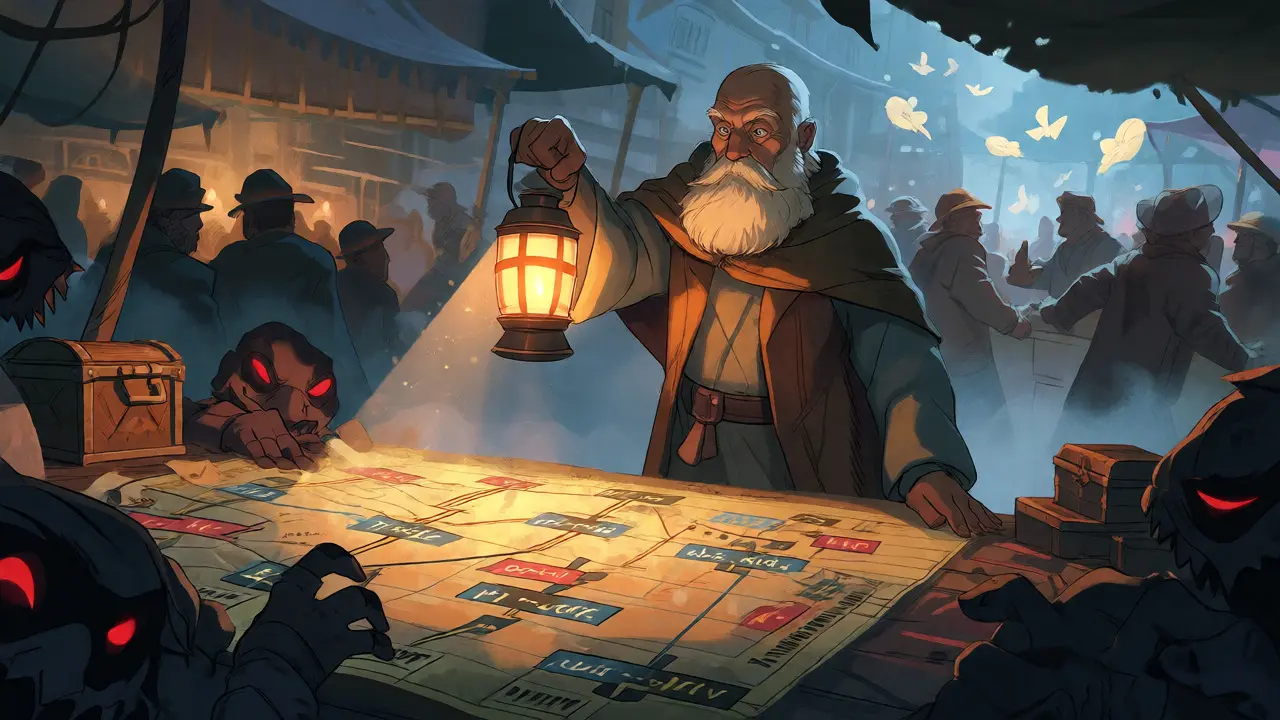
You might wonder why regulators haven’t stopped this yet. The answer lies in the nature of DeFi. It is permissionless. Anyone with a few hundred dollars in gas fees can deploy a smart contract on Ethereum, Binance Smart Chain, or Polygon. There is no gatekeeper checking your business plan before you launch a token.
Furthermore, the global and pseudonymous nature of blockchain transactions makes law enforcement difficult. A scammer in New Zealand can target investors in the US, Europe, and Asia simultaneously. Tracking the flow of funds through mixers and cross-chain bridges takes time, and by the time authorities act, the money is often laundered into fiat currency and spent.
Also, investor psychology plays a huge role. During bull markets, fear of missing out (FOMO) overrides caution. People see friends posting screenshots of 10x gains and jump in without doing due diligence. Scammers exploit this greed. They know that during hype cycles, fewer people read the whitepaper or check the contract address.
How to Protect Yourself
You can’t eliminate risk entirely in DeFi, but you can significantly reduce it. Here are practical steps to take before you connect your wallet:
- Check Liquidity Locks: Use tools like Unicrypt or Team Finance to verify if the liquidity is locked. If it’s not locked, the dev can pull it anytime.
- Analyze Contract Permissions: Use scanners like TokenSniffer or GoPlus Security. These tools automatically flag risky features like "Honeypot," "Mint," or "Owner Pause."
- Verify Social Proof: Don’t just look at follower counts. Look at engagement. Are real people asking questions? Or is it just bots spamming rocket emojis? Check the Telegram or Discord for moderator activity.
- Start Small: Never invest money you can’t afford to lose. Treat early-stage DeFi tokens like venture capital bets, not savings accounts.
- Read the Audit Report: If an audit exists, read the summary. Did the auditors find critical issues? Were they fixed? A "passed" audit doesn’t mean the project is safe; it just means no obvious bugs were found at that moment.
The Future of DeFi Safety
The good news is that the ecosystem is maturing. Decentralized exchanges are starting to implement stricter listing requirements. More projects are voluntarily locking liquidity and undergoing rigorous audits. Regulatory bodies in major jurisdictions are beginning to classify certain DeFi activities as securities, which could bring traditional fraud laws into play.
However, innovation moves faster than regulation. As long as it’s cheap to create a token and profitable to scam, rug pulls will continue. Your best defense remains your own skepticism. In DeFi, trust is earned, not given. If something sounds too good to be true, it almost certainly is a rug pull waiting to happen.
Can I recover my money after a rug pull?
It is very difficult. Since DeFi transactions are irreversible, you cannot simply call customer support to reverse a trade. If the scammers are identified and caught by law enforcement, you might get restitution, but this is rare and takes years. Often, the funds are mixed and moved across chains to obscure their origin.
Is every low-cap token a rug pull?
No. Many legitimate projects start with low market caps. However, low-cap tokens carry higher risk because they are easier to manipulate. Always perform due diligence regardless of the market cap.
What is a honeypot in crypto?
A honeypot is a type of smart contract bug or feature that allows users to buy a token but prevents them from selling it. This traps the investor’s funds until the developer chooses to unlock selling or drains the liquidity.
Does a code audit guarantee safety?
No. An audit checks for coding errors and standard vulnerabilities at a specific point in time. It does not guarantee that the team won’t execute a malicious function that was intentionally coded, nor does it prevent social engineering scams.
How do I check if liquidity is locked?
You can use third-party verification tools like Unicrypt or Mudra. These platforms track smart contracts and display whether the LP tokens are locked and for how long. If the lock expires soon, be cautious.