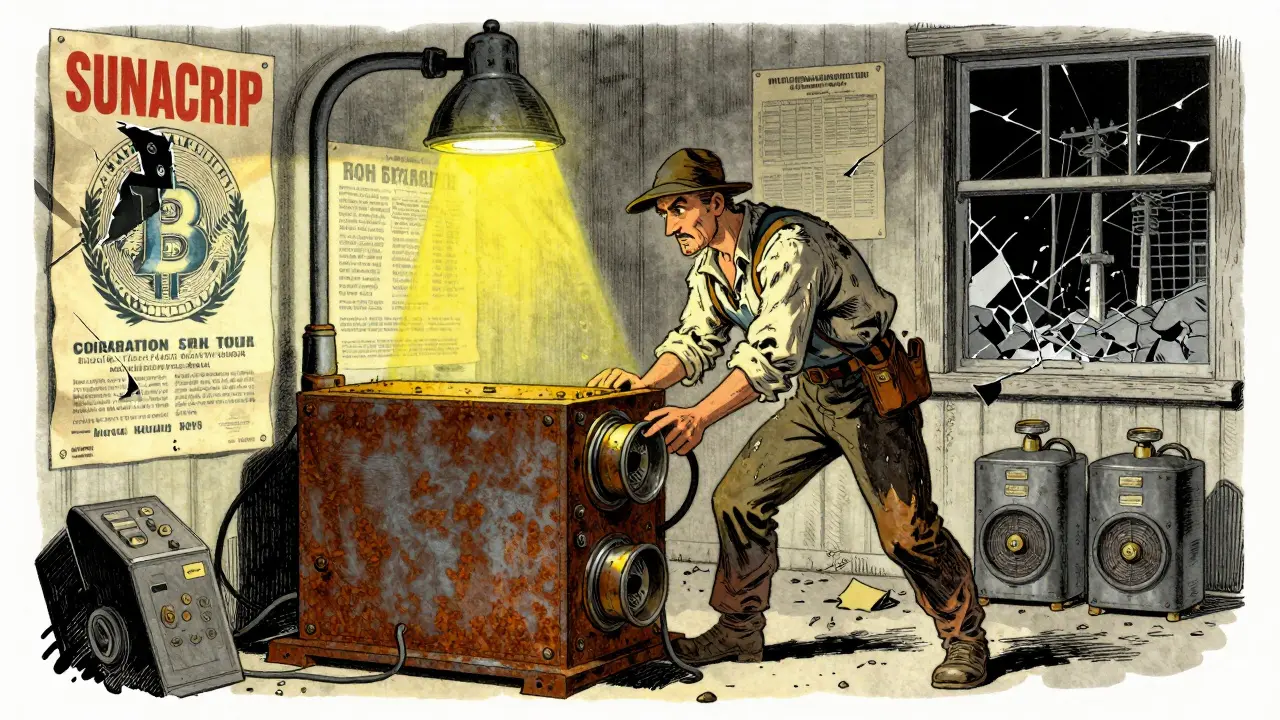
When Venezuela first announced it would take full control of cryptocurrency mining, many thought it was a bold move to save its failing economy. Others saw it as a power grab disguised as innovation. By 2026, the reality is neither. It’s a messy, broken system - half-law, half-chaos - where the government claims to regulate mining while its own agencies barely function.
How It Started: The Petro and the Birth of SUNACRIP
Venezuela didn’t just jump into crypto mining. It built a whole state-run machine around it. The push began in 2017 with the launch of the Petro, a government-backed cryptocurrency tied to oil reserves. But the real control mechanism came in 2019, when President Nicolás Maduro created the SUNACRIP (National Superintendence of Cryptocurrencies) through Presidential Decree No. 4,170. This wasn’t a suggestion. It was a mandate: all mining had to go through the state. SUNACRIP was supposed to be the gatekeeper. It would issue licenses, track every mining rig, and collect a cut of the rewards. The idea was simple: use Venezuela’s cheap electricity to mine Bitcoin and other coins, then use the profits to fund government programs. But the system didn’t just regulate mining - it tried to own it.The Rules: You Can’t Mine Unless the State Says So
If you want to mine crypto in Venezuela today, you have to follow a long list of rules - if you can even get past the bureaucracy. First, you must register in one of two government databases: the Comprehensive Registry of Miners (RIM) or the Comprehensive Registry of Cryptoactive Services (RISEC). Both are managed by SUNACRIP. You need to prove you have at least 500 kilowatts of dedicated power, submit ID documents for every person involved, and register every single mining device you own. Approval can take 90 to 120 days. Then there’s the National Mining Pool (NMP). This is the heart of the system. All mining rewards - whether you’re using one rig or a warehouse full - must flow through it. The NMP distributes Bitcoin and other coins to licensed miners, but it’s notoriously unreliable. Miners report delays of days or even weeks in getting payouts. Some say the system drops 15-20% of their potential earnings just from technical glitches. And you can’t just mine anywhere. The government requires you to use state-approved energy sources. That sounds great - Venezuela has some of the cheapest electricity in the world, at about $0.03 per kWh. But here’s the catch: the power grid is collapsing. In 2023, miners in Caracas and Maracaibo faced 40 to 60 hours of blackouts each month. Many had to buy diesel generators just to keep mining, which pushed costs up by 25%. The cheap power advantage? Gone.
The Crackdown: When the State Shut Down Its Own Miners
For a while, things looked like they were working. By 2023, over 500 licensed mining centers were operating. Some reports claimed they contributed 4% to Venezuela’s GDP. But then, in early 2023, everything changed. A corruption probe hit SUNACRIP hard. The head of the crypto ministry and several oil industry officials were arrested. The entire agency shut down. No more licenses. No more registrations. No more payouts from the NMP. Around 300 mining operations vanished overnight. Some miners say their equipment was seized. Others just walked away. In May 2024, the government officially banned all crypto mining, citing “excessive energy consumption.” It was a shocking reversal. Just months before, the same officials were touting mining as a lifeline for the economy. Now, they claimed it was draining the grid. But experts saw through it. The real issue wasn’t power - it was control. The government didn’t want miners making money outside its grasp.The Paradox: Legal, But Not Functional
Here’s the weird part: crypto mining is still technically legal in Venezuela. The laws haven’t been repealed. SUNACRIP was reorganized in March 2024, and a new body called CAVEMCRIP - with private sector input - was created to oversee operations again. But no one trusts it. The agency still doesn’t have enough staff. The NMP still doesn’t work reliably. The registry system still takes months to process. And the electricity? Still unreliable. Meanwhile, ordinary Venezuelans keep using crypto - not because the government wants them to, but because they have to. With inflation still over 100% in 2025, 70% of households now use stablecoins like USDT to buy food, pay rent, and send money to family abroad. The government’s own Conexus platform handles 40% of all electronic payments and is building a blockchain-based interbank network to let banks offer Bitcoin and stablecoin services by December 2025. So here’s the contradiction: the state tries to control mining, but people use crypto anyway - just not through the official channels. The government wants to own the mining, but the people own the usage.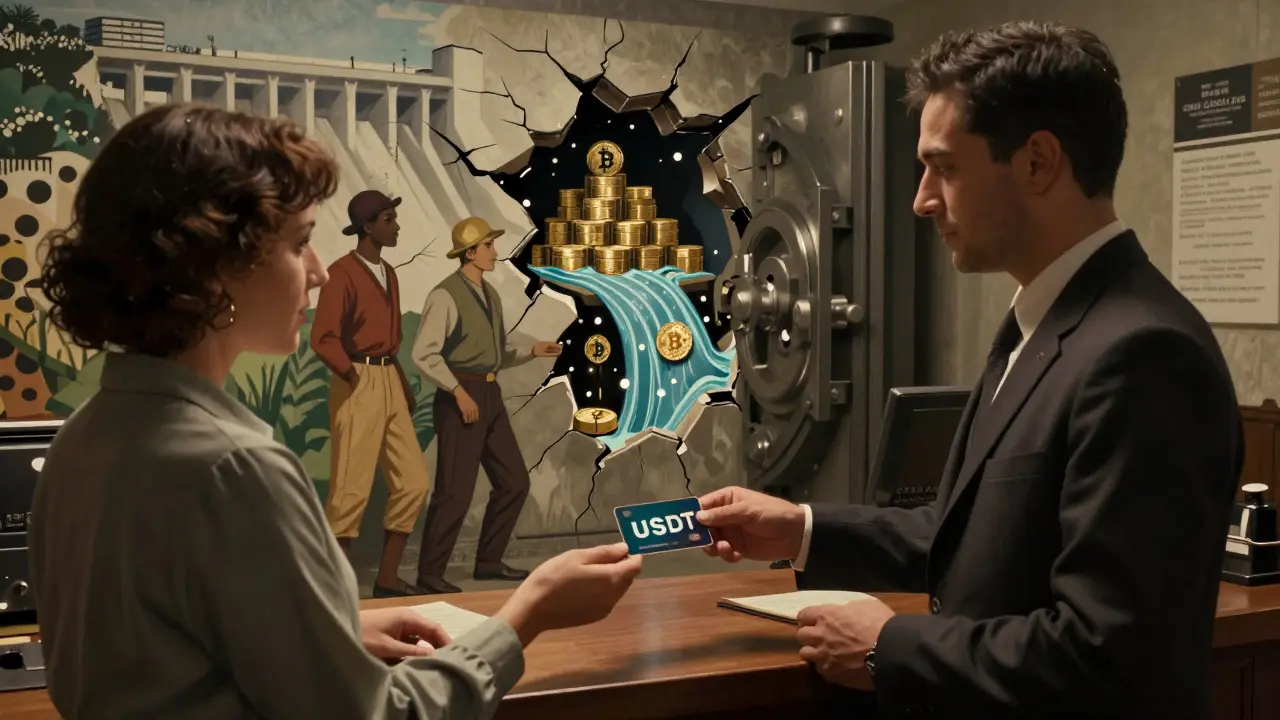
The Future: Will Banks Save It?
The most surprising development isn’t in the mining centers. It’s in the banks. By the end of 2025, Venezuela plans to let commercial banks directly custody, transfer, and exchange Bitcoin and stablecoins. This would make it the first country in the world to fully integrate crypto into its banking system. But will it work? Probably not - not as long as SUNACRIP remains broken. Analysts from Baker McKenzie say the crypto sector won’t stabilize until the government changes. And with Maduro’s administration facing international sanctions, criminal investigations, and domestic unrest, that change isn’t coming soon. Right now, Venezuela’s state-controlled mining model is a ghost. The laws are still there. The infrastructure is half-dead. The regulators are silent. And the miners? They’re either gone, or they’re mining underground - outside the system, outside the law, and outside the government’s reach.What This Means for Anyone Trying to Mine in Venezuela
If you’re thinking about starting a mining operation in Venezuela:- Don’t count on SUNACRIP to help you. It’s not functional.
- Don’t trust the National Mining Pool. It’s unreliable and slow.
- Don’t assume cheap electricity means low costs. Power outages and backup generators will eat your profits.
- Don’t expect legal protection. The rules change without notice.
Is crypto mining legal in Venezuela in 2026?
Yes, technically. The legal framework still exists, and mining isn’t outright banned. But the main regulatory agency, SUNACRIP, has been paralyzed since 2023. While licenses are still required, they’re rarely issued or enforced. The government’s official stance is inconsistent - banning mining one month, then allowing it again the next. In practice, mining exists in a legal gray zone.
What is SUNACRIP and why does it matter?
SUNACRIP, or the National Superintendence of Cryptocurrencies, was Venezuela’s official crypto regulator, created in 2019 to control all mining and crypto transactions. It required miners to register, enforced energy use rules, and managed the National Mining Pool. But after a corruption scandal in 2023, SUNACRIP stopped operating. It was briefly restructured in 2024 under CAVEMCRIP, but it still lacks staff, funding, and credibility. Today, it’s more of a symbol than a functioning agency.
Can I still mine crypto in Venezuela without a license?
Yes - and many people do. While the law requires licensing, enforcement is nearly nonexistent. Most miners now operate independently, using private power sources and avoiding SUNACRIP entirely. The government has no way to track or stop them. The real risk isn’t getting caught - it’s losing money to power outages, equipment failure, or scams.
Why does Venezuela have cheap electricity for mining?
Venezuela has massive hydroelectric dams, especially the Guri Dam, which supplies most of the country’s power. The government heavily subsidizes electricity - so much so that mining operations pay as little as $0.03 per kWh. But subsidies don’t mean reliability. The grid is crumbling, with frequent blackouts. Many miners now rely on diesel generators, which cost more than the electricity they’re trying to save.
What’s the future of crypto in Venezuela?
The government plans to let banks offer Bitcoin and stablecoin services by December 2025, which could make Venezuela the first country to fully integrate crypto into its banking system. But without a functioning regulator, stable power, and political stability, this plan is unlikely to succeed. Meanwhile, everyday Venezuelans are already using crypto - not because the state supports it, but because they have no other way to survive.
Sanchita Nahar
February 10, 2026 AT 19:22Donna Patters
February 11, 2026 AT 05:41Ben Pintilie
February 11, 2026 AT 11:05Michelle Cochran
February 12, 2026 AT 03:42Peggi shabaaz
February 13, 2026 AT 20:58Sakshi Arora
February 15, 2026 AT 20:19bala murali
February 17, 2026 AT 09:58Ekaterina Sergeevna
February 17, 2026 AT 14:54Grace Mugambi
February 17, 2026 AT 15:11Crystal McCoun
February 18, 2026 AT 07:31Elijah Young
February 19, 2026 AT 09:35Beth Trittschuh
February 20, 2026 AT 00:39Andrea Atzori
February 21, 2026 AT 17:30Joe Osowski
February 23, 2026 AT 02:37Gaurav Mathur
February 24, 2026 AT 07:24Jeremy Lim
February 25, 2026 AT 11:58kelvin joseph-kanyin
February 25, 2026 AT 20:14