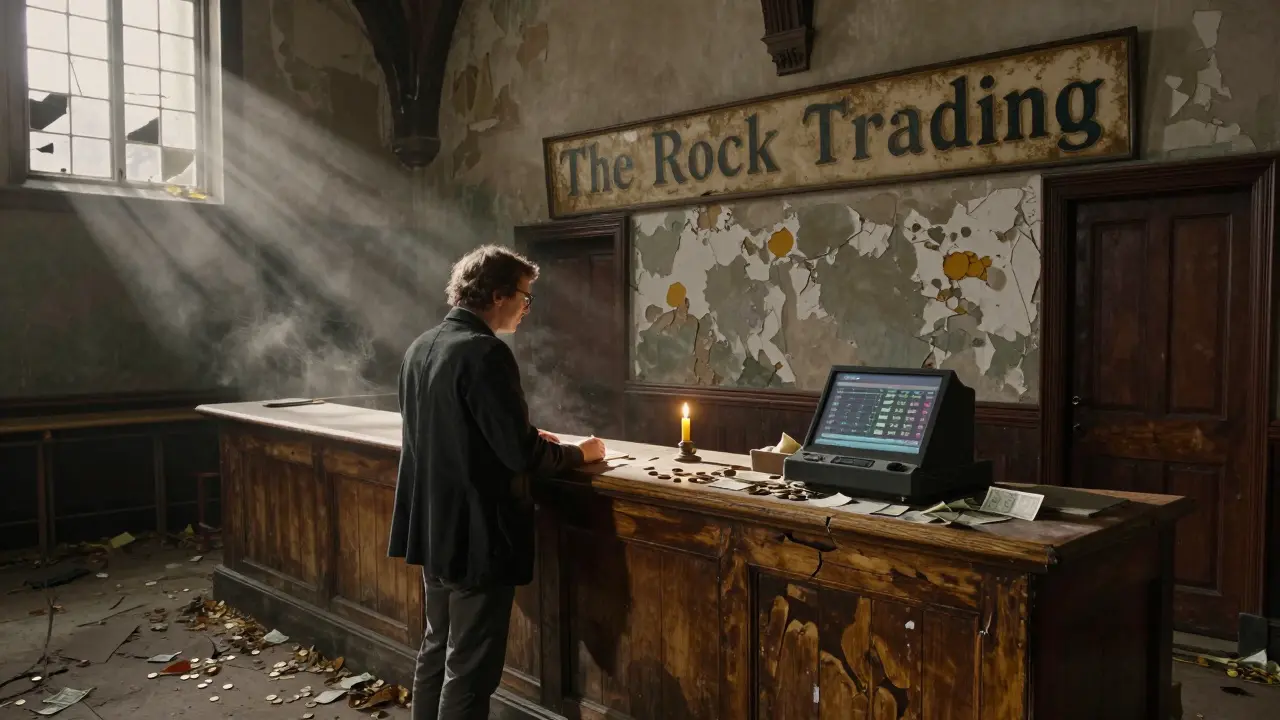
The Rock Trading was once one of the oldest and most trusted cryptocurrency exchanges in Europe. Founded in 2011, it started as a simple Bitcoin platform and grew into a regulated, fiat-friendly exchange serving tens of thousands of users. For over a decade, it stood out by focusing on compliance, low fees, and a clean interface - not flashy trading tools or meme coins. But in February 2023, everything collapsed. Client funds were frozen. Withdrawals stopped. By April 14, 2023, a Milan court declared it bankrupt. This isn’t a story about a new scam. It’s about how an old, seemingly stable exchange fell apart - and what it teaches anyone still using crypto platforms today.
What Made The Rock Trading Different
Most crypto exchanges in 2015 were wild west operations. The Rock Trading wasn’t. It was registered with Malta’s Financial Services Authority and Italy’s OAM. That meant real oversight, not just a website with a disclaimer. It didn’t offer 100x leverage, perpetual futures, or dozens of obscure altcoins. Instead, it stuck to the basics: BTC, ETH, LTC, XRP, and a few others - all paired with EUR, GBP, and USD. If you wanted to buy Bitcoin with your bank account and sell it later without jumping through hoops, this was one of the few places that made it easy.
Its fees were among the lowest in the market. For small traders, it charged 0.50%. High-volume users could drop as low as 0.02%. Compare that to Coinbase’s 0.5%-1% or Kraken’s 0.16%-0.26% at the time, and The Rock looked like a steal. Its API was fast, reliable, and used by automated traders. The web interface was simple - no clutter, no confusing menus. Even beginners could buy crypto in three clicks using its Fastlane feature. No need to understand order books or limit orders. Just pick your coin, enter the amount, and pay via bank transfer.
Security: A False Sense of Safety
The Rock Trading partnered with GreenAddress to offer multi-signature wallets. That meant funds needed multiple approvals before moving - a smart move. For years, users felt safe. Then came 2021.
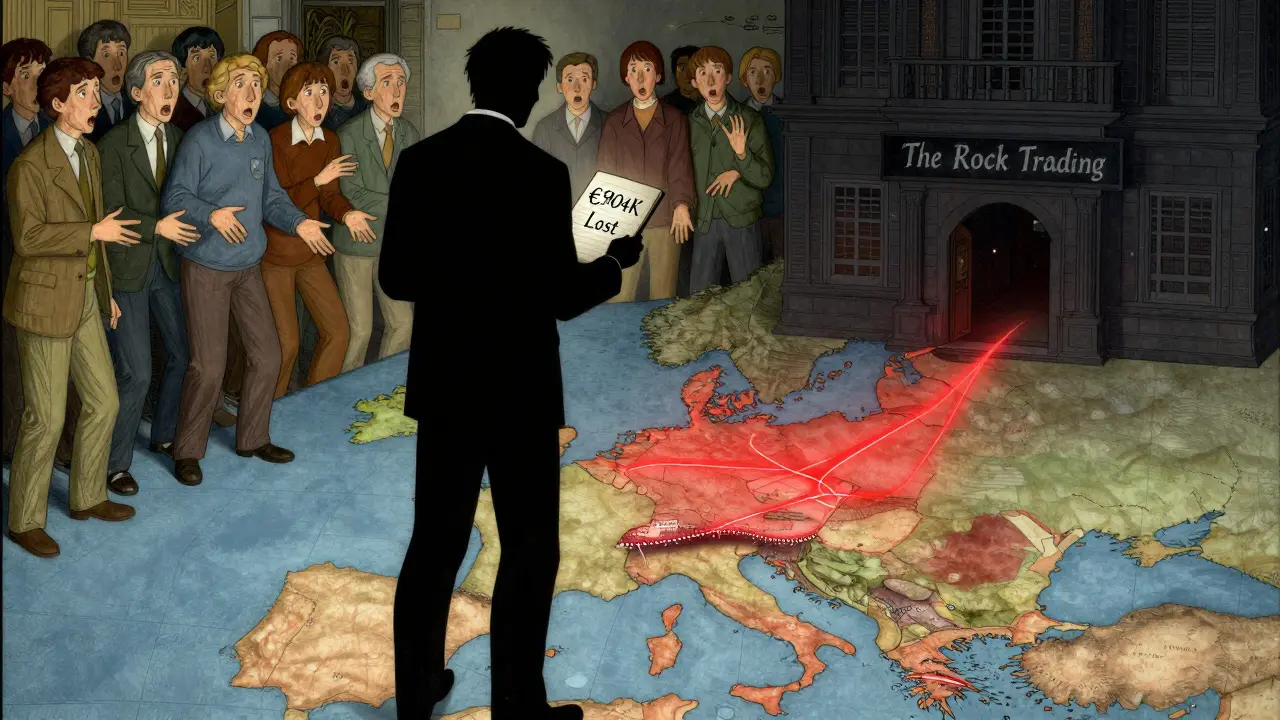
Onedime, the company handling digital services for The Rock, got hacked. €904,000 vanished. The exchange didn’t have enough reserves to cover it. Instead of admitting the loss openly, it quietly froze withdrawals for affected users. No public announcement. No emergency update. Just silence. Users noticed their funds were stuck. Support replies became slower. Some waited months for answers that never came.
By 2022, liquidity was already thin. Trading volume dropped. The BTC/EUR pair, once the most liquid, saw fewer buyers. The exchange stopped adding new coins. No updates to the app. No new features. It wasn’t evolving. It was holding on.
Why European Users Trusted It
Most crypto exchanges in Europe in the early 2010s were offshore, unregulated, and risky. The Rock Trading offered something rare: legitimacy. You could verify your identity with an Italian ID or German passport. Bank transfers from Germany, France, Spain - all accepted. It even offered a prepaid card linked to your crypto balance so you could spend Bitcoin at physical stores. For many, this was the first time they felt crypto was safe enough to use like real money.
Its user base was mostly European retail investors - not speculators. People who bought Bitcoin to hold, not to flip. Teachers, small business owners, retirees. They didn’t care about DeFi or NFTs. They just wanted a simple, honest place to trade. That’s why reviews on G2 and BitTrust.org were glowing - until they weren’t.
The Slow Decline
By 2020, competitors like Kraken and Bitpanda had caught up. They offered more coins, better mobile apps, instant withdrawals, and 24/7 support. The Rock Trading didn’t. It stuck to its old model. It didn’t add staking. Didn’t launch a wallet app. Didn’t improve customer service. Its support team, once praised, became a bottleneck. Users reported waiting 7-10 days for replies. Complaints about slow KYC verification piled up. One user said it took 18 days just to get their ID checked.
Then came the 2022 bear market. Prices crashed. Trading volume fell. The Rock Trading had no cushion. It didn’t have a reserve fund. It didn’t have insurance. It didn’t have enough cash to cover withdrawals when users started asking for their money back.
By January 2023, withdrawal requests were delayed. In February, they stopped entirely. Over 30,000 users were locked out. Emails went unanswered. The website still showed balances - but you couldn’t touch them. Social media lit up with panic. Reddit threads exploded. Then came the court order: bankruptcy.
What Happened After the Collapse
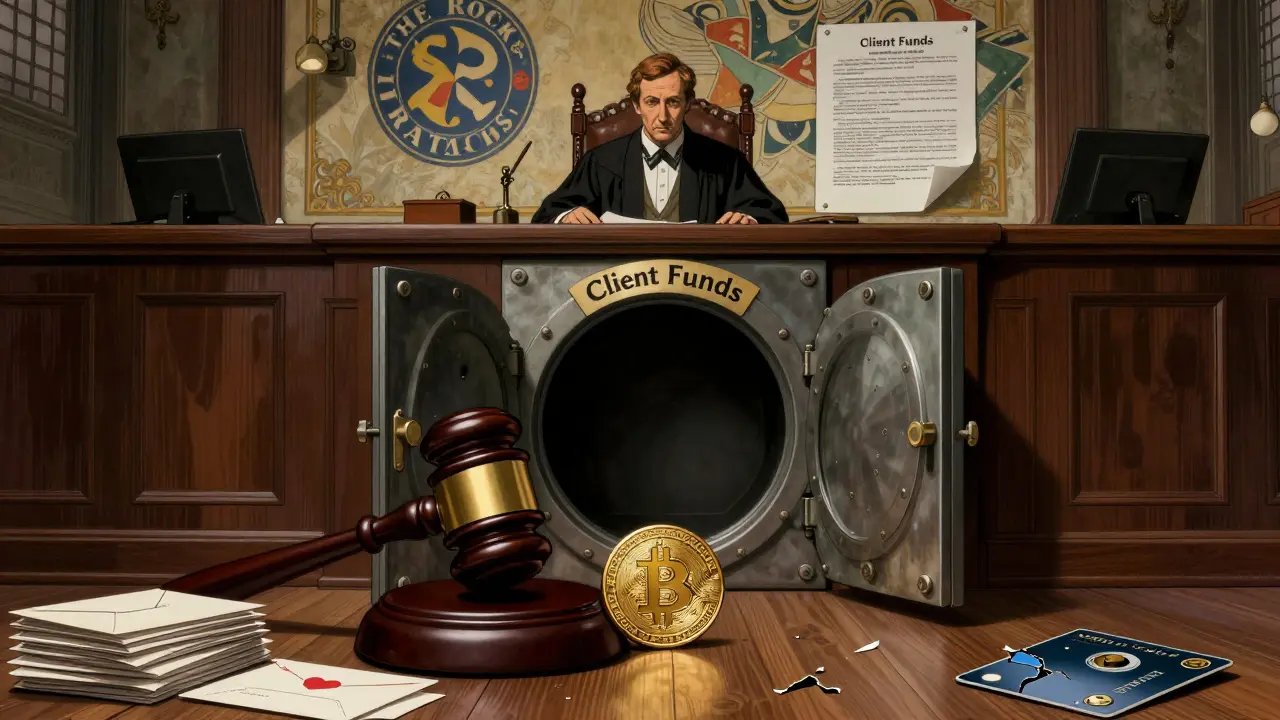
The Milan court took control. The exchange’s remaining Bitcoin and Ethereum were seized. Legal proceedings began to determine how much, if any, of the lost funds could be returned. As of March 2026, no major payouts have been made. Some users received a few euros as partial refunds - but most are still waiting.
The Financial Commission, a financial dispute resolution body, issued a warning: "The Rock Trading failed to meet basic operational standards. Clients should assume their funds are unrecoverable."
Lessons from The Rock Trading’s Fall
Here’s what you need to remember:
- Long history doesn’t mean safety. The Rock Trading operated for over 12 years. That didn’t protect it from poor risk management.
- Low fees can hide big risks. If an exchange offers fees far below market average, ask: How are they covering costs? Are they using client funds to stay afloat?
- Regulation isn’t a guarantee. Being registered with MFSA or OAM sounds good - but if the exchange isn’t audited or insured, it’s just paperwork.
- Don’t keep large amounts on any exchange. The Rock Trading wasn’t a scam. It was a failed business. And that’s more dangerous than a scam - because you trusted it.
- Watch for silence. When an exchange stops updating its app, delays withdrawals, or ignores customer complaints - that’s the first red flag.
Today, The Rock Trading’s website redirects to a notice: "Services suspended. Legal proceedings ongoing." No refunds. No timeline. Just a dead link to a once-trusted platform.
What to Use Instead
If you’re looking for a reliable European crypto exchange today, consider these alternatives:
- Kraken - Strong regulation, low fees, good support, and full transparency on reserves.
- Bitpanda - User-friendly, regulated in Austria, offers fiat on-ramps across Europe.
- Binance (EU version) - Though controversial, its EU branch is licensed and offers deep liquidity.
- Coinbase (EU) - Heavily regulated, insured custodial storage, and clear reporting.
These platforms don’t promise perfection. But they have transparent audits, clear customer support, and active development. The Rock Trading didn’t.
Final Thoughts
The Rock Trading didn’t die because it was a scam. It died because it stopped caring. It became a relic in a market that moved too fast. It trusted its reputation more than its infrastructure. And that’s the real lesson.
Crypto exchanges are businesses. Not banks. Not charities. If one stops innovating, stops communicating, or stops being transparent - it’s already failing. Even if it’s been around for 12 years.
Is The Rock Trading still operating?
No. The Rock Trading was declared bankrupt by a Milan court on April 14, 2023. All trading and withdrawal services were suspended. The website now displays a notice stating services are suspended due to legal proceedings. No new accounts can be created, and existing users cannot access their funds.
Can I get my money back from The Rock Trading?
It’s unlikely. After bankruptcy, the court seized the exchange’s remaining cryptocurrency holdings to distribute as partial compensation. As of March 2026, no significant payouts have been made. Most users received nothing. Some received small amounts (under €50) after lengthy legal processes. The Financial Commission advises users to assume their funds are unrecoverable.
Why did The Rock Trading freeze user funds?
The exchange suffered a liquidity crisis after a €904,000 hack in 2021 and declining trading volume. It didn’t have enough reserves to cover withdrawal requests. Instead of admitting the problem, it froze accounts to prevent a total collapse. This delayed the inevitable - but made the final bankruptcy worse for users.
Was The Rock Trading regulated?
Yes, it was registered with Malta’s Financial Services Authority (MFSA) and Italy’s OAM. But regulation doesn’t guarantee safety. Many regulated exchanges still fail due to poor management, lack of reserves, or hidden risks. The Rock Trading complied with paperwork but didn’t maintain operational stability.
What were The Rock Trading’s biggest weaknesses?
Its biggest weaknesses were: no emergency fund, outdated infrastructure, slow customer support, lack of transparency during crises, and failure to modernize. While competitors added staking, mobile apps, and insurance, The Rock Trading stuck to its 2012-era model. It prioritized reputation over resilience.
Should I trust an exchange just because it’s been around a long time?
No. Longevity doesn’t equal safety. The Rock Trading operated for over 12 years - and still collapsed. What matters is transparency, liquidity, active development, and clear communication during crises. Check if an exchange publishes proof-of-reserves, has responsive support, and updates its platform regularly. Age is not a substitute for sound management.
Austin King
March 8, 2026 AT 17:12Been using The Rock for years. Never had an issue till the freeze. So sad to see a legit platform go down like this. Trust matters in crypto, and they lost it.
Bonnie Jenkins-Hodges
March 10, 2026 AT 04:00LOL classic EU fail 😂 They thought regulation = safe? Bro, it’s crypto. If you didn’t hold your own keys, you were always gonna lose. 💸
Melissa Ritz
March 11, 2026 AT 02:22Honestly? The Rock was charming in a quaint, 2013 sort of way. Like a vinyl record player in a world of Spotify. Cute, but not built for the future. I mean, no staking? No mobile app? It’s like they were waiting to be replaced.
And don’t even get me started on the ‘quiet freeze.’ That wasn’t incompetence. That was cowardice wrapped in a compliance badge.
It’s funny how people romanticize ‘old-school’ exchanges. They forget: old doesn’t mean robust. It just means slower to die.
Compare it to Kraken’s transparent audits or Coinbase’s insurance fund. The Rock didn’t just lag - it ignored evolution. And crypto doesn’t wait for anyone.
I remember when their support used to reply in hours. By 2022? Weeks. That’s the canary in the coal mine. Silence is the first sign of rot.
They didn’t need more coins. They needed better systems. A reserve. A crisis plan. A heartbeat.
Instead, they leaned on reputation like a crutch. And crutches break when you need them most.
It’s not about being flashy. It’s about being responsible. And responsibility doesn’t come with a ‘founded in 2011’ badge.
Most users weren’t traders. They were teachers, retirees. People who trusted the system. And that’s the real tragedy.
This isn’t a cautionary tale about crypto. It’s about how institutions fail when they stop listening.
And now? We’re all paying for their inertia.
Cerissa Kimball
March 12, 2026 AT 19:04Regulation is not a guarantee of safety this is true but also the lack of audits and reserve proof is what killed them not just being old
They should have published monthly proof of reserves like BitMEX used to do
Even if they were slow to innovate they could have survived with transparency
But silence is the worst form of communication in finance
And when users cant withdraw for months its not a technical issue its a moral failure
Also the 904k hack in 2021 was the beginning of the end not the cause
The cause was ignoring the warning signs
And the fact they never told users they were in trouble
That’s the real crime
Not the hack
Not the low volume
Not the outdated UI
It was the lack of honesty
Ken Kemp
March 14, 2026 AT 16:49Biggest takeaway? Don’t confuse stability with sustainability. The Rock felt safe because it was quiet. But quiet doesn’t mean strong. It just means not screaming yet.
Think of it like your car: if it’s not making noise, you assume it’s fine. But if the oil hasn’t been changed in 10 years? You’re one turn away from disaster.
They didn’t need to chase DeFi. They just needed to keep their house in order.
And they didn’t. Simple as that.
Also - if your support takes 18 days to verify an ID? That’s not inefficiency. That’s abandonment.
Don’t let nostalgia blind you. Longevity without growth is just a slow funeral.
nalini jeyapalan
March 16, 2026 AT 05:55You people are missing the point. This wasn’t an accident. This was a slow-motion theft. The management knew they were insolvent. They kept taking new deposits to cover old withdrawals. Classic Ponzi behavior masked as ‘compliance.’
And now they’re hiding behind ‘bankruptcy proceedings’ like that’s some kind of honor.
They didn’t fail because they were outdated. They failed because they stole from their users.
Regulation doesn’t protect you. Transparency does. And they had none.
Don’t cry for The Rock. Cry for the retirees who lost their life savings because some CEO thought ‘we’ll figure it out later.’
jay baravkar
March 16, 2026 AT 15:03Heartbreaking but so true. I used to recommend The Rock to my mom. She’s 68 and finally got comfortable with crypto because of them. Now she’s stuck. No answers. No hope.
Don’t let this be in vain. Share this. Warn others. Never keep more than you can afford to lose - and never trust a platform that goes silent.
We can turn this pain into protection for others.
Ian Thomas
March 17, 2026 AT 09:15So let me get this straight - they were regulated, had low fees, and a clean interface… but no emergency fund, no insurance, and zero transparency?
That’s not a business model. That’s a trap dressed up as trust.
It’s like buying a Tesla because it looks sleek, then finding out the battery’s held together with duct tape.
Regulation is a license to operate. Not a guarantee of solvency.
And ‘we’ve been around since 2011’ is not a risk assessment.
It’s a funeral dirge.
Rachel Rowland
March 18, 2026 AT 07:00For anyone still using centralized exchanges - please, please, please move your funds to a hardware wallet. Even if you’re not trading. Even if you’re just holding.
The Rock wasn’t evil. It was lazy. And laziness kills faster than scams.
You don’t need a fancy platform. You need control.
Start with a Ledger. Learn how to send. Then sleep easy.
This isn’t fear. It’s freedom.
Basil Bacor
March 19, 2026 AT 00:01UK here. We had a similar thing with Bitstamp back in the day. They got bought out. The Rock didn’t. Why? Because they stopped caring. No updates. No comms. Just ‘we’re still here’ vibes.
Don’t be fooled by legacy. Legacy means nothing if you’re not evolving.
Issack Vaid
March 20, 2026 AT 05:47There’s a quiet arrogance in clinging to ‘old-school’ values while ignoring market dynamics. The Rock didn’t fail because crypto is volatile. It failed because it believed its own PR.
‘We’re compliant’ → doesn’t mean ‘we’re solvent.’
‘We have low fees’ → doesn’t mean ‘we have reserves.’
‘We’ve been here 12 years’ → doesn’t mean ‘we’re not crumbling.’
It’s tragic. But not surprising.
Human institutions collapse when they mistake reputation for resilience.
Shawn Warren
March 20, 2026 AT 22:31It is imperative to understand that regulatory compliance alone does not constitute financial integrity
Without operational transparency and adequate liquidity reserves
Even the most formally sanctioned entities are susceptible to systemic collapse
The Rock Trading exemplified this phenomenon
Its downfall was not abrupt but the culmination of prolonged neglect
Client funds must never be treated as operational capital
And yet that is precisely what occurred
One must question the adequacy of oversight bodies who permitted such conditions
Regulation without enforcement is an illusion
And illusions are dangerous in finance
Jackson Dambz
March 21, 2026 AT 00:23Of course it collapsed. They were a relic. No one’s surprised. The real question is why anyone trusted them after 2021. The hack was the warning. The silence was the verdict.
Now we get to watch 30,000 people beg for pennies while lawyers get rich.
Classic.
Megan Lutz
March 21, 2026 AT 22:16They didn’t die because they were old. They died because they stopped being a company. No updates. No communication. No accountability. That’s not a business. That’s a ghost.
And ghosts don’t pay back debts.
Jesse VanDerPol
March 23, 2026 AT 07:36Used to love their interface. Simple. Clean. No noise. Then one day, it just… stopped.
Never got an email. Never got a reply.
Just silence.
That’s the worst part.
jonathan swift
March 24, 2026 AT 01:30ALERT! This was a coordinated crypto wipeout by the Fed and EU central banks to push people into CBDCs!! 🚨
They let The Rock collapse on purpose so you’d lose trust in crypto and beg for digital euros!
Proof? The website still says ‘legal proceedings’ - that’s a cover-up!
They’re using blockchain tech to track your money now. Don’t you see it?
Send your coins to me. I’ll protect them. 💪
Datta Yadav
March 25, 2026 AT 04:05Let’s be real - The Rock Trading was never about users. It was about the founders cashing out quietly while pretending to be a trustworthy institution. The 2021 hack? A convenient excuse. The real theft happened years before - when they started using client funds to cover operational costs. The ‘low fees’? That was a bait. You thought you were getting a deal. You were funding their lifestyle.
They didn’t fail because they were outdated. They failed because they were predatory. The regulation? A smokescreen. The ‘founded in 2011’ badge? A marketing trick. The silence? A calculated move to let the market panic, then freeze withdrawals before the collapse. Classic.
And now? They’re hiding behind ‘bankruptcy court’ like it’s a shield. Meanwhile, the lawyers are getting paid. The auditors are silent. The regulators? Still waiting for a formal complaint.
Don’t cry for The Rock. Cry for the people who believed the lie.
This isn’t about crypto. It’s about how power works. The rich get to disappear. The middle class gets to beg.
And you? You’re next. Unless you learn. Unless you move your funds. Unless you stop trusting institutions that don’t answer their emails.
It’s not paranoia. It’s pattern recognition.
And The Rock? It was the textbook case.
Austin King
March 25, 2026 AT 19:18Wish I’d listened to myself. I kept saying ‘they’re too quiet’… but I thought they were just calm. Turns out, calm was just the eye of the storm.