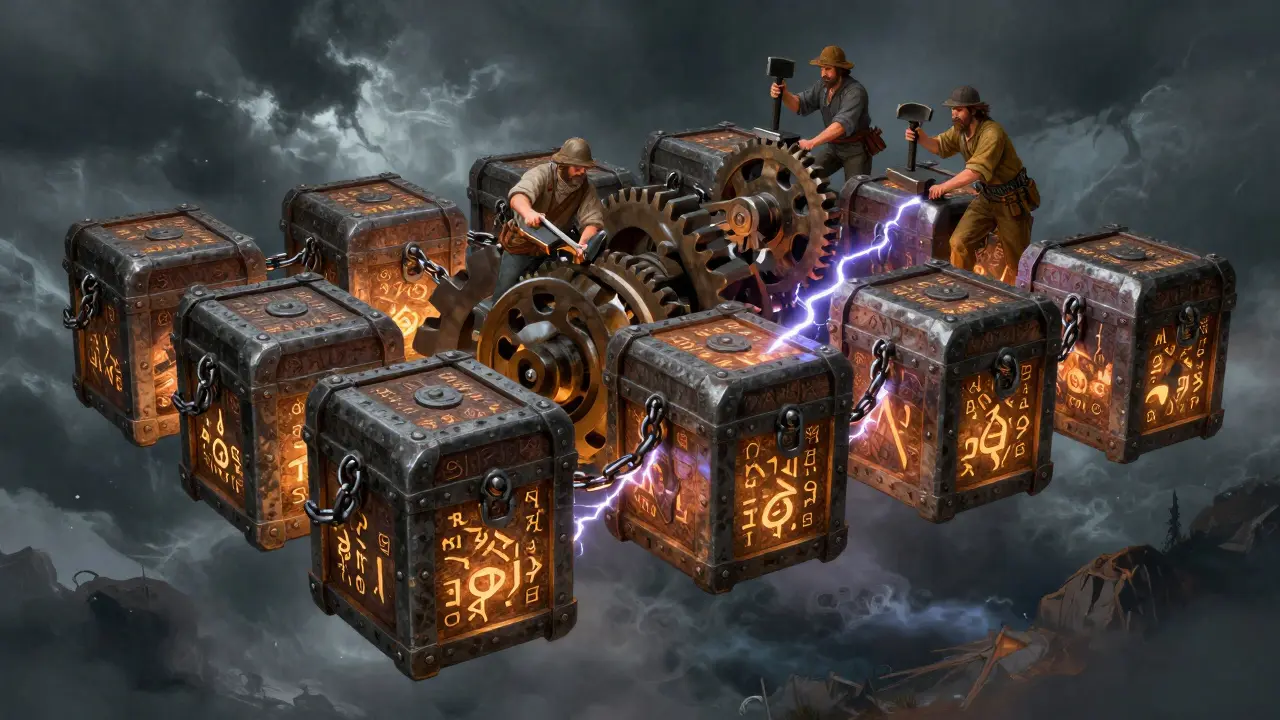
Think of a cryptocurrency like Bitcoin as a digital ledger that no single person controls. Every transaction ever made - from sending 0.01 BTC to a friend to buying coffee with crypto - gets recorded in a series of digital blocks. But what makes these blocks work? Why can’t you just toss transactions into a big pile and call it a day? The answer lies in the block structure. It’s not just a technical detail. It’s the reason cryptocurrency is secure, tamper-proof, and trustworthy. Without the right block structure, Bitcoin wouldn’t be Bitcoin. It would be a fragile, hackable system that collapses under its own weight. Let’s break down why this structure matters so much - and what happens when it’s done wrong.
What’s Inside a Block?
A block isn’t just a container for transactions. It’s a tightly packed, cryptographically sealed unit with six critical parts in its header alone:- Version number: Tells the network which rules the block follows.
- Previous block hash: Links this block to the one before it. This is the chain part of blockchain.
- Merkle root: A single fingerprint that represents every transaction in the block. No need to check each one individually.
- Timestamp: When the block was created. Not perfect, but good enough for ordering.
- Difficulty target: Sets how hard it is to mine this block. Adjusts automatically to keep blocks coming every ~10 minutes.
- Nonce: A random number miners tweak until the block’s hash meets the target. This is where the work happens.
Why the Chain Matters
The real magic happens because each block contains the hash of the one before it. That means if someone tried to change a transaction in Block 127, they’d have to recalculate the hash of Block 127 - which changes the hash of Block 128 - which changes the hash of Block 129 - and so on, all the way to the latest block. This isn’t just hard. It’s practically impossible. By the time you’re 100 blocks deep, thousands of miners have built on top of that block. To rewrite history, you’d need more computing power than the entire Bitcoin network combined. And even then, the network would reject your fake chain because it doesn’t match the longest, most-worked-on version. That’s immutability. It’s not a feature. It’s built into the structure.How Block Structure Enables Mining
Miners aren’t just verifying transactions. They’re racing to solve a math puzzle based on the block header. They take the version, previous hash, merkle root, timestamp, and difficulty target - then they try billions of nonces until one produces a hash that starts with enough zeros. The structure makes this possible. If the header didn’t have a fixed format, mining wouldn’t work. If the merkle root wasn’t there, verifying thousands of transactions in seconds would be too slow. If the difficulty target wasn’t part of the block, the network couldn’t adjust to more or fewer miners. The block structure turns a chaotic pile of transactions into a competitive, fair, and secure system. It’s what turns electricity and hardware into trust.
Block Size and Scalability
Bitcoin’s block size limit used to be 1MB. That meant roughly 7 transactions per second. During peak times, fees spiked because people were bidding to get their transactions into the next block. Critics said this was a flaw. Supporters said it was intentional. Why? Because larger blocks mean fewer people can run full nodes. Full nodes verify every block. They store the entire blockchain. If blocks get too big, your home computer can’t handle it. You need a server. And if only big companies can run nodes, the network becomes centralized. Block structure doesn’t just store data - it controls who gets to participate. That’s why Bitcoin’s 1MB limit wasn’t just technical. It was political. It was about keeping the network decentralized. Ethereum took a different path. It didn’t limit block size as strictly. Instead, it changed how transactions are processed and how blocks are validated. That’s why Ethereum can handle 15-30 transactions per second - but it also means more hardware is needed to keep up.Real-World Consequences of Poor Block Design
In 2017, Bitcoin’s block size debate split the community. One group wanted to increase the limit. Another said it would break decentralization. The result? Bitcoin Cash was born - a fork with 8MB blocks. Today, Bitcoin Cash processes more transactions per second than Bitcoin. But it also has fewer nodes. Fewer people verify its chain. That makes it more vulnerable to attacks. Meanwhile, Bitcoin’s smaller blocks forced innovation. The Lightning Network was built on top of Bitcoin to handle tiny payments off-chain. SegWit changed how transaction data is stored inside blocks, effectively increasing capacity without changing the limit. These solutions only worked because the original block structure was solid. It gave developers a stable foundation to build on.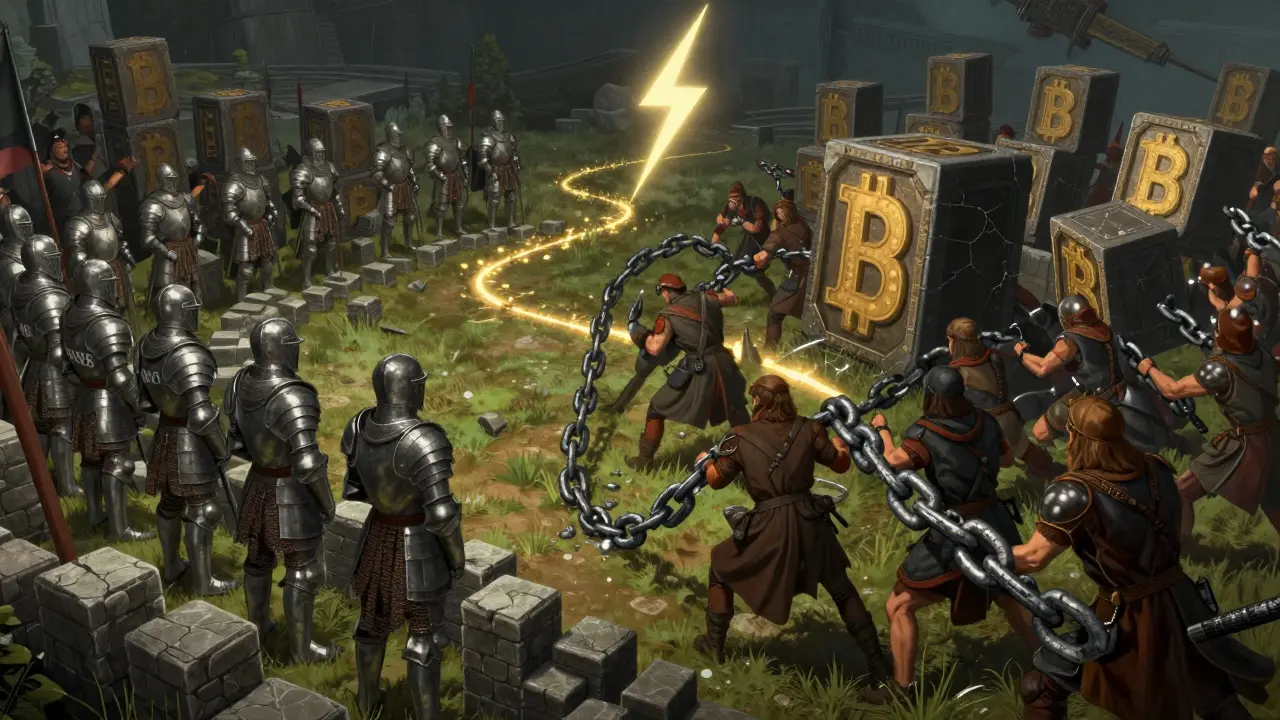
What Happens When Blocks Are Messy?
Not all blockchains are as clean as Bitcoin’s. Some new coins have poorly designed block structures. Maybe they don’t include a merkle root. Maybe their timestamps aren’t trusted. Maybe they allow blocks to be reordered easily. The result? Double-spending. Chain reorganizations. Wallets showing wrong balances. Users lose money. And once trust is broken, the cryptocurrency dies. Look at any altcoin that failed. Almost always, the root cause was a rushed or flawed block structure. No amount of marketing or hype can fix a broken chain.Future of Block Structure
Ethereum’s shift to Proof-of-Stake didn’t just change how blocks are created - it changed their structure. Blocks now have different fields, different validation rules, and different data formats. Miners are gone. Validators are in. The block header had to be rewritten. Meanwhile, researchers are experimenting with DAGs (directed acyclic graphs) instead of linear blocks. These could handle thousands of transactions per second. But they’re harder to secure. No one’s sure they’re as safe as Bitcoin’s chain. The trend is clear: block structure isn’t static. It evolves. But every change must preserve the core principles - immutability, verifiability, decentralization.Why This All Matters to You
You don’t need to be a developer to care about block structure. If you hold crypto, you’re trusting that the blocks behind it can’t be altered. If you use a wallet, you’re relying on the fact that every transaction was verified correctly. If you believe in crypto’s future, you’re betting that its structure can scale without breaking. Block structure is the invisible hand that keeps everything in place. It’s why your Bitcoin hasn’t been stolen. It’s why your transaction went through. It’s why the system still works after 15 years. Change it carelessly, and everything falls apart. Get it right, and you build trust that lasts decades.There’s no such thing as a perfect block structure. But there are good ones - and bad ones. Bitcoin’s design isn’t flashy. It’s simple. It’s stubborn. And that’s exactly why it still works.
Sharon Tuck
March 9, 2026 AT 21:13Found myself nodding at the part about full nodes. So many folks don’t realize decentralization isn’t just a buzzword-it’s a practical constraint.
Eva Gupta
March 11, 2026 AT 14:27Emily Pegg
March 11, 2026 AT 20:01Jamie Hoyle
March 13, 2026 AT 13:02Jennifer Pilot
March 14, 2026 AT 22:48Jeffrey Dean
March 16, 2026 AT 00:01Ken Kemp
March 16, 2026 AT 20:40Denise Folituu
March 18, 2026 AT 00:51jack carr
March 19, 2026 AT 01:10Nancy Jewer
March 20, 2026 AT 20:08Sherry Kirkham
March 21, 2026 AT 21:30