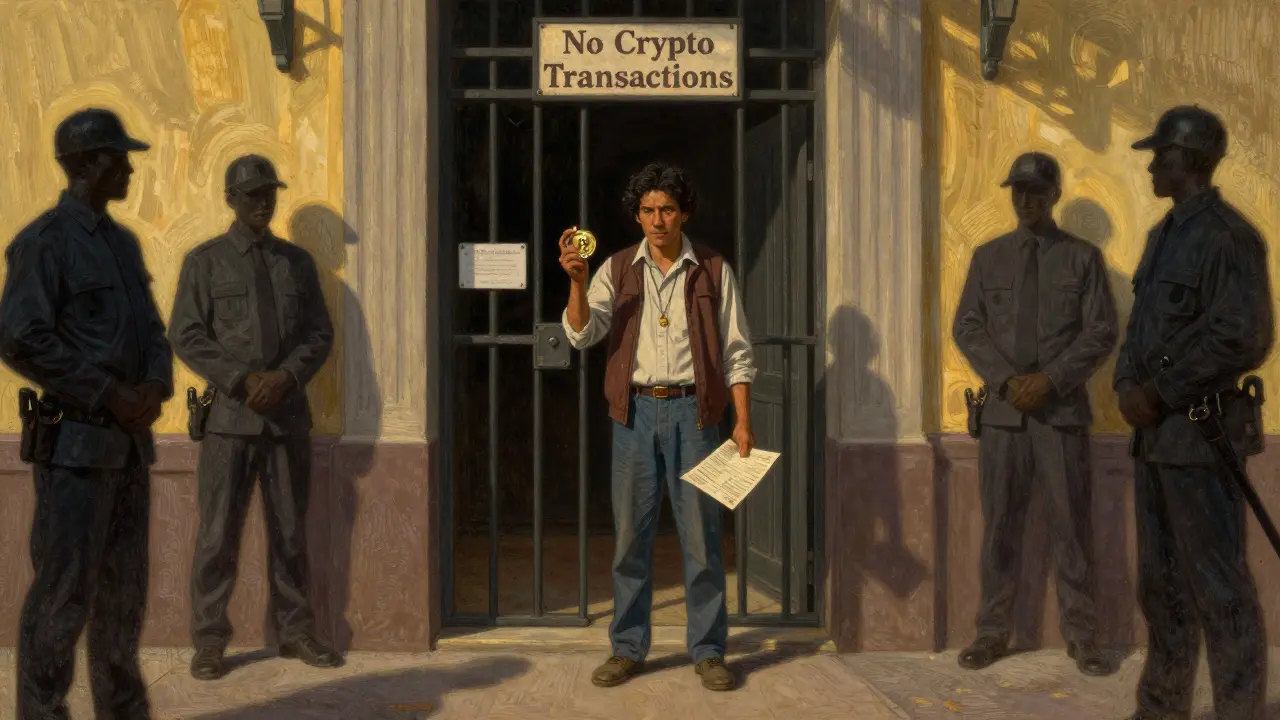
Colombia doesn’t ban cryptocurrency - but it does ban banks from touching it. That’s the strange, frustrating reality for millions of Colombians who want to use Bitcoin, Ethereum, or stablecoins in their daily lives. While you can still buy crypto on local exchanges, your bank account? Locked out. No deposits. No withdrawals. No crypto-linked debit cards. No investment products. If you’re a regular user, this means your money can’t move between the traditional financial system and the digital one - not without jumping through hoops.
How the Ban Works
The ban isn’t a law passed by Congress. It’s a rule issued by the Financial Superintendency of Colombia (SFC) in 2022. This agency supervises all banks, credit unions, and major fintech firms. Its directive is simple: no custody, no investment, no facilitation of crypto transactions. That means if you try to send $500 in Bitcoin to a friend, your bank won’t let you. If you want to buy a stablecoin like COPW, your savings account can’t fund it directly.It’s not just about blocking transfers. Banks must also block any automated systems that might accidentally process crypto payments. That includes payroll platforms, payment gateways, or even apps linked to your bank account. Even if you’re just trying to pay for a coffee with USDT, your bank’s backend system is programmed to reject it.
The rule applies to every institution under SFC supervision - which covers over 90% of Colombia’s banking sector. This includes giants like Bancolombia, Colpatria, and BBVA Colombia. All of them have to build walls around crypto - even if their own subsidiaries run crypto exchanges.
The Legal Gray Zone
Here’s the twist: crypto isn’t illegal. You can still trade it. You can still mine it. You can still hold it. The government hasn’t outlawed ownership. But because banks can’t touch it, the entire ecosystem gets squeezed. This creates what experts call a legal gray area. Crypto exists in a space where it’s tolerated but not integrated.That’s why you see companies like Wenia - a crypto exchange launched by Bancolombia - operating in plain sight. How? Because Wenia doesn’t use Bancolombia’s banking infrastructure. It uses third-party payment processors and non-bank financial partners. It’s a workaround. A loophole. And it’s exactly what the SFC didn’t intend - but couldn’t stop.
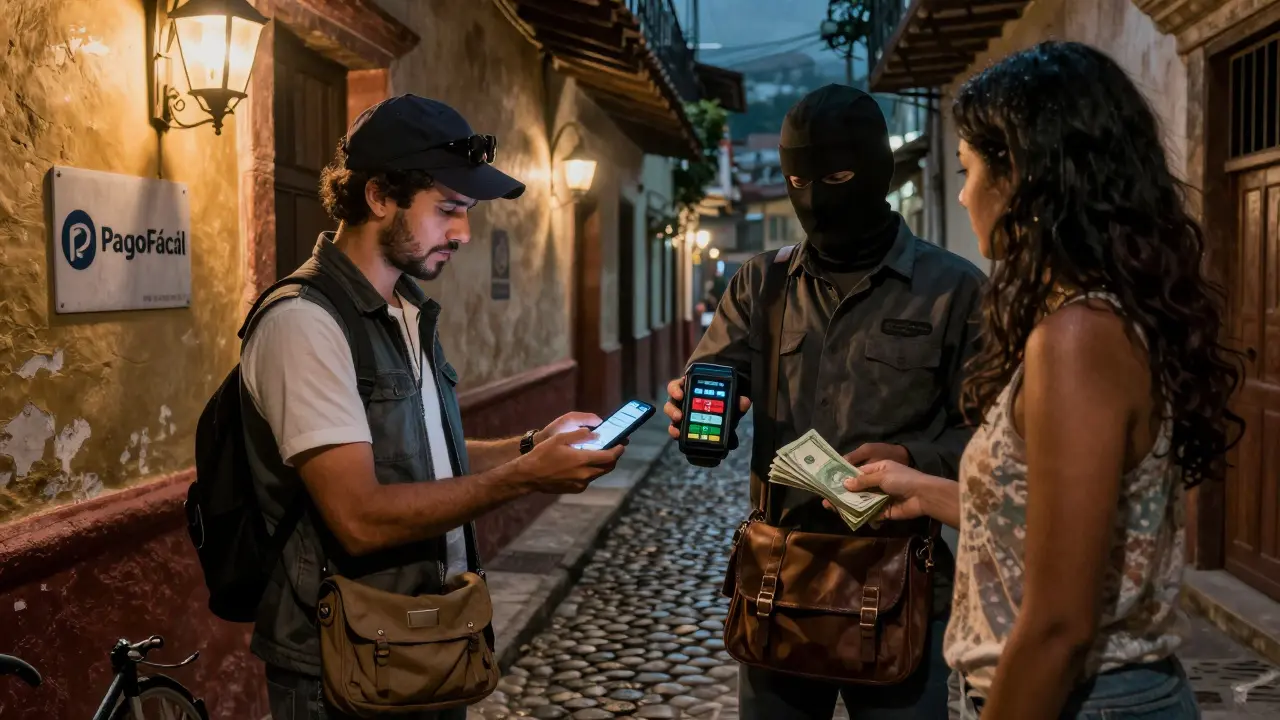
Meanwhile, Payment Service Providers (PSPs) like PagoFácil and Nequi are caught in the middle. They’re forced to monitor every crypto transaction over $150. They must collect full names, IDs, and addresses for both sender and receiver. If they miss one detail? Fines up to $1.5 million. That’s why many PSPs are now using RegTech tools - automated systems that scan, log, and report transactions in real time.
Why This Ban Exists
The SFC says it’s about risk. Crypto’s volatility, anonymity, and global nature make it a prime tool for money laundering and fraud. Colombia’s Financial Information and Analysis Unit (UIAF) has flagged hundreds of suspicious crypto transactions each month - many tied to drug trafficking, illegal mining, or ransomware.But there’s another layer. The Central Bank of Colombia is fiercely protective of the peso. Finance Minister Ricardo Bonilla made it clear in 2023: "There must be no other source of primary issuance than the Central Bank." In plain terms: no digital currencies that could compete with the peso. That’s why stablecoins like COPW - pegged 1:1 to the Colombian peso - are allowed under tight controls. They’re seen as a bridge, not a threat.
Colombia’s stance is different from its neighbors. Brazil taxed crypto trades starting in 2025. Chile licensed three crypto custodians. Mexico updated its fintech law to include crypto custody. Colombia? Still stuck in the middle - letting crypto exist but cutting off its lifeline to banks.
Who Gets Hurt?
The ban hits ordinary users hardest. People who rely on crypto for remittances - especially those sending money from the U.S. or Spain - now face delays and higher fees. Instead of sending crypto directly to a family member’s wallet, they have to use expensive third-party services that convert crypto to cash, then deliver it via physical agents.Small businesses suffer too. A tech startup in Medellín that accepts USDC for services can’t deposit those funds into its business account. It has to use a crypto-friendly payment processor, then manually transfer cash to its bank - a process that takes days and costs up to 8% in fees.
And then there’s the innovation drain. Startups building DeFi apps, NFT marketplaces, or blockchain-based supply chain tools can’t integrate with local banking. Investors won’t fund them. Banks won’t lend to them. Developers leave for countries like Argentina or Chile, where crypto is treated as legal money.
What’s Changing in 2026?
The original SFC regulatory sandbox - a program meant to test new crypto business models - expired in December 2023. No replacement has been announced. That’s left new startups in limbo. No testing. No approval. No clear path forward.But pressure is building. Colombia is the top country in Latin America for stablecoin adoption. Over 60% of all crypto transactions in the region pass through Colombian wallets. People are using crypto to pay for groceries, rent, and even medical bills. The market won’t wait.
Experts believe a new law is coming. Not a ban lift - but a regulation. One that allows banks to offer crypto services under strict conditions: full KYC, real-time reporting, and no direct exposure to volatile assets. The goal? Bring crypto into the financial system - not out of it.
The Bre-B payment platform, backed by the Central Bank, could be the key. If it allows crypto-linked payments without charging fees - and if it integrates with existing banking apps - it could quietly bypass the SFC ban. That’s already happening in pilot tests.

What You Can Do Right Now
If you’re a Colombian crypto user, here’s what actually works:- Use non-bank platforms like Wenia, Buda, or Bitso to buy and sell crypto.
- For payments, use crypto-to-cash services like PagoFácil or Nequi - but expect delays and fees.
- Keep all transaction records. Crypto income is taxable. The DIAN (tax authority) now tracks crypto wallets.
- Don’t use your bank account to fund crypto purchases. Use cash deposits, P2P transfers, or third-party wallets instead.
- Stay updated. The SFC may issue new guidelines in 2026. Watch for announcements from the Central Bank.
What’s Next?
Colombia won’t go full crypto-friendly tomorrow. But it won’t stay frozen either. The demand is too strong. The technology too widespread. The real question isn’t whether the ban will end - it’s how fast.One thing’s certain: the gap between what people want and what banks are allowed to do is widening. And in 2026, that gap will either be bridged - or broken.
Can I still buy Bitcoin in Colombia?
Yes. You can buy Bitcoin, Ethereum, and other cryptocurrencies on local exchanges like Wenia, Buda, and Bitso. The ban only stops banks from getting involved - not individuals from trading. Just make sure you use regulated platforms that comply with SFC reporting rules.
Can I use crypto to pay my bills or rent?
Not directly through your bank. But some landlords and service providers accept crypto payments through third-party platforms like PagoFácil or Nequi. These services convert your crypto to pesos and send cash to the recipient. It’s slower and more expensive than a direct bank transfer, but it works.
Is crypto taxed in Colombia?
Yes. The tax authority (DIAN) treats crypto as an intangible asset. If you sell for a profit, you owe capital gains tax. If you run a crypto business, you pay corporate income tax. Keep detailed records of all buys, sells, and trades - audits are increasing.
Why can Bancolombia run Wenia if banks are banned from crypto?
Wenia operates as a separate legal entity, not as part of Bancolombia’s banking division. It uses third-party payment processors and non-bank financial partners to move money. This loophole lets it offer crypto services while technically staying within the SFC’s ban.
Will Colombia lift the banking ban soon?
Not in 2026 - but a major regulatory update is likely. Experts predict new rules that allow banks to offer limited crypto services under strict oversight. The goal is integration, not prohibition. The expiration of the sandbox program and rising stablecoin usage are pushing regulators toward change.
Dominica Anderson
February 17, 2026 AT 19:31Stop pretending this is about 'risk.' It's about control. The peso's dominance is the real threat - not Bitcoin.
sruthi magesh
February 18, 2026 AT 05:29UIAF flags 'suspicious' transactions? How many of those are from cartels? Or from people remitting to family? The real crime is forcing 60M Colombians into financial apartheid.
Lisa Parker
February 19, 2026 AT 22:39Scott McCrossan
February 20, 2026 AT 18:22The SFC did the right thing. Stop romanticizing financial chaos.
AJITH AERO
February 22, 2026 AT 12:45andy donnachie
February 23, 2026 AT 14:49The SFC's rules are a stopgap. The real shift will come when the Central Bank realizes it can't stop what's already happening.
Chris Thomas
February 25, 2026 AT 04:26Wenia isn't a workaround - it's a Trojan horse. Bancolombia is laundering legitimacy through compliance theater. The real innovation isn't crypto. It's the legal fiction that lets them profit from it while pretending to oppose it.
Andrew Edmark
February 26, 2026 AT 15:27Keep using PagoFácil. Keep documenting your trades. Keep pushing. Change doesn't come from protests - it comes from persistence.
george chehwane
February 26, 2026 AT 19:23Stablecoins are the only thing keeping middle-class Colombians from total financial collapse. And now you want to criminalize the medicine because it's not approved by the FDA?
Charrie VanVleet
February 28, 2026 AT 19:12Rajib Hossaim
March 1, 2026 AT 07:30Jenn Estes
March 2, 2026 AT 05:07It's not about risk. It's about rent-seeking. And you're all just playing along.
Angela Henderson
March 2, 2026 AT 08:37People are just... doing it. The system didn't break. It just got bypassed.
James Breithaupt
March 4, 2026 AT 07:07The SFC is trying to control a river by building a dam. But the water’s already flowed around it. The question isn't if they'll adapt - it's whether they'll adapt before the whole system collapses under its own contradictions.
Sarah Shergold
March 4, 2026 AT 10:53Nova Meristiana
March 4, 2026 AT 20:35Now the startups are leaving. The devs are gone. The innovation? Buried under bureaucracy.
JJ White
March 6, 2026 AT 07:40They don't fear volatility. They fear irrelevance. And they'd rather see millions suffer than admit the peso isn't sacred.
Nicole Stewart
March 7, 2026 AT 20:00Alan Enfield
March 8, 2026 AT 11:34